Results by title
73 books match the query 'Popular works' and 5 start with l

Law in Everyday Life
Austin Sarat and Thomas R. Kearns, Editors
University of Michigan Press, 1995

Living With Cancer
A Practical GuideVisel, Dave
Rutgers University Press, 2006
In this essential guide, Dave Visel draws on expertise hard-won during his wife’s battle with lymphoma. He provides an overview of the varieties of cancer and all the basic types of treatments available. Chapters dispel common myths associated with these treatments and provide tips on nutrition and physical fitness. Visel also moves beyond the hospital to provide information and strategies to help with the emotional, practical, and financial effects of a diagnosis. Cancer patients will find the tools they need to make well-informed decisions on questions ranging from the right time to tell coworkers to whether to travel for treatment. Because medical bankruptcies affect nearly two million Americans each year, Visel devotes several chapters to financial issues. He also addresses the effects of cancer on relationships, such as how to deal with a difficult parent or whether to reconcile with an estranged spouse. In addition, Living with Cancer provides a comprehensive overview of the most useful corporate, government, and non-profit resources available. Anyone looking for help in understanding the full range of personal, professional, and legal issues associated with cancer will welcome this book. As inspiring as it is informative, it is a survival guide in the truest sense.

Living with Polio
The Epidemic and Its SurvivorsDaniel J. Wilson
University of Chicago Press, 2005
Living with Polio is the first book to focus primarily on the personal stories of the men and women who had acute polio and lived with its crippling consequences. Writing from personal experience, polio survivor Daniel J. Wilson shapes this impassioned book with the testimonials of more than one hundred polio victims, focusing on the years between 1930 and 1960. He traces the entire life experience of the survivors—from the alarming diagnosis all the way to the recent development of post-polio syndrome, a condition in which the symptoms of the disease may return two or three decades after they originally surfaced.
Living with Polio follows every physical and emotional stage of the disease: the loneliness of long separations from family and friends suffered by hospitalized victims; the rehabilitation facilitieswhere survivors spent a full year or more painfully trying to regain the use of their paralyzed muscles; and then the return home, where they were faced with readjusting to school or work with the aid of braces, crutches, or wheelchairs while their families faced the difficult responsibilities of caring for and supporting a child or spouse with a disability.
Poignant and gripping, Living with Polio is a compelling history of the enduring physical and psychological experience of polio straight from the rarely heard voices of its survivors.
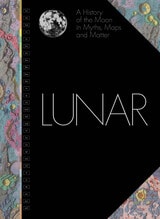
Lunar
A History of the Moon in Myths, Maps, and MatterEdited by Matthew Shindell
University of Chicago Press, 2024
President John F. Kennedy’s rousing “We will go to the Moon” speech in 1961 before the US Congress catalyzed the celebrated Apollo program, spurring the US Geological Survey’s scientists to map the Moon. Over the next eleven years a team of twenty-two, including a dozen illustrator-cartographers, created forty-four charts that forever changed the path of space exploration.
For the first time, each of those beautifully hand-drawn, colorful charts is presented together in one stunning book. In Lunar, National Air and Space Museum curator Matthew Shindell’s expert commentary accompanies each chart, along with the key geological characteristics and interpretations that were set out in the original Geologic Atlas of the Moon. Interwoven throughout the book are contributions from scholars devoted to studying the multifaceted significance of the Moon to humankind around the world. Traveling from the Stone Age to the present day, they explore a wide range of topics: the prehistoric lunar calendar; the role of the Moon in creation myths of Ancient Egypt, Greece, and Rome; the role of the Moon in astrology; the importance of the Moon in establishing an Earth-centered solar system; the association of the Moon with madness and the menstrual cycle; how the Moon governs the tides; and the use of the Moon in surrealist art.
Combining a thoughtful retelling of the Moon’s cultural associations throughout history with the beautifully illustrated and scientifically accurate charting of its surface, Lunar is a stunning celebration of the Moon in all its guises.

Lung Cancer Chronicles
Meyer, M.D., John
Rutgers University Press, 1990