81 books match the query 'Post-communism' and 3 start with l
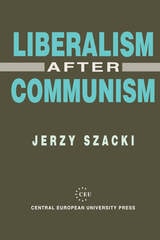
cover of Liberalism After Communism: The Implications of the 1993 Elections to the Federal Assembly

Liberalism After Communism

The Implications of the 1993 Elections to the Federal Assembly

Jerzy Szacki

Central European University Press, 1995

This study is devoted to recent developments in Central European (especially Polish) political thought, and concentrates on the emergence of liberal ideas, a subject largely neglected by Western observers. It provides a clear account of protoliberal and liberal thinking in Central Europe both before and after 1989, a critical appraisal of the democratic opposition to communism, and an analysis of economic liberalism as its rival orientation. The author examines the changes which occur in classical liberal ideas when they are implemented in a region with practically no liberal tradition and no socioeconomic infrastructure, and shows how liberal ideas in Central Europe are becoming constructivist, functioning as the ideological justification for a new kind of Utopian social engineering that aims at constructing capitalism.
[more]
cover of Losing Control: Global Security in the 21st Century

Losing Control

Global Security in the 21st Century

Paul Rogers

Pluto Press, 2010

When Losing Control was first published a decade ago it was years ahead of its time. Its argument was simple - the real causes of global insecurity were the widening socio-economic divide, global marginalisation and environmental limitations, especially climate change and conflict over energy resources.

Paul Rogers, one of the most original thinkers on international security, pointed to a world in which irregular warfare from the margins would prevent powerful states from maintaining their position. He even predicted accurately how the United States would respond to a catastrophic attack.

The new edition brings the whole analysis right up to date, arguing persuasively that the world’s elite cannot maintain control and that a far more emancipatory and sustainable approach to global security has to be developed.
[more]
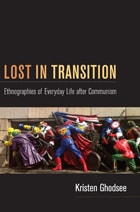
cover of Lost in Transition: Ethnographies of Everyday Life after Communism

Lost in Transition

Ethnographies of Everyday Life after Communism

Kristen Ghodsee

Duke University Press, 2011

Lost in Transition tells of ordinary lives upended by the collapse of communism. Through ethnographic essays and short stories based on her experiences with Eastern Europe between 1989 and 2009, Kristen Ghodsee explains why it is that so many Eastern Europeans are nostalgic for the communist past. Ghodsee uses Bulgaria, the Eastern European nation where she has spent the most time, as a lens for exploring the broader transition from communism to democracy. She locates the growing nostalgia for the communist era in the disastrous, disorienting way that the transition was handled. The privatization process was contested and chaotic. A few well-connected foreigners and a new local class of oligarchs and criminals used the uncertainty of the transition process to take formerly state-owned assets for themselves. Ordinary people inevitably felt that they had been robbed. Many people lost their jobs just as the state social-support system disappeared. Lost in Transition portrays one of the most dramatic upheavals in modern history by describing the ways that it interrupted the rhythms of everyday lives, leaving confusion, frustration, and insecurity in its wake.
[more]