137 books match the query 'Poverty' and 6 start with l
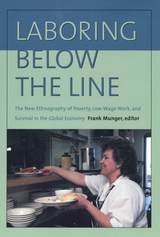
cover of Laboring Below the Line: The New Ethnography of Poverty, Low-Wage Work, and Survival in the Global Economy

Laboring Below the Line

The New Ethnography of Poverty, Low-Wage Work, and Survival in the Global Economy

Frank Munger

Russell Sage Foundation, 2002
As the distribution of wealth between rich and poor in the United States grew more and more unequal over the past twenty years, this economic gap assumed a life of its own in the popular culture. The news and entertainment media increasingly portrayed the lives of the poor with such stereotypes as the lazy welfare mother and the thuggish teen, offering Americans few ways to learn how the "other half" really lives. Laboring Below the Line works to bridge this gap by synthesizing a wide range of qualitative scholarship on the working poor. The result is a coherent, nuanced portrait of how life is lived below the poverty line, and a compelling analysis of the systemic forces in which poverty is embedded, and through which it is perpetuated. Laboring Below the Line explores the role of interpretive research in understanding the causes and effects of poverty. Drawing on perspectives of the working poor, welfare recipients, and marginally employed men and women, the contributors—an interdisciplinary roster of ethnographers, oral historians, qualitative sociologists, and narrative analysts—dissect the life circumstances that affect the personal outlook, ability to work, and expectations for the future of these people. For example, Carol Stack views the work aspirations of an Oakland teenager for whom a job is important, even though it strains her academic performance. And Ruth Buchanan looks at low-wage telemarketing workers who are attempting to move up the economic ladder while balancing family, education, and other important commitments. What emerges is a compelling picture of low-wage workers—one that illustrates the precarious circumstances of individuals struggling with the economic conditions and institutions that surround them Each chapter also explores the capacity for economic survival from a different angle, with ancillary commentary complementing the ethnographies with perspectives from other fields of study, such as economics. At this moment of governmental retrenchment, ethnography's complex, nonstereotypical portraits of individual people fighting against poverty are especially important. Laboring Below the Line reveals the ambiguities of real lives, the potential for individuals to change in unexpected ways, and the even greater intricacy of the collective life of a community.
[more]
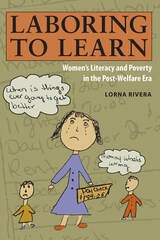
cover of Laboring to Learn: Women's Literacy and Poverty in the Post-Welfare Era

Laboring to Learn

Women's Literacy and Poverty in the Post-Welfare Era

Lorna Rivera

University of Illinois Press, 2007

The American adult education system has become an alternative for school dropouts, with some state welfare policies requiring teen mothers and women without high school diplomas to participate in adult education programs to receive aid. Currently, low-income women of color are more likely to be enrolled in the lowest levels of adult basic education. Very little has been published about women's experiences in these mandatory programs and whether the programs reproduce the conditions that forced women to drop out in the first place.

Lorna Rivera bridges the gap with this important study, the product of ten years' active ethnographic research with formerly homeless women who participated in adult literacy education classes before and after welfare reform. She draws on rich interviews with organizers and participants in the Adult Learners Program at Project Hope, a women's shelter and community development organization in Boston's Dudley neighborhood, one of the poorest in the city.

Analyzing the web of ideological contradictions regarding "work first" welfare reform policies, Rivera argues that poverty is produced and reproduced when women with low literacy skills are pushed into welfare-to-work programs and denied education. She examines how various discourses about individual choice and self-sufficiency shape the purposes of literacy, how low-income women express a sense of personal responsibility for being poor, and how neoliberal ideologies and practices compromise the goals of critical literacy programs. Throughout this study, the voices and experiences of formerly homeless women challenge cultural stereotypes about poor women, showing in personal and structural terms how social and economic forces shape and restrict opportunities for low-income women of color.
[more]
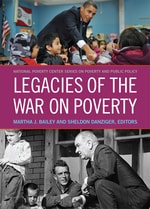
cover of Legacies of the War on Poverty 

Legacies of the War on Poverty 

Martha J. Bailey

Russell Sage Foundation, 2013
Many believe that the War on Poverty, launched by President Johnson in 1964, ended in failure. In 2010, the official poverty rate was 15 percent, almost as high as when the War on Poverty was declared. Historical and contemporary accounts often portray the War on Poverty as a costly experiment that created doubts about the ability of public policies to address complex social problems. Legacies of the War on Poverty, drawing from fifty years of empirical evidence, documents that this popular view is too negative. The volume offers a balanced assessment of the War on Poverty that highlights some remarkable policy successes and promises to shift the national conversation on poverty in America. Featuring contributions from leading poverty researchers, Legacies of the War on Poverty demonstrates that poverty and racial discrimination would likely have been much greater today if the War on Poverty had not been launched. Chloe Gibbs, Jens Ludwig, and Douglas Miller dispel the notion that the Head Start education program does not work. While its impact on children’s test scores fade, the program contributes to participants’ long-term educational achievement and, importantly, their earnings growth later in life. Elizabeth Cascio and Sarah Reber show that Title I legislation reduced the school funding gap between poorer and richer states and prompted Southern school districts to desegregate, increasing educational opportunity for African Americans. The volume also examines the significant consequences of income support, housing, and health care programs. Jane Waldfogel shows that without the era’s expansion of food stamps and other nutrition programs, the child poverty rate in 2010 would have been three percentage points higher. Kathleen McGarry examines the policies that contributed to a great success of the War on Poverty: the rapid decline in elderly poverty, which fell from 35 percent in 1959 to below 10 percent in 2010. Barbara Wolfe concludes that Medicaid and Community Health Centers contributed to large reductions in infant mortality and increased life expectancy. Katherine Swartz finds that Medicare and Medicaid increased access to health care among the elderly and reduced the risk that they could not afford care or that obtaining it would bankrupt them and their families. Legacies of the War on Poverty demonstrates that well-designed government programs can reduce poverty, racial discrimination, and material hardships. This insightful volume refutes pessimism about the effects of social policies and provides new lessons about what more can be done to improve the lives of the poor.
[more]
cover of Life After Welfare: Reform and the Persistence of Poverty

Life After Welfare

Reform and the Persistence of Poverty

By Laura Lein and Deanna T. Schexnayder; with Karen Manges Douglas and Daniel G. Schroeder

University of Texas Press, 2007

A Choice Outstanding Academic Book

In the decade since President Clinton signed the Personal Responsibility and Work Opportunity Reconciliation Act of 1996 into law—amidst promises that it would "end welfare as we know it"—did the reforms ending entitlements and moving toward time limits and work requirements lift Texas families once living on welfare out of poverty, or merely strike their names from the administrative rolls?

Under welfare reform, Texas continued with low monthly payments and demanding eligibility criteria. Many families who could receive welfare in other states do not qualify in Texas, and virtually any part-time job makes a family ineligible. In Texas, most families who leave welfare remain in or near poverty, and many are likely to return to the welfare rolls in the future.

This compelling work, which follows 179 families after leaving welfare, is set against a backdrop of multiple types of data and econometric modeling. The authors' multi-method approach draws on administrative data from nine programs serving low-income families and a statewide survey of families who have left welfare. Survey data on health problems, transportation needs, and child-care issues shed light on the patterns of employment and welfare use seen in the administrative data. In their lives after welfare, the families chronicled here experience poverty even when employed; a multiplicity of barriers to employment that work to exacerbate one another; and a failing safety net of basic human services as they attempt to sustain low-wage employment.
[more]
cover of Life Within Limits: Well-being in a World of Want

Life Within Limits

Well-being in a World of Want

Michael Jackson

Duke University Press, 2011
The sense that well-being remains elusive, transitory, and unevenly distributed is felt by the rich as well as the poor, and in all societies. To explore this condition of existential dissatisfaction, the anthropologist Michael Jackson traveled to Sierra Leone, described in a recent UN report as the “least livable” country in the world. There he revisited the village where he did his first ethnographic fieldwork in 1969–70 and lived in 1979. Jackson writes that Africans have always faced forces from without that imperil their lives and livelihoods. Though these forces have assumed different forms at different times—slave raiding, warfare, epidemic illness, colonial domination, state interference, economic exploitation, and corrupt government—they are subject to the same mix of magical and practical reactions that affluent Westerners deploy against terrorist threats, illegal immigration, market collapse, and economic recession. Both the problem of well-being and the question of what makes life worthwhile are grounded in the mystery of existential discontent—the question as to why human beings, regardless of their external circumstances, are haunted by a sense of insufficiency and loss. While philosophers have often asked the most searching questions regarding the human condition, Jackson suggests that ethnographic method offers one of the most edifying ways of actually exploring those questions.
[more]
cover of Living Faith: Everyday Religion and Mothers in Poverty

Living Faith

Everyday Religion and Mothers in Poverty

Susan Crawford Sullivan

University of Chicago Press, 2012

Scholars have made urban mothers living in poverty a focus of their research for decades. These women’s lives can be difficult as they go about searching for housing and decent jobs and struggling to care for their children while surviving on welfare or working at low-wage service jobs and sometimes facing physical or mental health problems. But until now little attention has been paid to an important force in these women’s lives: religion.
 
Based on in-depth interviews with women and pastors, Susan Crawford Sullivan presents poor mothers’ often overlooked views. Recruited from a variety of social service programs, most of the women do not attend religious services, due to logistical challenges or because they feel stigmatized and unwanted at church. Yet, she discovers, religious faith often plays a strong role in their lives as they contend with and try to make sense of the challenges they face. Supportive religious congregations prove important for women who are involved, she finds, but understanding everyday religion entails exploring beyond formal religious organizations.
 
Offering a sophisticated analysis of how faith both motivates and at times constrains poor mothers’ actions, Living Faith reveals the ways it serves as a lens through which many view and interpret their worlds.
[more]