Results by title
176 books match the query 'Prevention' and 3 start with l

Latina Adolescent Childbearing in East Los Angeles
By Pamela I. Erickson
University of Texas Press, 1998
Preventing teen pregnancy has become a national goal, but a one-size-fits-all strategy for achieving it may never be found. Because varying social and cultural factors lead to pregnancy among different ethnic/class groups, understanding these factors is essential in designing pregnancy prevention programs that work. This book explores the factors that lead to childbearing among Latina adolescents.
Pamela Erickson draws on both quantitative data and case histories to trace the pathways to motherhood for Latina teens. After situating her study within current research on teen pregnancy, she looks specifically at teen mothers enrolled in programs at Women's Hospital in East L.A. She describes the teens' relationships to their babies' fathers and their own families and discusses how these relationships affect whether teen mothers want to become pregnant, their use of prenatal, postpartum, and family planning services, and their ability to prevent a repeat pregnancy. Erickson describes culturally appropriate intervention efforts and assesses the limitations of prevention programs in institutional settings such as schools and clinics.
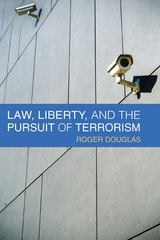
Law, Liberty, and the Pursuit of Terrorism
Roger Douglas
University of Michigan Press, 2014
Roger Douglas compares responses to terrorism by five liberal democracies—the United States, the United Kingdom, Canada, Australia, and New Zealand—over the past 15 years. He examines each nation’s development and implementation of counterterrorism law, specifically in the areas of information-gathering, the definition of terrorist offenses, due process for the accused, detention, and torture and other forms of coercive questioning.
Douglas finds that terrorist attacks elicit pressures for quick responses, often allowing national governments to accrue additional powers. But emergencies are neither a necessary nor a sufficient condition for such laws, which may persist even after fears have eased. He argues that responses are influenced by both institutional interests and prior beliefs, and complicated when the exigencies of office and beliefs point in different directions. He also argues that citizens are wary of government’s impingement on civil liberties and that courts exercise their capacity to restrain the legislative and executive branches. Douglas concludes that the worst antiterror excesses have taken place outside of the law rather than within, and that the legacy of 9/11 includes both laws that expand government powers and judicial decisions that limit those very powers.

Love in the Time of Zika
Environmental Crisis and the Future of ReproductionPaige Marie Patchin
Duke University Press, 2026