Results by title
88 books match the query 'Prisoners' and 3 start with l
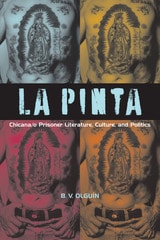
La Pinta
Chicana/o Prisoner Literature, Culture, and PoliticsBy B. V. Olguín
University of Texas Press, 2009
In this groundbreaking study based on archival research about Chicana and Chicano prisoners—known as Pintas and Pintos—as well as fresh interpretations of works by renowned Pinta and Pinto authors and activists, B. V. Olguín provides crucial insights into the central roles that incarceration and the incarcerated have played in the evolution of Chicana/o history, cultural paradigms, and oppositional political praxis.
This is the first text on prisoners in general, and Chicana/o and Latina/o prisoners in particular, that provides a range of case studies from the nineteenth century to the present. Olguín places multiple approaches in dialogue through the pairing of representational figures in the history of Chicana/o incarceration with specific themes and topics. Case studies on the first nineteenth-century Chicana prisoner in San Quentin State Prison, Modesta Avila; renowned late-twentieth-century Chicano poets Raúl Salinas, Ricardo Sánchez, and Jimmy Santiago Baca; lesser-known Chicana pinta and author Judy Lucero; and infamous Chicano drug baron and social bandit Fred Gómez Carrasco are aligned with themes from popular culture such as prisoner tattoo art and handkerchief art, Hollywood Chicana/o gangxploitation and the prisoner film American Me, and prisoner education projects.
Olguín provides a refreshing critical interrogation of Chicana/o subaltern agency, which too often is celebrated as unambiguously resistant and oppositional. As such, this study challenges long-held presumptions about Chicana/o cultures of resistance and proposes important explorations of the complex and contradictory relationship between Chicana/o agency and ideology.

Language, Resistance and Revival
Republican Prisoners and the Irish Language in the North of IrelandFeargal Mac Ionnrachtaigh
Pluto Press, 2013
Language, Resistance and Revival tells the untold story of the truly groundbreaking linguistic and educational developments that took place among Republican prisoners in Long Kesh prison from 1972-2000.
During a period of bitter struggle between Republican prisoners and the British state, the Irish language was taught and spoken as a form of resistance during incarceration. The book unearths this story for the first time and analyses the rejuvenating impact it had on the cultural revival in the nationalist community beyond the prison walls.
Based on unprecedented interviews, Feargal Mac Ionnrachtaigh explores a key period in Irish history through the original and 'insider' accounts of key protagonists in the contemporary Irish language revival.
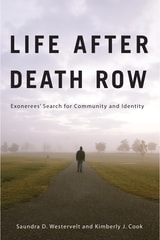
Life after Death Row
Exonerees' Search for Community and IdentitySaundra D. Westervelt and Kimberly J. Cook
Rutgers University Press, 2012
Life after Death Row examines the post-incarceration struggles of individuals who have been wrongly convicted of capital crimes, sentenced to death, and subsequently exonerated.
Saundra D. Westervelt and Kimberly J. Cook present eighteen exonerees’ stories, focusing on three central areas: the invisibility of the innocent after release, the complicity of the justice system in that invisibility, and personal trauma management. Contrary to popular belief, exonerees are not automatically compensated by the state or provided adequate assistance in the transition to post-prison life. With no time and little support, many struggle to find homes, financial security, and community. They have limited or obsolete employment skills and difficulty managing such daily tasks as grocery shopping or banking. They struggle to regain independence, self-sufficiency, and identity.
Drawing upon research on trauma, recovery, coping, and stigma, the authors weave a nuanced fabric of grief, loss, resilience, hope, and meaning to provide the richest account to date of the struggles faced by people striving to reclaim their lives after years of wrongful incarceration.