Results by title
391 books match the query 'Public opinion' and 10 start with l
Latin America in Caricature
By John J. Johnson
University of Texas Press, 1993
“Not many readers will thank the author as he deserves, for he has told us more about ourselves than we perhaps wish to know,” predicted Latin America in Books of Latin America in Caricature—an exploration of more than one hundred years of hemispheric relations through political cartoons collected from leading U.S. periodicals from the 1860s through 1980.
The cartoons are grouped according to recurring themes in diplomacy and complementing visual imagery. Each one is accompanied by a lengthy explanation of the incident portrayed, relating the drawing to public opinion of the day. Johnson’s thoughtful introduction and the comments that precede the individual chapters provide essential background for understanding U.S. attitudes and policies toward Latin America.
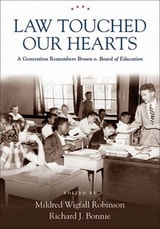
Law Touched Our Hearts
A Generation Remembers Brown v. Board of EducationMildred Wigfall Robinson
Vanderbilt University Press, 2008
What Brown did was to elevate race from the country's dirty secret to its most urgent topic of conversation. This book stands alone in presenting, in one source, stories of black and white Americans, men and women, from all parts of the nation, who were public school students during the years immediately after Brown. All shared an epiphany. Some became aware of race and the burden of racial separation. Others dared to hope that the yoke of racial oppression would at last be lifted.
The editors surveyed 4750 law professors born between 1936 and 1954, received 1000 responses, and derived these forty essays from those willing to write personal accounts of their childhood experiences in the classroom and in their communities. Their moving stories of how Brown affected them say much about race relations then and now. They also provide a picture of how social change can shape the careers of an entire generation in one profession.
Contributors provide accounts from across the nation. Represented are
-de jure states, those segregated by law at the time of Brown, including Alabama, Florida, Georgia, Louisiana, Maryland, Mississippi, North Carolina, South Carolina, Tennessee, Virginia, as well as the District of Columbia
-de facto states, those where segregation was illegal but a common practice, including California, Illinois, Kansas, Massachusetts, Missouri, New Jersey, New York, Ohio, Washington, and Wisconsin.
Learned Patriots
Debating Science, State, and Society in the Nineteenth-Century Ottoman EmpireM. Alper Yalçinkaya
University of Chicago Press, 2015
In Learned Patriots, M. Alper Yalçinkaya examines what it meant for nineteenth-century Ottoman elites themselves to have a debate about science. Yalçinkaya finds that for anxious nineteenth-century Ottoman politicians, intellectuals, and litterateurs, the chief question was not about the meaning, merits, or dangers of science. Rather, what mattered were the qualities of the new “men of science.” Would young, ambitious men with scientific education be loyal to the state? Were they “proper” members of the community? Science, Yalçinkaya shows, became a topic that could hardly be discussed without reference to identity and morality.
Approaching science in culture, Learned Patriots contributes to the growing literature on how science travels, representations and public perception of science, science and religion, and science and morality. Additionally, it will appeal to students of the intellectual history of the Middle East and Turkish politics.
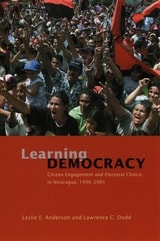
Learning Democracy
Citizen Engagement and Electoral Choice in Nicaragua, 1990-2001Leslie E. Anderson and Lawrence C. Dodd
University of Chicago Press, 2005
By analyzing nationwide surveys conducted during the 1990, 1996, and 2001 Nicaraguan presidential elections, Leslie E. Anderson and Lawrence C. Dodd provide insight into one of the most unexpected and intriguing recent advancements in third world politics. They offer a balanced account of the voting patterns and forward-thinking decisions that led Nicaraguans to first support the reformist Sandinista revolutionaries only to replace them with a conservative democratic regime a few years later. Addressing issues largely unexamined in Latin American studies, Learning Democracy is a unique and probing look at how the country's mass electorate moved beyond revolutionary struggle to establish a more stable democratic government by realizing the vital role of citizens in democratization processes.
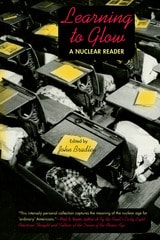
Learning to Glow
A Nuclear ReaderJohn Bradley
University of Arizona Press, 2000
In Learning to Glow, twenty-four essays testify to many of the unsuspected human and environmental costs of atomic science. They show that Americans have paid a terrible price for supposedly "winning" the Cold War--for although the nuclear nightmare may be over, we are still living with nuclear threats every day. Writers such as Scott Russell Sanders, Terry Tempest Williams, and Barbara Kingsolver reveal the psychic and emotional fallout of the Cold War and of subsequent developments in nuclear science. The essays include personal testimonies of what it was like to grow up with family members in nuclear-related jobs; hard-hitting journalism on the health and environmental costs of our nuclear policies and practices; and poignant stories of coming to terms with nuclear power, including contributions by writers who revisit Hiroshima in an attempt to heal the wounds left by the Bomb.
These essays offer an alternative to the official version of nuclear history as told to us by school textbooks, government authorities, and nuclear industry officials. They are stories of and by ordinary people who have suffered the consequences of the decisions made by those in power-stories that have been largely ignored, dismissed, or suppressed. They will challenge readers to re-examine their preconceptions about the way we deal with issues of nuclear arms and radioactive waste because they show that nuclear history does not belong to experts but to us all.
Contributors:
Marilou Awiakta
John Bradley
Jim Carrier
Alison Hawthorne Deming
Mary Dickson
Edward Dougherty
Ray Gonzalez
Karl Grossman
Sonya Huber
Barbara Kingsolver
Valerie Kuletz
Mary Laufer
Kay Mack
Craig McGrath
Bill Mesler
Richard H. Minear
Randy Morris
Mayumi Oda
Catherine Quigg
Richard Rawles
Kenneth Robbins
Scott Russell Sanders
David Seaborg
Terry Tempest Williams
Bill Witherup
Phil Woods
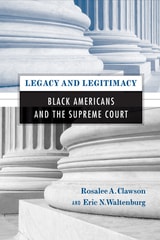
Legacy and Legitimacy
Black Americans and the Supreme CourtRosalee A. Clawson and Eric N. Waltenburg
Temple University Press, 2008
Thoroughly grounded in the latest scholarly literature, theoretical sources, and experimental results, Legacy and Legitimacy substantially advances understanding of Black Americans’ attitudes toward the Supreme Court, the Court’s ability to influence Blacks’ opinions about the legitimacy of public institutions and policies, and the role of media in shaping Blacks’ judgments.
Drawing on legitimacy theory—which explains the acceptance of or tolerance for controversial policies—the authors begin by reexamining the significance of “diffuse support” in establishing legitimacy. They provide a useful overview of the literature on legitimacy and a concise history of the special relationship between Blacks and the Court. They investigate the influences of group attitudes and media “framing.” And they employ data from large-scale surveys to show that Blacks with greater levels of diffuse support for the Court are more likely to adopt positions consistent with Court rulings.
With its broad scope and inclusion of new experimental findings, Legacy and Legitimacy will interest students and scholars of judicial politics, racial politics, media and politics, black studies and public opinion.
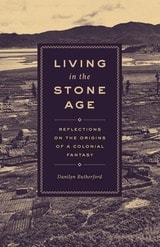
Living in the Stone Age
Reflections on the Origins of a Colonial FantasyDanilyn Rutherford
University of Chicago Press, 2018
Living in the Stone Age answers this question by following the adventures of officials sent to the New Guinea highlands in the 1930s to establish a foothold for Dutch colonialism. These officials became deeply dependent on the good graces of their would-be Papuan subjects, who were their hosts, guides, and, in some cases, friends. Danilyn Rutherford shows how, to preserve their sense of racial superiority, these officials imagined that they were traveling in the Stone Age—a parallel reality where their own impotence was a reasonable response to otherworldly conditions rather than a sign of ignorance or weakness. Thus, Rutherford shows, was born a colonialist ideology.
Living in the Stone Age is a call to write the history of colonialism differently, as a tale of weakness not strength. It will change the way readers think about cultural contact, colonial fantasies of domination, and the role of anthropology in the postcolonial world.
Locating the Proper Authorities
The Interaction of Domestic and International InstitutionsDaniel W. Drezner, Editor
University of Michigan Press, 2002
Looking North
Writings from Spanish America on the US, 1800 to the PresentEdited by John J. Hassett and Braulio Muñoz
University of Arizona Press, 2012
Given recent changes in politics and demographics, Latin America and the United States are becoming increasingly important to one another. Recognition of the two regions' differences and similarities may facilitate a more fruitful relationship, with increased respect and understanding.
It is with this in mind that editors John J. Hassett and Braulio Muñoz present a collection of writings that provides a look into the ways in which Spanish America has viewed its northern neighbor over the past two centuries. Gathered here are pieces by well-known figures from the worlds of Spanish American politics, history, philosophy, creative writing, and culture—names like Mario Vargas Llosa, Gabriel Garcia Marquez and Pablo Neruda.
Divided into three sections, Looking North begins by underscoring the cultural and political differences between the two Americas. It opens with a speech by Simón Bolívar to the Venezuelan Congress in 1819 and closes with an essay by Mario Vargas Llosa from 2006 on the controversial wall being constructed between the United States and Mexico. The second section explores the experiences of Spanish American travelers in the US, beginning with an account of former Argentine president Domingo Sarmiento's fascination with the United States during his travels in 1847 and ending with a 2008 essay by Vargas Llosa on the city of New York. The final section encompasses creative writing and commentaries by some of Spanish America's most gifted poets and novelists. It opens with Rubén Darío's "To Roosevelt" from 1905 and ends with Christine Granados's humorous and profound short story "Inner View," first published in 2006.
Touching on history, sociology, politics, and religion, the writings assembled here will be of interest to humanists, social scientists, and anyone intrigued by the ever-growing connection between the United Sates and Spanish America at all levels.
Lowering the Bar
Lawyer Jokes and Legal CultureMarc Galanter
University of Wisconsin Press, 2006