Results by title
753 books match the query 'Race' and 16 start with l
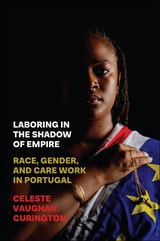
Laboring in the Shadow of Empire
Race, Gender, and Care Work in PortugalCeleste Vaughan Curington
Rutgers University Press, 2024
Winner of the ASA Race, Gender, and Class section's Distinguished Contribution to Scholarship Award
Winner of the ASA Racial and Ethnic Minorities section’s Oliver Cromwell Cox Book Award
Laboring in the Shadow of Empire: Race, Gender, and Care Work in Portugal examines the everyday lives of an African-descendant care service workforce that labors in an ostensibly “anti-racial” Europe and against the backdrop of the Portuguese colonial empire. While much of the literature on global care work has focused on Asian and Latine migrant care workers, there is comparatively less research that explicitly examines African care workers and their migration histories to Europe. Sociologist Celeste Vaughan Curington focuses on Portugal—a European setting with comparatively liberal policies around family settlement and naturalization for migrants. In this setting, rapid urbanization in the late twentieth century, along with a national push to reconcile work and family, has shaped the growth of paid home care and cleaning service industries. Many researchers focus on informal work settings, where immigrant rights are restricted and many workers are undocumented or without permanent residence status. Curington instead examines workers who have accessed citizenship or permanent residence status and also explores African women’s experiences laboring in care and service industries in the formal market, revealing how deeply colonial and intersectional logics of a racialized and international division of reproductive labor in Portugal render these women “hyper-invisible” and “hyper-visible” as “appropriate” workers in Lisbon.
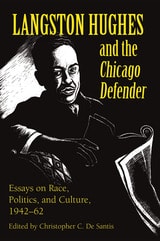
Langston Hughes and the *Chicago Defender*
Essays on Race, Politics, and Culture, 1942-62Langston Hughes. Edited by Christopher C. De Santis
University of Illinois Press, 1995
But it was as a columnist for the famous African-American newspaper the Chicago Defender that Hughes chronicled the hopes and despair of his people. For twenty years, he wrote forcefully about international race relations, Jim Crow, the South, white supremacy, imperialism and fascism, segregation in the armed forces, the Soviet Union and communism, and African-American art and culture. None of the racial hypocrisies of American life escaped his searing, ironic prose.
This is the first collection of Hughes's nonfiction journalistic writings. For readers new to Hughes, it is an excellent introduction; for those familiar with him, it gives new insights into his poems and fiction.
Language and Power Reader
Representations of Race in a "Post-Racist" EraRobert Eddy
Utah State University Press, 2014
A Language and Power Reader organizes reading and writing activities for undergraduate students, guiding them in the exploration of racism and cross-racial rhetorics.
Introducing texts written from and about versions of English often disrespected by mainstream Americans, A Language and Power Reader highlights English dialects and discourses to provoke discussions of racialized relations in contemporary America. Thirty selected readings in a range of genres and from writers who work in ?alternative? voices (e.g., Pidgin, African American Language, discourse of international and transnational English speakers) focus on disparate power relations based on varieties of racism in America and how those relations might be displayed, imposed, or resisted across multiple rhetorics. The book also directs student participation and discourse. Each reading is followed by comments and guides to help focus conversation.
Research has long shown that increasing a student?s metalinguistic awareness improves a student?s writing. No other reader available at this time explores the idea of multiple rhetorics or encourages their use, making A Language and Power Reader a welcome addition to writing classrooms.
Latinas and African American Women at Work
Race, Gender, and Economic InequalityIrene Browne
Russell Sage Foundation, 1999
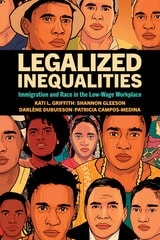
Legalized Inequalities
Immigration and Race in the Low-wage WorkplaceKati L. Griffith
Russell Sage Foundation, 2025
Drawing on interviews with over three hundred low-wage Haitian and Central American workers and worker advocates, Griffith, Gleeson, Dubuisson, and Campos-Medina reveal how U.S. policies produce and sustain job instability and insecurity. Together, contemporary U.S. labor and employment law, immigration policy, and enduring racial inequality work in tandem to keep workers’ wages low, lock them into substandard working conditions, and minimize opportunities to push for change. Workplace regulations meant to protect workers are weak and underenforced, privileging employers over workers. At-will employment policies, which allow employers to terminate employees without cause, discourage workers from bargaining for better jobs or holding employers accountable for even the most egregious mistreatment. Federal immigration policy further disempowers workers by deputizing employers to act as immigration enforcement agents through immigration status verification requirements. Undocumented workers often believe they must endure maltreatment or risk deportation. Anti-immigrant sentiment—encouraged by U.S. policy—impacts workers across all status groups. Additionally, despite a proliferation of civil rights legislation, racial disparities remain in the workplace. Workers of color are often paid less, forced to complete more dangerous and demeaning tasks, and subjected to racial harassment.
While these workers face formidable barriers to fighting for their rights, they are not entirely powerless. Some low-wage workers filed formal complaints with government agencies. Others, on their own or collectively, confronted their employers to demand fair and dignified treatment. Some even quit in protest of their poor working conditions. The authors argue that reforming labor and employment law, immigration law, and Civil Rights law is necessary to reshape the low-wage workplace. They suggest increasing funding for workers’ rights enforcement agencies, removing the mandate for employers to verify a worker’s immigration status, and making it easier to prove that employment discrimination has occurred, among other policy proposals, to help empower and protect low-wage immigrant workers of color.
Legalized Inequalities not only highlights the crushing consequences of U.S. policy on low-wage immigrant workers of color but showcases their resilience in the face of these obstacles.
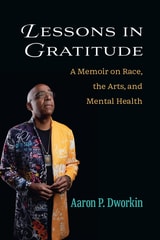
Lessons in Gratitude
A Memoir on Race, the Arts, and Mental HealthAaron P. Dworkin
University of Michigan Press, 2024
Aaron’s unique journey, which begins with his adoption by a white Jewish couple from Chicago at two weeks of age, leads him to the ultimate reunification with his birth family at the age of 31. Lessons of Gratitude is a coming of age story that examines the difficulties of biracial identity across generations and the challenges that mixed race families still face today. It is also a painful and honest adoption memoir, further complicating the narrator’s experiences of racial identity throughout his life and shaping his experiences with his own children. Through his work in the arts and the impact of this work, Dworkin has been able to “pay forward” the first thing that offered him unconditional love—music.
Lessons in Gratitude
A Memoir on Race, the Arts, and Mental HealthAaron P. Dworkin
University of Michigan Press, 2024
Aaron’s unique journey, which begins with his adoption by a white Jewish couple from Chicago at two weeks of age, leads him to the ultimate reunification with his birth family at the age of 31. Lessons in Gratitude is a coming of age story that examines the difficulties of biracial identity across generations and the challenges that mixed race families still face today. It is also a painful and honest adoption memoir, further complicating the narrator’s experiences of racial identity throughout his life and shaping his experiences with his own children. Through his work in the arts and the impact of this work, Dworkin has been able to “pay forward” the first thing that offered him unconditional love—music.

Liberalism in the Jungle
Race, Rubber, and the State in the Ecuadorian AmazonMatthew Ford
University of Texas Press, 0
The untold story of how liberal reform, Indigenous resistance, and the rubber trade transformed Ecuador’s Amazon.
Ecuador’s 1895 Liberal Revolution was a turning point for the nation. Along with crippling the power of the Catholic Church, the new Liberal government expanded the ranks of political participation, spearheaded projects to soften endemic regionalism, integrated the national economy into global markets through an export-oriented economic strategy, and launched a program of “Indian Redemption” aimed at “civilizing” what elites deemed as the “backward” Indigenous masses. The cacao economy was essential to the Liberal state reform, as it facilitated infrastructure modernizatoin and the ability to provide unprecedented public goods and services.
East of the Andes, the Liberal state launched the first attempt to incorporate the Amazonian frontier (the “Oriente”) and expand state power into the region. But, as Matthew Ford shows, a very different global commodity was transforming the Oriente. Unlike most economic booms, the global demand for rubber debilitated state efforts in the region. Liberalism in the Jungle traces how local, national, and global forces shaped the contours of Liberal efforts in the Amazon. By the end, readers will understand how the region transformed from an isolated outpost to the heart of the national economy and home to one of the world’s most powerful social movements.
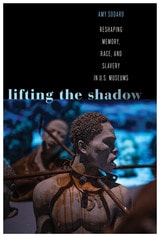
Lifting the Shadow
Reshaping Memory, Race, and Slavery in U.S. MuseumsAmy Sodaro
Rutgers University Press, 2025
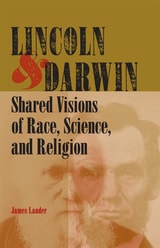
Lincoln and Darwin
Shared Visions of Race, Science, and ReligionJames Lander
Southern Illinois University Press, 2010
Born on the same day in 1809, Abraham Lincoln and Charles Darwin were true contemporaries. Though shaped by vastly different environments, they had remarkably similar values, purposes, and approaches. In this exciting new study, James Lander places these two iconic men side by side and reveals the parallel views they shared of man and God.
While Lincoln is renowned for his oratorical prowess and for the Emancipation Proclamation, as well as many other accomplishments, his scientific and technological interests are not widely recognized; for example, many Americans do not know that Lincoln is the only U.S. president to obtain a patent. Darwin, on the other hand, is celebrated for his scientific achievements but not for his passionate commitment to the abolition of slavery, which in part drove his research in evolution. Both men took great pains to avoid causing unnecessary offense despite having abandoned traditional Christianity. Each had one main adversary who endorsed scientific racism: Lincoln had Stephen A. Douglas, and Darwin had Louis Agassiz.
With graceful and sophisticated writing, Lander expands on these commonalities and uncovers more shared connections to people, politics, and events. He traces how these two intellectual giants came to hold remarkably similar perspectives on the evils of racism, the value of science, and the uncertainties of conventional religion.
Separated by an ocean but joined in their ideas, Lincoln and Darwin acted as trailblazers, leading their societies toward greater freedom of thought and a greater acceptance of human equality. This fascinating biographical examination brings the mid-nineteenth-century discourse about race, science, and humanitarian sensibility to the forefront using the mutual interests and pursuits of these two historic figures.
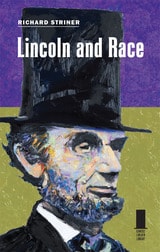
Lincoln and Race
Richard Striner
Southern Illinois University Press, 2012
Named on the 2013 list of University Press Books for Public and Secondary Schools
Abraham Lincoln is known as the Great Emancipator, yet his personal views on race have long been debated. Since his death, his legend has been shadowed by the mystery of his true stance toward non-whites. While Lincoln took many actions to fight slavery throughout his political career, his famously crafted speeches can be interpreted in different ways: at times his words suggest personal bigotry, but at other times he sounds like an enemy of racists. In Lincoln and Race, Richard Striner takes on one of the most sensitive subjects of Abraham Lincoln’s legacy, exploring in depth Lincoln’s mixed record and writings on the issue of race.
Striner gives fair hearing to two prevailing theories about Lincoln’s seemingly contradictory words and actions: Did Lincoln fight a long-term struggle to overcome his personal racism? Or were his racist comments a calculated act of political deception? Beginning with an exploration of the historical context of Lincoln’s attitudes toward race in the years before his presidency, Striner details the ambiguity surrounding the politician’s participation in the Free Soil Movement and his fight to keep slavery from expanding into the West. He explores Lincoln’s espousal of colonization—the controversial idea that freed slaves should be resettled in a foreign land—as a voluntary measure for black people who found the prospect attractive. The author analyzes some of Lincoln’s most racially charged speeches and details Lincoln’s presidential words and policies on race and the hotbed issue of voting rights for African Americans during the last years of the president’s life.
A brief but comprehensive look into one of the most contentious quandaries about Abraham Lincoln, Lincoln and Race invites readers to delve into the mind, heart, and motives of one of America’s most fascinating and complex leaders.
University Press Books for Public and Secondary Schools 2013 edition
Living Color
Race and Television in the United StatesSasha Torres, ed.
Duke University Press, 1998
Ranging across television genres, historical periods, and racial formations, Living Color—as it positions race as a key element of television’s cultural influence—moves the discussion out of a black-and-white binary and illustrates how class, gender, and sexuality interact with images of race. In addition to essays on representations of "Oriental" performers and African Americans in the early years of television, this collection also examines how the celebrity of the late MTV star Pedro Zamora countered racist and homophobic discourses; reveals how news coverage on drug use shifted from the white middle-class cocaine user in the early 1980s to the black "crack mother" of the 1990s; and takes on TV coverage of the Rodney King beating and the subsequent unrest in Los Angeles. Other essays consider O.J. Simpson’s murder trial, comparing television’s treatment of Simpson to that of Michael Jackson, Magic Johnson, Michael Jordan, and Clarence Thomas and look at the racism directed at Asian Americans by the recurring "Dancing Itos" on Jay Leno’s Tonight Show.
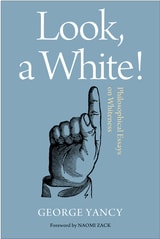
Look, A White!
Philosophical Essays on WhitenessGeorge Yancy
Temple University Press, 2012
Look, a White! returns the problem of whiteness to white people. Prompted by Eric Holder's charge, that as Americans, we are cowards when it comes to discussing the issue of race, noted philosopher George Yancy's essays map out a structure of whiteness.
He considers whiteness within the context of racial embodiment, film, pedagogy, colonialism, its "danger," and its position within the work of specific writers. Identifying the embedded and opaque ways white power and privilege operate, Yancy argues that the Black countergaze can function as a "gift" to whites in terms of seeing their own whiteness more effectively.
Throughout Look, a White! Yancy pays special attention to the impact of whiteness on individuals, as well as on how the structures of whiteness limit the capacity of social actors to completely untangle the way whiteness operates, thus preventing the erasure of racism in social life.
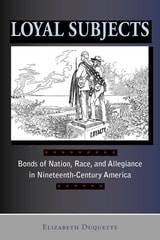
Loyal Subjects
Bonds of Nation, Race, and Allegiance in Nineteenth-Century AmericaDuquette, Elizabeth
Rutgers University Press, 2010
Loyal Subjects considers how the Civil War complicated the cultural value of emotion, especially the ideal of sympathy. Through an analysis of literary works written during and after the conflict-from Nathaniel Hawthorne's "Chiefly About War Matters" through Henry James's The Bostonians and Charles Chestnutt's "The Wife of His Youth," to the Pledge of Allegiance and W.E.B. Du Bois's John Brown, among many others-Duquette reveals that although American literary criticism has tended to dismiss the Civil War's impact, postwar literature was profoundly shaped by loyalty.
Lying up a Nation
Race and Black MusicRonald M. Radano
University of Chicago Press, 2003
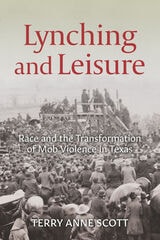
Lynching and Leisure
Race and the Transformation of Mob Violence in TexasTerry Anne Scott
University of Arkansas Press, 2022
Winner, 2022 Ottis Lock Endowment “Best Book” Award from the East Texas Historical Association
In Lynching and Leisure, Terry Anne Scott examines how white Texans transformed lynching from a largely clandestine strategy of extralegal punishment into a form of racialized recreation in which crowd involvement was integral to the mode and methods of the violence. Scott powerfully documents how lynchings came to function not only as tools for debasing the status of Black people but also as highly anticipated occasions for entertainment, making memories with friends and neighbors, and reifying whiteness. In focusing on the sense of pleasure and normality that prevailed among the white spectatorship, this comprehensive study of Texas lynchings sheds new light on the practice understood as one of the chief strategies of racial domination in the nineteenth- and twentieth-century South.