Results by title
237 books match the query 'Race & Ethnic Relations' and 6 start with l
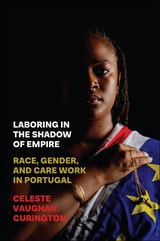
Laboring in the Shadow of Empire
Race, Gender, and Care Work in PortugalCeleste Vaughan Curington
Rutgers University Press, 2024
Winner of the ASA Race, Gender, and Class section's Distinguished Contribution to Scholarship Award
Winner of the ASA Racial and Ethnic Minorities section’s Oliver Cromwell Cox Book Award
Laboring in the Shadow of Empire: Race, Gender, and Care Work in Portugal examines the everyday lives of an African-descendant care service workforce that labors in an ostensibly “anti-racial” Europe and against the backdrop of the Portuguese colonial empire. While much of the literature on global care work has focused on Asian and Latine migrant care workers, there is comparatively less research that explicitly examines African care workers and their migration histories to Europe. Sociologist Celeste Vaughan Curington focuses on Portugal—a European setting with comparatively liberal policies around family settlement and naturalization for migrants. In this setting, rapid urbanization in the late twentieth century, along with a national push to reconcile work and family, has shaped the growth of paid home care and cleaning service industries. Many researchers focus on informal work settings, where immigrant rights are restricted and many workers are undocumented or without permanent residence status. Curington instead examines workers who have accessed citizenship or permanent residence status and also explores African women’s experiences laboring in care and service industries in the formal market, revealing how deeply colonial and intersectional logics of a racialized and international division of reproductive labor in Portugal render these women “hyper-invisible” and “hyper-visible” as “appropriate” workers in Lisbon.
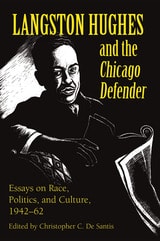
Langston Hughes and the *Chicago Defender*
Essays on Race, Politics, and Culture, 1942-62Langston Hughes. Edited by Christopher C. De Santis
University of Illinois Press, 1995
But it was as a columnist for the famous African-American newspaper the Chicago Defender that Hughes chronicled the hopes and despair of his people. For twenty years, he wrote forcefully about international race relations, Jim Crow, the South, white supremacy, imperialism and fascism, segregation in the armed forces, the Soviet Union and communism, and African-American art and culture. None of the racial hypocrisies of American life escaped his searing, ironic prose.
This is the first collection of Hughes's nonfiction journalistic writings. For readers new to Hughes, it is an excellent introduction; for those familiar with him, it gives new insights into his poems and fiction.
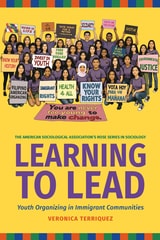
Learning to Lead
Grassroots Organizing in Immigrant CommunitiesVeronica Terriquez
Russell Sage Foundation, 2026
Children of immigrants make up more than one in four people in the United States under the age of thirty. Amid today’s multipronged attacks on immigrant communities and growing threats to democratic participation, these young people often encounter significant barriers to political participation. Despite these challenges, some children of immigrants and refugees engage in nonpartisan grassroots campaigns, addressing issues such as education, health, environmental justice, immigrant rights, housing, and voting rights. In Learning to Lead, sociologist Veronica Terriquez examines how youth organizing groups facilitate the civic and political engagement of low-income, second-generation immigrant adolescents, enabling them to collectively exercise power alongside their non-immigrant peers and adult allies.
Drawing on extensive survey, semi-structured interview, and other data, Terriquez shows that nonprofit youth organizing groups strengthen adolescents’ capacity to address the systemic challenges facing their communities through political engagement. Although these groups vary in the quality of their programming, they generally share a commitment to supporting young people’s healthy development, offer a critical form of civics education, and provide extensive guidance on how to participate in civic life. These groups adapt their programming in response to local demographic and political dynamics.
Many adolescents who join grassroots organizing groups face overlapping stresses related to poverty, immigration status, neighborhood violence, and other hardships. In response, youth organizing groups create spaces that support emotional well-being while also encouraging academic success and job-readiness. At the same time, they help young people develop a critical understanding of social inequality, power, and public policy. Through ethnic studies workshops and other activities, youth explore their own identities and learn about the histories and struggles of diverse communities.
This education often motivates second-generation immigrant and refugee youth to work in solidarity with their non-immigrant Black and Indigenous peers and deepens their understanding of the historical, economic, and political roots of community problems, as well as potential policy solutions. Unlike many youth-focused interventions, organizing groups also provide sustained, hands-on training in how to collectively exercise their voice in policy debates and government elections, effectively functioning as civic apprenticeships. Staff and experienced members mentor newer participants in basic civic skills such as public speaking, event planning, and community outreach, while also coaching them on strategies for mobilize peers and adult allies to contribute to nonpartisan campaigns.
Because of these intensive and formative experiences, adolescents who participate in youth organizing during high school tend to remain highly active in civic life into early adulthood. Terriquez concludes that these groups offer important lessons for schools and other youth-serving institutions seeking to strengthen engagement in a multiracial democracy.
Learning to Lead offers a thorough examination of the role of how young people acquire the capacities to become a meaningful political force.
Legacies of Slavery
Shared History and Family Conversations with Myra Davis-Branic, Frye Gaillard, and Kern JacksonEdited by Frye Gaillard
University of Alabama Press, 2026
Documents conversations between two southern writers and friends whose families were intertwined in slavery
Legacies of Slavery commemorates a story of racial reconciliation in the South. Writers, educators, and friends Frye Gaillard and Myra Davis-Branic discovered a shared family history of slavery in Eutawville, South Carolina, where Davis-Branic’s family was enslaved by Gaillard’s family.
In 2024, the University of South Alabama’s Kern Jackson moderated three conversations with Davis-Branic and Gaillard in Mobile. These conversations are presented here in an edited format. Davis-Branic and Gaillard discussed their intertwined family history and what they each learned from research into their ancestors. They relay origin stories and the role of a key grandparent who greatly impacted their lives. They also talk about their own trajectories in a historical context, the issue of slavery in their families, and the legacy of slavery for their children and families.
The book concludes with short excerpts, one from Davis-Branic’s book Cornbread My Soul: The Davis Family of Eutawville, South Carolina, and one from Gaillard’s family history, Lessons from the Big House: One Family’s Passage Through the History of the South, a Memoir. Legacies of Slavery stands as a powerful and unique documentation for all who are interested in how two southern families, bound by slavery in the past and now by friendship and a degree of understanding, have found some measure of redemption.
Let’s Talk About Race in Storytimes
Jessica Anne Bratt
American Library Association, 2021
Foreword by Kirby McCurtis
With the help of this book’s adaptable storytime activities, tools for self-reflection, and discussion starters, children’s librarians will learn how to put anti-racism work into their professional practice while fostering an environment that celebrates all identities.As the weekly lists of best-sellers demonstrate, many people want to engage with racial issues. But when it comes to talking about race, they often don’t know how or are hesitant to take the first steps. This includes children's librarians, who are taking seriously our profession’s calls for diversity, equity, and inclusion. They already know that popular storytimes can be an effective way to increase community representation and belonging at the library. Incorporating race into storytimes is an ideal way to foster inclusion by normalizing conversations about these issues. This book will help public and school librarians face their own biases, showing them how to have honest discussions with children, their caregivers, and storytime attendees, as well as their colleagues. In this book, you will discover
- several ready-to-use library storytimes that incorporate racial themes, complete with sample activities and booklists;
- an anti-oppression framework, based on the author’s own real-world practice, that is customizable for different settings and situations;
- concrete suggestions for overcoming fears and awkwardness when it comes to talking about race, with advice on practicing new language, making space to connect around appropriate cultural books for read alouds, and evaluating books for storytime;
- interactive self-reflecting worksheets which explore planning picture book introductions and songs for inclusive storytimes, providing age-appropriate glimpses into history, and suggested affirmations in describing skin tone, hair, and language;
- advocacy talking points centered on social justice that will encourage discussion with co-workers and other library staff; and
- guidance on community engagement, relationship building, and intentionally trying to diversify your world in order to truly become an anti-bias practitioner.
Liberal Democracy and the Limits of Tolerance
Essays in Honor and Memory of Yitzhak RabinRaphael Cohen-Almagor, Editor
University of Michigan Press, 2000