Results by title
4743 books match the query 'Religion' and 136 start with l
L'chol Z'man v'Eit- PDF Electronic Version
For Sacred Moments: The CCAR Life-Cycle GuideRabbi Don Goor
Central Conference of American Rabbis, 2015
L'chol Z'man v'Eit
For Sacred Moments 2021 Supplement: The CCAR Life-Cycle GuideDonald Goor
Central Conference of American Rabbis, 2021
This supplement to the CCAR clergy manual contains a wealth of prayers, readings, rituals, and ceremonies, expanding the original to encompass many new situations. Designed for the current moment, its prayers and blessings respond to the evolving role of Reform clergy and the changing life experiences of our congregants. Among these liturgical responses are blessings for moving, starting school, and taking a new name; prayers to support community members dealing with infertility, premature birth, abortion, addiction, eating disorders, assault, and suicide; and an extensive collection of readings to guide communities through times of challenge and pain such as natural disasters, shootings, and antisemitic incidents. The loose-leaf-print and digital formats enable clergy to customize the manual with the resources they find most useful.
L'chol Z'man v'Eit
For Sacred Moments Book + 2021 Supplement: The CCAR Life-Cycle GuideRabbi Donald Goor and Rabbi April Davis
Central Conference of American Rabbis, 2021
This is a PDF version of the manual. You will receive a link to download a PDF that directly integrates the supplement material and the material found in the original manual.
Now with a new supplement, the CCAR clergy manual contains a wealth of prayers, readings, rituals, and ceremonies, expanding the original to encompass many new situations. Designed for the current moment, its prayers and blessings respond to the evolving role of Reform clergy and the changing life experiences of our congregants. Among these liturgical responses are blessings for moving, starting school, and taking a new name; prayers to support community members dealing with infertility, premature birth, abortion, addiction, eating disorders, assault, and suicide; and an extensive collection of readings to guide communities through times of challenge and pain such as natural disasters, shootings, and antisemitic incidents.
L'influence de l'arameen sur les traducteurs de la LXX principalement sur les traducteurs grecs poste
Anne-Françoise Loiseau
SBL Press, 2016
Further your understanding of the methods and peculiarities of the ancient Greek translators and revisers of the Hebrew Bible
Loiseau presents examples of Greek translations of verses from the Hebrew Bible that clearly illustrate the influence of Aramaic or Late Hebrew on the semantics of the Septuagint translators. The author postulates that the Greek translators based their translations on Hebrew-Aramaic equivalents maintained as lists or even on proto-targumim such as those found at Qumran, both predecessors of the later Aramaic targumic translations. Loiseau's examples provide convincing explanations for different coincidences occurring between the Greek translations and the interpretative traditions found in the targumim and help elucidate a number of puzzling translations where two Aramaic words that are very similar graphically or phonetically were erroneously interchanged.
Features
- Unique insight into ancient Jewish exegesis
- English summary
- The first extensive illustration of the influence of the Aramaic or Late Hebrew on the Septuagint
L. Annaeus Cornutus
Greek Theology, Fragments, and TestimoniaGeorge Boys-Stones
SBL Press, 2018
The first English translation of Greek Theology
The first-century CE North African philosopher Cornutus lived in Rome as a philosopher and is best known today for his surviving work Greek Theology, which explores the origins and names of the Greek gods. However, he was also interested in the language and literature of the poets Persius and Lucan and wrote one of the first commentaries on Virgil. This book collects and translates all of our evidence for Cornutus for the first time and includes the first published English translation of Greek Theology. This collection offers entirely fresh insight into the intellectual world of the first century.
Features
- Translation based on the latest critical text
- The first truly holistic picture of Cornutus’s intellectual profile
- A new account of the early debate over Aristotle’s Categories and the Stoic contribution to it
LXX Isaiah 24
1-26:6 as Interpretation and Translation: A Methodological DiscussionWilson de Angelo Cunha
SBL Press, 2014
Explore how interpretation affects translation
In this volume Cunha argues that the differences found between the Septuagint text of Isaiah and the Hebrew of the Masoretic Text must be weighed against the literary context in which they are found. The author demonstrates that LXX Isa 24:1–26:6 can be seen as a coherent ideological composition that differs greatly from the way scholars have interpreted MT Isa 24:1–26:6. This coherence comes across through the use of certain lexemes and conjunctions throughout the passage. The book lays the case that a scribe or translator already had an interpretation before he started the process of translation that shaped his translation of the Hebrew text into Greek.
Features:
- An introduction sketching the history of research on LXX Isa 24:1–26:6
- A focused comparision of the Masoretic Text to the Septuagint
- A thorough discussion of the coherence of LXX Isa 24:1–26:6
La Violencia and the Hebrew Bible
The Politics and Histories of Biblical Hermeneutics on the AmericaSusanne Scholz
SBL Press, 2016
Exegetically noteworthy and culturally-theologically relevant
Violence in its wide range of horrifying expressions is real in people’s lives, and biblical interpreters must take violence in the world seriously to arrive at relevant ideas about the place of the Bible in the world. Each essay addresses people’s experiences of violence in the study of the Bible through the context of la violencia, the Spanish noun referring to the brutal, repressive, and murderous policies of state-sponsored violence practiced in many South and Central American and Caribbean countries during the twentieth century that external powers such as the USA often endorsed and fostered. The volume represents an important contribution to biblical studies and to the field of Latina/o studies. The contributors are Cheryl B. Anderson, Pablo Andiñach, Nancy Bedford, Lee Cuéllar, Steed V. Davidson, Serge Frolov, Renata Furst, Julia M. O’Brien, Todd Penner, José Enrique Ramírez, Ivoni Richter Reimer, and Susanne Scholz.
Features:
- Twelve essays by scholars living and working on the American continent
- Articles reveal the complex historical, political, and cultural conditions on the American continent that have contributed to our understanding of violence in the Bible
- Focus on themes of racial, social, and cultural violence
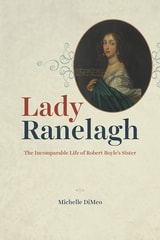
Lady Ranelagh
The Incomparable Life of Robert Boyle's SisterMichelle DiMeo
University of Chicago Press, 2021
Philosophers, mathematicians, politicians, and religious authorities sought her opinion on everything from decimalizing the currency to producing Hebrew grammars. She practiced medicine alongside distinguished male physicians, treating some of the most elite patients in London. Her medical recipes, political commentaries, and testimony concerning the philosophers’ stone gained international circulation. She was an important influence on Boyle and a formidable thinker in her own right.
Drawing from a wealth of new archival sources, Michelle DiMeo fills out Lady Ranelagh’s legacy in the context of a historically sensitive and nuanced interpretation of gender, science, and religion. The book re-creates the intellectual life of one of the most respected and influential women in seventeenth-century Europe, revealing how she managed to gain the admiration of diverse contemporaries, effect social change, and shape contemporary science.
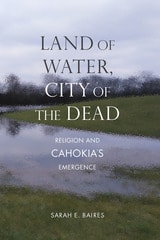
Land of Water, City of the Dead
Religion and Cahokia's EmergenceSarah E. Baires
University of Alabama Press, 2017
Explores the embodiment of religion in the Cahokia land and how places create, make meaningful, and transform practices and beliefs
Cahokia, the largest city of the Mississippian mound cultures, lies outside present-day East St. Louis. Land of Water, City of the Dead reconceptualizes Cahokia’s emergence and expansion (ca. 1050–1200), focusing on understanding a newly imagined religion and complexity through a non-Western lens. Sarah E. Baires argues that this system of beliefs was a dynamic, lived component, based on a broader ontology, with roots in other mound societies. This religion was realized through novel mortuary practices and burial mounds as well as through the careful planning and development of this early city’s urban landscape.
Baires analyzes the organization and alignment of the precinct of downtown Cahokia with a specific focus on the newly discovered and excavated Rattlesnake Causeway and the ridge-top mortuary mounds located along the site axes. Land of Water, City of the Dead also presents new data from the 1954 excavations of the ridge-top mortuary Wilson Mound and a complete analysis of the associated human remains. Through this skeletal analysis, Baires discusses the ways that Cahokians processed and buried their ancestors, identifying unique mortuary practices that include the intentional dismemberment of human bodies and burial with marine shell beads and other materials.
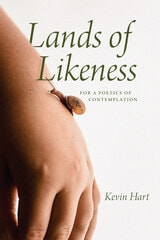
Lands of Likeness
For a Poetics of ContemplationKevin Hart
University of Chicago Press, 2023
In Lands of Likeness, Kevin Hart develops a new hermeneutics of contemplation through a meditation on Christian thought and secular philosophy. Drawing on Kant, Schopenhauer, Coleridge, and Husserl, Hart first charts the emergence of contemplation in and beyond the Romantic era. Next, Hart shows this hermeneutic at work in poetry by Gerard Manley Hopkins, Marianne Moore, Wallace Stevens, and others. Delivered in its original form as the prestigious Gifford Lectures, Lands of Likeness is a revelatory meditation on contemplation for the modern world.
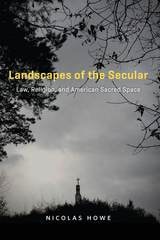
Landscapes of the Secular
Law, Religion, and American Sacred SpaceNicolas Howe
University of Chicago Press, 2016
Fusing geography, legal scholarship, and religion in a potent analysis, Howe shows how seemingly routine questions about how to look at a sunrise or a plateau or how to assess what a mountain is both physically and ideologically, lead to complex arguments about the nature of religious experience and its implications for our lives as citizens. In American society—nominally secular but committed to permitting a diversity of religious beliefs and expressions—such questions become all the more fraught and can lead to difficult, often unsatisfying compromises regarding how to interpret and inhabit our public lands and spaces. A serious commitment to secularism, Howe shows, forces us to confront the profound challenges of true religious diversity in ways that often will have their ultimate expression in our built environment. This provocative exploration of some of the fundamental aspects of American life will help us see the land, law, and society anew.
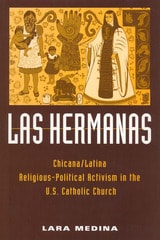
Las Hermanas
Chicana/Latina Religious-Political Activism in the U. S. Catholic ChurchLara Medina
Temple University Press, 2005
Last Works
Moses Mendelssohn. Translated by Bruce Rosenstock
University of Illinois Press, 2012
Latino/a Biblical Hermeneutics
Problematics, Objectives, StrategiesFrancisco Lozada Jr.
SBL Press, 2014
Engage essays that are profoundly theological and resolutely social
In this collection of essays, contributors seek to analyze the vision of the critical task espoused by Latino/a critics. The project explores how such critics approach their vocation as critics in the light of their identity as members of the Latino/a experience and reality. A variety of critics—representing a broad spectrum of the Latino/a American formation, along various axes of identity—address the question in whatever way they deem appropriate: What does it mean to be a Latino/a critic?
Features:
- Essays from sixteen scholars
- Articles bring together the fields of biblical studies and racial-ethnic studies
- Conclusion addresses directions for future research
Latter-day Eloquence
Two Centuries of Mormon OratoryEdited by Richard Benjamin Crosby and Isaac James Richards
University of Illinois Press, 2026
Essential and one-of-a-kind, Latter-day Eloquence provides a foundational reference for the study of Latter-day Saint rhetoric and oratory.
Latter-day Lore
Mormon Folklore StudiesEric A. Eliason
University of Utah Press, 2013
Latter-day Saint Perspectives on Atonement
Edited by Deidre Nicole Green and Eric D. Huntsman
University of Illinois Press, 2024
The Church of Jesus Christ of Latter-day Saints and other Christians have always shared a fundamental belief in the connection between personal salvation and the suffering, death, and resurrection of Jesus Christ. While having faith in and experiencing the atonement of Christ remains a core tenet for Latter-day Saints, some thinkers have in recent decades reconsidered traditional understandings of atonement.
Deidre Nicole Green and Eric D. Huntsman edit a collection that brings together multiple and diverse approaches to thinking about Latter-day Saint views on this foundational area of theology. The essayists draw on and go beyond a wide range of perspectives, classical atonement theories, and contemporary reformulations of atonement theory. The first section focuses on scriptural and historical foundations while the second concentrates on theological explorations. Together, the contributors evaluate what is efficacious and ethical in the Latter-day Saint outlook and offer ways to reconceive those views to provide a robust theological response to contemporary criticisms about atonement.
Contributors: Nicholas J. Frederick, Fiona Givens, Deidre Nicole Green, Sharon J. Harris, J.B. Haws, Eric D. Huntsman, Benjamin Keogh, Ariel Bybee Laughton, Adam S. Miller, Jenny Reeder, T. Benjamin Spackman, and Joseph M. Spencer
Latter-day Screens
Gender, Sexuality, and Mediated MormonismBrenda R. Weber
Duke University Press, 2019
Laughing at the Devil
Seeing the World with Julian of NorwichAmy Laura Hall
Duke University Press, 2018
Laughter at the Foot of the Cross
Michael A. Screech
University of Chicago Press, 2015
But we are fortunate in our guide: drawing on his immense knowledge of the classics and of humanists like Erasmus and Rabelais—who used Plato and Aristotle to interpret the Gospels—and incorporating the thoughts of Aesop, Calvin, Lucian of Samosata, Luther, Socrates, and others, Screech shows that Renaissance thinkers revived ancient ideas about what inspires laughter and whether it could ever truly be innocent. As Screech argues, in the minds of Renaissance scholars, laughter was to be taken very seriously. Indeed, in an era obsessed with heresy and reform, this most human of abilities was no laughing matter.
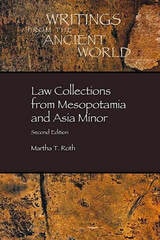
Law Collections from Mesopotamia and Asia Minor
Martha T. Roth
SBL Press, 1997

Law and Liberty
Jesus, Paul, and the Newness of ChristianityRomano Penna
Catholic University of America Press, 2026
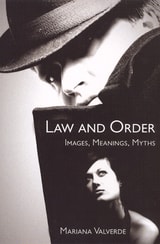
Law and Order
Images, Meanings, MythsValverde, Mariana
Rutgers University Press, 2006
But with television courtrooms appearing more like the studio of The Jerry Springer Show than institutions of justice, and with weekly dramas seamlessly blending cutting-edge forensic science with exaggerated fictions, it calls to question: just what is it about these shows that has the public so captivated? And, what effects do the images of crime and order presented through the media have on society's view of the actual legal and criminal justice systems?
In Law and Order: Images, Meanings, Myths, Mariana Valverde draws on examples from film, television, and newspapers to examine these questions and to demonstrate how popular culture is creating an unrealistic view of crime and crime control. Valverde argues that understanding the impact of media representations of courtrooms, police departments, prisons, and the people who populate them is essential to comprehending the reality of criminal justice.
Introducing a wealth of resources in social and cultural studies along with suggestions for classroom discussions and assignments, this book pushes the field of criminology in new and exciting theoretical directions. It is essential reading for students and scholars of criminal justice and law.
Law and Religion in a Secular Age
Rafael Domingo
Catholic University of America Press, 2023
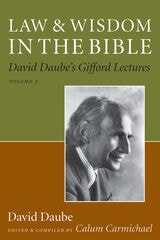
Law and Wisdom in the Bible
David Daube's Gifford Lectures, Volume IIDavid Daube
Templeton Press, 2010
"That over forty years after they were delivered these famous but unavailable Gifford Lectures should be published is occasion for celebration. Once again we hear Daube’s voice, patient and probing, as he turns over, tests, pushes fresh inquiries, and finds new insights. No man has had such a subtle sense of scriptural texts matched by such a supple sense of the practices and peculiarities of human beings engaged in the legal process. Law and Wisdom in the Bible is classic Daube." mdash;John T. Noonan Jr., United States Circuit Judge
David Daube (1909–99) was known for his unique and sophisticated research on Roman law, biblical law, Jewish Law, and medical ethics. In Law and Wisdom in the Bible, the first published collection of his 1964 Gifford Lectures, Daube derives from his complex understanding of biblical texts both ancient and contemporary notions about wisdom, justice, and education.
In addressing these and other profound issues, Daube crosses traditional disciplinary boundaries and bridges the
gap between humanism and religion, especially with regard to Christianity and Judaism. With his sophisticated understanding of Talmudic law and literature, his thinking, which is on full display in these lectures, revolutionized prevailing perceptions about the New Testament.
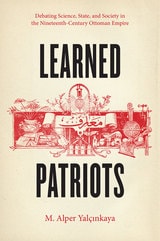
Learned Patriots
Debating Science, State, and Society in the Nineteenth-Century Ottoman EmpireM. Alper Yalçinkaya
University of Chicago Press, 2015
In Learned Patriots, M. Alper Yalçinkaya examines what it meant for nineteenth-century Ottoman elites themselves to have a debate about science. Yalçinkaya finds that for anxious nineteenth-century Ottoman politicians, intellectuals, and litterateurs, the chief question was not about the meaning, merits, or dangers of science. Rather, what mattered were the qualities of the new “men of science.” Would young, ambitious men with scientific education be loyal to the state? Were they “proper” members of the community? Science, Yalçinkaya shows, became a topic that could hardly be discussed without reference to identity and morality.
Approaching science in culture, Learned Patriots contributes to the growing literature on how science travels, representations and public perception of science, science and religion, and science and morality. Additionally, it will appeal to students of the intellectual history of the Middle East and Turkish politics.
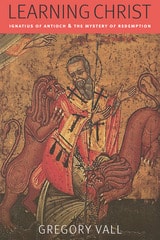
Learning Christ
Gregory Vall
Catholic University of America Press, 2013
Learning from Case Studies in Chaplaincy
Towards Practice Based Evidence and ProfessionalismEdited by Renske Kruizinga, Jacques Körver, Martin Walton, and Martjin Stoutjesdijk
Eburon Academic Publishers, 2020
The recent body of case-study work on chaplaincy care synthesizes the inherent narrative nature of chaplaincy with the structured rigors of contemporary care research. This volume is composed of contributions from both practitioners and academic researchers, joining reflections on the challenges of case studies in chaplaincy care with specific results. Drawing on reflections on methodology and professionalization in chaplaincy, the volume hopes to contribute to answering the question of how and why chaplaincy works.
Learning to Trust in Freedom
Signs from Jewish, Christian, and Muslim TraditionsDavid B. Burrell, C.S.C.
University of Scranton Press, 2010
True religious faith cannot be confirmed by any external proofs. Rather, it is founded on a basic act of trust—and the common root of that trust, for Jewish, Christian, and Islamic traditions, is a belief in the divine creation of the universe. But with Learning to Trust in Freedom, David B. Burrell asks the provocative question: How do we reach that belief, and what is it about the universe that could possibly testify to its divine origins? Even St. Augustine, he points out, could only find faith after a harrowing journey through the lures of desire—and it is that very desire that Burrell seizes on as a tool with which to explore the origin and purpose of the world. Delving deep into the intertwinings of desire and faith, and drawing on St. John of the Cross, Edith Stein, and Charles Taylor, Burrell offers a new understanding of free will, trust, and perception.
Legal Norms, Proceures, and Exchanges in the Early Modern <i>ius commune</i?
Damian Smith
Catholic University of America Press, 2026
Legal Writing, Legal Practice
The Biblical Bailment Law and Divine JusticeYael Landman
SBL Press, 2022
Legitimating New Religions
Lewis, James R
Rutgers University Press, 2003
James R. Lewis has written the first book to deal explicitly with the issue of how emerging religions legitimate themselves. He contends that a new religion has at least four different, though overlapping, areas where legitimacy is a concern: making converts, maintaining followers, shaping public opinion, and appeasing government authorities. The legitimacy that new religions seek in the public realm is primarily that of social acceptance. Mainstream society's acknowledgement of a religion as legitimate means recognizing its status as a genuine religion and thus recognizing its right to exist. Through a series of wide-ranging case studies Lewis explores the diversification of legitimation strategies of new religions as well the tactics that their critics use to de-legitimate such groups. Cases include the Movement for Spiritual Inner Awareness, Native American prophet religions, spiritualism, the Church of Christ-Scientist, Scientology, Church of Satan, Heaven's Gate, Unitarianism, Hindu reform movements, and Soka Gakkai, a new Buddhist sect.
Since many of the issues raised with respect to newer religions can be extended to the legitimation strategies deployed by established religions, this book sheds an intriguing new light on classic questions about the origin of all religions.
Leo Strauss and His Catholic Readers
Geoffrey M. Vaughan
Catholic University of America Press, 2018
Leo Strauss and the Rediscovery of Maimonides
Kenneth Hart Green
University of Chicago Press, 2013
An invaluable companion to Green’s comprehensive collection of Strauss’s writings on Maimonides, this volume shows how Strauss confronted the commonly accepted approaches to the medieval philosopher, resulting in both a new understanding of Maimonides and a new depth and direction for his own thought. It will be welcomed by anyone engaged with the work of either philosopher.
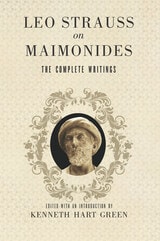
Leo Strauss on Maimonides
The Complete WritingsLeo Strauss
University of Chicago Press, 2013
With Leo Strauss on Maimonides, Kenneth Hart Green presents for the first time a comprehensive, annotated collection of Strauss’s writings on Maimonides, comprising sixteen essays, three of which appear in English for the first time. Green has also provided careful translations of materials that had originally been quoted in Hebrew, Arabic, Latin, German, and French; written an informative introduction highlighting the original contributions found in each essay; and brought references to out-of-print editions fully up to date. The result will become the standard edition of Strauss’s writings on Maimonides.
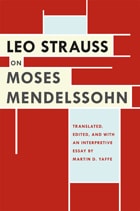
Leo Strauss on Moses Mendelssohn
Leo Strauss
University of Chicago Press, 2012
Moses Mendelssohn (1729–86) was the leading Jewish thinker of the German Enlightenment and the founder of modern Jewish philosophy. His writings, especially his attempt during the Pantheism Controversy to defend the philosophical legacies of Spinoza and Leibniz against F. H. Jacobi’s philosophy of faith, captured the attention of a young Leo Strauss and played a critical role in the development of his thought on one of the fundamental themes of his life’s work: the conflicting demands of reason and revelation.
Leo Strauss on Moses Mendelssohn is a superbly annotated translation of ten introductions written by Strauss to a multi-volume critical edition of Mendelssohn’s work. Commissioned in Weimar Germany in the 1920s, the project was suppressed and nearly destroyed during Nazi rule and was not revived until the 1960s. In addition to Strauss’s introductions, Martin D. Yaffe has translated Strauss’s editorial remarks on each of the passages he annotates in Mendelssohn’s texts and brings those together with the introductions themselves. Yaffe has also contributed an extensive interpretive essay that both analyzes the introductions on their own terms and discusses what Strauss writes elsewhere about the broader themes broached in his Mendelssohn studies.
Strauss’s critique of Mendelssohn represents one of the largest bodies of work by the young Strauss on a single thinker to be made available in English. It illuminates not only a formerly obscure phase in the emergence of his thought but also a critical moment in the history of the German Enlightenment.
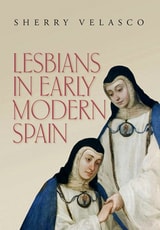
Lesbians in Early Modern Spain
Sherry Velasco
Vanderbilt University Press, 2011
The women in these accounts, stories, and cases range from internationally famous transgendered celebrities to lesbian criminals, from those suspected of "special friendships" in the convent to ordinary villagers.
Velasco argues that the diverse and recurrent representations of lesbian desire provide compelling evidence of how different groups perceived intimacy between women as more than just specific sex acts. At times these narratives describe complex personal relationships and occasionally characterize these women as being of a certain "type," suggesting an early modern precursor to what would later be recognized as divergent lesbian, bisexual, and transgender identities.
Lessons and Legacies IV
Reflections on Religion, Justice, Sexuality, and GenocideLarry V. Thompson
Northwestern University Press, 2003
Variously concerned with issues of guilt and victimization, the essays examine individuals like Pius XII and Romano Guardini and the institutions of organized religion as well as the roles of the Jewish Councils and the retributive judicial proceedings in Hungary. They reveal that victimization within the Holocaust experience is surprisingly open-ended, with Jewish women doubly victimized by their gender; postwar Germans viewing themselves as the epoch's greatest victims; Poles, whether Jewish or not, victimized beyond others because of their proximity to the epicenter of the Holocaust; and German university students corrupted by ideological inculcation and racist propaganda.
Though offering no "positive lessons" or comforting assurances, these essays add to the ongoing examination of Holocaust consequences and offer insightful analyses of facets previously minimized or neglected. Together they illustrate that matters of gender, sexuality, and proximity are crucial for shaping perceptions of a Holocaust reality that will always remain elusive.

Let Jasmine Rain Down
Song and Remembrance among Syrian JewsKay Kaufman Shelemay
University of Chicago Press, 1998
Shelemay views the intersection of music, individual remembrances, and collective memory through the pizmonim. Reconstructing a century of pizmon history in America based on research in New York, Mexico, and Israel, she explains how verbal and musical memories are embedded in individual songs and how these songs perform both what has been remembered and what otherwise would have been forgotten. In confronting issues of identity and meaning in a postmodern world, Shelemay moves ethnomusicology into the domain of memory studies.
Letters
Saint Leo the Great
Catholic University of America Press, 1957
Letters (1–81)
Saint Cyprian
Catholic University of America Press, 1964
Letters 1–50
Saint Cyril of Alexandria
Catholic University of America Press, 1987
Letters 51–110
Saint Cyril of Alexandria
Catholic University of America Press, 1987
Letters 91-120
Catholic University of America Press, 1998
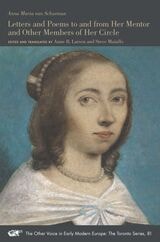
Letters and Poems to and from Her Mentor and Other Members of Her Circle
Anna Maria van Schurman
Iter Press, 2021
This volume presents in translation a remarkable collection of her letters and poems—many of which were previously unpublished—that span almost four decades of her life, from 1631 to 1669.
Letters from Lockdown
Sustaining Public Service Values During the Covid-19 PandemicClaire Foster-Gilbert
Haus Publishing, 2020
Letters from the Lockdown presents the twelve original letters alongside new, deeply personal accounts from public servants on the job. Together, this collection provides an opportunity to reflect on how public values meet practice as the global crisis unfolds.
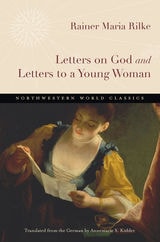
Letters on God and Letters to a Young Woman
Rainer Maria Rilke, Translated from the German by Annemarie S. Kidder
Northwestern University Press, 2012
For Rainer Maria Rilke, letter writing was a discipline and art unto itself. Some seven thousand of his letters have survived, among them works of profound beauty and insight to rival his poems and fiction. For the first time, this volume makes available to an English-speaking audience two of the earliest collections of Rilke letters published after his death, each with a nuanced introduction and notes by Annemarie S. Kidder.
The thematic collection Letters on God contains two letters by Rilke, the first an actual letter written during World War I, in 1915 in Munich, the second a fictional one composed after the war, in 1922 at Muzot in Switzerland. In these letters, Rilke builds on the mystical view of God conceived in The Book of Hours, but he moves beyond it, demonstrating a unique vision of God and Christ, the church and religious experience, friendship and death.
Like his famous Letters to a Young Poet, Rilke’s Letters to a Young Woman presents an intimate series of letters written to a young admirer. The nine letters collected here were written to Lisa Heise over the course of five years, from 1919 to 1924. Though Rilke and Heise never met, the poet emerges in these letters as a compassionate listener and patient teacher who with levelheaded sensitivity affirms and guides the movements of another person’s soul.
Letters, 1-30
Peter Damian
Catholic University of America Press, 1989
Letters, 1-91
Saint Ambrose
Catholic University of America Press, 1954
Letters, 121-150
Owen J. Peter Damian
Catholic University of America Press, 2004