Results by title
598 books match the query 'Religious' and 20 start with l
Last Works
Moses Mendelssohn. Translated by Bruce Rosenstock
University of Illinois Press, 2012
Leo Sowerby
Joseph Sargent
University of Illinois Press, 2024
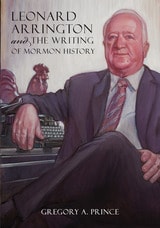
Leonard Arrington and the Writing of Mormon History
Gregory A. Prince
University of Utah Press, 2016
Leonard Arrington is considered by many the foremost twentieth-century historian of Mormonism. He played a key role in establishing the Western History Association and the Mormon History Association, and more than a half-century after its publication, his revised doctoral dissertation, Great Basin Kingdom: An Economic History of the Latter-day Saints 1830-1900, remains a standard. But Arrington’s career was not without controversy. Gregory Prince takes an in-depth look at this respected historian and, in telling Arrington’s story, gives readers insight into the workings of the LDS Church in the late twentieth century.
In 1972, during a major reorganization of the LDS Church, Arrington was asked to serve as the official church historian, thereby becoming the first—and thus far the only—professional historian to hold that title. He immediately set out to professionalize the entire Church History Division and open its extensive archives to scholarly researching. While the output of and from that division moved Mormon studies to a new level, the shift of historiography from faith promotion ecclesiastical, to scholarly and professional research and analysis was unacceptable to a handful of powerful senior apostles. In 1980 the History Division was disassembled and moved to Brigham Young University. That led to a shift in the professionalization of the Church History Division and Archives and in Arrington’s career but not to a loss of his broad influence.
This biography is the first to draw upon the remarkable Arrington diaries (over 20,000 pages); it is supplemented by the author’s interviews of more than 100 people who knew or worked with Arrington. The book is of additional significance given continuing battles between the LDS Church and scholars, which frequently gains national attention because of excommunications of prominent intellectuals.
Winner of the Evans Biography Award and the John Whitmer Historical Association's Brim Biography Book Award.
Leonard Cohen
A NovelJeffrey Lewis
Haus Publishing, 2025
The Leonard Cohen at the center of Leonard Cohen: A Novel is an everyman, a would-be artist, a would-be lover, a would-be tragic figure, yet a man haunted by the greatness of his namesake. He struggles to compete. He struggles to be more than a punchline in his own mind. He struggles, in particular, to write one song as great as the least of the great Leonard Cohen's songs.
At the center of Leonard's life is Daphne. In their meeting on a Greek island, a contemporary fable of Daphne and Apollo plays out. But even with Daphne, Leonard is shadowed by the other Leonard Cohen, whom he fears is the real Apollo. The ancient myth haunts the fated lovers, and the nobody Leonard Cohen’s life becomes at once a mystery, a miracle, and a myth on its own terms.
Once upon a time, Apollo fell hard for Daphne, who turned herself into a laurel tree. No less a fate awaits the protagonists of this slender yet universal novel, where art, love, and fame all fatefully intertwine.
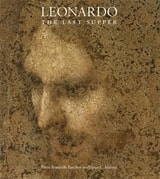
Leonardo, The Last Supper
Pinin Brambilla Barcilon and Pietro C. Marani
University of Chicago Press, 2001
The technical problems with the Last Supper began as soon as Leonardo started to paint it. He jettisoned the traditional fresco technique of applying paint to wet plaster, a method unsuited to Leonardo's slow and thorough execution, and created the work instead with an experimental technique that involved painting directly on the dry plaster. With this renegade method, Leonardo rendered one of the most enduring painting techniques volatile and unstable. Added to this initial complication have been centuries of pollution, tourists, candle smoke, and the ravages of age, not to mention food fights in the refectory staged by Napoleonic soldiers and Allied bombs in 1943. By the middle of the twentieth century, the Last Supper was in desperate need of a complete restoration.
Pinin Brambilla Barcilon was chosen to head this twenty-year project, and Leonardo, The Last Supper is the official record of her remarkable effort. It first documents the cleaning and removal of the overpainting performed in the other attempts at restoration and then turns to Barcilon's meticulous additions in watercolor, which were based on Leonardo's preparatory drawings, early copies of the painting, and contemporary textual descriptions. This book presents full-scale reproductions of details from the fresco that clearly display and distinguish Leonardo's hand from that of the restorer. With nearly 400 sumptuous color reproductions, the most comprehensive technical documentation of the project by Barcilon, and an introductory essay by art historian and project codirector Pietro C. Marani that focuses on the history of the fresco, Leonardo, The Last Supper is an invaluable historic record, an extraordinarily handsome book, and an essential volume for anyone who appreciates the beauty, technical achievements, and fate of Renaissance painting.
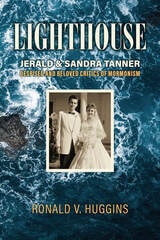
Lighthouse
Jerald and Sandra Tanner, Despised and Beloved Critics of MormonismRonald V. Huggins
Signature Books, 2022
The Tanners consistently challenged the church’s position on many historical issues. Utah Lighthouse was long the only source for Mormon scholars to obtain crucial historical reprints, which they still happily or begrudgingly purchase; for others, the Tanners’ writings have been the source of disillusionment with the church. Despised or beloved, the influence of Jerald and Sandra Tanner cannot be underestimated or ignored.
Lightning from the Depths
An Anthology of Albanian PoetryRobert Elsie and Janice Mathie-Heck
Northwestern University Press, 2008
If a people
Have no poets
And no poetry of their own
For a National Anthology
Then treachery and barking
Will do the trick
With these words, a challenge is laid down in this new volume of Albanian poetry. Albania, however, has a dynamic tradition of literature. Lightning from the Depths is the first English collection to present the full range of Albanian verse. Albanian literature has had many lives. The early Christian traditions disappeared as Islam and the Ottoman Empire took over. Muslim literature, too, withered when the nation strove to become an independent European country. The beginnings of a modern tradition were quashed by the Stalinists. All along this rocky path, poets have turned the political strife, poverty, and isolation their nation has often experienced into culture, both celebrating and questioning the society in which they live. Lightning from the Depths opens readers’ eyes to a new political and cultural world populated artists who can spin despair into poetry.
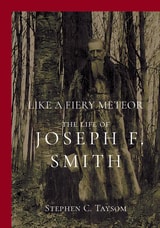
Like a Fiery Meteor
The Life of Joseph F. SmithStephen C. Taysom
University of Utah Press, 2023
Joseph F. Smith was born in 1838 to Hyrum Smith and Mary Fielding Smith. Six years later both his father and his uncle, Joseph Smith Jr., the founding prophet of the Church of Jesus Christ of Latter-day Saints, were murdered in Carthage, Illinois. The trauma of that event remained with Joseph F. for the rest of his life, affecting his personal behavior and public tenure in the highest tiers of the LDS Church, including the post of president from 1901 until his death in 1918. Joseph F. Smith laid the theological groundwork for modern Mormonism, especially the emphasis on temple work. This contribution was capped off by his “revelation on the redemption of the dead,” a prophetic glimpse into the afterlife. Taysom’s book traces the roots of this vision, which reach far more deeply into Joseph F. Smith’s life than other scholars have previously identified.
In this first cradle-to-grave biography of Joseph F. Smith, Stephen C. Taysom uses previously unavailable primary source materials to craft a deeply detailed, insightful story of a prominent member of a governing and influential Mormon family. Importantly, Taysom situates Smith within the historical currents of American westward expansion, rapid industrialization, settler colonialism, regional and national politics, changing ideas about family and masculinity, and more. Though some writers tend to view the LDS Church and its leaders through a lens of political and religious separatism, Taysom does the opposite, pushing Joseph F. Smith and the LDS Church closer to the centers of power in Washington, DC, and elsewhere.

Living Medjugorje
Saverio Gaeta
St. Augustine's Press, 2025
What is happening in Medjugorje and why do hundreds of thousands of people visit each year? In June of 1981, the Blessed Virgin Mary, Mother of God, began appearing to six young people with messages above all of peace and conversion. She calls herself the "Queen of Peace," and these apparitions have continued to this day. First coming to the children in the rocky hills outside the small city ravaged by war and Communism, throngs of pilgrims walk the unfriendly trails to the original spot every day of the year and often with bare feet. The miracles and spiritual experiences attributed to this place are impossible to count.
The pilgrimage to Rome is historical and deeply woven into the custom of piety and devotion in the Catholic Church. But for the post-modern world, Medjugorje is the pre-eminent 'destination' for all people seeking to encounter God, especially those who have fallen away or have no religious affiliation. The Jubilee Year will bring many more to Medjugorje and Saverio Gaeta's guidebook provides a necessary service of how to do it and what to do while one is there. The introduction to the English edition is provided by the official chaplain to English-speaking pilgrims, Leon Pereira.
There are over 200 color photographs and graphs.
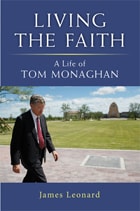
Living the Faith
A Life of Tom MonaghanJames Leonard
University of Michigan Press, 2012
Who is Tom Monaghan?
Is he the four-year-old kid whose father died on Christmas Eve and whose mother sent him to an orphanage and then a juvenile detention home?
Is he the entrepreneurial genius who built Domino's Pizza from a hole-in-the-wall pizzeria in Michigan into an American brand as world-conquering as Ford or Coke?
Is he the religious visionary who sold Domino's for $1 billion to create an orthodox Catholic university, law school, and special interest law firm with the goal of transforming America to reflect his conservative values?
He's all that and more. With extensive interviews with friends and enemies plus unprecedented access to the man himself, but wholly without his authorization, Living the Faith illuminates Tom Monaghan, the man and the myth.
Living the Faithis the much-needed, definitive biography of one of the most fascinating and controversial figures in the realms of American business and religion. Through eighteen hard-boiled chapters, journalist James Leonard follows Monaghan on his path from a heartbroken kid who climbed into his father's coffin to the business tycoon who purchased the world-champion Detroit Tigers and spent a fortune on his own air force, navy, and island to the religious visionary who founded a university to make saints and a public interest law firm to overturn evolution.
A sympathetic but critical perspective of the man and his works, this book is for believers, nonbelievers, and agnostics; for conservatives, liberals, and independents; for the rich, the poor, and the shrinking middle class. Mainly, however, this book is for those who want the facts about Tom Monaghan—and the truth about the effect religion had on one man and the effect that man had on the world.
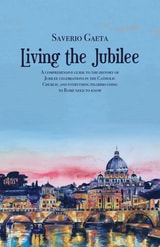
Living the Jubilee
Saverio Gaeta
St. Augustine's Press, 2025
Saverio Gaeta provides a concise and insightful history of Jubilee celebrations, tracing the custom to biblical norms and following developments up to present day. Jubilees are joyous remembrances of God's consistent paternal intervention in human life, and a time to acknowledge a common orientation toward the encounter with his Son, Jesus Christ, who brings salvation and life in the Trinity.
Living the Jubilee is indispensable for the reader who wishes to embark on a journey of faith, to live as a pilgrim and not tourist in this life. Gaeta inspires everyone to partake of the Jubilee celebrations. He also provides everything a traveler to Rome needs to know to make this trip––public transportation routes, event schedules, how one acquires the Vatican-issued pilgrim card and tickets needed to attend many of these events, plus much more. Even if readers do not make the voyage to Rome, Gaeta's account of the Jubilee in the Catholic Church is a wondrous display of thousands of years of tradition and history that has never lost a sense of joy and gratitude for the God who remains among us. It is a remarkable keepsake and helpful even for Jubilee celebrations in parishes and local communities.
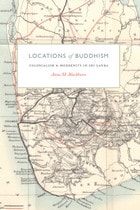
Locations of Buddhism
Colonialism and Modernity in Sri LankaAnne M. Blackburn
University of Chicago Press, 2010
Modernizing and colonizing forces brought nineteenth-century Sri Lankan Buddhists both challenges and opportunities. How did Buddhists deal with social and economic change; new forms of political, religious, and educational discourse; and Christianity? And how did Sri Lankan Buddhists, collaborating with other Asian Buddhists, respond to colonial rule? To answer these questions, Anne M. Blackburn focuses on the life of leading monk and educator Hikkaduve Sumangala (1827–1911) to examine more broadly Buddhist life under foreign rule.
In Locations of Buddhism, Blackburn reveals that during Sri Lanka’s crucial decades of deepening colonial control and modernization, there was a surprising stability in the central religious activities of Hikkaduve and the Buddhists among whom he worked. At the same time, they developed new institutions and forms of association, drawing on pre-colonial intellectual heritage as well as colonial-period technologies and discourse. Advocating a new way of studying the impact of colonialism on colonized societies, Blackburn is particularly attuned here to human experience, paying attention to the habits of thought and modes of affiliation that characterized individuals and smaller scale groups. Locations of Buddhism is a wholly original contribution to the study of Sri Lanka and the history of Buddhism more generally.

Logic and Sin in the Writings of Ludwig Wittgenstein
Philip R. Shields
University of Chicago Press, 1992
"Shields argues that the appearance throughout Wittgenstein's writings of such concepts as ritual, limit, transgression, a change of will, pride, temptation, and judgment implies a relation between religion and the logical aspects of Wittgenstein's philosophy."—Choice
"Of the many recent books about Wittgenstein, Logic and Sin is one of the very few that are well worth having"—Fergus Kerr, Modern Theology
"What Shields has uncovered in Wittgenstein's religious sensibility is something genuine and profound. . . . Shields has not just written an important book on Wittgenstein but an enlightening work that invites further reflection."—Eric O. Springsted, Cross Currents
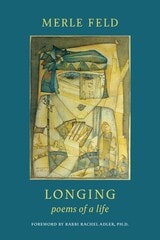
Longing
Poems of a LifeMerle Feld
Central Conference of American Rabbis, 2023
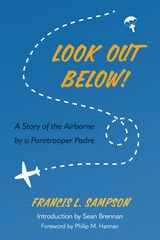
Look Out Below! A Story of the Airborne by a Paratrooper Padre
Francis L. Sampson
Catholic University of America Press, 2023
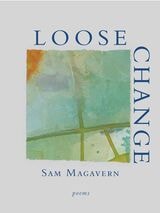
Loose Change
Sam Magavern
Tupelo Press, 2026
A luminous, darkly playful collection of poems that moves with equal ease through myth, scripture, history, domestic life, and the surreal textures of contemporary existence.
In three interwoven sections—”King David,” “Loose Change,” and “Life with Atropos”—Sam Magavern’s Loose Change reimagines biblical figures, philosophers, ordinary laborers, animals, and dreamers with a voice that is by turns comic, tender, metaphysical, and elegiac. These poems assemble a mosaic of loss, desire, absurdity, memory, and endurance, finding flashes of beauty and meaning in the discarded, the humble, and the half-forgotten. With formal agility and a distinctive wit, Loose Change affirms poetry’s power to transfigure the everyday while confronting time, mortality, and longing with both gravity and radiance.
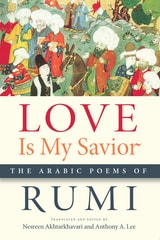
Love Is My Savior
The Arabic Poems of RumiNesreen Rumi
Michigan State University Press, 2016
This dual-language volume opens a treasury of Rumi’s mystic thought and startling poetry. His verses pulsate with desire and longing, with sensuality, and with ecstatic celebration. Rumi found in his mystic poetry a vehicle for the expression of the endless spiritual bounties of love. He placed love at the center of his faith and doctrine, and he pronounced it to be the goal of his life and the only form of true worship. This collection is stunningly rendered in English by an award-winning poet and a distinguished translator of Arabic poetry.
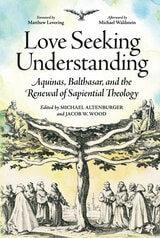
Love Seeking Understanding
Aquinas, Balthasar, and the Renewal of Sapiential TheologyMichael Altenburger
Catholic University of America Press, 2024
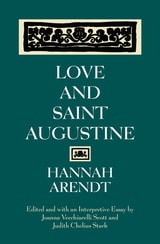
Love and Saint Augustine
Hannah Arendt
University of Chicago Press, 1995
In Love and Saint Augustine, Joanna Vecchiarelli Scott and Judith Chelius Stark make this important early work accessible for the first time. Here is a completely corrected and revised English translation that incorporates Arendt's own substantial revisions and provides additional notes based on letters, contracts, and other documents as well as the recollections of Arendt's friends and colleagues during her later years.
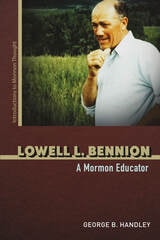
Lowell L. Bennion
A Mormon EducatorGeorge B. Handley
University of Illinois Press, 2023
Known in his lifetime for a tireless dedication to humanitarian causes, Lowell L. Bennion was also one of the most important theologians and ethicists to emerge in the Church of Jesus Christ of Latter-day Saints in the twentieth century.
George B. Handley’s intellectual biography delves into Bennion’s thought and extraordinary intellectual life. Rejecting the idea that individual LDS practice might be at odds with lived experience, Bennion insisted the gospel favored the growth of individuals acting and living in the present. He also focused on the need for ongoing secular learning alongside religious practice and advocated for an idea of social morality that encouraged Latter-day Saints to seek out meaningful transformations of character and put their ethical commitments into practice. Handley examines Bennion’s work against the background of a changing institution that once welcomed his common-sense articulation of LDS ideas and values but became discomfited by how his thought cast doubt on the Church’s beliefs about race and other issues.