Results by title
939 books match the query 'Religious aspects' and 18 start with l

La Violencia and the Hebrew Bible
The Politics and Histories of Biblical Hermeneutics on the AmericaSusanne Scholz
SBL Press, 2016
Exegetically noteworthy and culturally-theologically relevant
Violence in its wide range of horrifying expressions is real in people’s lives, and biblical interpreters must take violence in the world seriously to arrive at relevant ideas about the place of the Bible in the world. Each essay addresses people’s experiences of violence in the study of the Bible through the context of la violencia, the Spanish noun referring to the brutal, repressive, and murderous policies of state-sponsored violence practiced in many South and Central American and Caribbean countries during the twentieth century that external powers such as the USA often endorsed and fostered. The volume represents an important contribution to biblical studies and to the field of Latina/o studies. The contributors are Cheryl B. Anderson, Pablo Andiñach, Nancy Bedford, Lee Cuéllar, Steed V. Davidson, Serge Frolov, Renata Furst, Julia M. O’Brien, Todd Penner, José Enrique Ramírez, Ivoni Richter Reimer, and Susanne Scholz.
Features:
- Twelve essays by scholars living and working on the American continent
- Articles reveal the complex historical, political, and cultural conditions on the American continent that have contributed to our understanding of violence in the Bible
- Focus on themes of racial, social, and cultural violence
Landscapes of the Secular
Law, Religion, and American Sacred SpaceNicolas Howe
University of Chicago Press, 2016
Fusing geography, legal scholarship, and religion in a potent analysis, Howe shows how seemingly routine questions about how to look at a sunrise or a plateau or how to assess what a mountain is both physically and ideologically, lead to complex arguments about the nature of religious experience and its implications for our lives as citizens. In American society—nominally secular but committed to permitting a diversity of religious beliefs and expressions—such questions become all the more fraught and can lead to difficult, often unsatisfying compromises regarding how to interpret and inhabit our public lands and spaces. A serious commitment to secularism, Howe shows, forces us to confront the profound challenges of true religious diversity in ways that often will have their ultimate expression in our built environment. This provocative exploration of some of the fundamental aspects of American life will help us see the land, law, and society anew.
Laughter at the Foot of the Cross
Michael A. Screech
University of Chicago Press, 2015
But we are fortunate in our guide: drawing on his immense knowledge of the classics and of humanists like Erasmus and Rabelais—who used Plato and Aristotle to interpret the Gospels—and incorporating the thoughts of Aesop, Calvin, Lucian of Samosata, Luther, Socrates, and others, Screech shows that Renaissance thinkers revived ancient ideas about what inspires laughter and whether it could ever truly be innocent. As Screech argues, in the minds of Renaissance scholars, laughter was to be taken very seriously. Indeed, in an era obsessed with heresy and reform, this most human of abilities was no laughing matter.

Law, Sex, and Christian Society in Medieval Europe
James A. Brundage
University of Chicago Press, 1990
"Brundage's book is consistently learned, enormously useful, and frequently entertaining. It is the best we have on the relationships between theological norms, legal principles, and sexual practice."—Peter Iver Kaufman, Church History
Learning to Trust in Freedom
Signs from Jewish, Christian, and Muslim TraditionsDavid B. Burrell, C.S.C.
University of Scranton Press, 2010
True religious faith cannot be confirmed by any external proofs. Rather, it is founded on a basic act of trust—and the common root of that trust, for Jewish, Christian, and Islamic traditions, is a belief in the divine creation of the universe. But with Learning to Trust in Freedom, David B. Burrell asks the provocative question: How do we reach that belief, and what is it about the universe that could possibly testify to its divine origins? Even St. Augustine, he points out, could only find faith after a harrowing journey through the lures of desire—and it is that very desire that Burrell seizes on as a tool with which to explore the origin and purpose of the world. Delving deep into the intertwinings of desire and faith, and drawing on St. John of the Cross, Edith Stein, and Charles Taylor, Burrell offers a new understanding of free will, trust, and perception.
Legitimating New Religions
Lewis, James R
Rutgers University Press, 2003
James R. Lewis has written the first book to deal explicitly with the issue of how emerging religions legitimate themselves. He contends that a new religion has at least four different, though overlapping, areas where legitimacy is a concern: making converts, maintaining followers, shaping public opinion, and appeasing government authorities. The legitimacy that new religions seek in the public realm is primarily that of social acceptance. Mainstream society's acknowledgement of a religion as legitimate means recognizing its status as a genuine religion and thus recognizing its right to exist. Through a series of wide-ranging case studies Lewis explores the diversification of legitimation strategies of new religions as well the tactics that their critics use to de-legitimate such groups. Cases include the Movement for Spiritual Inner Awareness, Native American prophet religions, spiritualism, the Church of Christ-Scientist, Scientology, Church of Satan, Heaven's Gate, Unitarianism, Hindu reform movements, and Soka Gakkai, a new Buddhist sect.
Since many of the issues raised with respect to newer religions can be extended to the legitimation strategies deployed by established religions, this book sheds an intriguing new light on classic questions about the origin of all religions.

Liberal Suppression
Section 501(c)(3) and the Taxation of SpeechPhilip Hamburger
University of Chicago Press, 2018
Tracing the history of American liberalism, including theological liberalism and its expression in nativism, Hamburger shows the centrality of turbulent popular anxieties about the Catholic Church and other potentially orthodox institutions. He argues persuasively that such theopolitical fears about the political speech of churches and related organizations underlay the adoption, in 1934 and 1954, of section 501(c)(3)’s speech limits. He thereby shows that the speech restrictions have been part of a broad majority assault on minority rights and that they are grossly unconstitutional.
Along the way, Hamburger explores the role of the Ku Klux Klan and other nativist organizations, the development of American theology, and the cultural foundations of liberal “democratic” political theory. He also traces important legal developments such as the specialization of speech rights and the use of law to homogenize beliefs. Ultimately, he examines a wide range of contemporary speech restrictions and the growing shallowness of public life in America.
His account is an unflinching look at the complex history of American liberalism and at the implications for speech, the diversity of belief, and the nation’s future.
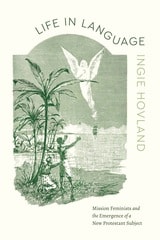
Life in Language
Mission Feminists and the Emergence of a New Protestant SubjectIngie Hovland
University of Chicago Press, 2025
The language of the Bible is a powerful lens through which many Protestants understand themselves and their world, and its prohibitions on women’s speech pose complicated challenges to women. Nevertheless, women frequently serve as vocal leaders in Protestant organizations, including the early twentieth-century Norwegian Mission Society. In Life in Language, Ingie Hovland offers a unique biography of Henny Dons, a leader of the society’s so-called mission feminists, that grapples with ways Protestant women crafted innovative, expansive self-understandings through Christian language. More than their male peers, the mission feminists turned to religious speech to express material, as well as heavenly, desires for paid work, voting rights, and more, and Hovland argues that these experiments in women speaking, reading, writing, and listening paved the way for a new way of being in the world.
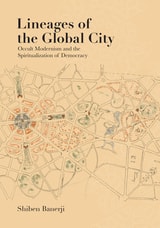
Lineages of the Global City
Occult Modernism and the Spiritualization of DemocracyShiben Banerji
University of Texas Press, 2025
2026 PROSE Award in Architecture & Urban Planning, Association of American Publishers (AAP)
2026 Book Prize Shortlist, Modernist Studies Association (MSA)
The forgotten history of the occult foundations of the early twentieth-century global city.
War, revolution, genocide, rebellion, slump. The economic and political turmoil of the early twentieth century seemed destined to rip asunder the ties that bound colonizers and the colonized to one another. The upheaval represented an opportunity, and not just to nationalists who imagined new homelands or to socialists who dreamed of international brotherhood. For modernists in the orbit of various occultisms, the crisis of empire also represented an opportunity to reveal humanity’s fundamental unity and common fate.
Lineages of the Global City recounts a continuous, if also contentious, transnational exchange among modernists and occultists across the Americas, Europe, South Asia, and Australia between 1905 and 1949. At stake were the feelings and affect of a new global subject who would perceive themselves as belonging to humanity as a unified whole, and the urban environment that would foster their subjectivity. The interventions in this debate, which drew in the period’s most renowned modernists, took the form of a succession of plans for cities, suburbs, and communes, as well as experiments in building, drawing, printmaking, filmmaking, and writing. Weaving together postcolonial, feminist, and Marxist insight on subject formation, Shiben Banerji advances a new way of understanding modernist urban space as the design of subjective effects.
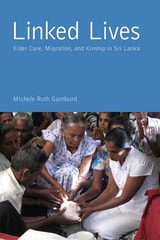
Linked Lives
Elder Care, Migration, and Kinship in Sri LankaMichele Ruth Gamburd
Rutgers University Press, 2021
Listening at Lookout Creek
Nature in Spiritual PracticeGretel Van Wieren
Oregon State University Press, 2019
It wasn’t always like this. For years, Van Wieren studied and attempted to emulate the lives of the mystics. As a pastor in rural, dairy-farming New York, she walked the fields and woods behind the parsonage daily. Remembering that time in her life, Van Wieren concludes that she is out of practice, and she goes to the H. J. Andrews Experimental Forest in Oregon’s western Cascade Mountains to conduct a spiritual experiment: Is it possible to rediscover a deep sense of connection with the natural world, and can it be done, with children, in today’s high-tech, hyper-busy world?
Listening at Lookout Creek weaves philosophical and spiritual interpretations of the natural world with personal, hands-on experiences of particular landed places. It will be of interest to students of environmental ethics, religion, and nature, conservation practitioners, hunting and fishing enthusiasts, and all those who work to connect children with nature.

Listening to the Voices of the Dead
The 3-11 Tohoku Disaster SpeaksIsomae Jun'ichi
University of Michigan Press, 2024
Living Faith
Everyday Religion and Mothers in PovertySusan Crawford Sullivan
University of Chicago Press, 2012
Love Between Women
Early Christian Responses to Female HomoeroticismBernadette J. Brooten
University of Chicago Press, 1996
"An extraordinary accomplishment. . . . A definitive source for all future discussion of homoeroticism and the Bible."—Mary Rose D'Angelo, Harvard Gay & Lesbian Review
"[Brooten's] convincing analysis . . . not only profoundly reshapes our understanding of the past, but it should also shape the way in which that past, particularly the early Christian texts with their immense normative weight, will be used for the future."—Anne L. Clark, Journal of Lesbian Studies
"Love Between Women gives contemporary debates on sexuality a carefully delineated past. It boldly insists upon a different future, one informed by history but not tyrannized by it."—Susan Ackerman, Lambda Book Report
"Fascinating, provocative and lucid. . . . Brooten has made a fundamental contribution to women's and gender studies, gay and lesbian studies, and classics."—Elizabeth A. Castelli, Women's Review of Books
Winner of the Lambda Literary Award for Best Lesbian Studies Book, 1997
Love Seeking Understanding
Aquinas, Balthasar, and the Renewal of Sapiential TheologyMichael Altenburger
Catholic University of America Press, 2024
Love and Saint Augustine
Hannah Arendt
University of Chicago Press, 1995
In Love and Saint Augustine, Joanna Vecchiarelli Scott and Judith Chelius Stark make this important early work accessible for the first time. Here is a completely corrected and revised English translation that incorporates Arendt's own substantial revisions and provides additional notes based on letters, contracts, and other documents as well as the recollections of Arendt's friends and colleagues during her later years.
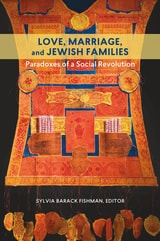
Love, Marriage, and Jewish Families
Paradoxes of a Social RevolutionEdited by Sylvia Barack Fishman
Brandeis University Press, 2015
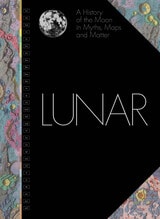
Lunar
A History of the Moon in Myths, Maps, and MatterEdited by Matthew Shindell
University of Chicago Press, 2024
President John F. Kennedy’s rousing “We will go to the Moon” speech in 1961 before the US Congress catalyzed the celebrated Apollo program, spurring the US Geological Survey’s scientists to map the Moon. Over the next eleven years a team of twenty-two, including a dozen illustrator-cartographers, created forty-four charts that forever changed the path of space exploration.
For the first time, each of those beautifully hand-drawn, colorful charts is presented together in one stunning book. In Lunar, National Air and Space Museum curator Matthew Shindell’s expert commentary accompanies each chart, along with the key geological characteristics and interpretations that were set out in the original Geologic Atlas of the Moon. Interwoven throughout the book are contributions from scholars devoted to studying the multifaceted significance of the Moon to humankind around the world. Traveling from the Stone Age to the present day, they explore a wide range of topics: the prehistoric lunar calendar; the role of the Moon in creation myths of Ancient Egypt, Greece, and Rome; the role of the Moon in astrology; the importance of the Moon in establishing an Earth-centered solar system; the association of the Moon with madness and the menstrual cycle; how the Moon governs the tides; and the use of the Moon in surrealist art.
Combining a thoughtful retelling of the Moon’s cultural associations throughout history with the beautifully illustrated and scientifically accurate charting of its surface, Lunar is a stunning celebration of the Moon in all its guises.