Results by title
231 books match the query 'Revolutionary Period (1775-1800)' and 4 start with l
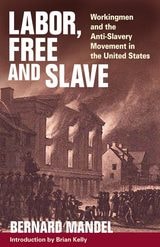
Labor, Free and Slave
Workingmen and the Anti-Slavery Movement in the United StatesBernard Mandel.Introduction by Brian Kelly
University of Illinois Press, 2006
Bernard Mandel's classic study provides a concise overview of the relationship between organized abolitionism and the fledgling labor movement in the period before the Civil War. Mandel argues that slavery reinforced the powerlessness of white workers North and South, and the racial divisions that it upheld rendered effective labor solidarity impossible. Deep distrust between abolitionists and the working classes, however, compelled Northern workers to find their own way into the antislavery ranks.
Laws of Our Fathers
Popular Culture and the U.S. ConstitutionEdited by Ray B. Browne and Glenn J. Browne
University of Wisconsin Press, 1986
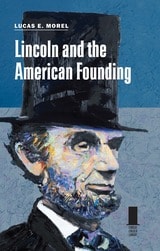
Lincoln and the American Founding
Lucas E. Morel
Southern Illinois University Press, 2020
In this persuasive work of intellectual history, Lucas E. Morel argues that the most important influence on Abraham Lincoln’s political thought and practice was what he learned from the leading figures of and documents from the birth of the United States. In this systematic account of those principles, Morel compellingly demonstrates that to know Lincoln well is to understand thoroughly the founding of America.
With each chapter describing a particular influence, Morel leads readers from the Founding Father, George Washington; to the founding documents, the Declaration of Independence and Constitution; to the founding compromise over slavery; and finally to a consideration of how the original intentions of the Founding Fathers should be respected in light of experience, progress, and improvements over time. Within these key discussions, Morel shows that without the ideals of the American Revolution, Lincoln’s most famous speeches would be unrecognizable, and the character of the nation would have lost its foundation on the universal principles of human equality, individual liberty, and government by the consent of the governed.
Lincoln thought that the principles of human equality and individual rights could provide common ground for a diverse people to live as one nation and that some old things, such as the political ideals of the American founding, were worth preserving. He urged Americans to be vigilant in maintaining the institutions of self-government and to exercise and safeguard the benefits of freedom for future generations. Morel posits that adopting the way of thinking and speaking Lincoln advocated, based on the country’s founding, could help mend our current polarized discourse and direct the American people to employ their common government on behalf of a truly common good.
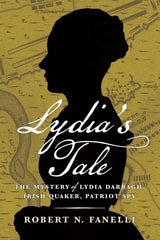
Lydia's Tale
The Mystery of Lydia Darragh, Irish Quaker, Patriot SpyRobert N. Fanelli
Westholme Publishing, 2025
Lydia’s Tale:The Mystery of Lydia Darragh, Irish Quaker, Patriot Spy by Robert N. Fanelli uncovers a myriad of previously unknown records, knitting together for the first time the life and experiences of this remarkable heroine of the American Revolution who lived in the heart of Philadelphia. Behind her story we find an assertive woman who took an active hand in the affairs of her family and her community. Drawing on genealogical sources, legal documents, and other correspondence, the author reconstructs Lydia Darragh’s early life in Dublin, her livelihood in Pennsylvania, and how the Revolution shaped her and her children’s lives. Exploring the context of Lydia’s tale sheds light on the activities of women in Revolutionary Philadelphia, reveals the complex issues faced by pacifist Quakers in a time of war, and brings to light the contributions of Irish immigrants in securing America’s freedom.
The author’s careful research reveals little known details and corrects historians’ common misapprehensions about the Revolutionary period. Along the way, we meet often overlooked figures, including diarist Christopher Marshall and his family, the irascible Quaker recluse Bathsheba Bowers, and Blair McClenachan, the wealthy Patriot financier who also served his adopted country as a common soldier. Lydia Darragh is frequently included among that small group of women cited as Revolutionary heroines. This detailed microhistory demonstrates how legend can inform the study of history, describing how one woman’s personal reminiscence morphed into a piece of American mythology, now recovered in the historical context it deserves.