Results by title
50 books match the query 'Saldívar-Hull, Sonia' and 2 start with l
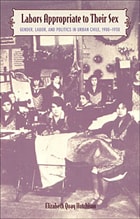
Labors Appropriate to Their Sex
Gender, Labor, and Politics in Urban Chile, 1900–1930Elizabeth Quay Hutchison
Duke University Press, 2001
In addition to population and industrial censuses, Hutchison culls published and archival sources to illuminate such misconceptions and to reveal how women’s paid labor became a locus of anxiety for a society confronting social problems—both real and imagined—that were linked to industrialization and modernization. The limited options of working women were viewed by politicians, elite women, industrialists, and labor organizers as indicative of a society in crisis, she claims, yet their struggles were also viewed as the potential springboard for reform. Labors Appropriate to Their Sex thus demonstrates how changing norms concerning gender and work were central factors in conditioning the behavior of both male and female workers, relations between capital and labor, and political change and reform in Chile.
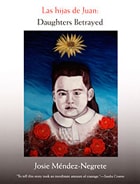
Las hijas de Juan
Daughters BetrayedJosie Méndez-Negrete
Duke University Press, 2006
Méndez-Negrete was born in Mexico, in the state of Zacatecas. She recalls a joyous childhood growing up in the midst of Tabasco, a vibrant town filled with extended family. Her father, though, had dreams of acquiring wealth in el norte. He worked sun-up to sun-down in the fields of south Texas. Returning home to Mexico, his pockets full of dollars, he spent evenings drinking and womanizing.
When Méndez-Negrete was eleven, her father moved the family to the United States, where they eventually settled in California’s Santa Clara Valley. There her father began molesting his daughters, viciously beating them and their mother. Within the impoverished immigrant family, the abuse continued for years, until a family friend brought it to the attention of child welfare authorities. Méndez-Negrete’s father was tried, convicted, and imprisoned.
Las hijas de Juan is told chronologically, from the time Méndez-Negrete was a child until she was a young adult trying, along with the rest of her family, to come to terms with her father’s brutal legacy. It is a harrowing story of abuse and shame compounded by cultural and linguistic isolation and a system of patriarchy that devalues the experiences of women and girls. At the same time, Las hijas de Juan is an inspiring tale, filled with strong women and hard-won solace found in traditional Mexican cooking, songs, and storytelling.