Results by title
59 books match the query 'San Francisco' and 2 start with l
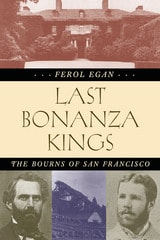
Last Bonanza Kings
The Bourns of San FranciscoFerol Egan
University of Nevada Press, 2009
Much of the wealth from the great mining bonanzas of the nineteenth century American West flowed into San Francisco and made possible the growth of the city and some fabulous personal fortunes. Among the wealthiest and most powerful of the Bonanza Kings were William Bowers Bourn I and his son and successor, William Bowers Bourn II. Their wealth came from rich mines in Nevada’s Comstock Lode and Treasure Hill and California’s Sierra foothills, as well as astute business ventures in the booming port city of San Francisco. Last Bonanza Kings tells their story with all the colorful detail and sweeping sense of epic drama that the characters and their times demand, setting them into the turbulent context of an age of rampant financial and civic growth, major technological advances in mining, lavish philanthropy, and opulent personal lifestyles.
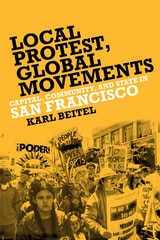
Local Protests, Global Movements
Capital, Community, and State in San FranciscoKarl Beitel
Temple University Press, 2013
Using San Francisco as an illuminating case study, Beitel analyzes the innovative ways urban social movements have organized around issues regarding land use, housing, urban ecology, and health care on the local level to understand the changing nature of protest formation around the world.
Reconciling the passing of New Left Ideals and the emergence of mobilization on a global scale, he assesses the limits of contemporary urban movements as conduits for advancing a radical political program. Beitel argues these limits reflect recurrent problems of internal fragmentation, and the manner in which liberal democratic institutions structure processes of political participation and interest representation.