Results by title
546 books match the query 'Semiotics & Theory' and 13 start with l

Late Colonial Sublime
Neo-Epics and the End of RomanticismG. S. Sahota
Northwestern University Press, 2018
By bringing together distinct literary canons—both metropolitan and colonial, hegemonic and subaltern, Western and Eastern, all of which took shape upon the common realities of imperial capitalism—Late Colonial Sublime takes an original dialectical approach. It experiments with fragments, parallaxes, and constellational form to explore the aporias of modernity as well as the possible futures they may signal in our midst. A bold intervention into contemporary debates that synthesizes a wealth of sources, this book will interest readers and scholars in world literature, critical theory, postcolonial criticism, and South Asian studies.
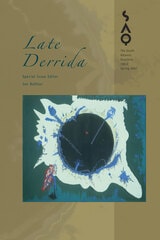
Late Derrida, Volume 106
Ian Balfour , ed.
Duke University Press, 0
The essays address a wide array of Derrida’s concerns: human rights, justice, religion, the performative, “the gift of death,” mourning, and sovereignty. They often put Derrida’s texts in conjunction with the works of others—Wordsworth, Agamben, Schelling, and Benjamin, to name a few—that resonate with and on occasion resist Derrida’s own thinking and writing. One essay offers a reading of Wordsworth’s elegy “Distressful gift!” as a dialogue with questions posed by Derrida, using as its frame the kind of nonnormative mourning that Derrida advocated, together with a haunting analysis of the character of survival. Other essays look at Derrida’s theory of performativity as advanced in his late works, continuing his emphasis on the power of language, and in general they emulate his vigilance in attending to force and violence everywhere.
Contributors. Ian Balfour, David L. Clark, Mary Jacobus, David E. Johnson, David Lloyd, J. Hillis Miller, Marc Redfield, Rei Terada, Elisabeth Weber
Late Theory
Fredric Jameson, or The Persistence of ReadingPhillip E. Wegner
University of Minnesota Press, 2026
A bold, dialectic engagement with Fredric Jameson’s thought
Fredric Jameson (1934–2024) is widely regarded as the most influential literary and cultural theorist of the past fifty years. The culmination of more than three decades of sustained engagement with Jameson’s work, Late Theory offers a critical response to his late writings, namely the final volumes of his “Poetics of Social Forms,” to develop an original and dialectical reading practice in conversation with his evolving thought.
Jameson’s final works bring renewed clarity to three foundational concerns that structure his intellectual legacy. These are the problem of periodization and the challenge of grasping the present as a historical category, the dangers posed by the rise of moralizing modes of critique in literary and cultural studies, and the radical interpretive potential unlocked by allegory and the semiotic method. Phillip E. Wegner shows how these late interventions mark not a conclusion but an extension of Jameson’s long-standing project: envisioning the dialectic as a living, collective form of reasoning—a “thought mode of the future” capable of transforming our lives.
At its core, Late Theory is a passionate argument for cultural and aesthetic education as a practice of solidarity and imagination. Foregrounding Jameson’s enduring effort to build heterogeneous communities of readers committed to shared inquiry, Wegner affirms the urgency of reading, teaching, and thinking together in a moment of crisis for the university and global culture.
Retail e-book files for this title are screen-reader friendly with images accompanied by short alt text and/or extended descriptions.
Latinamericanism after 9/11
John Beverley
Duke University Press, 2011
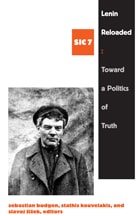
Lenin Reloaded
Toward a Politics of Truth, sic viiSebastian Budgen, Stathis Kouvelakis, and Slavoj Žižek, eds.
Duke University Press, 2007
These essays, some of which are appearing in English for the first time, bring Lenin face-to-face with the problems of today, including war, imperialism, the imperative to build an intelligentsia of wage earners, the need to embrace the achievements of bourgeois society and modernity, and the widespread failure of social democracy. Lenin Reloaded demonstrates that truth and partisanship are not mutually exclusive as is often suggested. Quite the opposite—in the present, truth can be articulated only from a thoroughly partisan position.
Contributors. Kevin B. Anderson, Alain Badiou, Etienne Balibar, Daniel Bensaïd, Sebastian Budgen, Alex Callinicos, Terry Eagleton, Fredric Jameson, Stathis Kouvelakis, Georges Labica, Sylvain Lazarus, Jean-Jacques Lecercle, Lars T. Lih, Domenico Losurdo, Savas Michael-Matsas, Antonio Negri, Alan Shandro, Slavoj Žižek
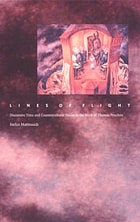
Lines of Flight
Discursive Time and Countercultural Desire in the Work of Thomas PynchonStefan Mattessich
Duke University Press, 2002
Mattessich theorizes a new kind of time—subjective displacement—dramatized in the parody, satire, and farce deployed through Pynchon’s oeuvre. In particular, he is interested in showing how this sense of time relates to the counterculture of the 1960s and 1970s. Examining this movement as an instance of flight or escape and exposing the beliefs behind it, Mattessich argues that the counterculture’s rejection of the dominant culture ultimately became an act of self-cancellation, a rebellion in which the counterculture found itself defined by the very order it sought to escape. He points to parallels in Pynchon’s attempts to dramatize and enact a similar experience of time in the doubling-back, crisscrossing, and erasure of his writing. Mattessich lays out a theory of cultural production centered on the ethical necessity of grasping one’s own susceptibility to discursive forms of determination.
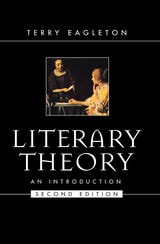
Literary Theory
An IntroductionTerry Eagleton
University of Minnesota Press, 1996

Literature and the Cognitive Revolution, Volume 23
Alan Richardson and Francis F. Steen
Duke University Press, 0

Literature for Change
The Case for Literary Research Across Languages and CulturesEdited by Charles Burdett, Joseph Ford, Godela Weiss-Sussex, and Naomi Wells
University of London Press, 2026
Highlighting efforts to address today’s most pressing social challenges through the study of texts in languages other than English.
Literature for Change examines how the study, production, circulation, and reception of literary texts in languages other than English contribute to addressing contemporary social challenges. Through eleven case studies across diverse languages and cultures, it analyzes the real-world impact of literary research, showing its relevance to sectors such as museums and heritage, the environmental and medical humanities, and the digital sphere. Combining hermeneutic and aesthetic approaches, the chapters demonstrate the value of varied methods, including theoretically grounded creative inquiry, and the connections between literary studies and other disciplines. The book affirms the importance of the field of modern languages and the continuing role of literary texts in shaping social and cultural life.
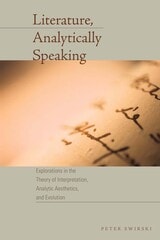
Literature, Analytically Speaking
Explorations in the Theory of Interpretation, Analytic Aesthetics, and EvolutionBy Peter Swirski
University of Texas Press, 2010
In a new approach to interdisciplinary literary theory, Literature, Analytically Speaking integrates literary studies with analytic aesthetics, girded by neo-Darwinian evolution. Scrutinizing narrative fiction through a lens provided by analytic philosophy, revered literary theorist Peter Swirski puts new life into literary theory while fashioning a set of practical guidelines for critics in the interpretive trenches.
Dismissing critical inquirers who deny intention its key role in the study of literary reception, Swirski extends the defense of intentionality to art and to human behavior in general. In the process, Swirski takes stock of the recent work in evolutionary theory, arguing that the analysis of narrative truth may be grounded in the neo-Darwinian paradigm which forms the empirical backbone behind his analytic approach. Literature, Analytically Speaking provides a series of precepts designed to capture the ways in which we do interpret (and ought to interpret) works of literature. Reflecting a resounding shift from the poststructuralist paradigm, Swirski's lively and colorful presentation, backed up by a dazzling variety of examples and case studies, reconceptualizes the aesthetics of literature and literary studies.
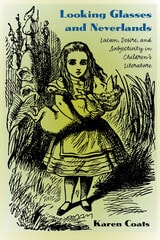
Looking Glasses and Neverlands
Lacan, Desire, and Subjectivity in Children's LiteratueKaren Coats
University of Iowa Press, 2004
This groundbreaking study introduces and explores Lacan’s complex theories of subjectivity and desire through close readings of canonical children’s books such as Charlotte’s Web, Stellaluna, Holes, Tangerine, and The Chocolate War, providing an introduction to an increasingly influential body of difficult work while making the claim that children’s textual encounters are as significant as their existential ones in constituting their subjectivities and giving shape to their desires.
Loser Sons
Politics and AuthorityAvital Ronell
University of Illinois Press, 2013

Lotman and Cultural Studies
Encounters and ExtensionsEdited by Andreas Schonle
University of Wisconsin Press, 2006
In this volume, edited by Andreas Schönle, contributors extend Lotman's theories to a number of fields. Focusing on his less frequently studied later period, Lotman and Cultural Studies engages with such ideas as the "semiosphere," the fluid, dynamic semiotic environment out of which meaning emerges; "auto-communication," the way in which people create narratives about themselves that in turn shape their self-identity; change, as both gradual evolution and an abrupt, unpredictable "explosion"; power; law and mercy; Russia and the West; center and periphery.
As William Mills Todd observes in his afterword, the contributors to this volume test Lotman's legacy in a new context: "Their research agendas-Iranian and American politics, contemporary Russian and Czech politics, sexuality and the body-are distant from Lotman's own, but his concepts and awareness yield invariably illuminating results."