Results by title
254 books match the query 'Sex' and 9 start with l

Lady Chatterley's Legacy in the Movies
Sex, Brains, and Body GuysLehman, Peter
Rutgers University Press, 2010
Peter Lehman and Susan Hunt relate a host of wide-ranging films to a literary tradition dating back to D. H. Lawrence's Lady Chatterley's Lover and an emerging body culture of our time. Through an engaging and compelling narrative, they argue that the hero's body, lovemaking style, and penis-revealed through extensive male nudity-celebrate conformity to norms of masculinity and male sexuality. Simultaneously, these films denigrate the vital, creative, erotic world of the mind. Just when women began to successfully compete with men in the workplace, these movies, if you will, unzip the penis as the one thing women do not have but want and need for their fulfillment.
But Lehman and Hunt also find signs of a yearning for alternative forms of sexual and erotic pleasure in film, embracing diverse bodies and vibrant minds. Lady Chatterley's Legacy in the Movies shows how filmmakers, spectators, and all of us can be empowered to dethrone the body guy, his privileged body, and preferred style of lovemaking, replacing it with a wide range of alternatives.

Law in Everyday Japan
Sex, Sumo, Suicide, and StatutesMark D. West
University of Chicago Press, 2005
Compiling case studies based on seven fascinating themes—karaoke-based noise complaints, sumo wrestling, love hotels, post-Kobe earthquake condominium reconstruction, lost-and-found outcomes, working hours, and debt-induced suicide—Law in Everyday Japan offers a vibrant portrait of the way law intermingles with social norms, historically ingrained ideas, and cultural mores in Japan. Each example is informed by extensive fieldwork. West interviews all of the participants-from judges and lawyers to defendants, plaintiffs, and their families-to uncover an everyday Japan where law matters, albeit in very surprising ways.

Law, Sex, and Christian Society in Medieval Europe
James A. Brundage
University of Chicago Press, 1990
"Brundage's book is consistently learned, enormously useful, and frequently entertaining. It is the best we have on the relationships between theological norms, legal principles, and sexual practice."—Peter Iver Kaufman, Church History
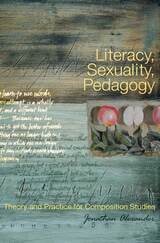
Literacy, Sexuality, Pedagogy
Theory and Practice for Composition StudiesJonathan Alexander
Utah State University Press, 2008
In Literacy, Sexuality, Pedagogy, Jonathan Alexander argues for the development of students' "sexual literacy." Such a literacy is not just concerned with developing fluency with sexuality as a "hot" topic, but with understanding the intimate interconnectedness of sexuality and literacy in Western culture. Using the work of scholars in queer theory, sexuality studies, and the New Literacy Studies, Alexander unpacks what he sees as a crucial--if often overlooked--dimension of literacy: the fundamental ways in which sexuality has become a key component of contemporary literate practice, of the stories we tell about ourselves, our communities, and our political investments.
Alexander then demonstrates through a series of composition exercises and writing assignments how we might develop students' understanding of sexual literacy. Examining discourses of gender, heterosexuality, and marriage allows students (and instructors) a critical opportunity to see how the languages we use to describe ourselves and our communities are saturated with ideologies of sexuality. Understanding how sexuality is constructed and deployed as a way to "make meaning" in our culture gives us a critical tool both to understand some of the fundamental ways in which we know ourselves and to challenge some of the norms that govern our lives. In the process, we become more fluent with the stories that we tell about ourselves and discover how normative notions of sexuality enable (and constrain) narrations of identity, culture, and politics. Such develops not only our understanding of sexuality, but of literacy, as we explore how sexuality is a vital, if vexing, part of the story of who we are.
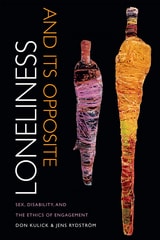
Loneliness and Its Opposite
Sex, Disability, and the Ethics of EngagementDon Kulick and Jens Rydström
Duke University Press, 2015
Loneliness and Its Opposite documents how two countries generally imagined to be progressive engage with these questions in very different ways. Denmark and Sweden are both liberal welfare states, but they diverge dramatically when it comes to sexuality and disability. In Denmark, the erotic lives of people with disabilities are acknowledged and facilitated. In Sweden, they are denied and blocked. Why do these differences exist, and how do both facilitation and hindrance play out in practice?
Loneliness and Its Opposite charts complex boundaries between private and public, love and sex, work and intimacy, and affection and abuse. It shows how providing disabled adults with access to sexual lives is not just crucial for a life with dignity. It is an issue of fundamental social justice with far reaching consequences for everyone.
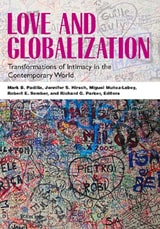
Love and Globalization
Transformations of Intimacy in the Contemporary WorldMark B. Padilla
Vanderbilt University Press, 2007
The richly-textured ethnographies provoke a series of questions about emerging vocabularies for friendship and romance; the adoption of cultural forms from faraway places; the emergence of new desires, pleasures, and emotions that circulate as commodities in the global marketplace; and the ways economic processes shape public and private expressions of sexual intimacy.

Love in Africa
Edited by Jennifer Cole and Lynn M. Thomas
University of Chicago Press, 2009
In recent years, scholarly interest in love has flourished. Historians have addressed the rise of romantic love and marriage in Europe and the United States, while anthropologists have explored the ways globalization has reshaped local ideas about those same topics. Yet, love in Africa has been peculiarly ignored, resulting in a serious lack of understanding about this vital element of social life—a glaring omission given the intense focus on sexuality in Africa in the wake of HIV/AIDS.
Love in Africa seeks both to understand this failure to consider love and to begin to correct it. In a substantive introduction and eight essays that examine a variety of countries and range in time from the 1930s to the present, the contributors collectively argue for the importance of paying attention to the many different cultural and historical strands that constitute love in Africa. Covering such diverse topics as the reception of Bollywood movies in 1950s Zanzibar, the effects of a Mexican telenovela on young people’s ideas about courtship in Niger, the models of romance promoted by South African and Kenyan magazines, and the complex relationship between love and money in Madagascar and South Africa, Love in Africa is a vivid and compelling look at love’s role in African society.
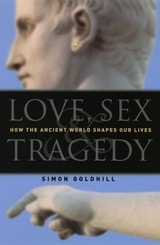
Love, Sex & Tragedy
How the Ancient World Shapes Our LivesSimon Goldhill
University of Chicago Press, 2004
Marx, Clark Gable, George W. Bush, Oscar Wilde, and Freud—Goldhill's range here is enormous, and he takes great delight in tracing both follies and fundamental philosophical questions through the centuries and continents to the birthplace of Western civilization as we know it. Underlying his brisk and learned excursions through history and art is the foundational belief, following Cicero, that learning about the classics makes a critical difference to our self-understanding. Whether we are considering the role of religion in contemporary society, our expectations about the boundaries between public and private life, or even how we spend our free time, recognizing the role of the classics is integral to our comprehension of modern life and our place in it.
When Goldhill asks "Who do you think you are?" he presents us with the rarest of opportunities: the chance to let him lead us, firmly but with a wink, back two thousand years to where we are.
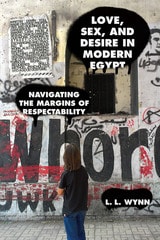
Love, Sex, and Desire in Modern Egypt
Navigating the Margins of RespectabilityBy L. L. Wynn
University of Texas Press, 2018
Cairo is a city obsessed with honor and respectability—and love affairs. Sara, a working-class woman, has an affair with a married man and becomes pregnant, only to be abandoned by him; Ayah and Zeid, a respectably engaged couple, argue over whether Ayah’s friend is a prostitute or a virgin; Malak, a European belly dancer who sometimes gets paid for sex, wants to be loved by a man who won’t treat her like a whore just because she’s a dancer; and Alia, a Christian banker who left her abusive husband, is the mistress of a wealthy Muslim man, Haroun, who encourages business by hosting risqué parties for other men and their mistresses.
Set in transnational Cairo over two decades, Love, Sex, and Desire in Modern Egypt is an ethnography that explores female respectability, male honor, and Western theories and fantasies about Arab society. L. L. Wynn uses stories of love affairs to interrogate three areas of classic anthropological theory: mimesis, kinship, and gift. She develops a broad picture of how individuals love and desire within a cultural and political system that structures the possibilities of, and penalties for, going against sexual and gender norms. Wynn demonstrates that love is at once a moral horizon, an attribute that “naturally” inheres in particular social relations, a social phenomenon strengthened through cultural concepts of gift and kinship, and an emotion deeply felt and desired by individuals.