Results by title
279 books match the query 'Slavery' and 13 start with l
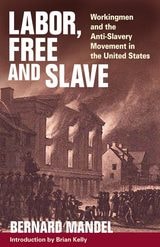
Labor, Free and Slave
Workingmen and the Anti-Slavery Movement in the United StatesBernard Mandel.Introduction by Brian Kelly
University of Illinois Press, 2006
Bernard Mandel's classic study provides a concise overview of the relationship between organized abolitionism and the fledgling labor movement in the period before the Civil War. Mandel argues that slavery reinforced the powerlessness of white workers North and South, and the racial divisions that it upheld rendered effective labor solidarity impossible. Deep distrust between abolitionists and the working classes, however, compelled Northern workers to find their own way into the antislavery ranks.
Legacies of Slavery
Shared History and Family Conversations with Myra Davis-Branic, Frye Gaillard, and Kern JacksonEdited by Frye Gaillard
University of Alabama Press, 2026
Documents conversations between two southern writers and friends whose families were intertwined in slavery
Legacies of Slavery commemorates a story of racial reconciliation in the South. Writers, educators, and friends Frye Gaillard and Myra Davis-Branic discovered a shared family history of slavery in Eutawville, South Carolina, where Davis-Branic’s family was enslaved by Gaillard’s family.
In 2024, the University of South Alabama’s Kern Jackson moderated three conversations with Davis-Branic and Gaillard in Mobile. These conversations are presented here in an edited format. Davis-Branic and Gaillard discussed their intertwined family history and what they each learned from research into their ancestors. They relay origin stories and the role of a key grandparent who greatly impacted their lives. They also talk about their own trajectories in a historical context, the issue of slavery in their families, and the legacy of slavery for their children and families.
The book concludes with short excerpts, one from Davis-Branic’s book Cornbread My Soul: The Davis Family of Eutawville, South Carolina, and one from Gaillard’s family history, Lessons from the Big House: One Family’s Passage Through the History of the South, a Memoir. Legacies of Slavery stands as a powerful and unique documentation for all who are interested in how two southern families, bound by slavery in the past and now by friendship and a degree of understanding, have found some measure of redemption.
Legal Spectatorship
Slavery and the Visual Culture of Domestic ViolenceKelli Moore
Duke University Press, 2022
Duke University Press Scholars of Color First Book Award recipient
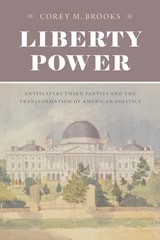
Liberty Power
Antislavery Third Parties and the Transformation of American PoliticsCorey M. Brooks
University of Chicago Press, 2015
As Corey M. Brooks explains, abolitionist trailblazers who organized first the Liberty Party and later the more moderate Free Soil Party confronted formidable opposition from a two-party system expressly constructed to suppress disputes over slavery. Identifying the Whigs and Democrats as the mainstays of the southern Slave Power’s national supremacy, savvy abolitionists insisted that only a party independent of slaveholder influence could wrest the federal government from its grip. A series of shrewd electoral, lobbying, and legislative tactics enabled these antislavery third parties to wield influence far beyond their numbers. In the process, these parties transformed the national political debate and laid the groundwork for the success of the Republican Party and the end of American slavery.
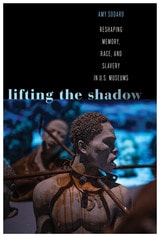
Lifting the Shadow
Reshaping Memory, Race, and Slavery in U.S. MuseumsAmy Sodaro
Rutgers University Press, 2025
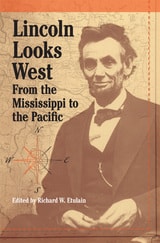
Lincoln Looks West
From the Mississippi to the PacificEdited by Richard W. Etulain
Southern Illinois University Press, 2010
This first-ever volume to comprehensively explore President Abraham Lincoln’s ties to the American West brings together a variety of scholars and experts who offer a fascinating look at the sixteenth president’s lasting legacy in the territory beyond the Mississippi River. Editor Richard W. Etulain’s extensive introductory essay treats these western connections from Lincoln’s early reactions to Texas, Oregon, and the Mexican War in the 1840s, through the 1850s, and during his presidency, providing a framework for the nine essays that follow.
Each of these essays offers compelling insight into the many facets of Lincoln’s often complex interactions with the American West. Included in this collection are a provocative examination of Lincoln’s opposition to the Mexican War; a discussion of the president’s antislavery politics as applied to the new arena of the West; new perspectives on Lincoln’s views regarding the Thirteenth Amendment and his reluctance regarding the admission of Nevada to the Union; a fresh look at the impact of the Radical Republicans on Lincoln’s patronage and appointments in the West; and discussion of Lincoln’s favorable treatment of New Mexico and Arizona, primarily Southern and Democratic areas, in an effort to garner their loyalty to the Union. Also analyzed is “The Tribe of Abraham”—Lincoln’s less-than-competent appointments in Washington Territory made on the basis of political friendship—and the ways in which Lincoln’s political friends in the Western Territories influenced his western policies. Other essays look at Lincoln’s dealings with the Mormons of Utah, who supported the president in exchange for his tolerance, and American Indians, whose relations with the government suffered as the president’s attention was consumed by the crisis of the Civil War.
In addition to these illuminating discussions, Etulain includes a detailed bibliographical essay, complete with examinations of previous interpretations and topics needing further research, as well as an extensive list of resources for more information on Lincoln's ties west of the Mississippi. Loaded with a wealth of information and fresh historical perspectives, Lincoln Looks West explores yet another intriguing dimension to this dynamic leader and to the history of the American West.
Contributors:
Richard W. Etulain
Michael S. Green
Robert W. Johannsen
Deren Earl Kellogg
Mark E. Neely Jr.
David A. Nichols
Earl S. Pomeroy
Larry Schweikart
Vincent G. Tegeder
Paul M. Zall
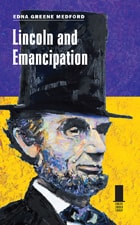
Lincoln and Emancipation
Edna Greene Medford
Southern Illinois University Press, 2015
In this succinct study, Edna Greene Medford examines the ideas and events that shaped President Lincoln’s responses to slavery, following the arc of his ideological development from the beginning of the Civil War, when he aimed to pursue a course of noninterference, to his championing of slavery’s destruction before the conflict ended. Throughout, Medford juxtaposes the president’s motivations for advocating freedom with the aspirations of African Americans themselves, restoring African Americans to the center of the story about the struggle for their own liberation.
Lincoln and African Americans, Medford argues, approached emancipation differently, with the president moving slowly and cautiously in order to save the Union while the enslaved and their supporters pressed more urgently for an end to slavery. Despite the differences, an undeclared partnership existed between the president and slaves that led to both preservation of the Union and freedom for those in bondage. Medford chronicles Lincoln’s transition from advocating gradual abolition to campaigning for immediate emancipation for the majority of the enslaved, a change effected by the military and by the efforts of African Americans. The author argues that many players—including the abolitionists and Radical Republicans, War Democrats, and black men and women—participated in the drama through agitation, military support of the Union, and destruction of the institution from within. Medford also addresses differences in the interpretation of freedom: Lincoln and most Americans defined it as the destruction of slavery, but African Americans understood the term to involve equality and full inclusion into American society. An epilogue considers Lincoln’s death, African American efforts to honor him, and the president’s legacy at home and abroad.
Both enslaved and free black people, Medford demonstrates, were fervent participants in the emancipation effort, showing an eagerness to get on with the business of freedom long before the president or the North did. By including African American voices in the emancipation narrative, this insightful volume offers a fresh and welcome perspective on Lincoln’s America.
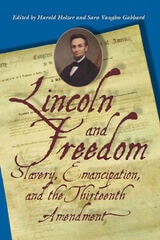
Lincoln and Freedom
Slavery, Emancipation, and the Thirteenth AmendmentEdited by Harold Holzer and Sara Vaughn Gabbard
Southern Illinois University Press, 2007
Lincoln’s reelection in 1864 was a pivotal moment in the history of the United States. The Emancipation Proclamation had officially gone into effect on January 1, 1863, and the proposed Thirteenth Amendment had become a campaign issue. Lincoln and Freedom: Slavery, Emancipation, and the Thirteenth Amendment captures these historic times, profiling the individuals, events, and enactments that led to slavery’s abolition. Fifteen leading Lincoln scholars contribute to this collection, covering slavery from its roots in 1619 Jamestown, through the adoption of the Constitution, to Abraham Lincoln’s presidency.
This comprehensive volume, edited by Harold Holzer and Sara Vaughn Gabbard, presents Abraham Lincoln’s response to the issue of slavery as politician, president, writer, orator, and commander-in-chief. Topics include the history of slavery in North America, the Supreme Court’s Dred Scott decision, the evolution of Lincoln’s view of presidential powers, the influence of religion on Lincoln, and the effects of the Emancipation Proclamation.
This collection effectively explores slavery as a Constitutional issue, both from the viewpoint of the original intent of the nation’s founders as they failed to deal with slavery, and as a study of the Constitutional authority of the commander-in-chief as Lincoln interpreted it. Addressed are the timing of Lincoln’s decision for emancipation and its effect on the public, the military, and the slaves themselves.
Other topics covered include the role of the U.S. Colored Troops, the election campaign of 1864, and the legislative debate over the Thirteenth Amendment. The volume concludes with a heavily illustrated essay on the role that iconography played in forming and informing public opinion about emancipation and the amendments that officially granted freedom and civil rights to African Americans.
Lincoln and Freedom provides a comprehensive political history of slavery in America and offers a rare look at how Lincoln’s views, statements, and actions played a vital role in the story of emancipation.
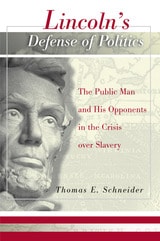
Lincoln's Defense of Politics
The Public Man and His Opponents in the Crisis Over SlaveryThomas E. Schneider
University of Missouri Press, 2005
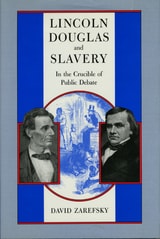
Lincoln, Douglas, and Slavery
In the Crucible of Public DebateDavid Zarefsky
University of Chicago Press, 1990
Literary Bondage
Slavery in Cuban NarrativeBy William Luis
University of Texas Press, 1990
In the nineteenth century, the Cuban economy rested on the twin pillars of sugar and slaves. Slavery was abolished in 1886, but, one hundred years later, Cuban authors were still writing antislavery narratives. William Luis explores this seeming paradox in his groundbreaking study Literary Bondage, asking why this literary genre has remained a viable means of expression.
Applying Foucault's theory of counter-discourse to a vast body of antislavery literature, Luis shows how these narratives have always served to undermine the foundations of slavery, to protest the marginalized status of blacks in Cuban society, and to rewrite the canon of "acceptable" history and literature. He finds that emancipation did not end the need for such counter-discourse and reveals how the antislavery narrative continues to provide a forum for voices that have been silenced by the dominant culture.
In addition to such well-known works as Cecilia Valdés, The Kingdom of This World, and The Autobiography of a Runaway Slave, Luis draws on many literary works outside the familiar canon, including Romualdo, uno de tantos, Aponte, SofíaLa familia Unzúazu, El negrero, and Los guerrilleros negros. This comprehensive coverage raises important questions about the process of canon-formation and brings to light Cuba's rich heritage of Afro-Latin literature and culture.
Lovable Racists, Magical Negroes, and White Messiahs
David Ikard
University of Chicago Press, 2017
In the book, Ikard explodes the fiction of a postracial society while awakening us to the sobering reality that we must continue to fight for racial equality or risk losing the hard-fought gains of the Civil Rights movement. Through his close reading of novels, films, journalism, and political campaigns, he analyzes willful white blindness and attendant master narratives of white redemption—arguing powerfully that he who controls the master narrative controls the perception of reality. The book sounds the alarm about seemingly innocuous tropes of white redemption that abound in our society and generate the notion that blacks are perpetually indebted to whites for liberating, civilizing, and enlightening them. In Lovable Racists, Magical Negroes, and White Messiahs, Ikard expertly and unflinchingly gives us a necessary critical historical intervention.
Lyrical Liberators
The American Antislavery Movement in Verse, 1831–1865Monica Pelaez
Ohio University Press, 2018
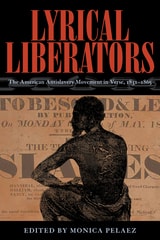
Before Black Lives Matter and Hamilton, there were abolitionist poets, who put pen to paper during an era when speaking out against slavery could mean risking your life. Indeed, William Lloyd Garrison was dragged through the streets by a Boston mob before a planned lecture, and publisher Elijah P. Lovejoy was fatally shot while defending his press from rioters. Since poetry formed a part of the cultural, political, and emotional lives of readers, it held remarkable persuasive power. Yet antislavery poems have been less studied than the activist editorials and novels of the time.
In Lyrical Liberators, Monica Pelaez draws on unprecedented archival research to recover these poems from the periodicals—Garrison’s Liberator, Frederick Douglass’s North Star, and six others—in which they originally appeared. The poems are arranged by theme over thirteen chapters, a number that represents the amendment that finally abolished slavery in 1865. The book collects and annotates works by critically acclaimed writers, commercially successful scribes, and minority voices including those of African Americans and women.
There is no other book like this. Sweeping in scope and passionate in its execution, Lyrical Liberators is indispensable for scholars and teachers of American literature and history, and stands as a testimony to the power of a free press in the face of injustice.