Results by title
216 books match the query 'Social' and 8 start with l
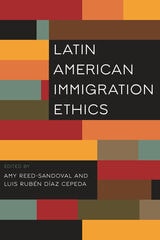
Latin American Immigration Ethics
Edited by Amy Reed-Sandoval Luis Rubén Díaz Cepeda
University of Arizona Press, 2021
Without eschewing relevant conceptual resources derived from European and Anglo-American philosophies, the essays in this book emphasize Latin American and Latinx philosophies, decolonial and feminist theories, and Indigenous philosophies of Latin America, in the pursuit of an immigration ethics. The contributors explore the moral challenges of immigration that either arise within Latin America, or when Latin Americans and Latina/o/xs migrate to and reside within the United States. Uniquely, some chapters focus on south to south migration. Contributors also examine Latina/o/x experiences in the United States, addressing the lacuna of philosophical writing on migration, maternity, and childhood.
Latin American Immigration Ethics advances philosophical conversations and debates about immigration by theorizing migration from the Latin American and Latinx context.
Contributors
Luis Rubén Díaz Cepeda, Lori Gallegos, Margaret Griesse, Eduardo Mendieta, José Jorge Mendoza, Amos Nascimento, Carlos Pereda, Silvana Rabinovich, Amy Reed-Sandoval, Raúl Villarroel, Allison B. Wolf
Leading Edges in Social and Behavioral Science
R. Duncan Luce
Russell Sage Foundation, 1990
Leftist Theories of Sport
A Critique and ReconstructionWilliam J. Morgan
University of Illinois Press, 1994
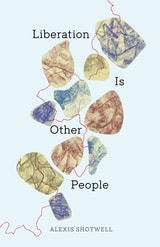
Liberation Is Other People
Alexis Shotwell
University of Minnesota Press, 2026
A compelling call to transform isolation into solidarity and turn shared action into lasting change
Liberation Is Other People offers a bold and timely exploration of how we confront the immense, interconnected challenges of our time. It begins with the truth that many of the crises we face—climate collapse, war, systemic inequality—are human-made and therefore humanly transformable. Yet such “wicked problems” cannot be solved by individuals alone. Every attempt to repair exposes how deeply our lives are entangled across histories of power, privilege, and vulnerability.
Rejecting the idea that personal virtue or guilt can solve the world’s problems, Alexis Shotwell offers a philosophy and practice of collective freedom through collective struggle. Drawing on thinkers such as Angela Davis and Ursula K. Le Guin, she argues that freedom is not the power to act alone but the capacity to shape the world with others. Through sustained engagement with climate politics, white settler responsibility, and the reimagining of sexuality and gender, Liberation Is Other People shows how embracing complicity and acknowledging that none of us stand outside the systems we wish to change can open new possibilities for solidarity and transformation.
Rather than a call to purity or perfection, Liberation Is Other People is a vision of politics as a shared, necessarily imperfect process of creation. Shotwell builds a compelling case that solidarity can be a source of joy, inspiration, and political power. In this age of division and isolation, Shotwell insists that our greatest possibility lies not in fixing the world by our individual selves but in remaking it—together.
Retail e-book files for this title are screen-reader friendly.
Life, Emergent
The Social in the Afterlives of ViolenceYasmeen Arif
University of Minnesota Press, 2016
How does an inquiry into life as it lives (or dies) amid mass violence look like from the perspective of the “social”? Taking us from Sierra Leone to India to Lebanon, Life, Emergent challenges conventional understandings of biopolitics, weaving a politics of life through the lens of life, not death.
Arguing that the “letting die” element of biopolitics has been overemphasized, Yasmeen Arif zeros in on biopolitics’ other pole: “making live.” She does so by highlighting the various means and the forms of life configured in the aftermath—or afterlives—of violent events in contexts of law, justice, community, and identity. Her analysis of the social repercussions is both global and local in scope. Arif examines the convictions made in the Special Court of Sierra Leone, the first hybrid court of its nature under international criminal law. Next, she explores the making of a justice movement in the context of Hindu–Muslim violence in 2002 in the state of Gujarat, India. From there she revisits the Sikh carnage in Delhi of 1984. Finally, she explores a span of civil violence in Lebanon, and particularly, its effects on the city of Beirut.
This rigorously argued book brings together the various strands of life and the social that each chapter has disentangled—and in doing so it begins to frame a politics of, and in, life.

Lifeworlds
Essays in Existential AnthropologyMichael Jackson
University of Chicago Press, 2012
Losing Culture
Nostalgia, Heritage, and Our Accelerated TimesDavid Berliner
Rutgers University Press, 2020
Such sentiments get echoed around the world, from aging Trump supporters in West Virginia to young villagers in West Africa. But what is triggering this sense of cultural loss, and to what ends does this rhetoric get deployed?
To answer these questions, anthropologist David Berliner travels around the world, from Guinea-Conakry, where globalization affects the traditional patriarchal structure of cultural transmission, to Laos, where foreign UNESCO experts have become self-appointed saviors of the nation’s cultural heritage. He also embarks on a voyage of critical self-exploration, reflecting on how anthropologists handle their own sense of cultural alienation while becoming deeply embedded in other cultures. This leads into a larger examination of how and why we experience exonostalgia, a longing for vanished cultural heydays we never directly experienced.
Losing Culture provides a nuanced analysis of these phenomena, addressing why intergenerational cultural transmission is vital to humans, yet also considering how efforts to preserve disappearing cultures are sometimes misguided or even reactionary. Blending anthropological theory with vivid case studies, this book teaches us how to appreciate the multitudes of different ways we might understand loss, memory, transmission, and heritage.
Lucchesi and The Whale
Frank Lentricchia
Duke University Press, 2001
Having become “a mad Ahab of reading,” who is driven to dissect the “artificial body of Melville’s behemothian book” to grasp its truth, Lucchesi allows his thoughts to wander and loop from theory to dream to reality to questionable memory. But his black humor-tinged musings are often as profoundly moving as they are intellectual, such as the section in which he ponders the life and philosophy of Ludwig Wittgenstein in relation to the significance of a name—and then attempts to share these thoughts with a sexy, middle-aged flight attendant—or another in which he describes a chance meeting with a similarly-named mafia don.
Despite apparent spiritual emptiness, Lucchesi in the end does find “a secret meaning” to Moby-Dick. And Lentricchia’s creations—both Lucchesi and The Whale and its main character—reveal this meaning through a series of ingeniously self-reflective metaphors, in much the way that Melville himself did in and through Moby-Dick. Vivid, humorous, and of unparalleled originality, this new work from Frank Lentricchia will inspire and console all who love and ponder both great literature and those who would write it.