322 books match the query 'Social Policy' and 6 start with l
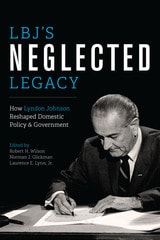
cover of LBJ's Neglected Legacy: How Lyndon Johnson Reshaped Domestic Policy and Government

LBJ's Neglected Legacy

How Lyndon Johnson Reshaped Domestic Policy and Government

Edited by Robert H. Wilson, Norman J. Glickman, and Laurence E. Lynn, Jr.

University of Texas Press, 2015

During the five full years of his presidency (1964–1968), Lyndon Johnson initiated a breathtaking array of domestic policies and programs, including such landmarks as the Civil Rights Act, Head Start, Food Stamps, Medicare and Medicaid, the Immigration Reform Act, the Water Quality Act, the Voting Rights Act, Social Security reform, and Fair Housing. These and other “Great Society” programs reformed the federal government, reshaped intergovernmental relations, extended the federal government’s role into new public policy arenas, and redefined federally protected rights of individuals to engage in the public sphere. Indeed, to a remarkable but largely unnoticed degree,Johnson’s domestic agenda continues to shape and influence current debates on major issues such as immigration, health care, higher education funding, voting rights, and clean water, even though many of his specific policies and programs have been modified or, in some cases, dismantled since his presidency.

LBJ’s Neglected Legacy examines the domestic policy achievements of one of America’s most effective, albeit controversial, leaders. Leading contributors from the fields of history, public administration, economics, environmental engineering, sociology, and urban planning examine twelve of LBJ’s key domestic accomplishments in the areas of citizenship and immigration, social and economic policy, science and technology, and public management. Their findings illustrate the enduring legacy of Johnson’s determination and skill in taking advantage of overwhelming political support in the early years of his presidency to push through an extremely ambitious and innovative legislative agenda, and emphasize the extraordinary range and extent of LBJ’s influence on American public policy and administration.
[more]
cover of Labor of Fire: The Ontology of Labor between Economy and Culture

Labor of Fire

The Ontology of Labor between Economy and Culture

Bruno Gullì

Temple University Press, 2005

In Labor of Fire, Bruno Gullì offers a timely and much needed re-examination of the concept of labor. Distinguishing between "productive labor" (working for money or subsistence) and "living labor" (working for artistic creation), Gullì convincingly argues for a definition of work that recognizes the importance of artistic and social creativity to our definition of labor and the self.

Gullì lays the groundwork for his book by offering a critique of productive labor, and then maps out his productive/living labor distinction in detail, reviewing the work of Marx and others.
[more]
cover of Legacies of the War on Poverty 

Legacies of the War on Poverty 

Martha J. Bailey

Russell Sage Foundation, 2013
Many believe that the War on Poverty, launched by President Johnson in 1964, ended in failure. In 2010, the official poverty rate was 15 percent, almost as high as when the War on Poverty was declared. Historical and contemporary accounts often portray the War on Poverty as a costly experiment that created doubts about the ability of public policies to address complex social problems. Legacies of the War on Poverty, drawing from fifty years of empirical evidence, documents that this popular view is too negative. The volume offers a balanced assessment of the War on Poverty that highlights some remarkable policy successes and promises to shift the national conversation on poverty in America. Featuring contributions from leading poverty researchers, Legacies of the War on Poverty demonstrates that poverty and racial discrimination would likely have been much greater today if the War on Poverty had not been launched. Chloe Gibbs, Jens Ludwig, and Douglas Miller dispel the notion that the Head Start education program does not work. While its impact on children’s test scores fade, the program contributes to participants’ long-term educational achievement and, importantly, their earnings growth later in life. Elizabeth Cascio and Sarah Reber show that Title I legislation reduced the school funding gap between poorer and richer states and prompted Southern school districts to desegregate, increasing educational opportunity for African Americans. The volume also examines the significant consequences of income support, housing, and health care programs. Jane Waldfogel shows that without the era’s expansion of food stamps and other nutrition programs, the child poverty rate in 2010 would have been three percentage points higher. Kathleen McGarry examines the policies that contributed to a great success of the War on Poverty: the rapid decline in elderly poverty, which fell from 35 percent in 1959 to below 10 percent in 2010. Barbara Wolfe concludes that Medicaid and Community Health Centers contributed to large reductions in infant mortality and increased life expectancy. Katherine Swartz finds that Medicare and Medicaid increased access to health care among the elderly and reduced the risk that they could not afford care or that obtaining it would bankrupt them and their families. Legacies of the War on Poverty demonstrates that well-designed government programs can reduce poverty, racial discrimination, and material hardships. This insightful volume refutes pessimism about the effects of social policies and provides new lessons about what more can be done to improve the lives of the poor.
[more]
cover of Legitimacy and Criminal Justice: An International Perspective

Legitimacy and Criminal Justice

An International Perspective

Tom R. Tyler

Russell Sage Foundation, 2007

The police and the courts depend on the cooperation of communities to keep order. But large numbers of urban poor distrust law enforcement officials. Legitimacy and Criminal Justice explores the reasons that legal authorities are or are not seen as legitimate and trustworthy by many citizens. Legitimacy and Criminal Justice is the first study of the perceived legitimacy of legal institutions outside the U.S. The authors investigate relations between courts, the police, and communities in the U.K., Western Europe, South Africa, Slovenia, South America, and Mexico, demonstrating the importance of social context in shaping those relations. Gorazd Meško and Goran Klemencic examine Slovenia's adoption of Western-style "community policing" during its transition to democracy. In the context of Slovenia's recent Communist past—when "community policing" entailed omnipresent social and political control—citizens regarded these efforts with great suspicion, and offered little cooperation to the police. When states fail to control crime, informal methods of law can gain legitimacy. Jennifer Johnson discusses an extra-legal policing system carried out by farmers in Guerrero, Mexico—complete with sentencing guidelines and initiatives to reintegrate offenders into the community. Feeling that federal authorities were not prosecuting the crimes that plagued their province, the citizens of Guerrero strongly supported this extra-legal arrangement, and engaged in massive protests when the central government tried to suppress it. Several of the authors examine how the perceived legitimacy of the police and courts varies across social groups. Graziella Da Silva, Ignacio Cano, and Hugo Frühling show that attitudes toward the police vary greatly across social classes in harshly unequal societies like Brazil and Chile. And many of the authors find that ethnic minorities often display greater distrust toward the police, and perceive themselves to be targets of police discrimination. Indeed, Hans-Jöerg Albrecht finds evidence of bias in arrests of the foreign born in Germany, which has fueled discontent among Berlin's Turkish youth. Sophie Body-Gendrot points out that mutual hostility between police and minority communities can lead to large-scale violence, as the Parisian banlieu riots underscored. The case studies presented in this important new book show that fostering cooperation between law enforcement and communities requires the former to pay careful attention to the needs and attitudes of the latter. Forging a new field of comparative research, Legitimacy and Criminal Justice brings to light many of the reasons the law's representatives succeed—or fail—in winning citizens' hearts and minds. A Volume in the Russell Sage Foundation Series on Trust
[more]
cover of Life after Death: What Happens When Someone Survives an Execution?

Life after Death

What Happens When Someone Survives an Execution?

Austin D. Sarat

Temple University Press, 2027

In May and October of 2026, the Tennessee Department of Corrections failed to execute first Tony Carruthers and then Christa Pike via lethal injection. Their experiences raise the question of whether a second execution would be constitutional and fuel the debate over whether the death penalty can ever be anything but cruel and unusual punishment.

In Life after Death, esteemed legal scholar and student of capital punishment Austin Sarat tells the stories of eight others who, like Carruthers and Pike, survived failed execution attempts. He recounts what went wrong and what happened to them after their near-death experiences. Some endured the trauma of a second execution; others remained incarcerated for the rest of their lives. But each case posed distinctive challenges for courts and public officials.

Sarat insists that the death penalty can never be humane and that no one should ever have to face a second trip to the execution chamber. Life after Death urges Americans to recognize those realities. It offers a critical examination of the way the justice system uses capital punishment, and it does so by telling the stories of prisoners who survive efforts to put them to death.

[more]
cover of Locked Up, Locked Out: Young Men in the Juvenile Justice System

Locked Up, Locked Out

Young Men in the Juvenile Justice System

Anne M. Nurse

Vanderbilt University Press, 2010

Locked Up, Locked Out follows forty juvenile male offenders, from their first-time admissions to the Ohio system through their incarceration and reentry into the community. The author conducted three lengthy interviews with each of these youth over a period of two and a half years. These interviews bring alive their attitudes and day-to-day prison experiences, as well as the intricate connections between life on the inside and life on the outside.

Status is key to everyday life in prison, and it is often played out in demonstrations of masculinity, misogyny, and violence. Some gangs and some "area codes" (as the old neighborhoods are called) are seen as tougher than others and are given more respect. Even letters from family members and girlfriends are important signs of whether a prisoner matters: one young man says, "I'd write letters every day to people to beg 'em to write me back." Another reports, "There would be people in there writing girls, saying, hey, write me this nasty letter of things we're going to do and things we did. And they'd write back with these letters. And now he'll get to walk around with his letter bragging, like, hey, check this out. These are the kind of girls I got."

Incarcerated youth also work hard at impression management. Coping with prison requires a young man to present one face to fellow prisoners and another to the authorities who will decide his release date.

The author pays substantial attention to the programs youth are offered, including those focusing on education, anger management, job training, and parenting skills. Another section looks at contact between incarcerated youth and the outside world, including a discussion of the impact of incarceration on families.

Based on her extensive knowledge of policies in other states, the author also provides a broad overview of the juvenile justice system nationally, describing how the system is organized, administered, and funded. Readers are taken through the juvenile justice process from conviction through parole with special attention paid to new state initiatives and sentencing structures.
[more]