158 books match the query 'Social justice' and 8 start with l

cover of Labs of Our Own: Feminist Tinkerings with Science

Labs of Our Own

Feminist Tinkerings with Science

Sig / Sara Giordano

Rutgers University Press, 2025

From climate change to COVID-19 to reproductive justice, there has been deep political polarization around science. Labs of Our Own provides a unique entry point into these twenty-first-century science wars by focusing on our affective relationships to science. The book delves into various sites where scientists, teachers, artists, and activists claim to create more democratic access to science—from DIY biology community labs to feminist classrooms to activist science practitioners. The reader will find that these claims for and attempts at democratic sciences not only impact what counts as science and who counts as a scientist but reconfigure who is included in the proper public. Instead of arguing for a knee-jerk defense of science against right-wing attacks, Labs of Our Own builds the case for a feminist, antiracist, decolonial, queer science tinkering practice that intentionally, politically, and ethically acts to produce new challenges to the definition and boundaries of the human.
[more]
cover of Law, Legislation and Liberty, Volume 2: The Mirage of Social Justice

Law, Legislation and Liberty, Volume 2

The Mirage of Social Justice

F. A. Hayek

University of Chicago Press, 1977
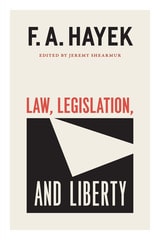
F. A. Hayek made many valuable contributions to the field of economics as well as to the disciplines of philosophy and politics. This volume represents the second of Hayek's comprehensive three-part study of the relations between law and liberty. Here, Hayek expounds his conviction that he continued unexamined pursuit of "social justice" will contribute to the erosion of personal liberties and encourage the advent of totalitarianism.
[more]
cover of Law, Legislation, and Liberty, Volume 19

Law, Legislation, and Liberty, Volume 19

F. A. Hayek

University of Chicago Press, 2021

A new edition of F. A. Hayek’s three-part opus Law, Legislation, and Liberty, collated in a single volume
In this critical entry in the University of Chicago’s Collected Works of F. A. Hayek series, political philosopher Jeremy Shearmur collates Hayek’s three-part study of law and liberty and places Hayek’s writings in careful historical context. Incisive and unrestrained, Law, Legislation, and Liberty is Hayek at his late-life best, making it essential reading for understanding the philosopher’s politics and worldview. 

These three volumes constitute a scaling up of the framework offered in Hayek’s famed The Road to Serfdom. Volume 1, Rules and Order, espouses the virtues of classical liberalism; Volume 2, The Mirage of Social Justice, examines the societal forces that undermine liberalism and, with it, liberalism’s capacity to induce “spontaneous order”; and Volume 3, The Political Order of a Free People, proposes alternatives and interventions against emerging anti-liberal movements, including a rule of law that resides in stasis with personal freedom. 

Shearmur’s treatment of this challenging work—including an immersive new introduction, a conversion of Hayek’s copious endnotes to footnotes, corrections to Hayek’s references and quotations, and the provision of translations to material that Hayek cited only in languages other than English—lends it new importance and accessibility. Rendered anew for the next generations of scholars, this revision of Hayek’s Law, Legislation, and Liberty is sure to become the standard.
[more]
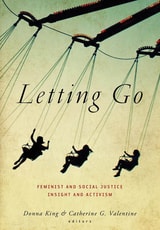
cover of Letting Go: Feminist and Social Justice Insight and Activism

Letting Go

Feminist and Social Justice Insight and Activism

Donna King

Vanderbilt University Press, 2015

At a time when women are being exhorted to "lean in" and work harder to get ahead, Letting Go: Feminist and Social Justice Insight and Activism encourages both women and men to "let go" instead. The book explores alternatives to the belief that individual achievement, accumulation, and attention-seeking are the road to happiness and satisfaction in life. Letting go demands a radical recognition that the values, relationships, and structures of our neoliberal (competitive, striving, accumulating, consuming, exploiting, oppressive) society are harmful both on a personal level and, especially important, on a social and environmental level.

There is a huge difference between letting go and "chilling out." In a lean-in society, self-care is promoted as something women and men should do to learn how to "relax" and find a comfortable work-life balance. By contrast, a feminist letting-go and its attendant self-care have the potential to be a radical act of awakening to social and environmental injustice and a call to activism.
[more]
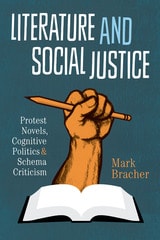
cover of Literature and Social Justice: Protest Novels, Cognitive Politics, and Schema Criticism

Literature and Social Justice

Protest Novels, Cognitive Politics, and Schema Criticism

By Mark Bracher

University of Texas Press, 2013

Can reading social protest novels actually produce a more just world? Literature and Social Justice offers a scientifically informed, evidence-based affirmative answer to that crucial question, arguing that literature has the potential—albeit largely unrealized—to produce lasting, socially transformative psychological changes in readers. Moving beyond traditional social criticism in its various forms, including feminist, gender, queer, and postcolonialist approaches, Mark Bracher uses new knowledge concerning the cognitive structures and processes that constitute the psychological roots of social injustice to develop a detailed, systematic critical strategy that he calls “schema criticism,” which can be applied to literature and other discourses to maximize and extend their potential for promoting social justice.

Bracher draws on studies in social cognition, social neuroscience, evolutionary psychology, political psychology, and psychoanalysis to uncover the root cognitive structures that cause misunderstandings among people and give rise to social injustice. Using the novels The Jungle, The Grapes of Wrath, and Native Son, he then demonstrates how schema criticism can correct these faulty cognitive structures and enable readers to develop more accurate and empathetic views of those they deem “Other,” as well as become more aware of their own cognitive processes. Calling the book “insightful, erudite, and humane,” Cognitive Approaches to Literature and Culture Series coeditor Patrick Colm Hogan says, “This inspiring book should be welcomed by literary critics, political activists, and anyone who cares about social justice.”
[more]
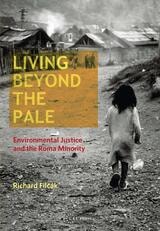
cover of Living beyond the Pale: Environmental Justice and the Roma Minority

Living beyond the Pale

Environmental Justice and the Roma Minority

Richard Filcák

Central European University Press, 2012
We find Roma settlements on the outskirts of villages, separated from the majority population by roads, railways or other barriers, disconnected from water pipelines and sewage treatment. Why are some people (or groups) better off than others when it comes to the distribution of environmental benefits? In order to understand the present situation and identify ways to address the impacts of these inequalities we must understand the past and mechanisms related to the differentiated treatment. The situation and discrimination of the Roma ethnic minority in Slovakia is examined from the perspective of environmental conditions and injustice. There is no simple answer as to why there is environmental injustice. Environmental conditions in Roma settlements are just one of the indicators of failures of policies addressing the problem of poverty and social exclusion in marginalized groups, structural discrimination, and internal Roma problems. Environmental injustice is not an outcome of the "historical determination" of the Roma population to live in environmentally problematic places.
[more]
cover of Local Justice in America

Local Justice in America

Jon Elster

Russell Sage Foundation, 1995
Notions of justice and fairness are central to the American belief that the pursuit of a healthy and productive life is the right of all citizens. Yet in the real world there are seldom sufficient resources to meet the needs of everyone, and institutions are routinely forced to make difficult decisions regarding who will be favored and who will not. Local Justice in America is an insightful look into how selections are made in four critical areas: college admissions, kidney transplants, employee layoffs, and legalized immigration. This volume's case studies survey the history and modern rationale behind seemingly enigmatic allocation systems, chronicling the political and ethical debates, occasional scandals, and judicial battles that have shaped them. Though these selection processes differ significantly, each reflects a bitter struggle between opposing—and equally intense—principles of local justice. For example, are admissions officers who use special points to foster student diversity less fair than those who rely exclusively on scholastic achievement? How did the system of personal discretion among doctors selecting transplant patients come to be viewed by the public as more inequitable than compassionate? Does the use of seniority as a gauge in layoffs violate equal opportunity laws or provide employers with their only objective and neutral criterion? How have partisan interest groups repeatedly shifted immigration quotas between the extremes of xenophobia and altruism? In framing chapters, editor Jon Elster draws upon these studies to speculate on the unique nature of the American value system. Arguing that race matters deeply in all considerations of local justice, he discusses how our society's assessment of neediness balances on the often uneasy compromises between the desire to reward deserving individuals and the call to strengthen opportunities for disadvantaged groups. Well informed and stimulating, Local Justice in America speaks directly to policy debates in the fields of health, education, work, and immigration, and makes an important contribution to our understanding of the fundamental social issues that affect our daily welfare.
[more]
cover of Local Officials and the Struggle to Transform Cities: A View from Post-Apartheid South Africa

Local Officials and the Struggle to Transform Cities

A View from Post-Apartheid South Africa

Edited by Claire Bénit-Gbaffou

University College London, 2024

An ethnographic exploration of the challenges faced by South African municipalities to make the urban world a better place.

Why are even progressive local authorities with the will to improve seldom able to change cities? Why does it seem almost impossible to redress spatial inequalities, deliver and maintain basic services, elevate impoverished areas, and protect marginalized communities? Why do municipalities in the Global South refuse to work with prevailing social informalities, and resort instead to interventions that are known to displace and aggravate the very issues they aim to address?

Local Officials and the Struggle to Transform Cities analyzes these challenges in South African cities, where the brief post-apartheid moment opened a window for progressive city government and made research into state practices both possible and necessary. The book interrogates city officials’ practices through a comparative gaze into other ‘progressive moments’ in large cities in Brazil, the United States, and India. It considers the instruments that these officials invent to implement urban policies, the agency these officials develop, and the constraints they navigate in governing unequal cities. Claire Bénit-Gbaffou captures in this book actual officials’ practices through first-hand experience, state ethnographies, and engaged research. This reveals day-to-day practices that question generalized explanations of state failure in complex urban societies as essential malevolence, contextual weakness, corruption, and inefficiency.

This book opens the black box of the workings of the state, with the hope of opening paths for the construction of progressive policies in contemporary cities.
 
[more]