165 books match the query 'Social sciences' and 9 start with l
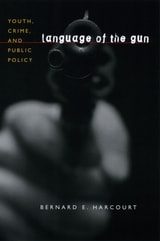
cover of Language of the Gun: Youth, Crime, and Public Policy

Language of the Gun

Youth, Crime, and Public Policy

Bernard E. Harcourt

University of Chicago Press, 2006

Legal and public policies concerning youth gun violence tend to rely heavily on crime reports, survey data, and statistical methods. Rarely is attention given to the young voices belonging to those who carry high-powered semiautomatic handguns. In Language of the Gun, Bernard E. Harcourt recounts in-depth interviews with youths detained at an all-malecorrectional facility, exploring how they talk about guns and what meanings they ascribe to them in a broader attempt to understand some of the assumptions implicit in current handgun policies. In the process, Harcourt redraws the relationships among empirical research, law, and public policy.

Home to over 150 repeat offenders ranging in age from twelve to seventeen, the Catalina Mountain School is made up of a particular stratum of boys—those who have committed the most offenses but will still be released upon reaching adulthood. In an effort to understand the symbolic and emotional language of guns and gun carrying, Harcourt interviewed dozens of these incarcerated Catalina boys. What do these youths see in guns? What draws them to handguns? Why do some of them carry and others not? For Harcourt, their often surprising answers unveil many of the presuppositions that influence our laws and policies.
[more]
cover of Law and the Social Sciences

Law and the Social Sciences

Leon Lipson

Russell Sage Foundation, 1987

The notion of law as a social phenomenon would have surprised educators and scholars a century ago. For them, law was a science and the library was the ultimate source of all legal knowledge. Our contemporary willingness to see law in a social context—reflecting social relations, for example, or precipitating social changes—is a relatively recent development, spurred during the last quarter century by the work of a generation of scholars (mostly social scientists and law professors) who believe the perspectives of the social sciences are essential to a better understanding of the law.

Law and the Social Sciences provides a unique and authoritative assessment of modern sociolegal research. Its impressive range and depth, the centrality of its concerns, and the stature of its contributors all attest to the vitality of the law-and-society movement and the importance of interdisciplinary work in this field.

Each chapter is both an exposition of its author’s point of view and a survey of the pertinent literature. In treating such topics as law and the economic order, legal systems of the world, the deterrence doctrine, and access to justice, the authors explore overlapping themes—the tension between public and private domains, between diffused and concentrated power, between the goals of uniformity and flexibility, between costs and benefits—that are significant to observers not only of our legal institutions but of other social systems as well.

[more]
cover of Law and the Social Sciences: The Second Half Century

Law and the Social Sciences

The Second Half Century

Julius Stone

University of Minnesota Press, 1966

Law and the Social Sciences was first published in 1966. Minnesota Archive Editions uses digital technology to make long-unavailable books once again accessible, and are published unaltered from the original University of Minnesota Press editions.

The author, a distinguished authority on law, provides an illuminating and challenging discussion of the social aspects of law and legal problems. As a background to some penetrating observations, he takes stock of the contributions and interrelations of the bodies of knowledge, from both the juristic and the social science side, which bear upon the study of law at the present time. He is concerned to show the respects in which jurisprudential ideas in this area have been stimulated and clarified by work in the social sciences, and, conversely, to draw attention to the need for the increased interest of social scientists in this area to take account of juristic insights, many of them of long standing. He points out some of the dangers, not limited to waste of effort, arising from "parochialism" on the part of either the lawyer or the social scientist. The final section is devoted to a study of the contributions, potentialities, and limits of behavioralist and computer techniques in understanding and operating the appellate judicial process.

The book is based on a series of three lectures given by the author as the William S. Pattee Memorial Lectures sponsored by the University of Minnesota Law School.
[more]
cover of Leading Edges in Social and Behavioral Science

Leading Edges in Social and Behavioral Science

R. Duncan Luce

Russell Sage Foundation, 1990
The reach of the social and behavioral sciences is currently so broad and interdisciplinary that staying abreast of developments has become a daunting task. The thirty papers that constitute Leading Edges in Social and Behavioral Science provide a unique composite picture of recent findings and promising new research opportunities within most areas of social and behavioral research. Prepared by expert scholars under the auspices of the National Academy of Sciences, these timely and well-documented reports define research priorities for an impressive range of topics: Part I: Mind and Brain Part II: Behavior in Social Context Part III: Choice and Allocation Part IV: Evolving Institutions Part V: Societies and International Orders Part VI: Data and Analysis
[more]
cover of Learning More from Social Experiments: Evolving Analytic Approaches

Learning More from Social Experiments

Evolving Analytic Approaches

Howard S. Bloom

Russell Sage Foundation, 2005

Policy analysis has grown increasingly reliant on the random assignment experiment—a research method whereby participants are sorted by chance into either a program group that is subject to a government policy or program, or a control group that is not. Because the groups are randomly selected, they do not differ from one another systematically. Therefore any differences between the groups at the end of the study can be attributed solely to the influence of the program or policy. But there are many questions that randomized experiments have not been able to address. What component of a social policy made it successful? Did a given program fail because it was designed poorly or because it suffered from low participation rates? In Learning More from Social Experiments, editor Howard Bloom and a team of innovative social researchers profile advancements in the scientific underpinnings of social policy research that can improve randomized experimental studies. Using evaluations of actual social programs as examples, Learning More from Social Experiments makes the case that many of the limitations of random assignment studies can be overcome by combining data from these studies with statistical methods from other research designs. Carolyn Hill, James Riccio, and Bloom profile a new statistical model that allows researchers to pool data from multiple randomized-experiments in order to determine what characteristics of a program made it successful. Lisa Gennetian, Pamela Morris, Johannes Bos, and Bloom discuss how a statistical estimation procedure can be used with experimental data to single out the effects of a program's intermediate outcomes (e.g., how closely patients in a drug study adhere to the prescribed dosage) on its ultimate outcomes (the health effects of the drug). Sometimes, a social policy has its true effect on communities and not individuals, such as in neighborhood watch programs or public health initiatives. In these cases, researchers must randomly assign treatment to groups or clusters of individuals, but this technique raises different issues than do experiments that randomly assign individuals. Bloom evaluates the properties of cluster randomization, its relevance to different kinds of social programs, and the complications that arise from its use. He pays particular attention to the way in which the movement of individuals into and out of clusters over time complicates the design, execution, and interpretation of a study. Learning More from Social Experiments represents a substantial leap forward in the analysis of social policies. By supplementing theory with applied research examples, this important new book makes the case for enhancing the scope and relevance of social research by combining randomized experiments with non-experimental statistical methods, and it serves as a useful guide for researchers who wish to do so.
[more]
cover of Liberating Method: Feminism and Social Research

Liberating Method

Feminism and Social Research

Marjorie Devault

Temple University Press, 1999

Feminist scholars, and those inspired by other liberatory movements, have raised profound questions about the standard practices of social research. Arguing that established methods too often ignore and obfuscate social oppression, they search for approaches that will more adequately represent marginalized groups and the social processes that organize their lives. Liberating Method charts one researcher's view of this project as Marjorie L. DeVault, one of the leading practitioners and teachers of feminist methodology, examines in her collection of new and previously published essays the dimensions of feminist research.

DeVault believes in "writing carefully," that is with care (precision) and caring (empathy). In addition to essays on how women write, are silenced, and can speak up, she includes an autobiographical sketch, a discussion of "the self as resource," and a section on what she calls "excavation," or the work of recovering unrecognized or suppressed aspects of women's experience. She explores the sources and meanings of feminist methodology, the strategies of reflexive analysis, and  the issues that arise when writing and teaching feminist research. Committed to a feminism attentive to oppressions that operate simultaneously with gender, DeVault considers exclusions and distortions in feminist research and strategies for building more inclusive approaches. Including a closing essay that presents "practical advice" for oppositional researchers,  LiberatingMethod reflects DeVault's conviction that feminist insights can and should contribute to a sounder, more rigorous social science.
[more]
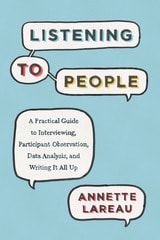
cover of Listening to People: A Practical Guide to Interviewing, Participant Observation, Data Analysis, and Writing It All Up

Listening to People

A Practical Guide to Interviewing, Participant Observation, Data Analysis, and Writing It All Up

Annette Lareau

University of Chicago Press, 2021

A down-to-earth, practical guide for interview and participant observation and analysis.

In-depth interviews and close observation are essential to the work of social scientists, but inserting one’s researcher-self into the lives of others can be daunting, especially early on.  Esteemed sociologist Annette Lareau is here to help. Lareau’s clear, insightful, and personal guide is not your average methods text. It promises to reduce researcher anxiety while illuminating the best methods for first-rate research practice.
 
As the title of this book suggests, Lareau considers listening to be the core element of interviewing and observation. A researcher must listen to people as she collects data, listen to feedback as she describes what she is learning, listen to the findings of others as they delve into the existing literature on topics, and listen to herself in order to sift and prioritize some aspects of the study over others. By listening in these different ways, researchers will discover connections, reconsider assumptions, catch mistakes, develop and assess new ideas, weigh priorities, ponder new directions, and undertake numerous adjustments—all of which will make their contributions clearer and more valuable.
 
Accessibly written and full of practical, easy-to-follow guidance, this book will help both novice and experienced researchers to do their very best work. Qualitative research is an inherently uncertain project, but with Lareau’s help, you can alleviate anxiety and focus on success.
 
[more]
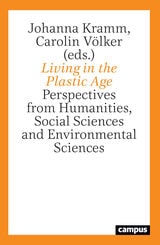
cover of Living in the Plastic Age: Perspectives from Humanities, Social Sciences and Natural Sciences

Living in the Plastic Age

Perspectives from Humanities, Social Sciences and Natural Sciences

Edited by Johanna Kramm and Carolin Völker

Campus Verlag, 2022

A comprehensive discussion on the complex role of plastics in society-nature relationships.

The anthology Living in the Plastic Age focuses on the multidimensional facets of plastics and microplastics from different disciplinary angles. Small plastic fragments (microplastics) and larger plastic waste can be found even on the remotest island. Plastic waste all over the planet is the visual footprint of humanity’s consumerism and mass production. Plastics shape the relationship between society and nature in such a profound way that we can today speak of the “Plastic Age.” This anthology aims to question the role of plastics in our society and the implications plastics have for the environment and human health. The detection of this emergent contaminant opens up a new field of scientific engagement for natural sciences on the effects of (micro-) plastics for the environment and the social sciences on new governance regimes on marine litter as well as on solution strategies to combat plastic waste.  
 
[more]
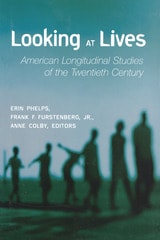
cover of Looking at Lives: American Longitudinal Studies of the Twentieth Century

Looking at Lives

American Longitudinal Studies of the Twentieth Century

Erin Phelps

Russell Sage Foundation, 2002

The impact of long-term longitudinal studies on the landscape of twentieth century social and behavioral science cannot be overstated. The field of life course studies has grown exponentially since its inception in the 1950s, and now influences methodologies as well as expectations for all academic research. Looking at Lives offers an unprecedented "insider's view" into the intentions, methods, and findings of researchers engaged in some of the 20th century's landmark studies. In this volume, eminent American scholars—many of them pioneers in longitudinal studies—provide frank and illuminating insights into the difficulties and the unique scientific benefits of mounting studies that track people's lives over a long period of time. Looking at Lives includes studies from a range of disciplines, including psychology, sociology, and education, which together cover a span of more than fifty years. The contributors pay particular attention to the changing historical, cultural, and scientific context of their work, as well as the theoretical and methodological changes that have occurred in their fields over decades. What emerges is a clear indication of the often unexpected effects these studies have had on public policies and public opinion—especially as they relate to such issues as the connection between poverty and criminal behavior, or the consequences of teen-age pregnancy and drug use for inner-city youth. For example, David Weikart reveals how his long-term research on preschool intervention projects, begun in 1959, permitted him to show how surprisingly effective preschool education can be in improving the lives of disadvantaged children. In another study, John Laub and Robert Sampson build on findings from a groundbreaking study begun by Sheldon and Eleanor Glueck in the 1950s to reveal the myriad ways in which juvenile delinquency can predict criminal behavior in adults. And Arland Thornton, Ronald Freedman, and William Axinn employ an intergenerational study of women and their children begun in 1962 to examine the substantial relaxation of social mores for family and individual behavior in the latter decades of the 20th century. Looking at Lives is full of striking testimony to the importance of long-term, longitudinal studies. As a unique chronicle of the origins and development of longitudinal studies in America, this collection will be an invaluable aid to 21st century investigators who seek to build on the successes and the experiences of the pioneers in life-course studies.
[more]