Results by title
171 books match the query 'Soldiers' and 8 start with l
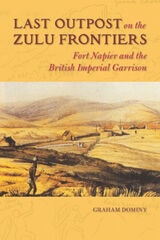
Last Outpost on the Zulu Frontiers
Fort Napier and the British Imperial GarrisonGraham Dominy
University of Illinois Press, 2016
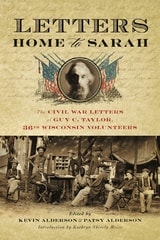
Letters Home to Sarah
The Civil War Letters of Guy C. Taylor, Thirty-Sixth Wisconsin VolunteersGuy C. Taylor; Edited by Kevin L. Alderson and Patsy Alderson; Introduction by Kathryn Shively Meier
University of Wisconsin Press, 2012
From the initial mustering and training of his regiment at Camp Randall in Wisconsin, through the siege of Petersburg in Virginia, General Lee’s surrender at Appomattox, and the postwar Grand Review of the Armies parade in Washington, D.C., Taylor conveys in vivid detail his own experiences and emotions and shows himself a keen observer of all that is passing around him. While at war, he contracts measles, pneumonia, and malaria, and he writes about the hospitals, treatments, and sanitary conditions that he and his comrades endured during the war. Amidst the descriptions of soldiering, Taylor’s letters to Sarah are threaded with the concerns of a young married couple separated by war but still coping together with childrearing and financial matters. The letters show, too, Taylor’s transformation from a lonely and somewhat disgruntled infantryman to a thoughtful commentator on the greater ideals of the war.
This remarkable trove of letters, which had been left in the attic of Taylor’s former home in Cashton, Wisconsin, was discovered by local historian Kevin Alderson at a household auction. Recognizing them for the treasure they are, Alderson bought the letters and, aided by his wife Patsy, painstakingly transcribed the letters and researched Taylor’s story in Wisconsin and at historical sites of the Civil War. The Aldersons’ preface and notes are augmented by an introduction by Civil War historian Kathryn Shively Meier, and the book includes photographs, maps, and illustrations related to Guy Taylor’s life and letters.
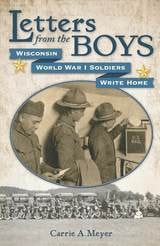
Letters from the Boys
Wisconsin World War I Soldiers Write HomeCarrie A Meyer
Wisconsin Historical Society Press, 2018
On the 100th anniversary of the arrival of the flood of American troops in Europe that would shift the tide of World War I in favor of the Allies, Letters from the Boys brings to life this terrible war as experienced by Wisconsinites writing home.
Technology had transformed the battlefield in alarming ways. Automatic rifles mowed down the young men who went “over the top” to attack enemy trenches; airplanes and improved artillery brought death unseen from miles away; terrifying clouds of poison gas choked and burned the European countryside; the internal combustion engine brought tanks to the battlefield for the first time and revolutionized the way troops deployed.
In the thick of it were young men from Wisconsin who found themselves caught up in geopolitical events half a world away. Professor Carrie A. Meyer combed through three newspapers in Green County, Wisconsin, to collect and synthesize the letters from the boys into a narrative that is both unique and representative, telling the stories of several Green County boys and what they saw, from preparing for war, to life among French families near the front, to the terror of the battlefield. Meyer gracefully removes the veil of obscurity and anonymity hanging over soldiers who participated in a war fought so long ago by great numbers of men, reminding us that armies are made of individuals who strove to do their part and then return to their families.
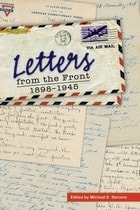
Letters from the Front, 1898-1945
Michael E. Stevens
Wisconsin Historical Society Press, 1992
This volume tells the stories of 62 men and women from Wisconsin who served in the Spanish-American War, World War I, and World War II. Letters from the Front is a vivid social history of wartime as told by those who took part in these foreign conflicts. Most of them are "ordinary" people, uprooted from farms, factories, and offices, who took part in extraordinary events. This work explores how war changed their lives and reveals the emotions they felt in uniform, in remote outposts, in combat, and in prison camps. These letters, diaries, oral histories, newspapers, and contemporary accounts provide a history of adaptation to military life; they also reflect the changes that occurred over the half-century encompassing these confilcts, an era of great technological innovation — and one in which America's vision of itself also changed.
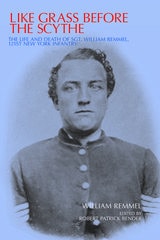
Like Grass before the Scythe
The Life and Death of Sgt. William Remmel 121st New York InfantryWilliam Remmel
University of Alabama Press, 2007
Sergeant William Remmel was a German immigrant who had settled with his parents and family in far upstate New York. His letters collected in Like Grass before the Scythe cover more than two full years of his service and provide details on military and social history in the eastern theater of operations and on the experience of the home front in upstate New York among a largely immigrant, working-class family and community.
Remmel wrote in English and apparently his parents responded in German. In addition to the important material on an immigrant family’s experience, Remmel also deals with the question of slavery, illness and hospital care (when he was wounded), the problem of hard war/total war, as well as the campaigns of Chancellorsville, Gettysburg, and the Shenandoah Valley in 1864.
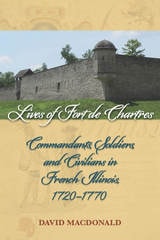
Lives of Fort de Chartres
Commandants, Soldiers, and Civilians in French Illinois, 1720–1770David MacDonald
Southern Illinois University Press, 2016
Fort de Chartres, built in 1719-1720 in the heart of what would become the American Midwest, embodied French colonial power for half a century. Lives of Fort de Chartres, by David MacDonald, details the French colonial experience in Illinois from 1720 to 1770 through vivid depictions of the places, people, and events around the fort and its neighboring villages.
In the first section, MacDonald explores the fascinating history of French Illinois and the role of Fort de Chartres in this history, focusing on native peoples, settlers, slaves, soldiers, villages, trade routes, military administration, and the decline of French rule in Illinois. The second section profiles the fort’s twelve distinctive and often colorful commandants, who also served as administrative heads of French Illinois. These men’s strong personalities served them well when dealing simultaneously with troops, civilians, and Indians and their multifaceted cultures. In the third section, MacDonald presents ten thought-provoking biographies of people whose lives intersected with Fort de Chartres in various ways, from a Kaskaskia Indian woman known as “the Mother of French Illinois” to an ill-fated chicken thief and a European aristocrat. Subjects treated in the book include French–Native American relations, the fur trade, early Illinois agriculture, and tensions among different religious orders. Together, the biographies and historical narrative in the volume illuminate the challenges that shaped the French colonies in America.
The site of Fort de Chartres, recognized as a National Historic Landmark in 1966, still exists today as a testament to the ways in which French, British, Spanish, and American histories have intertwined. Both informative and entertaining, Lives of Fort de Chartres contributes to a more complete understanding of the French colonial experience in the Midwest and portrays a vital and vigorous community well worth our appreciation.
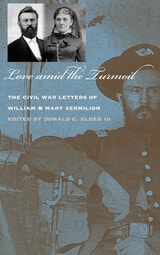
Love amid the Turmoil
The Civil War Letters of William and Mary VermilionDonald C. Elder, III
University of Iowa Press, 2003
William Vermilion (1830-1894) served as a captain in Company F of the 36th Iowa Infantry from October 1862 until September 1865. Although he was a physician in Iconium in south central Iowa at the start of the war, after it ended he became a noted lawyer in nearby Centerville; he was also a state senator from 1869 to 1872. Mary Vermilion (1831-1883) was a schoolteacher who grew up in Indiana; she and William married in 1858. In this volume historian Donald Elder provides a careful selection from the hundreds of supportive, informative, and heart-wrenching letters that they wrote each other during the war—the most complete collection of letters exchanged between a husband and a wife during the Civil War.
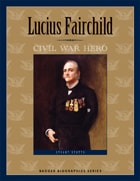
Lucius Fairchild
Civil War HeroStuart Stotts
Wisconsin Historical Society Press, 2010