Results by title
226 books match the query 'Southwest, New' and 8 start with l
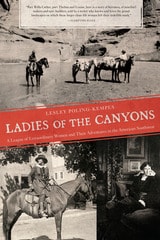
Ladies of the Canyons
A League of Extraordinary Women and Their Adventures in the American SouthwestLesley Poling-Kempes
University of Arizona Press, 2015
Educated, restless, and inquisitive, Natalie Curtis, Carol Stanley, Alice Klauber, and Mary Cabot Wheelwright were plucky, intrepid women whose lives were transformed in the first decades of the twentieth century by the people and the landscape of the American Southwest. Part of an influential circle of women that included Louisa Wade Wetherill, Alice Corbin Henderson, Mabel Dodge Luhan, Mary Austin, and Willa Cather, these ladies imagined and created a new home territory, a new society, and a new identity for themselves and for the women who would follow them.
Their adventures were shared with the likes of Theodore Roosevelt and Robert Henri, Edgar Hewett and Charles Lummis, Chief Tawakwaptiwa of the Hopi, and Hostiin Klah of the Navajo. Their journeys took them to Monument Valley and Rainbow Bridge, into Canyon de Chelly, and across the high mesas of the Hopi, down through the Grand Canyon, and over the red desert of the Four Corners, to the pueblos along the Rio Grande and the villages in the mountains between Santa Fe and Taos.
Although their stories converge in the outback of the American Southwest, the saga of Ladies of the Canyons is also the tale of Boston’s Brahmins, the Greenwich Village avant-garde, the birth of American modern art, and Santa Fe’s art and literary colony.
Ladies of the Canyons is the story of New Women stepping boldly into the New World of inconspicuous success, ambitious failure, and the personal challenges experienced by women and men during the emergence of the Modern Age.

Last Rampage
The Escape of Gary TisonJames W. Clarke
University of Arizona Press, 1999
Late Holocene Research on Foragers and Farmers in the Desert West
Barbara J. Roth and Maxine E. McBrinn
University of Utah Press, 2015
Three main themes link these papers: the role of the environment in shaping prehistoric behavior, flexibility in foraging and farming adaptations, and diversity in settlement strategies. Contributors cover a range of topics including the varied ways hunter-gatherers adapted to arid environments, the transition from hunting and gathering to farming and the reasons for it, the variation in early farmers across the Southwest and Great Basin, and the differing paths followed as they developed settled villages.
Late Prehistoric Hunter-Gatherers and Farmers of the Jornada Mogollon
Thomas R. Rocek
University Press of Colorado, 2023
The Jornada branch of the Mogollon culture and its inhabitants played a significant economic, political, and social role at multiple scales. This volume draws together results from recent large-scale CRM work that has amassed among the largest data sets in the Southwest with up-to-date chronological, architectural, faunal, ceramic, obsidian sourcing, and other specialized studies. Chapters by some of the most active researchers in the area address topics that reach beyond the American Southwest, such as mobility, forager adaptations, the transition to farming, responses to environmental challenges, and patterns of social interaction.
Late Prehistoric Hunter-Gatherers and Farmers of the Jornada Mogollon is an up-to-date summary of the major developments in the region and their implications for Southwest archaeology in particular and anthropological archaeological research more generally.
The publication of this book is supported in part by the Arizona Archaeological and Historical Society and the Center for Material Culture Studies at the University of Delaware.
Contributors: Rafael Cruz Antillón, Douglas H. M. Boggess, Peter C. Condon, Linda Scott Cummings, Moira Ernst, Tim Graves, David V. Hill, Nancy A. Kenmotsu, Shaun M. Lynch, Arthur C. MacWilliams, Mary Malainey, Timothy D. Maxwell, Myles R. Miller, John Montgomery, Jim A. Railey, Thomas R. Rocek, Matt Swanson, Christopher A. Turnbow, Javier Vasquez, Regge N. Wiseman, Chad L. Yost
Law and the Living Colorado River
Robert W. Adler
University of Utah Press, 2023
Law and the Living Colorado River asserts that the so-called Law of the River—the vast assemblage of interstate compacts, international treaties, federal and state statutes, regulations, contracts, and other legal documents governing use and management of the Colorado River—ignores the needs of the river as a nested system of aquatic and aquatic-dependent ecosystems. Although society now recognizes and appreciates the natural values of the Colorado River, the Law of the River remains fixed in service of human economies like irrigation and hydropower. Robert W. Adler contends that the law must respond to changing values that prioritize natural systems alongside human ones. He proposes acknowledging the legal rights of the river itself, following the recent movement to recognize rights of nature in other ecosystems around the world. Recognizing that U.S. law has significant barriers to that proposal, however, Adler borrows from aspects of international water law to propose as a shorter-term strategy amendments to the Colorado River Compact that would enhance protection of the river’s environmental needs and values.
Adler delivered this lecture on March 17, 2022, at the 27th annual symposium of the Wallace Stegner Center for Land, Resources and the Environment, jointly sponsored by the Wallace Stegner Center and the Water & Tribes Initiative | Colorado River Basin.
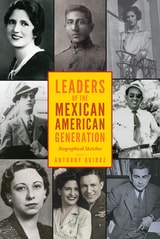
Leaders of the Mexican American Generation
Biographical EssaysAnthony Quiroz
University Press of Colorado, 2016
Leaders of the Mexican American Generation explores the lives of a wide range of influential members of the US Mexican American community between 1920 and 1965 who paved the way for major changes in their social, political, and economic status within the United States.
Including feminist Alice Dickerson Montemayor, to San Antonio attorney Gus García, and labor activist and scholar Ernesto Galarza, the subjects of these biographies include some of the most prominent idealists and actors of the time. Whether debating in a court of law, writing for a major newspaper, producing reports for governmental agencies, organizing workers, holding public office, or otherwise shaping space for the Mexican American identity in the United States, these subjects embody the core values and diversity of their generation.
More than a chronicle of personalities who left their mark on Mexican American history, Leaders of the Mexican American Generation cements these individuals as major players in the history of activism and civil rights in the United States. It is a rich collection of historical biographies that will enlighten and enliven our understanding of Mexican American history.
Living and Leaving
A Social History of Regional Depopulation in Thirteenth-Century Mesa VerdeDonna M. Glowacki
University of Arizona Press, 2015
Much of the focus on this topic has been directed at understanding the role of climate change, drought, violence, and population pressure. The role of social factors, particularly religious change and sociopolitical organization, are less well understood. Bringing together multiple lines of evidence, including settlement patterns, pottery exchange networks, and changes in ceremonial and civic architecture, this book takes a historical perspective that naturally forefronts the social factors underlying the depopulation of Mesa Verde.
Author Donna M. Glowacki shows how “living and leaving” were experienced across the region and what role differing stressors and enablers had in causing emigration. The author’s analysis explains how different histories and contingencies—which were shaped by deeply rooted eastern and western identities, a broad-reaching Aztec-Chaco ideology, and the McElmo Intensification—converged, prompting everyone to leave the region. This book will be of interest to southwestern specialists and anyone interested in societal collapse, transformation, and resilience.
Lost Homelands
Ruin and Reconstruction in the 20th-Century SouthwestAudrey Goodman
University of Arizona Press, 2010
Through analyzing a variety of texts and images, Goodman illuminates the ways that modern forces such as militarization, environmental degradation, internal migration, and an increased border patrol presence have shattered the perception of a secure homeland in the Southwest. The deceptive natural beauty of the Southwest deserts shields a dark history of trauma and decimation that has remained as a shadow on the region’s psyche. The first to really synthesize such wide-ranging material about the effects of the atomic age in the Southwest, Goodman realizes the value of combined visual and verbal art and uses it to put forth her own original ideas about reconstructing a new sense of homeland.
Lost Homelands reminds us of the adversity and dislocation suffered by people of the Southwest by looking at the ways that artists, photographers, filmmakers, and writers have grappled with these problems for decades. In assessing the ruination of the region, however, Goodman argues that those same artists and writers have begun to reassemble a new sense of homeland from these fragments.