Results by title
428 books match the query 'Stories' and 18 start with l
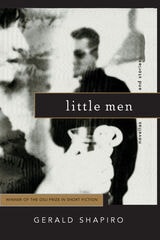
LITTLE MEN
NOVELLAS AND STORIESGERALD SHAPIRO
The Ohio State University Press, 2004
Ira Mittelman, the middle-aged hero of “A Box of Ashes,” one of two novellas in Little Men, is wrestling with a dilemma: should he fulfill his late father’s dying wish by taking the old man’s ashes back to Missouri, to scatter them on the grounds of Camp HaHaTonka, the Boy Scout camp where Ira spent several summers as a boy? It’s a long way to go just to dump some ashes, and if Ira makes this pilgrimage, his absence might jeopardize the fragile relationship he’s managed to maintain with his ex-wife (they’re still having sex every Friday night).
In “Spivak in Babylon,” Little Men’s other novella, it’s 1982, and Leo Spivak, an ambitious 30-year-old copywriter at a large Chicago advertising agency, is about to get his big break: a chance to go to Hollywood to participate for the first time in the filming of a television commercial. A week in Hollywood, on the company’s expense account! A room at the fabled Chateau Marmont (Garbo’s old suite, in fact)! The only problem is the subject of the commercial itself: a new feminine hygiene spray to be marketed to pre-adolescent girls. Hovering over all the proceedings in “Spivak in Babylon” is the genial, befuddled presence of President Ronald Reagan, the Leader of the Free World, who haunts Leo’s dreams.

Lake Song
A Novel in StoriesLesley Pratt Bannatyne
The Ohio State University Press, 2025
Selected by Deesha Philyaw as winner of the AWP Grace Paley Prize in Short Fiction
Shortlisted, 2026 Massachusetts Book Award, Fiction Category
The linked stories of Lake Song, set in the fictional town of Kinder Falls in New York’s Finger Lakes region, span decades to plumb the complexities, violence, and compassion of small-town life as the twentieth century hurtles forward. Against a backdrop of historical events—bootlegging, Klan attacks, gold smuggling, the Albany Ketchup Murders, the 1965 Northeast blackout—a generations-long mystery unwinds. In 1906 Mavis Staunch drowns in Okisee Lake days after she refuses to sell her land to a trio of brothers. The same night, one of the brothers, Angus Epps, doesn’t come home. Few suspect the two events are connected, and no one imagines the role that a ten-year-old boy, a canoe, and a pack of coyotes play in the tragedies. Spiritualists, grifters, sugar makers, arsonists, seekers, and saleswomen wind through each other’s lives and across decades to add layers of resonance to each captivating story. The mercurial lake that unites the people of Kinder Falls sustains as much as it haunts, both witness and diary.

Landfall
A Ring of StoriesJulie Hensley
The Ohio State University Press, 2016
Last Stands
StoriesStories by Gordon Weaver
University of Missouri Press, 2004

Legends of the Warring States
Persuasions, Romances, and Stories from <em>Chan-kuo Ts'e</em>J. I. Crump
University of Michigan Press, 1998
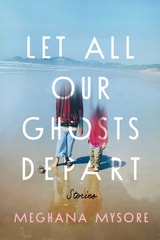
Let All Our Ghosts Depart
StoriesMeghana Mysore
West Virginia University Press, 2026
In this powerful debut collection, present-day women of the South Asian diaspora grapple with belonging and are haunted by intergenerational inheritances. Meghana Mysore, herself the daughter of Indian immigrants, spins her stories around narrators struggling to assimilate into the surreal world around them. At times, this disorientation skews speculative, where deceased mothers reappear as chiding, broken-down cars. At turns absurd and darkly humorous, the women in Mysore’s stories all experience transformation, be it small or monumental, where they find spaces of freedom and delight within their circumstances.
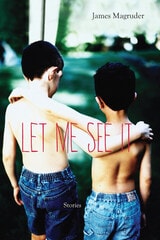
Let Me See It
StoriesJames Magruder
Northwestern University Press, 2014
James Magruder’s collection of linked stories follows two gay cousins, Tom and Elliott, from adolescence in the 1970s to adulthood in the early ’90s. With a rueful blend of comedy and tenderness, Magruder depicts their attempts to navigate the closet and the office and the lessons they learn about libidinous coworkers, résumé boosting, Italian suffixes, and frozen condoms. As Tom and Elliot search for trusting relationships while the AIDS crisis deepens, their paths diverge, leading Tom to a new sense of what matters most. Magruder is especially adept at rendering the moments that reveal unwritten codes of behavior to his characters, who have no way of learning them except through painful experience.
Loss is sudden, the fallout portrayed with a powerful economy. In Tom and Elliott, readers come to recognize themselves, driven by the same absurd desires and unconscious impulses, subjected to the same fates.
Light without Heat
StoriesMatthew Kirkpatrick
University of Alabama Press, 2012
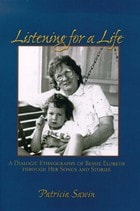
Listening For a Life
A Dialogic Ethnography of Bessie Eldreth through Her Songs and StoriesPatricia Sawin
Utah State University Press, 2004
Drawing on Bahktinian and feminist theory, Sawin pushes forward our understanding of the interactive roles of ethnographer and subject and in the process gives us a deeper understanding of folk singer and storyteller Bessie Eldreth and her greatest art, herself.
Listening to the Land
Stories from the Cacapon and Lost River ValleyJamie S. Ross
West Virginia University Press, 2013
Although still rural and mostly forested, development and land fragmentation in the Cacapon and Lost River Valley have increased over the last decades. Listening to the Land: Stories from the Cacapon and Lost River Valley is a conversation between the people of this Valley and their land, chronicling this community’s dedication to preserving its farms, forests, and rural heritage.
Little Bit Know Something
Stories in a Language of AnthropologyRobin Ridington
University of Iowa Press, 1990

Living Off the Pacific Ocean Floor
Stories of a Commercial FishermanGeorge Moskovita
Oregon State University Press, 2015
In a career that spanned over 60 years, George Moskovita met with many maritime adventures, recounted for the reader in a clear, direct, and unsentimental style. He saw the fishery he had helped build devastated by foreign factory processing ships. He bought, repaired, traded, and sank more boats than most fishermen would work on in a lifetime. Along the way, he managed to raise four daughters with his wife, June. The name of one of his last boats, the Four Daughters, reflects the central importance of family life to a man who was often at sea. Moskovita’s memoir provides a unique glimpse of Pacific maritime life in the 20th century, small-town coastal life after World War II, and the early days of fishery development in Oregon.
With an introduction and textual notes by Carmel Finley, an historian of science, and Mary Hunsicker, an aquatic and fisheries scientist, this book will be invaluable to fishery students and professionals interested in the biology, ecology, and history of oceans and commercial fishing. It will also have broad appeal to readers of Oregon history and maritime adventure, and anyone else who has ever stood at the western edge of the continent and wondered what life was like at sea.
Living with Stories
Telling, Re-telling, and RememberingSchneider, William
Utah State University Press, 2008
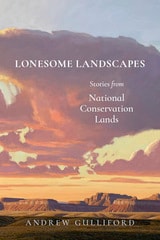
Lonesome Landscapes
Stories from National Conservation LandsAndrew Gulliford
University of Utah Press, 2026
While the National Park Service is widely known, far fewer Americans are familiar with the Bureau of Land Management’s vast National Conservation Lands—thirty-seven million acres spanning eleven western states and Alaska. Lonesome Landscapes is the first comprehensive history of this system from public domain lands to the designation of national monuments and conservation areas in the twenty-first century.
Drawing from archives, interviews, and field reporting, Gulliford reveals the unsung heroes who safeguarded these lands, from pioneering rangers to grassroots advocates in Native American and Hispanic communities. With vivid stories of explorers, cowboys, hermits, and even an alligator named Clem, this book blends scholarship with storytelling. Lonesome Landscapes is both a definitive history and a call to keep America’s wild places in public hands—an essential read for anyone passionate about the West.
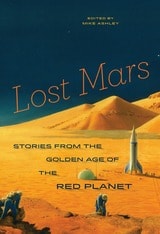
Lost Mars
Stories from the Golden Age of the Red PlanetEdited by Mike Ashley
University of Chicago Press, 2018
An antique-shop owner gets a glimpse of the Red Planet through an intriguing artifact. A Martian’s wife contemplates the possibility of life on Earth. A resident of Venus describes his travels across the two alien planets. From an arid desert to an advanced society far superior to that of Earth, portrayals of Mars have differed radically in their attempts to uncover the truth about our neighboring planet.
Since the 1880s, after an astronomer first described “channels” on the surface of Mars, writers have been fascinated with the planet, endlessly speculating on what life on Mars might look like and what might happen should we make contact with the planet's inhabitants. This wonderful collection offers ten wildly imaginative short stories from the golden age of science fiction by such classic sci-fi writers as H.G. Wells, Ray Bradbury, and J. G. Ballard, as well as hard-to-find stories by unjustly forgotten writers from the genre.
Assembled and introduced by acclaimed anthologist Mike Ashley, these stories vividly evoke a time when notions of life on other planets—from vegetation and water to space invaders and utopian societies—were new and startling. As we continue to imagine landing people on Mars, these stories are well worth revisiting as gripping and vivid dispatches from futurists past.
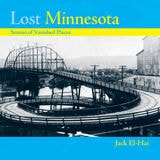
Lost Minnesota
Stories of Vanished PlacesJack El-Hai
University of Minnesota Press, 2000
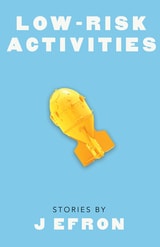
Low-Risk Activities
StoriesJ Efron
University of Alabama Press, 2025
Formally daring and emotionally disarming, Low-Risk Activities spins out twenty-two uncanny stories that feel like dispatches from a future already here—and already unraveling.
J Efron’s Low-Risk Activities is a genre-defying collection that slips between interview transcript, personal confession, government form, and speculative fable—told through the voices of orphans, immortals, office workers, digital nomads, and posthuman survivors. These are characters in limbo, each trying to make sense of a fractured world where logic doesn’t always follow law.
The book opens with Lan Caihe, a faux-memoir in which a gender-fluid, possibly immortal narrator navigates trauma, desire, and the politics of being unclassifiable—part myth, part autofiction, and entirely singular. Later entries mimic psychological evaluations, immigration interrogations, and philosophical questionnaires, inviting the reader not just to observe, but to participate.
Structured like a psychic excavation, Low-Risk Activities questions how we define personhood, how language shapes identity, and how systems reduce people to data—only to lose the meaning of what that data once held. Efron’s voice is intimate yet disorienting, full of humor, dread, and lyrical estrangement. Fans of Anne Carson, Jenny Boully, and Rivka Galchen will find familiar resonance in this work that refuses to resolve neatly—and in doing so, reveals something startlingly true.
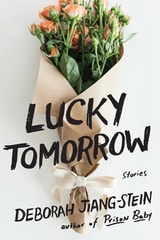
Lucky Tomorrow
StoriesDeborah Jiang-Stein
University of Minnesota Press, 2025
Lives of longing and resilience, searching and belonging in a debut story collection from a memoirist and renowned advocate for change
For a Lucky Tomorrow Buy a Flower Today. Is it true? a prospective customer asks. About the luck? “Absolutely!” Felma says. Flowers, she knows, are all that’s anchored in this world, even if not for long, and like others in these luminous stories, Felma knows what it is to be rootless. In Lucky Tomorrow, Deborah Jiang-Stein presents an unforgettable cast of characters dreaming of redemption, purpose, and connection in a wounded yet beautiful world.
A young girl stuck working at her family’s candy stand. A former priest trapped on a crowded train. A prisoner robbed of the book she’s been writing. A father haunted by his broken family. A woman confined to a psych ward. A reverend caring for her dying housemate. And Felma, a flower vendor, searching for the daughter she gave birth to while in prison, who was swiftly bundled away. Felma’s story leads us in, through, and around the others—a central beating heart for these lives on the fringes, where Jiang-Stein finds a singular, tenacious humanity.
The stories in Lucky Tomorrow move through settings drawn from the path of the author’s own life: Seattle, where she grew up after being born in an Appalachian prison; Tokyo, where she once lived; the Twin Cities, where she currently resides; and the American South, where she travels for much of her advocacy work with women in prison. Pushing the boundaries of genre, Jiang-Stein delicately layers the stories of these outcasts, eccentrics, and visionaries, gathering them in from the shadows with remarkable empathy and candor, laying bare our shared sorrows and joys.