224 books match the query 'Theory, etc' and 5 start with l

cover of Language, Sign and Gender in Beowulf

Language, Sign and Gender in Beowulf

Gillian R. Overing

Southern Illinois University Press, 1990

Not a book about what Beowulf means but how it means, and how the reader participates in the process of meaning construction.

Overing’s primary aim is to address the poem on its own terms, to trace and develop an interpretive strategy consonant with the extent of its difference. Beowulf’s arcane structure describes cyclical repetitions and patterned intersections of themes which baffle a linear perspective, and suggest instead the irresolution and dynamism of the deconstructionist free play of textual elements.

Chapter 1 posits the self/reader as a function of the text/language, examining the ways in which the text "speaks" the reader. Chapter 2 develops an interactive semiotic strategy in an attempt to describe an isomorphic relation between poem and reader, between text and self. Chapter 3 addresses the notions of text and self as more complex functions or formulations of desire, and thus complicates and expands the arguments of the two preceding chapters. The final chapter examines the issue of desire in the poem, and, to a lesser extent, desire in the reader (insofar as these may legitimately be viewed as distinct from each other).
[more]
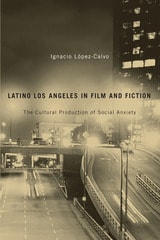
cover of Latino Los Angeles in Film and Fiction: The Cultural Production of Social Anxiety

Latino Los Angeles in Film and Fiction

The Cultural Production of Social Anxiety

Ignacio López-Calvo

University of Arizona Press, 2014

Los Angeles has long been a place where cultures clash and reshape. The city has a growing number of Latina/o authors and filmmakers who are remapping and reclaiming it through ongoing symbolic appropriation. In this illuminating book, Ignacio López-Calvo foregrounds the emotional experiences of authors, implicit authors, narrators, characters, and readers in order to demonstrate that the evolution of the imaging of Los Angeles in Latino cultural production is closely related to the politics of spatial location. This spatial-temporal approach, he writes, reveals significant social anxieties, repressed rage, and deep racial guilt.

Latino Los Angeles in Film and Fiction sets out to reconfigure the scope of Latino literary and cultural studies. Integrating histories of different regions and nations, the book sets the interplay of unresolved contradictions in this particular metropolitan area. The novelists studied here stem from multiple areas, including the U.S. Southwest, Guatemala, and Chile. The study also incorporates non-Latino writers who have contributed to the Latino culture of the city.

The first chapter examines Latino cultural production from an ecocritical perspective on urban interethnic relations. Chapter 2 concentrates on the representation of daily life in the barrio and the marginalization of Latino urban youth. The third chapter explores the space of women and how female characters expand their area of operations from the domestic space to the public space of both the barrio and the city.

A much-needed contribution to the fields of urban theory, race critical theory, Chicana/o–Latina/o studies, and Los Angeles writing and film, López-Calvo offers multiple theoretical perspectives—including urban theory, ecocriticism, ethnic studies, gender studies, and cultural studies— contextualized with notions of transnationalism and post-nationalism.
[more]
cover of Listening to Homer: Tradition, Narrative, and Audience

Listening to Homer

Tradition, Narrative, and Audience

Ruth Scodel

University of Michigan Press, 2002

The Homeric poems were not intended for readers, but for a listening audience. Traditional in their basic elements, the stories were learned by oral poets from earlier poets and recreated at every performance. Individual nuances, tailored to the audience, could creep into the stories of the Greek heroes on each and every occasion when a bard recited the epics.
For a particular audience at a particular moment, "tradition" is what it believes it has inherited from the past--and it may not be particularly old. The boundaries between the traditional and the innovative may become blurry and indistinct. By rethinking tradition, we can see Homer's methods and concerns in a new light. The Homeric poet is not naive. He must convince his audience that the story is true. He must therefore seem disinterested, unconcerned with promoting anyone's interests. The poet speaks as if everything he says is merely the repetition of old tales. Yet he carefully ensures that even someone who knows only a minimal amount about the ancient heroes can follow and enjoy the performance, while someone who knows many stories will not remember inappropriate ones. Pretending that every detail is already familiar, the poet heightens suspense and implies that ordinary people are the real judges of great heroes.
Listening to Homer transcends present controversies about Homeric tradition and invention by rethinking how tradition functions. Focusing on reception rather than on composition, Ruth Scodel argues that an audience would only rarely succeed in identifying narrative innovation. Homeric narrative relies on a traditionalizing, inclusive rhetoric that denies the innovation of the oral performance while providing enough information to make the epics intelligible to audiences for whom much of the material is new.
Listening to Homer will be of interest to general classicists, as well as to those specializing in Greek epic and narrative performance. Its wide breadth and scope will also appeal to those non-classicists interested in the nature of oral performance.
Ruth Scodel is Professor of Greek and Latin, University of Michigan, and former president of the American Philological Association.
"Ruth Scodel's Listening to Homer proves it is still possible to explore the workings of epic without recourse to a battery of jargon or technicalities. This is not a 'one big idea' book but a rich . . . set of reflections; it makes refreshing reading . . . ."
---Greece & Rome
"This is an important book, putting the receiving rather than the sending side of the performance of the Homeric epics center stage. The many observations on narrative technique are often new and worthwhile."
---Irene J.F. de Jong, Gnomon
[more]
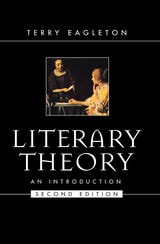
cover of Literary Theory: An Introduction

Literary Theory

An Introduction

Terry Eagleton

University of Minnesota Press, 1996
[more]
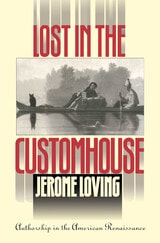
cover of Lost in the Customhouse: Authorship in the American Renaissance

Lost in the Customhouse

Authorship in the American Renaissance

Jerome Loving

University of Iowa Press, 1993

In this vigorous challenge to dominant literary criticism, Jerome Loving extends the traditional period of American literary rebirth to the end of the 19th century and argues for the intrinsic value of literature in the face of new historicist and deconstructionist readings. Bucking the trend for revisionist interpretations, Loving discusses the major work of the 19th century’s canonized writers as restorative adventures with the self and society.
From Irving, Hawthorne, Melville, Poe, Thoreau, and Emerson to Whitman, Twain, Dickinson, James, Chopin, and Dreiser, Loving finds the American literary tradition filled with narrators who keep waking up to the central scene of the author’s real or imagined life. They travel through a customhouse of the imagination in which the Old World experience of the present is taxed by the New World of the utopian past, where life is always cyclical instead of linear and ameliorative.
Loving celebrates, enjoys, and experiences these awakened and reborn writers as he challenges the notion that American literature is preponderately “cultural work.” In the epilogue, he packs up his own carpetbag—the American ego—and passes through the European customhouse to find that American writers are more readily perceived as literary geniuses outside their culture than within it.
[more]