Results by title
527 books match the query 'Translations into English' and 20 start with l
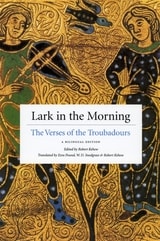
Lark in the Morning
The Verses of the Troubadours, a Bilingual EditionEdited by Robert Kehew
University of Chicago Press, 2005
Lark in the Morning honors the meter, word play, punning, and sound effects in the troubadours' works while celebrating the often playful, bawdy, and biting nature of the material. Here, Robert Kehew augments his own verse translations with those of two seminal twentieth-century poets—Ezra Pound and W. D. Snodgrass—to provide a collection that captures both the poetic pyrotechnics of the original verse and the astonishing variety of troubadour voices. This bilingual edition contains an introduction to the three major periods of the troubadours—their beginning, rise, and decline—as well as headnotes that briefly put each poet in context. Lark in the Morning will become an essential collection for those interested in learning about and teaching the origins of Western vernacular poetry.
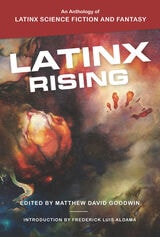
Latinx Rising
An Anthology of Latinx Science Fiction and FantasyEdited by Matthew David Goodwin / Introduction by Frederick Luis Aldama
The Ohio State University Press, 2020
The new and established voices assembled here (including Kathleen Alcalá, Carmen Maria Machado, Ernest Hogan, and other luminaries) invite us to imagine a Latinx past, present, and future that have not been whitewashed by mainstream perspectives. As in the best mixtapes, this anthology moves satisfyingly through the loud and brash, the quiet and thoughtful. There are ghosts, space aliens, robots—and a grandmother who unwittingly saves the universe through her cooking. The result is a deeply pleasurable read that pushes beyond magical realism and social realism to demonstrate all the thrilling possibilities of what Latinx literature can be.

Laughing Lost in the Mountains
Poems of Wang WeiWei Wang
University Press of New England, 1992

Letters
Isabella Andreini
Iter Press, 2023
Isabella Andreini (1562–1604) was a commedia dell’arte diva who toured Italy and France as part of the Compagnia dei Comici Gelosi. Letters is a collection of epistles written by Andreini in fictional, anonymous, male, and female voices, a “hermaphroditic” alternation of gender unlike any that had been seen in letter writing to that time. In her letters, Andreini remade the humanistic epistolary genre into a distinctive fusion of literary and dramatic performance. The guise of epistolary intimacy cedes to a knowing artificiality, which allows for the emergence of Andreini’s modern critique of the gendered self as a uniform entity. The collection centers on love and examines—from surprising perspectives—pertinent issues such as death, the birth of a girl, prostitution, patriarchal marital practices, love in old age, courtiership, country and city life, human nature, and defenses and critiques of both sexes.
Letters and Orations
Cassandra Fedele
University of Chicago Press, 2000
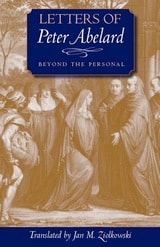
Letters of Peter Abelard, Beyond the Personal
Peter Abelard
Catholic University of America Press, 2008
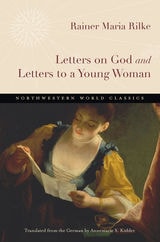
Letters on God and Letters to a Young Woman
Rainer Maria Rilke, Translated from the German by Annemarie S. Kidder
Northwestern University Press, 2012
For Rainer Maria Rilke, letter writing was a discipline and art unto itself. Some seven thousand of his letters have survived, among them works of profound beauty and insight to rival his poems and fiction. For the first time, this volume makes available to an English-speaking audience two of the earliest collections of Rilke letters published after his death, each with a nuanced introduction and notes by Annemarie S. Kidder.
The thematic collection Letters on God contains two letters by Rilke, the first an actual letter written during World War I, in 1915 in Munich, the second a fictional one composed after the war, in 1922 at Muzot in Switzerland. In these letters, Rilke builds on the mystical view of God conceived in The Book of Hours, but he moves beyond it, demonstrating a unique vision of God and Christ, the church and religious experience, friendship and death.
Like his famous Letters to a Young Poet, Rilke’s Letters to a Young Woman presents an intimate series of letters written to a young admirer. The nine letters collected here were written to Lisa Heise over the course of five years, from 1919 to 1924. Though Rilke and Heise never met, the poet emerges in these letters as a compassionate listener and patient teacher who with levelheaded sensitivity affirms and guides the movements of another person’s soul.
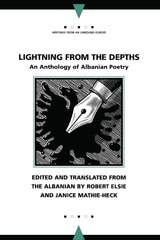
Lightning from the Depths
An Anthology of Albanian PoetryRobert Elsie and Janice Mathie-Heck
Northwestern University Press, 2008
If a people
Have no poets
And no poetry of their own
For a National Anthology
Then treachery and barking
Will do the trick
With these words, a challenge is laid down in this new volume of Albanian poetry. Albania, however, has a dynamic tradition of literature. Lightning from the Depths is the first English collection to present the full range of Albanian verse. Albanian literature has had many lives. The early Christian traditions disappeared as Islam and the Ottoman Empire took over. Muslim literature, too, withered when the nation strove to become an independent European country. The beginnings of a modern tradition were quashed by the Stalinists. All along this rocky path, poets have turned the political strife, poverty, and isolation their nation has often experienced into culture, both celebrating and questioning the society in which they live. Lightning from the Depths opens readers’ eyes to a new political and cultural world populated artists who can spin despair into poetry.
Like Bits of Wind
Selected Poetry and Poetic Prose, 1974-2014Pierre Chappuis
Seagull Books, 2016
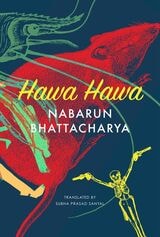
Long Live the Counter-Revolution
Hawa Hawa' and Other StoriesNabarun Bhattacharya
Seagull Books, 2022
In this wildly inventive collection of Nabarun Bhattacharya’s stories, we meet characters such as a trigger-happy cop in an authoritarian police state, a man who holds on to a piece of rope from a deadly noose, a retired revolutionary thrilled by delusions of grandeur, and people working for a corporation that arranges lavish suicides for a price. Ranging from scathing satires of society to surreal investigations of violence and love, these stories are also a window onto the political and social climate in Bengal, tracing both pan-Indian developments like the 1975 Emergency and local ones like militant-leftist Naxalism and the decades-long Communist reign in the state. Expertly translated from the Bengali, Hawa Hawa and Other Stories is a journey through the mind of one of the most daring countercultural writers of India, one with particular resonance in these chaotic times.
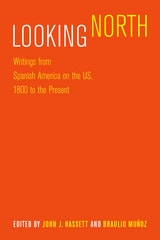
Looking North
Writings from Spanish America on the US, 1800 to the PresentEdited by John J. Hassett and Braulio Muñoz
University of Arizona Press, 2012
Given recent changes in politics and demographics, Latin America and the United States are becoming increasingly important to one another. Recognition of the two regions' differences and similarities may facilitate a more fruitful relationship, with increased respect and understanding.
It is with this in mind that editors John J. Hassett and Braulio Muñoz present a collection of writings that provides a look into the ways in which Spanish America has viewed its northern neighbor over the past two centuries. Gathered here are pieces by well-known figures from the worlds of Spanish American politics, history, philosophy, creative writing, and culture—names like Mario Vargas Llosa, Gabriel Garcia Marquez and Pablo Neruda.
Divided into three sections, Looking North begins by underscoring the cultural and political differences between the two Americas. It opens with a speech by Simón Bolívar to the Venezuelan Congress in 1819 and closes with an essay by Mario Vargas Llosa from 2006 on the controversial wall being constructed between the United States and Mexico. The second section explores the experiences of Spanish American travelers in the US, beginning with an account of former Argentine president Domingo Sarmiento's fascination with the United States during his travels in 1847 and ending with a 2008 essay by Vargas Llosa on the city of New York. The final section encompasses creative writing and commentaries by some of Spanish America's most gifted poets and novelists. It opens with Rubén Darío's "To Roosevelt" from 1905 and ends with Christine Granados's humorous and profound short story "Inner View," first published in 2006.
Touching on history, sociology, politics, and religion, the writings assembled here will be of interest to humanists, social scientists, and anyone intrigued by the ever-growing connection between the United Sates and Spanish America at all levels.
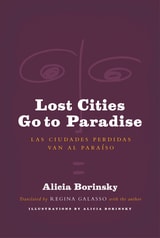
Lost Cities Go to Paradise
Las Ciudades Perdidas Van al ParaísoAlicia Borinsky
Swan Isle Press, 2014
At the center of Borinsky’s work are the cities, which are a masquerade of disaster and spectacle that moves through space and time. Within these cities reside a man with two bills who gives three out of generosity, a woman who hides her face so that she may be better seen, cheating lovers who betray only to end up entwined in a tango, and immigrants who borrow each other’s accents. Filled with energy and irreverence, Lost Cities Go to Paradise captures the indignities and excitement of living among others in a society and discovering what is valued—and all that is not.
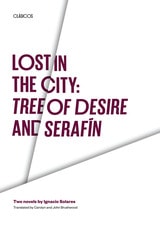
Lost in the City
Tree of Desire and Serafin: Two novels by Ignacio SolaresBy Ignacio Solares
University of Texas Press, 1998
Cristina, the young protagonist of Tree of Desire, and her little brother Joaquín run away from a home that is outwardly normal, but inwardly disfunctional. Lost on the streets of Mexico City, they confront some of the most terrifying aspects of city life. Or is it all a dream? The story suggests, without confirming, that sexual abuse has driven Cristina to her desperate escape. But is it an escape? Are they awakening from a dream, or reentering a nightmare?
Serafín, too, is lost in the city. Searching for his father who has deserted the family, he is virtually helpless amid the city dangers. Serafín finds compassion in surprising places, but will he survive to return to his mother and their rural village?
These two novels by one of Mexico's premier writers illuminate many aspects of contemporary Mexican life. Solares describes Mexico's different social classes with Dickensian realism. His focus on young protagonists, unusual in Mexican literature, opens a window onto problems of children's vulnerability that know no national borders. At the same time, his use of elements of the fantastic and the paranormal, and his evocative writing style, make reading his novels a most pleasurable experience.
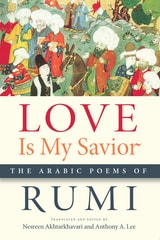
Love Is My Savior
The Arabic Poems of RumiNesreen Rumi
Michigan State University Press, 2016
This dual-language volume opens a treasury of Rumi’s mystic thought and startling poetry. His verses pulsate with desire and longing, with sensuality, and with ecstatic celebration. Rumi found in his mystic poetry a vehicle for the expression of the endless spiritual bounties of love. He placed love at the center of his faith and doctrine, and he pronounced it to be the goal of his life and the only form of true worship. This collection is stunningly rendered in English by an award-winning poet and a distinguished translator of Arabic poetry.
Love, Life, and Lust in Heinrich Kaufringer's Verse Narratives
Albrecht Classen
Arizona Center for Medieval and Renaissance Studies, 2015
Lovers’ Debates for the Stage
A Bilingual EditionIsabella Andreini
Iter Press, 2022
The actress and author Isabella Andreini won international renown playing the bold, versatile, and intellectual inamorata of the commedia dell’arte. After her death, her husband Francesco Andreini continued publishing her works, among them the thirty-one amorosi contrasti—or lovers’ debates— presented in this volume. Available in English for the first time, Lovers' Debates enables readers to envision the commedia dell’arte through the words of its most revered diva. Lovers flirt boldly, trade bawdy insults, exhibit their learning, and drive each other mad in stage dialogues that showcase Isabella’s skill in composition and drama. Sparkling with wit and bursting with dynamic energy, these brilliant lovers’ dialogues for the stage hold strong appeal not only for specialists in early modern literature and women’s studies, but for enthusiasts, scholars, and practitioners of classic and contemporary theatre.
Lucrece and Brutus
Glory in the Land of TenderMadeleine de Scudéry
Iter Press, 2021
Comprising texts by Madeleine de Scudéry, including many from her novel Clélie, this volume focuses on the story of Lucretia, the Roman matron whose rape and suicide led to the downfall of the Roman monarchy. Through her work, Scudéry seeks to contrast the enormous cultural contributions of women with their physical vulnerability and to propose an alternative to sexual violation, as envisioned on the Map of the Land of Tender that charts an imaginary land in the novel and outlines a path toward love. In Scudéry’s version of this tale, Lucrece and her beloved, Brutus, follow the path of tender friendship. Scudéry contradicts history’s characterization of Lucrece as craving glory in the form of fame. Indeed, contrary to ancient sources, Lucrece’s glory will be her decision to sacrifice herself secretly for her tender friend.
Lyrics of the French Renaissance
Marot, Du Bellay, RonsardEdited by Norman R. Shapiro
University of Chicago Press, 2006
Hope Glidden’s accessible introduction, along with the notes she and Shapiro provide on specific poems, will increase readers’ enjoyment and illuminate the historical and linguistic issues relating to this wealth of more than 150 lyric poems.
“A marvelous micro-anthology of sixteenth-century French letters. Representing the pinnacle of French Renaissance verse, the poems singled out here are sensitively interpreted in rhymed English versions. . . . There is a pleasant and inspiring craftsmanship in these interpretations.”—Virginia Quarterly Review
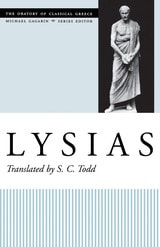
Lysias
By S. C. Todd
University of Texas Press, 2000
This is the second volume in the Oratory of Classical Greece series. Planned for publication over several years, the series will present all of the surviving speeches from the late fifth and fourth centuries B.C. in new translations prepared by classical scholars who are at the forefront of the discipline. These translations are especially designed for the needs and interests of today's undergraduates, Greekless scholars in other disciplines, and the general public.
Classical oratory is an invaluable resource for the study of ancient Greek life and culture. The speeches offer evidence on Greek moral views, social and economic conditions, political and social ideology, and other aspects of Athenian culture that have been largely ignored: women and family life, slavery, and religion, to name just a few.
This volume contains all the complete works and eleven of the largest fragments attributed to Lysias, the leading speechwriter of the generation (403-380 B.C.) after the Peloponnesian War, who was also one of the finest and most deceptive storytellers of all time. As a noncitizen resident in Athens, Lysias could take no direct part in politics, but his speeches, written for clients to deliver in court, paint vivid pictures of various private and public disputes: one speaker defends himself on a charge of murdering his wife's lover, while another is accused of having caused the deaths of democratic activists under the short-lived oligarchy of the Thirty (404/3), despite his claim to be protected by the amnesty that accompanied the restoration of democracy in 403.
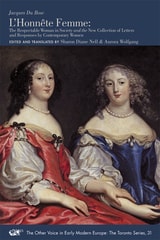
L’Honnête Femme
The Respectable Woman in Society and the New Collection of Letters and Responses by Contemporary WomenJacques Du Bosc
Iter Press, 2014
—Reverend John J. Conley, SJ
Knott Professor of Philosophy, Loyola University Maryland