Results by title
63 books match the query 'Turkey & Ottoman Empire' and 2 start with l
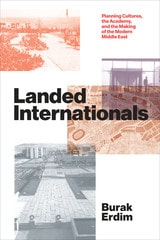
Landed Internationals
Planning Cultures, the Academy, and the Making of the Modern Middle EastBy Burak Erdim
University of Texas Press, 2020
2022 On the Brinck Book Award, University of New Mexico School of Architecture + Planning
Special Mention, First Book Prize, International Planning History Society
Landed Internationals examines the international culture of postwar urban planning through the case of the Middle East Technical University (METU) in Ankara, Turkey. Today the center of Turkey's tech, energy, and defense elites, METU was founded in the 1950s through an effort jointly sponsored by the UN, the University of Pennsylvania, and various governmental agencies of the United States and Turkey. Drawing on the language of the UN and its Technical Assistance Board, Erdim uses the phrase "technical assistance machinery" to encompass the sprawling set of relationships activated by this endeavor.
Erdim studies a series of legitimacy battles among bureaucrats, academics, and other professionals in multiple theaters across the political geography of the Cold War. These different factions shared a common goal: the production of nationhood—albeit nationhood understood and defined in multiple, competing ways. He also examines the role of the American architecture firm Skidmore, Owings, and Merrill; the New York housing policy guru Charles Abrams; the UN and the University of Pennsylvania; and the Turkish architects Altuğ and Behruz Çinici. In the end, METU itself looked like a model postwar nation within the world order, and Erdim concludes by discussing how it became an important force in transnational housing, planning, and preservation in its own right.
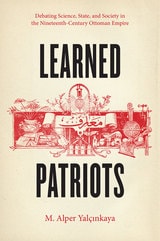
Learned Patriots
Debating Science, State, and Society in the Nineteenth-Century Ottoman EmpireM. Alper Yalçinkaya
University of Chicago Press, 2015
In Learned Patriots, M. Alper Yalçinkaya examines what it meant for nineteenth-century Ottoman elites themselves to have a debate about science. Yalçinkaya finds that for anxious nineteenth-century Ottoman politicians, intellectuals, and litterateurs, the chief question was not about the meaning, merits, or dangers of science. Rather, what mattered were the qualities of the new “men of science.” Would young, ambitious men with scientific education be loyal to the state? Were they “proper” members of the community? Science, Yalçinkaya shows, became a topic that could hardly be discussed without reference to identity and morality.
Approaching science in culture, Learned Patriots contributes to the growing literature on how science travels, representations and public perception of science, science and religion, and science and morality. Additionally, it will appeal to students of the intellectual history of the Middle East and Turkish politics.