Results by title
301 books match the query 'West (U.S.)' and 5 start with l
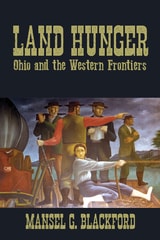
Land Hunger
Ohio and the Western FrontiersMansel G. Blackford
Ohio University Press, 2025

Late Holocene Research on Foragers and Farmers in the Desert West
Barbara J. Roth and Maxine E. McBrinn
University of Utah Press, 2015
Three main themes link these papers: the role of the environment in shaping prehistoric behavior, flexibility in foraging and farming adaptations, and diversity in settlement strategies. Contributors cover a range of topics including the varied ways hunter-gatherers adapted to arid environments, the transition from hunting and gathering to farming and the reasons for it, the variation in early farmers across the Southwest and Great Basin, and the differing paths followed as they developed settled villages.
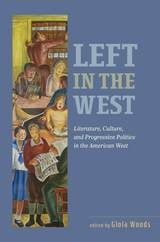
Left in the West
Literature, Culture, and Progressive Politics in the American WestGioia Woods
University of Nevada Press, 2018
From the early 19th century to the present, a remarkably complex and varied body of literary and cultural production has emerged out of progressive social movements. While the literary left in the West shared many interests with other regional expressions—labor, class, anti-fascism, and anti-imperialism, the influence of Manifest Destiny—the distinct history of settler colonialism in western territories caused western leftists to develop concerns unique to the region.
Chapters in the volume provide an impressive range of analysis, covering artists and movements from suffragist writers to bohemian Californian photographers, from civil rights activists to popular folk musicians, from Latinx memoirists to Native American experimental writers, to name just a few.
The unique consideration of the West as a socio-political region establishes a framework for political critique that moves beyond class consequences, anti-fascism, and civil liberties, and into distinct Western concerns such as Native American sovereignty, environmental exploitation, and the legacies of settler colonialism. What emerges is a deeper understanding of the region and its unique people, places, and concerns.
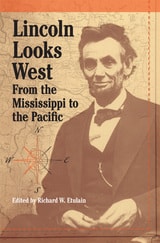
Lincoln Looks West
From the Mississippi to the PacificEdited by Richard W. Etulain
Southern Illinois University Press, 2010
This first-ever volume to comprehensively explore President Abraham Lincoln’s ties to the American West brings together a variety of scholars and experts who offer a fascinating look at the sixteenth president’s lasting legacy in the territory beyond the Mississippi River. Editor Richard W. Etulain’s extensive introductory essay treats these western connections from Lincoln’s early reactions to Texas, Oregon, and the Mexican War in the 1840s, through the 1850s, and during his presidency, providing a framework for the nine essays that follow.
Each of these essays offers compelling insight into the many facets of Lincoln’s often complex interactions with the American West. Included in this collection are a provocative examination of Lincoln’s opposition to the Mexican War; a discussion of the president’s antislavery politics as applied to the new arena of the West; new perspectives on Lincoln’s views regarding the Thirteenth Amendment and his reluctance regarding the admission of Nevada to the Union; a fresh look at the impact of the Radical Republicans on Lincoln’s patronage and appointments in the West; and discussion of Lincoln’s favorable treatment of New Mexico and Arizona, primarily Southern and Democratic areas, in an effort to garner their loyalty to the Union. Also analyzed is “The Tribe of Abraham”—Lincoln’s less-than-competent appointments in Washington Territory made on the basis of political friendship—and the ways in which Lincoln’s political friends in the Western Territories influenced his western policies. Other essays look at Lincoln’s dealings with the Mormons of Utah, who supported the president in exchange for his tolerance, and American Indians, whose relations with the government suffered as the president’s attention was consumed by the crisis of the Civil War.
In addition to these illuminating discussions, Etulain includes a detailed bibliographical essay, complete with examinations of previous interpretations and topics needing further research, as well as an extensive list of resources for more information on Lincoln's ties west of the Mississippi. Loaded with a wealth of information and fresh historical perspectives, Lincoln Looks West explores yet another intriguing dimension to this dynamic leader and to the history of the American West.
Contributors:
Richard W. Etulain
Michael S. Green
Robert W. Johannsen
Deren Earl Kellogg
Mark E. Neely Jr.
David A. Nichols
Earl S. Pomeroy
Larry Schweikart
Vincent G. Tegeder
Paul M. Zall

Lucky 13
Short Plays about Arizona, Nevada, and UtahRed Shuttleworth
University of Nevada Press, 1995