Results by title
52 books match the query 'Women in motion pictures' and 3 start with l
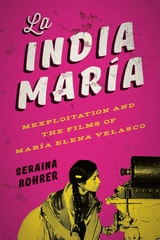
La India María
Mexploitation and the Films of María Elena VelascoBy Seraina Rohrer
University of Texas Press, 2017
La India María—a humble and stubborn indigenous Mexican woman—is one of the most popular characters of the Mexican stage, television, and film. Created and portrayed by María Elena Velasco, La India María has delighted audiences since the late 1960s with slapstick humor that slyly critiques discrimination and the powerful. At the same time, however, many critics have derided the iconic figure as a racist depiction of a negative stereotype and dismissed the India María films as exploitation cinema unworthy of serious attention. By contrast, La India María builds a convincing case for María Elena Velasco as an artist whose work as a director and producer—rare for women in Mexican cinema—has been widely and unjustly overlooked.
Drawing on extensive interviews with Velasco, her family, and film industry professionals, as well as on archival research, Seraina Rohrer offers the first full account of Velasco’s life; her portrayal of La India María in vaudeville, television, and sixteen feature film comedies, including Ni de aquí, ni de allá [Neither here, nor there]; and her controversial reception in Mexico and the United States. Rohrer traces the films’ financing, production, and distribution, as well as censorship practices of the period, and compares them to other Mexploitation films produced at the same time. Adding a new chapter to the history of a much-understudied period of Mexican cinema commonly referred to as “la crisis,” this pioneering research enriches our appreciation of Mexploitation films.
Lady Chatterley's Legacy in the Movies
Sex, Brains, and Body GuysLehman, Peter
Rutgers University Press, 2010
Peter Lehman and Susan Hunt relate a host of wide-ranging films to a literary tradition dating back to D. H. Lawrence's Lady Chatterley's Lover and an emerging body culture of our time. Through an engaging and compelling narrative, they argue that the hero's body, lovemaking style, and penis-revealed through extensive male nudity-celebrate conformity to norms of masculinity and male sexuality. Simultaneously, these films denigrate the vital, creative, erotic world of the mind. Just when women began to successfully compete with men in the workplace, these movies, if you will, unzip the penis as the one thing women do not have but want and need for their fulfillment.
But Lehman and Hunt also find signs of a yearning for alternative forms of sexual and erotic pleasure in film, embracing diverse bodies and vibrant minds. Lady Chatterley's Legacy in the Movies shows how filmmakers, spectators, and all of us can be empowered to dethrone the body guy, his privileged body, and preferred style of lovemaking, replacing it with a wide range of alternatives.
Like a Natural Woman
Spectacular Female Performance in Classical HollywoodPullen, Kirsten
Rutgers University Press, 2014
Bringing a fresh perspective to film history through the lens of performance studies, Kirsten Pullen explores the ways in which these actresses, who always appeared to be “playing themselves,” responded to the naturalist notion that actors should create authentic characters by drawing from their own lives. At the same time, she examines how Hollywood presented these female stars as sex objects, focusing on their spectacular bodies at the expense of believable characterization or narratives.
Pullen not only helps us appreciate what talented actresses these five women actually were, but also reveals how they sought to express themselves and maintain agency, even while meeting the demands of their directors, studios, families, and fans to perform certain feminine roles. Drawing from a rich collection of classic films, publicity materials, and studio archives, Like a Natural Woman lets us take a new look at both Hollywood acting techniques and the performance of femininity itself.