272 books match the query 'Work' and 11 start with l

cover of La Plonqui: The Literary Life and Work of Margarita Cota-Cárdenas

La Plonqui

The Literary Life and Work of Margarita Cota-Cárdenas

Edited by Jesús Rosales and Vanessa Fonseca-Chávez

University of Arizona Press, 2023

Celebrating more than forty years of creative writing by Chicana author Margarita Cota-Cárdenas, this volume includes critical essays, reflections, interviews, and previously unpublished writing by the author herself to document the lifelong craft and legacy of a pioneering writer in the field.

Nicknamed “La Plonky” by her family after a made-up childhood song, Cota-Cárdenas grew up in California, taught almost exclusively in Arizona, and produced five major works (two novels and three books of poetry) that offer an expansive literary production spanning from the 1960s to today. Her perspectives on Chicana identity, the Chicanx movement, and the sociopolitical climate of Arizona and the larger U.S.-Mexico border region represent a significant contribution to the larger body of Chicanx literature. Additionally, the volume explores her perspectives on issues of gender, sexuality, and identity related to the Chicanx experience over time.

Divided into three major parts, this collection begins with an introduction, followed by two testimonial essays written by the author herself and a longtime colleague, as well as an interview with the author. The second section contains nine essays by well-established literary critics that analyze Cota-Cárdenas’s literary output within a Chicano Movement literary context and offer new readings of Cota-Cárdenas’s fiction and poetry. The third part presents poetry and fiction from Cota-Cárdenas, including an excerpt from a work in progress. As a whole, the collection aims to affirm Margarita Cota-Cárdenas’s significant role in shaping the field of Chicana literature and emphasizes the importance of honoring a celebrated author who wrote a majority of her works in Spanish—one of the few Chicana writers to do so.

Contributors
Laura Elena Belmonte
Margarita Cota-Cárdenas
José R. Flores
Vanessa Fonseca-Chávez
Carolyn González
Gabriella Gutiérrez y Muhs
Manuel M. Martín-Rodríguez
Kirsten F. Nigro
Margarita E. Pignataro
Tey Diana Rebolledo
Jesús Rosales
Charles St-Georges
Javier Villarreal
[more]
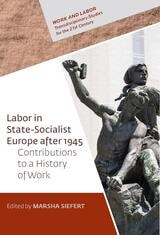
cover of Labor in State-Socialist Europe, 1945–1989: Contributions to a History of Work

Labor in State-Socialist Europe, 1945–1989

Contributions to a History of Work

Marsha Siefert

Central European University Press, 2020

Labor regimes under communism in East-Central Europe were complex, shifting, and ambiguous. This collection of sixteen essays offers new conceptual and empirical ways to understand their history from the end of World War II to 1989, and to think about how their experiences relate to debates about labor history, both European and global.

The authors reconsider the history of state socialism by re-examining the policies and problems of communist regimes and recovering the voices of the workers who built them. The contributors look at work and workers in Albania, Bulgaria, Czechoslovakia, the German Democratic Republic, Hungary, Poland, Romania, and Yugoslavia. They explore the often contentious relationship between politics and labor policy, dealing with diverse topics including workers’ safety and risks; labor rights and protests; working women’s politics and professions; migrant workers and social welfare; attempts to control workers’ behavior and stem unemployment; and cases of incomplete, compromised, or even abandoned processes of proletarianization. Workers are presented as active agents in resisting and supporting changes in labor policies, in choosing allegiances, and in defining the very nature of work.
[more]
cover of Labor of Fire: The Ontology of Labor between Economy and Culture

Labor of Fire

The Ontology of Labor between Economy and Culture

Bruno Gullì

Temple University Press, 2005

In Labor of Fire, Bruno Gullì offers a timely and much needed re-examination of the concept of labor. Distinguishing between "productive labor" (working for money or subsistence) and "living labor" (working for artistic creation), Gullì convincingly argues for a definition of work that recognizes the importance of artistic and social creativity to our definition of labor and the self.

Gullì lays the groundwork for his book by offering a critique of productive labor, and then maps out his productive/living labor distinction in detail, reviewing the work of Marx and others.

[more]
cover of Labors of Fear: The Modern Horror Film Goes to Work

Labors of Fear

The Modern Horror Film Goes to Work

Edited by Aviva Briefel and Jason Middleton

University of Texas Press, 2023

2024 Best Edited Collection, Midwest Popular Culture Association / Midwest American Culture Association (MPCA/ACA)

How work and capitalism inspire horror in modern film.


American ideals position work as a source of pride, opportunity, and meaning. Yet the ravages of labor are constant grist for horror films. Going back decades to the mad scientists of classic cinema, the menial motel job that prepares Norman Bates for his crimes in Psycho, and the unemployed slaughterhouse workers of The Texas Chain Saw Massacre, horror movies have made the case that work is not so much a point of pride as a source of monstrosity.

Editors Aviva Briefel and Jason Middleton assemble the first study of horror’s critique of labor. In the 1970s and 1980s, films such as The Shining and Dawn of the Dead responded to deindustrialization, automation, globalization, and rising numbers of women in the workforce. Labors of Fear explores these critical issues and extends them in discussions of recent works such as The Autopsy of Jane Doe, Midsommar, Survival of the Dead, It Follows, Get Out, and Us. Covering films ranging from the 1970s onward, these essays address novel and newly recognized modes and conditions of labor: reproductive labor, emotion work and emotional labor, social media and self-branding, intellectual labor, service work, precarity, and underemployment. In its singular way, horror continues to make spine-tingling sense of what is most destructive in the wider sociopolitical context of US capitalism.
[more]
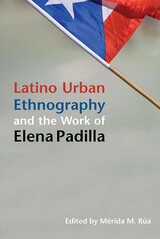
cover of Latino Urban Ethnography and the Work of Elena Padilla

Latino Urban Ethnography and the Work of Elena Padilla

Merida M. Rua

University of Illinois Press, 2010
This study reclaims and builds upon the classic work of anthropologist Elena Padilla in an effort to examine constructions of space and identity among Latinos. The volume includes an annotated edition of Padilla's 1947 University of Chicago master's thesis, "Puerto Rican Immigrants in New York and Chicago: A Study in Comparative Assimilation," which broke with traditional urban ethnographies and examined racial identities and interethnic relations. Weighing the importance of gender and the interplay of labor, residence, and social networks, Padilla examined the integration of Puerto Rican migrants into the social and cultural life of the larger community where they settled. Also included are four comparative and interdisciplinary original essays that foreground the significance of Padilla's early study about Latinos in Chicago. Contributors discuss the implications of her groundbreaking contributions to urban ethnographic traditions and to the development of Puerto Rican studies and Latina/o studies.
 
Contributors are Nicholas De Genova, Zaire Z. Dinzey-Flores, Elena Padilla, Ana Y. Ramos-Zayas, Mérida M. Rúa, and Arlene Torres.
[more]
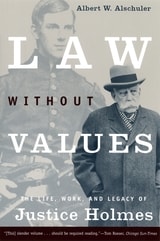
cover of Law Without Values: The Life, Work, and Legacy of Justice Holmes

Law Without Values

The Life, Work, and Legacy of Justice Holmes

Albert W. Alschuler

University of Chicago Press, 2000
In recent decades, Oliver Wendell Holmes has been praised as "the only great American legal thinker" and "the most illustrious figure in the history of American law." But in Albert Alschuler's critique of both Justice Holmes and contemporary legal scholarship, a darker portrait is painted—that of a man who, among other things, espoused Social Darwinism, favored eugenics, and, as he himself acknowledged, came "devilish near to believing that might makes right."
[more]
cover of Learning to Work: The Case for Reintegrating Job Training and Education

Learning to Work

The Case for Reintegrating Job Training and Education

W. Norton Grubb

Russell Sage Foundation, 1996

"Grubb's powerful vision of a workforce development system connected by vertical ladders for upward mobility adds an important new dimension to our continued efforts at system reform. The unfortunate reality is that neither our first-chance education system nor our second-chance job training system have succeeded in creating clear pathways out of poverty for many of our citizens. Grubb's message deserves a serious hearing by policy makers and practitioners alike." —Evelyn Ganzglass, National Governors' Association Over the past three decades, job training programs have proliferated in response to mounting problems of unemployment, poverty, and expanding welfare rolls. These programs and the institutions that administer them have grown to a number and complexity that make it increasingly difficult for policymakers to interpret their effectiveness. Learning to Work offers a comprehensive assessment of efforts to move individuals into the workforce, and explains why their success has been limited. Learning to Work offers a complete history of job training in the United States, beginning with the Department of Labor's manpower development programs in the1960s and detailing the expansion of services through the Comprehensive Employment and Training Act in the 1970s and the Job Training Partnership Act in the 1980s.Other programs have sprung from the welfare system or were designed to meet the needs of various state and corporate development initiatives. The result is a complex mosaic of welfare-to-work, second-chance training, and experimental programs, all with their own goals, methodology, institutional administration, and funding. Learning to Work examines the findings of the most recent and sophisticated job training evaluations and what they reveal for each type of program. Which agendas prove most effective? Do their effects last over time? How well do programs benefit various populations, from welfare recipients to youths to displaced employees in need of retraining? The results are not encouraging. Many programs increase employment and reduce welfare dependence, but by meager increments, and the results are often temporary. On average most programs boosted earnings by only $200 to $500 per year, and even these small effects tended to decay after four or five years.Overall, job training programs moved very few individuals permanently off welfare, and provided no entry into a middle-class occupation or income. Learning to Work provides possible explanations for these poor results, citing the limited scope of individual programs, their lack of linkages to other programs or job-related opportunities, the absence of academic content or solid instructional methods, and their vulnerability to local political interference. Author Norton Grubb traces the root of these problems to the inherent separation of job training programs from the more successful educational system. He proposes consolidating the two domains into a clearly defined hierarchy of programs that combine school- and work-based instruction and employ proven methods of student-centered, project-based teaching. By linking programs tailored to every level of need and replacing short-term job training with long-term education, a system could be created to enable individuals to achieve increasing levels of economic success. The problems that job training programs address are too serious too ignore. Learning to Work tells us what's wrong with job training today, and offers a practical vision for reform.
[more]
cover of Liberating Economics: Feminist Perspectives on Families, Work, and Globalization

Liberating Economics

Feminist Perspectives on Families, Work, and Globalization

Drucilla K. Barker and Susan F. Feiner

University of Michigan Press, 2004

Liberating Economics draws on central concepts from women's studies scholarship to construct a feminist understanding of the economic roles of families, caring labor, motherhood, paid and unpaid labor, poverty, the feminization of labor, and the consequences of globalization. Barker and Feiner consistently recognize the importance of social location -- gender, race, class, sexual identity, and nationality -- in economic processes shaping the home, paid employment, market relations, and the global economy. Throughout they connect women's economic status in the industrialized nations to the economic circumstances surrounding women in the global South.

Rooted in the two disciplines, this book draws on the rich tradition of interdisciplinary work in feminist social science scholarship to construct a parallel between the notions that the "personal is political" and "the personal is economic."

Drucilla K. Barker is Professor of Economics and Women's Studies, Hollins University.

Susan F. Feiner is Associate Professor of Economics and Women's Studies, University of Southern Maine.


[more]
cover of Life and Work of George Sylvester Morris: A Chapter in the History of American Thought in the Nineteenth Century

Life and Work of George Sylvester Morris

A Chapter in the History of American Thought in the Nineteenth Century

R.M. Wenley

University of Michigan Press, 1917
George Sylvester Morris was a man whose “rare personality stamped itself” upon the University of Michigan, according to author R. M. Wenley. This book is a biography of the nineteenth-century philosopher, from his early years in New England, through his professorship at the University of Michigan, to his early death in 1889. Also included in this book is a bibliography of Morris’s writings.
[more]
cover of Life, Work, and Rebellion in the Coal Fields: The Southern West Virginia Miners, 1880-1922 2nd Edition

Life, Work, and Rebellion in the Coal Fields

The Southern West Virginia Miners, 1880-1922 2nd Edition

David Corbin

West Virginia University Press, 2015

Between 1880 and 1922, the coal fields of southern West Virginia witnessed two bloody and protracted strikes, the formation of two competing unions, and the largest armed conflict in American labor history—a week-long battle between 20,000 coal miners and 5,000 state police, deputy sheriffs, and mine guards. These events resulted in an untold number of deaths, indictments of over 550 coal miners for insurrection and treason, and four declarations of martial law. Corbin argues that these violent events were collective and militant acts of aggression interconnected and conditioned by decades of oppression. His study goes a long way toward breaking down the old stereotypes of Appalachian and coal mining culture. This second edition contains a new preface and afterword by author David A. Corbin.
[more]
cover of Literary Modernism and the Transformation of the Work

Literary Modernism and the Transformation of the Work

James F. Knapp

Northwestern University Press, 1988

Literary Modernism and the Transformation of Work probes the relationship between the aesthetic structures of modernism and its political and philosophical shape. James F. Knapp explores modernism's engagement with and reaction to the theories and discourse of scientific management that were reshaping the workplace in the early twentieth century, and in so doing, he traces "the ways in which a socially dominant discourse of knowledge is reproduced—and challenged—through a series of texts that range from the marginal to the most fully canonized."
[more]