Results by title
353 books match the query 'World War II' and 10 start with l
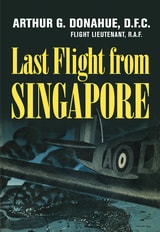
Last Flight from Singapore
Arthur G. Donahue
Westholme Publishing, 2014
In Last Flight from Singapore, Donahue tells his dramatic story, accompanied by photographs he took himself, of the intense and futile battle against the Japanese for control of the gateway to the Malay Peninsula. He continues his story through his convalescence to his return to England, where he once again began patrols over Europe. The manuscript for Last Flight from Singapore was found among his effects after he did not return from a patrol in 1942 and was presumed lost.
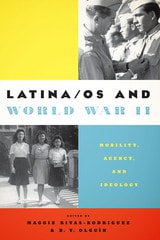
Latina/os and World War II
Mobility, Agency, and IdeologyEdited by Maggie Rivas-Rodriguez and B.V. Olguín
University of Texas Press, 2014
The first book-length study of Latina/o experiences in World War II over a wide spectrum of identities and ancestries—from Cuban American, Spanish American, and Mexican American segments to the under-studied Afro-Latino experience—Latina/os and World War II probes the controversial aspects of Latina/o soldiering and citizenship in the war, the repercussions of which defined the West during the twentieth century. The editors also offer a revised, more accurate tabulation of the number of Latina/os who served in the war.
Spanning imaginative productions, such as vaudeville and the masculinity of the soldado razo theatrical performances; military segregation and the postwar lives of veterans; Tejanas on the homefront; journalism and youth activism; and other underreported aspects of the wartime experience, the essays collected in this volume showcase rarely seen recollections. Whether living in Florida in a transformed community or deployed far from home (including Mexican Americans who were forced to endure the Bataan Death March), the men and women depicted in this collection yield a multidisciplinary, metacritical inquiry. The result is a study that challenges celebratory accounts and deepens the level of scholarly inquiry into the realm of ideological mobility for a unique cultural crossroads. Taking this complex history beyond the realm of war narratives, Latina/os and World War II situates these chapters within the broader themes of identity and social change that continue to reverberate in postcolonial lives.
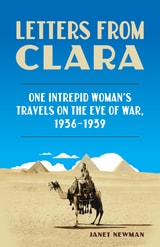
Letters from Clara
One Intrepid Woman's Travels on the Eve of War, 1936-1939Janet Newman
Wisconsin Historical Society Press, 2022
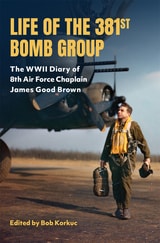
Life of the 381st Bomb Group
The World War II Diary of Eighth Air Force Chaplain James Good BrownBob Korkuc
University of Missouri Press, 2026
While working on his first book, Bob Korkuc became intimately familiar with the 381st Bombardment Group of the Mighty Eighth Air Force and met the group’s chaplain, James Good Brown. Brown kept a diary during his time with the bomb group (1943 to 1945) in which he chronicled the daily experiences of the men.
Years after the war, Brown self-published his diary, which today is hard to find. Through his friendship with Brown, Korkuc gained access to and chose to edit the original docu - ment so that more readers might appreciate this insightful wartime eyewitness account.
Serving in his early forties alongside men twenty years his junior—whom he called the “Mighty Men of the 381st”—Brown took part in morning briefings, shared meals with crews, and anxiously awaited their return from dangerous daylight bombing missions. Flying as a noncombatant, an unnecessary eleventh crewmember, Brown describes his own observations of a Flying Fortress combat mission over Germany. Writing with extraordinary candor, Brown documents the inner workings of a bomb group that flew 297 combat missions over Europe, providing vivid character assessments of his fellow airmen and capturing both their victories and devastating losses.
In addition to judiciously editing Brown’s original diary for readability, Korkuc created a unique appendix, which reveals the fate of every airman who served with Brown. The immediacy of Brown’s narration combined with Korkuc’s meticulous editing make this a promising new resource for scholars and general readers alike.
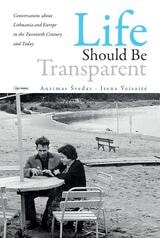
Life should be Transparent
Conversations about Lithuania and Europe in the Twentieth Century and TodayAurimas Svedas
Central European University Press, 2020
This book of thirteen conversations introduces us to the life of an exceptional person—theatre critic, Germanist, and long-time chair of the Open Lithuania Fund board—Irena Veisaitė. The dialogue between Lithuanian historian Aurimas Švedas and a woman who reflects deeply on her experiences reveals both one individual’s historically dramatic life and the fate of Europe and Lithuania in the twentieth century.
Through the complementary lenses of history and memory, we confront with Veisaitė the horrific events of the Holocaust, which brought about the end of the Lithuanian Jewish world. We also meet an array of world-class cultural figures, see fragments of legendary theatre performances, and hear meaningful words that were spoken or heard decades ago.
This book’s interlocutors do not so much seek to answer the question “What was it like?” but instead repeatedly ask each other: “What, how, and why do we remember? What is the meaning of our experiences? How can history help us to live in the present and create the future? How do we learn to understand and forgive?”
A series of Veisaitė’s texts, statements, and letters, presented at the end of the book suggest further ways of answering these questions.
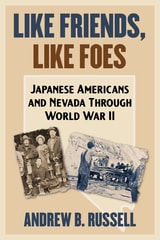
Like Friends, Like Foes
Japanese Americans and Nevada through World War IIAndrew B. Russell
University of Nevada Press, 2026
Like Friends, Like Foes offers a comprehensive analysis of how Nevada residents responded and reacted to the “Japanese Question” during World War II. Both before and during the war, the experience of Japanese American residents of Nevada varied widely. Once the war started, Japanese immigrants experienced an unusual case of mass internment from the mining towns of Ruth and McGill, Nevada, while Japanese American railroad workers and their families, scattered across the state, faced sudden layoffs and evictions. At the same time, most of the Japanese Americans living in Nevada fared much better than their counterparts who resided in the surrounding states.
Andrew Russell’s study examines how variations in local history and local circumstances generated starkly different perspectives and responses to the supposed “Japanese problems” confronting Nevada’s small communities, the state, and the larger region. While Russell’s interpretive history spotlights some highly unusual developments, it nevertheless offers fresh evidence of how individuals or small groups can play significant roles in combating the abuse of civil rights during times of fear and uncertainty.
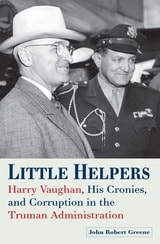
Little Helpers
Harry Vaughan, His Cronies, and Corruption in the Truman AdministrationJohn Robert Greene
University of Missouri Press, 2024
Greene begins with the story of how Truman and Vaughan met during World War I, then examines Vaughan’s support for Truman for the Senate and later as President. The majority of the book, however, considers the various cronies that surrounded Vaughan and illustrates the significance of his relationship with Truman—and the president’s inability to rein him in.
Drawing from primary and archival sources, many never before published, Little Helpers is further distinguished by its use of the correspondence between Vaughan and Truman. Greene also provides a dramatic narrative account of the inner workings of the Truman administration, making the book accessible to the general reader as well as the specialist.
Look Out Below! A Story of the Airborne by a Paratrooper Padre
Francis L. Sampson
Catholic University of America Press, 2023
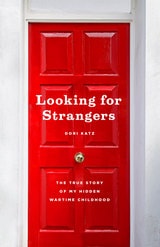
Looking for Strangers
The True Story of My Hidden Wartime ChildhoodDori Katz
University of Chicago Press, 2013
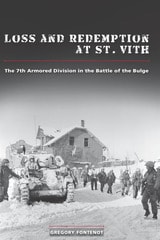
Loss and Redemption at St. Vith
The 7th Armored Division in the Battle of the BulgeGregory Fontenot, Colonel, US Army, Retired
University of Missouri Press, 2020