Results by title
295 books match the query 'Zoology' and 8 start with l
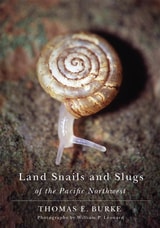
Land Snails and Slugs of the Pacific Northwest
Thomas E. Burke
Oregon State University Press, 2013
Primarily an identification guide, this richly illustrated volume offers complete information on the range of terrestrial mollusk shapes, sizes, and characteristics. It presents an overview of their habitat requirements as well as details of land snail and slug ecology, collection and preservation methods, and biogeography.
Land Snails and Slugs of the Pacific Northwest is an essential reference for biologists, horticulturalists, gardeners, and naturalists, and anyone wishing to identify species in the field.
• Identification keys and species accounts for most of the 245 taxa of terrestrial slugs and snails in the region
• 280 full-color photographs of 155 species and subspecies
• Range maps for most species
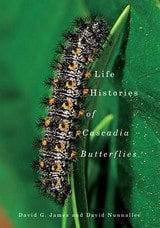
Life Histories of Cascadia Butterflies
David G. James
Oregon State University Press, 2011
Life Underground
The Biology of Subterranean RodentsEdited by Eileen A. Lacey, James L. Patton, and Guy N. Cameron
University of Chicago Press, 2000
Life Underground provides the first comprehensive review of the biology of subterranean rodents. Arranged by topic rather than by taxon to facilitate cross-species comparisons, chapters cover such subjects as morphology, physiology, social behavior, genetic variation, and evolutionary diversification. Two main questions run throughout the book. First, to what extent has subterranean life shaped the biology of these animals, leading to similar adaptations among otherwise dissimilar species? Second, how have the distinct evolutionary histories of these groups led to different solutions to the challenges posed by life underground?
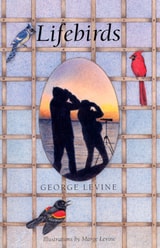
Lifebirds
Levine, George
Rutgers University Press, 1995
In the tradition of Annie Dillard, this book is a set of meditations on nature, in this case specifically on the way birds and birding are entangled with life, with work, family, and friends. While it delicately narrates loving engagement with birds, it is not a field guide. Its author is a birder, not a professional ornithologist. Although the book does in fact offer a surprising amount of detail about birds, it is primarily a consideration of the experience and human significance of seeing birds, rather than of the birds in themselves as objects of systematic study. It attempts to convey something of the extraordinary variety and excitement of birding, the complications and subtleties of bird identification, the implication of birding in the imagination and the world against which it is usually defined.
While one doesn’t have to be interested in birds to read it with pleasure, it attempts to seduce the reader into the birding experience through a series of autobiographical memoirs with birds at their center. It is not meant for experts, except as experts might be interested in how a journeyman experiences their more significantly constructed world. In the end the book is about a lot more than birds. It is about “lifebirds,” with all the many meanings that word might seem to imply.
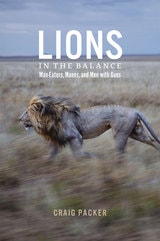
Lions in the Balance
Man-Eaters, Manes, and Men with GunsCraig Packer
University of Chicago Press, 2015
Monsters take many forms: from man-eating lions to the people who hunt them, from armed robbers to that midnight knock at the door of a cheap hotel room in Dar es Salaam. And celebrated biologist Craig Packer has faced them all. Head on.
With Lions in the Balance, Packer takes us back into the complex, tooth-and-claw world of the African lion, offering revealing insights into both the lives of one of the most iconic and dangerous animals on earth and the very real risks of protecting them. A sequel to his prize-winning Into Africa—which gave many readers their first experience of fieldwork in Africa, of cooperative lions on dusty savannas, and political kidnappings on the shores of Lake Tanganyika—this new diary-based chronicle of cutting-edge research and heartbreaking corruption will both alarm and entertain. Packer’s story offers a look into the future of the lion, one in which the politics of conservation will require survival strategies far more creative and powerful than those practiced anywhere in the world today.
Packer is sure to infuriate millionaires, politicians, aid agencies, and conservationists alike as he minces no words about the problems he encounters. But with a narrative stretching from far flung parts of Africa to the corridors of power in Washington, DC, and marked by Packer’s signature humor and incredible candor, Lions in the Balance is a tale of courage against impossible odds, a masterly blend of science, adventure, and storytelling, and an urgent call to action that will captivate a new generation of readers.
Little Seal
An Alaska AdventureWritten and Illustrated by Ram Papish
University of Alaska Press, 2009
The northern fur seal spends most of its life in the open ocean of the North Pacific, from California up through Alaska and down to Japan. These seals travel hundreds of miles, farther than any other seal or sea lion, to reach their remote breeding grounds. Most fur seals go to the Pribilof Islands of Alaska, where, historically, several million fur seals converged annually, but the population counted in the Pribilofs in 2008 was less than one million and dropping rapidly. Ram Papish’s richly illustrated story follows these magnificent—and increasingly vulnerable—creatures through the most important part of their lives.
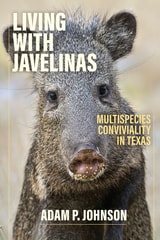
Living with Javelinas
Multispecies Conviviality in TexasAdam P. Johnson
University of Texas Press, 2026
An ethnography on how both humans and javelinas can thrive in shared space.
As human settlements expand into formerly wild lands, coexistence with wildlife is no longer optional––it’s a daily negotiation. In Living with Javelinas, Adam Johnson explores what it means to share space and adapt in a more-than-human world. Often mistaken for wild pigs, javelinas unsettle the boundaries between nuisance and neighbor. Johnson traces the other species that shape their lives––feral hogs, prickly pear, mountain cedar––and examines how folklore, perception, and memory influence human–javelina encounters. Drawing on ethnographic, ecological, and ethological research across Texas, he shows how coexistence becomes a practical, albeit often uneasy, conviviality.
In much of Texas, decades of hunting have made javelinas wary. Through extended time with rancher Roger Gray, who encounters and feeds javelinas daily, Johnson reveals how repeated contact can foster a mutually responsive relationship. Bringing anthropology into dialogue with ecology, Living with Javelinas argues that coexistence is not harmony but an ongoing adjustment. In a time of ecological strain, situated acts of accommodation point toward more ethical and sustainable ways of living together.
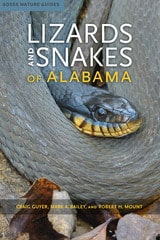
Lizards and Snakes of Alabama
Craig Guyer, Mark A. Bailey, and Robert H. Mount
University of Alabama Press, 2019
The Definitive Guide to Alabama’s Reptilian Wildlife.
Lizards and Snakes of Alabama is the most comprehensive taxonomy gathered since Robert H. Mount’s seminal 1975 volume on the reptiles and amphibians of Alabama. This richly illustrated guide provides an up-to-date summary of the taxonomy and life history of lizards and snakes native to, or introduced to, the state.
Alabama possesses one of the most species-rich biotas in north temperate areas and this richness is reflected in some groups of lizards, such as skinks, and especially in snakes. The authors examine all known species within the state and describe important regional variations in each species, including changes in species across the many habitats that comprise the state. Significant field studies, especially of Alabama’s threatened and endangered species, have been performed and are used to inform discussion of each account.
The life-history entry for each species is comprised of scientific and common names, full-color photographs, a morphological description, discussion of habits and life cycle, and a distribution map depicting the species range throughout the state, as well as notes on conservation and management practices. The illustrated taxonomic keys provided for families, genera, species, and subspecies are of particular value to herpetologists.
This extensive guide will serve as a single resource for understanding the rich natural history of Alabama by shedding light on an important component of that biodiversity. Accessible to all, this volume is valuable to both the professional herpetologist and the general reader interested in snakes and lizards.