Results by title
18284 books match the query 'United States' and 698 start with l
Looking at Lives
American Longitudinal Studies of the Twentieth CenturyErin Phelps
Russell Sage Foundation, 2002
Looking for America on the New Jersey Turnpike
Gillespie, Angus K
Rutgers University Press, 1992
Looking for America on the New Jersey Turnpike, Second Edition
Angus Kress Gillespie
Rutgers University Press, 2024
When Angus Gillespie and Michael Rockland wrote Looking for America on the New Jersey Turnpike in 1989, they simply wanted to express their fascination with a road that many commuters regarded with annoyance or indifference. Little did they expect that it would be hailed as a classic, listed by the state library alongside works by Whitman and Fitzgerald as one of the ten best books ever written about New Jersey or by a New Jerseyan.
Now Looking for America on the New Jersey Turnpike is back in a special updated and expanded edition, examining how this great American motorway has changed over the past thirty-five years. You’ll learn how the turnpike has become an icon inspiring singers and poets. And you’ll meet the many people it has affected, including the homeowners displaced by its construction, the highway patrol and toll-takers who work on it, and the drivers who speed down its lanes every day.
Looking for God in the Suburbs
The Religion of the American Dream and its Critics, 1945-1965Hudnut-Beumler, James
Rutgers University Press, 1994
In the 1950s, 99 percent of adult Americans said they believed in God. How, James Hudnut-Beumler asks, did this consensus about religion turn into the confrontational debates over religion in the 1960s? He argues that post-World War II suburban conformity made church-going so much a part of middle-class values and life that religion and culture became virtually synonymous. Secular critics like David Riesman, William Whyte, C. Wright Mills, and Dwight Macdonald, who blamed American culture for its conformism and lack of class consciousness, and religious critics like Will Herberg, Gibson Winter, and Peter Berger, who argued that religion had lost its true roots by incorporating only the middle class, converged in their attacks on popular religion.
Although most Americans continued to live and worship as before, a significant number of young people followed the critics' call for a faith that led to social action, but they turned away from organized religion and toward the counterculture of the sixties. The critics of the 1950s deserve credit for asking questions about the value of religion as it was being practiced and the responsibilities of the affluent to the poor—and for putting these issues on the social and cultural agenda of the next generation.
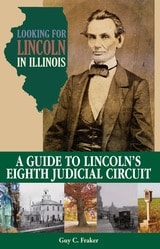
Looking for Lincoln in Illinois
A Guide to Lincoln's Eighth Judicial CircuitGuy C. Fraker
Southern Illinois University Press, 2017
For twenty-three years Abraham Lincoln practiced law on the Eighth Judicial Circuit in east central Illinois, and his legal career is explored in Looking for Lincoln in Illinois: A Guide to Lincoln’s Eighth Judicial Circuit. Guy C. Fraker directs readers and travelers through the prairies to the towns Lincoln visited regularly. Twice a year, spring and fall, Lincoln’s work took him on a journey covering more than four hundred miles. As his stature as a lawyer grew, east central Illinois grew in population and influence, and the Circuit provided Lincoln with clients, friends, and associates who became part of the network that ultimately elevated him to the presidency.
This guidebook to the Circuit features Illinois courthouses, Looking for Lincoln Wayside Exhibits, and other Lincoln points of interest. Fraker guides travelers down the long stretches of quiet country roads that gave Lincoln time to read and think to the locations where Lincoln’s broad range of cases expanded his sense of the economic and social forces changing America.
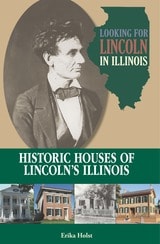
Looking for Lincoln in Illinois
Historic Houses of Lincoln’s IllinoisErika Holst
Southern Illinois University Press, 2018
This richly illustrated compendium of twenty-two historic buildings in the Abraham Lincoln National Heritage Area includes houses, a hotel, and an art center, all of which are open to the public. Each site links today’s visitors with a place Lincoln lived, a home of a Lincoln friend or colleague, or a spot that illuminates Lincoln’s era and legacy in central Illinois. Along with dozens of modern and historical photographs, entries contain explorations of historical connections to Lincoln and detailed information about exceptional features and artifacts. Complete with maps, this showcase of Illinois heritage is a handy guide for day trips, extended tours, or armchair adventures.
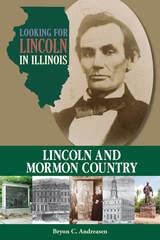
Looking for Lincoln in Illinois
Lincoln and Mormon CountryBryon C. Andreasen
Southern Illinois University Press, 2015
Although they inhabited different political, social, and cultural arenas, Abraham Lincoln and the pioneer generation of Latter-day Saints, or Mormons, shared the same nineteenth-century world. Bryon C. Andreasen’s Looking for Lincoln in Illinois: Lincoln and Mormon Country relates more than thirty fascinating and surprising stories that show how the lives of Lincoln and the Mormons intersected.
This richly illustrated and carefully researched book expands on some of the storyboards found on the Looking for Lincoln Story Trail, from the Mormon capital of Nauvoo to the state capital of Springfield. Created by the Looking for Lincoln Heritage Coalition, this trail consists of wayside exhibits posted in sites of significance to Lincoln’s life and career across fifty-two communities in Illinois. The book’s keyed maps, historic photos, and descriptions of battles, Mormon expeditions, and events at inns, federal buildings, and even Lincoln’s first Illinois log cabin connect the stories to their physical locations.
Exploring the intriguing question of whether Lincoln and Mormon founder Joseph Smith ever met, the book reveals that they traveled the same routes and likely stayed at the same inns. The book also includes colorful and engaging looks at key figures such as Brigham Young, various Mormon apostles, and more. Anyone inspired by Lincoln, as well as Mormon and Illinois history enthusiasts, will appreciate this look back at a long-past, but not forgotten, landscape.
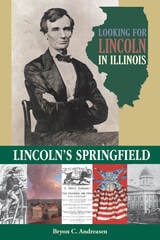
Looking for Lincoln in Illinois
Lincoln's SpringfieldBryon C. Andreasen
Southern Illinois University Press, 2015
Winner, ISHS Certificate of Excellence Award, 2016
Presenting fifty Abraham Lincoln stories—some familiar and beloved, some fresh and unexpected—Looking for Lincoln in Illinois: Lincoln’s Springfield is a carefully researched, richly illustrated guide to the Springfield, Illinois, locations on the Looking for Lincoln Story Trail. Created by the Looking for Lincoln Heritage Coalition, this trail consists of more than two hundred illustrated storyboards posted at sites of significance to Lincoln’s life and career across fifty-two communities in Illinois. The storyboards connect Lincoln-related tales to the geographical locations where they occurred, giving visitors, and now readers, a tour of the social and cultural landscape of Lincoln’s nineteenth-century world while revealing the very human Lincoln known by friends and associates.
This book celebrates the trail as a rich historical resource, featuring the original storyboards produced for Springfield and including twelve additional stories and more than 150 illustrations. Engaging stories in the book bring Lincoln’s Springfield to life: Lincoln created controversy with his Temperance Address, which he delivered in a church on Fourth Street in February 1842. He unexpectedly married Mary Todd in her sister’s home on the edge of Springfield later that year. The Lincolns’ sons used to harness dogs and cats to small wagons and drive them around the dirt streets of town. When Lincoln visited his dentist, he applied his own chloroform, because the practice of analgesia was not yet common. He reportedly played the ball game Fives in a downtown alley while waiting for news of his presidential nomination. And boxing heavyweight champion John C. Heenan visited the presidential candidate in October 1860. Through texts, historic photographs and images, and maps, including one keyed to the story locations in downtown Springfield, readers of this fascinating volume are invited to imagine social and cultural landscapes that have been lost in time.

Looking for the Last Percent
The Controversy over Census UndercountsHarvey M. Choldin
Rutgers University Press, 1994
Every census misses some people, but those who are poor, male, urban, black, and Hispanic are most likely not to be counted. In 1980 and 1990, big city mayors complained that census undercounts were depriving their communities of their correct representation in Congress and of their fair share of state and federal dollars. The mayors filed lawsuits to demand recounts and statistical corrections to the census. Harvey Choldin tells the story of the conflict between Census Bureau staff and politicians over how to handle the undercount.
Statisticians at the census bureau were caught between their own rigorous scientific standards and these strong political demands. Choldin explains the political and statistical issues in the undercount controversy, and describes the major research and development program in which statisticians developed innovative techniques with which to measure and correct undercounts. He concludes by showing that, despite the undercount, the United States has an excellent census.
Looking through the Speculum
Examining the Women’s Health MovementJudith A. Houck
University of Chicago Press, 2024
The women’s health movement in the United States, beginning in 1969 and taking hold in the 1970s, was a broad-based movement seeking to increase women’s bodily knowledge, reproductive control, and well-being. It was a political movement that insisted that bodily autonomy provided the key to women’s liberation. It was also an institution-building movement that sought to transform women’s relationships with medicine; it was dedicated to increasing women’s access to affordable health care without the barriers of homophobia, racism, and sexism. But the movement did not only focus on women’s bodies. It also encouraged activists to reimagine their relationships with one another, to develop their relationships in the name of personal and political change, and, eventually, to discover and confront the limitations of the bonds of womanhood.
This book examines historically the emergence, development, travails, and triumphs of the women’s health movement in the United States. By bringing medical history and the history of women’s bodies into our emerging understandings of second-wave feminism, the author sheds light on the understudied efforts to shape health care and reproductive control beyond the hospital and the doctor’s office—in the home, the women’s center, the church basement, the bookshop, and the clinic. Lesbians, straight women, and women of color all play crucial roles in this history. At its center are the politics, institutions, and relationships created by and within the women’s health movement, depicted primarily from the perspective of the activists who shaped its priorities, fought its battles, and grappled with its shortcomings.

Loose Ends
Closure and Crisis in the American Social TextRussell Reising
Duke University Press, 1996
Reising suggests that these "non-endings" entirely refocus the narrative structures they appear to conclude, accentuate the narrative stresses and ideological fissures that the texts seem to suppress, and reveal "shadow narratives" that trail alongside the dominant story line. He argues that unless the reader notices the ruptures in the closing moments of these works, the social and historical moments in which the narrative and the reader are embedded will be missed. This reading not only offers new interpretive possibilities, but also uncovers startling affinities between the poetry of Phillis Wheatley and the fiction of Henry James, between Charles Brockden Brown’s Wieland and Melville’s least-studied novel, and between Emily Dickinson’s poem "I Started Early—Took My Dog" and Disney’s animated classic.
Pursuing the implications of these failed moments of closure, Reising elaborates on topics ranging from the roots of domestic violence and mass murder in early American religious texts to the pornographic imperative of mid-century nature writing, and from James’s "descent" into naturalist and feminist fiction to Dumbo’s explosive projection of commercial, racial, and political agendas for postwar U. S. culture.

Lord, Please Don't Take Me in August
African-Americans in Newport and Saratoga Springs, 1870-1930Myra B. Young Armstead
University of Illinois Press, 1999
The lives built by Black Americans in a pair of summer resort towns
In the late nineteenth and early twentieth centuries, northern resort towns were in their heyday as celebrated retreats for America's wealthy. Lord, Please Don't Take Me in August documents the experiences of African Americans in Saratoga Springs, New York, and Newport, Rhode Island--towns that provided a recurring season of expanded employment opportunities, enhanced social life, cosmopolitan experience, and, in a good year, enough money to last through the winter.
Affirming that the decision to live in their tiny resort communities was conscious and deliberate, Myra B. Young Armstead shows how Afro-Saratogians and Afro-Newporters organized their rhythms, their routines, and their communities to create meaningful identities for themselves. Living on streets close to their churches, developing social organizations that promoted their standards of gentility and respectability, and lobbying for wider opportunities, these African Americans actively shaped their lives within the structures and limitations imposed on them.
Armstead situates the resort town between the poles of the rural South and the large industrial cities of the North. She shows how these small northern towns, with their seasonal economic rhythms and domestic wage work, permitted an important continuity between rural and urban lifestyles and a path from rural South to urban North besides the jarring, disruptive journey that often ended in the ghetto.
"Lord, Please Don't Take Me in August" tells a story that is at once American and uniquely African American: a story of economic imperatives and enlarged social aspirations culminating in a season--June, July, and August--that brought Blacks as close as they could get to the American Dream.
Lords of the Ring
The Triumph and Tragedy of College Boxing's Greatest TeamDoug Moe
University of Wisconsin Press, 2005
Under legendary and beloved coach John Walsh, the most successful coach in the history of American collegiate boxing, University of Wisconsin boxers won eight NCAA team championships and thirty-eight individual titles from 1933 to 1960. Badger boxers included heroes like Woody Swancutt, who later helped initiate the Strategic Air Command, and rogues like Sidney Korshak, later the most feared mob attorney in the United States. A young fighter from Louisville named Cassius Clay also boxed in the Wisconsin Field House during this dazzling era.
But in April 1960, collegiate boxing was forever changed when Charlie Mohr— Wisconsin’s finest and most popular boxer, an Olympic team prospect—slipped into a coma after an NCAA tournament bout in Madison. Suddenly, not just Mohr’s life but the entire sport of college boxing was in peril. It was to be the last NCAA boxing tournament ever held. Lords of the Ring tells the whole extraordinary story of boxing at the University of Wisconsin, based on dozens of interviews and extensive examination of newspaper microfilm, boxing records and memorabilia.
Lore of the Lumber Camps
Earl Clifton Beck
University of Michigan Press, 1948
The text discusses the cultural life of the lumberjacks, who, despite their rugged lifestyle, adhered to a chivalrous code of conduct. Beck details their traditions, storytelling, music, and dance, emphasizing the rich folklore that emerged from the camps. The book promises further exploration of the log-marking system, notable lumber figures, and the impact of deforestation on Michigan’s landscape.
Los Angeles
The Development, Life, and Structure of the City of Two Million in Southern CaliforniaAnton Wagner
J. Paul Getty Trust, The, 2022
No book on the emergence of Los Angeles, today a metropolis of more than four million people, has been more influential or elusive than this volume by Anton Wagner. Originally published in German in 1935 as Los Angeles: Werden, Leben und Gestalt der Zweimillionenstadt in Südkalifornien, it is one of the earliest geographical investigations of a city understood as a series of layered landscapes. Wagner demonstrated that despite its geographical disadvantages, Los Angeles grew rapidly into a dominant urban region, bolstered by agriculture, real estate development, transportation infrastructure, tourism, the oil and automobile industries, and the film business. Although widely reviewed upon its initial publication, his book was largely forgotten until reintroduced by architectural historian Reyner Banham in his 1971 classic Los Angeles: The Architecture of Four Ecologies.
This definitive translation is annotated by Edward Dimendberg and preceded by his substantial introduction, which traces Wagner's biography and intellectual formation in 1930s Germany and contextualizes his work among that of other geographers. It is an essential work for students, scholars, and curious readers interested in urban geography and the rise of Los Angeles as a global metropolis.
“This fine new translation by Timothy Grundy of Anton Wagner's Los Angeles with Edward Dimendberg's lucidly probing introduction constitutes a major contribution to urban history and our understanding of one of the world's most enigmatic and significant cities.”
—Thomas S. Hines, Research Professor of History and Architecture and Urban Design, UCLA
“Edward Dimendberg has done a remarkable job bringing Anton Wagner's classic study of Los Angeles to a wider readership. This landmark publication will enable many strands of urban scholarship to enter into dialogue for the first time.”
—Matthew Gandy, Professor of Geography, University of Cambridge, and author of Natura Urbana: Ecological Constellations in Urban Space (2022)
“Anton Wagner was a prescient and troubling historical figure. Nearly a century ago, with his camera in hand, he walked Los Angeles in fervent exploration of metropolitan growth. This beautiful and expert book takes Wagner every bit as seriously as he took Los Angeles.”
—William Deverell, Director, Huntington-USC Institute on California and the West
"Anton Wagner’s geographic and ethnographic history of the urbanization of Los Angeles has long been unavailable to English-speaking readers. This early study, accompanied by Edward Dimendberg’s comprehensive introduction, will be of interest to all who, like Reyner Banham, admire its impressive scholarship and firsthand account of a city and ecology already in the throes of dynamic transformation."
—Joan Ockman, Vincent Scully Visiting Professor of Architectural History, Yale School of Architecture
"Encompassing copious photographs, insightful commentary, and thorough reconstruction of Wagner’s life and times, this new translation of Anton Wagner’s Los Angeles provides the missing link in scholarship about the metropolis during the early twentieth century. Its continuing relevance and controversial edge will appeal to urban researchers and college students beyond Southern California."
—Michael Dear, Professor Emeritus of City & Regional Planning, University of California, Berkeley
"Scholars of Los Angeles, or any city, must rejoice at this first proper English-language publication of Wagner's brilliant, if problematic, urban studies masterpiece. The edition is made accessible and relevant by Edward Dimendberg's indispensable prefatory material and contextualization."
—Roger Keil, Professor of Environmental and Urban Change, York University
“Finally translating this fascinating book into English fills an important gap in our historical knowledge of Los Angeles and its interpretation. Edward Dimendberg's invaluable introduction situates Anton Wagner in a comprehensive intellectual context. Of more than merely historical interest, this in-depth picture of Los Angeles in 1933 is essential reading for anyone interested in cities.”
—Margaret Crawford, Professor of Architecture, University of California, Berkeley
“This key text from 1935 for understanding Los Angeles urbanism is finally available in an excellent English translation by Timothy Grundy. Revelatory introductory essays by Anthony Vidler and Edward Dimendberg explain how German geographer (and later Nazi Party member) Anton Wagner was able to map and conceptualize the radical originality of this archetypal American metropolis in ways that deeply influenced Reyner Banham and so many subsequent writers on the city.”
—Robert Fishman, Taubman College of Architecture and Planning, University of Michigan
"Expertly annotated by Edward Dimendberg, Anton Wagner’s book on the growth of Los Angeles, which first appeared in German in 1935, is a landmark study in the history of urbanization. At the same time, it can be read as an example of transnational and comparative history, in which an observer from one country commented on developments in another. This volume will interest historians of the modern city, both in America and in Germany."
—Andrew Lees, Distinguished Professor of History Emeritus, Rutgers University
“Blending his wide knowledge and his acute wit, Edward Dimendberg has meticulously reconstructed the genesis of a forgotten doctoral thesis, which had remained unread for more than eighty years, despite its acknowledgement by Reyner Banham. This pioneering scholarly study of the Southern Californian metropolis is now available for the first time in English, inscribed with subtlety in both its German and its American contexts on the basis of thorough investigations.”
—Jean-Louis Cohen, Sheldon H. Solow Professor in the History of Architecture, Institute of Fine Arts, New York University
"This is the odyssey of a book written and published in 1930s Nazi Germany, forgotten after the war, and rediscovered by Reyner Banham in the ‘70s. Los Angeles is a seminal text of modern architectural history and confronts readers in the present with the paradox of an unknown classic.“
—Wolfgang Schivelbusch, author of The Railway Journey
“Finally, a translation of Anton Wagner’s Los Angeles, with extensive notes and a superb and deeply researched introduction by Edward Dimendberg, has arrived. It turns out that it was worth the wait. This volume is not only an important historic document, but a still-unrivaled portrait of a great city.”
—Robert Bruegmann, Distinguished Professor Emeritus of Art History, Architecture, and Urban Planning at the University of Illinois at Chicago and author of Sprawl: A Compact History
"Scholars of Los Angeles can rejoice that Anton Wagner’s legendary study of early 1930s Los Angeles is at last available in a masterful translation, with a luminous introduction by Edward Dimendberg that captures Wagner’s analytical brilliance as well as his troubling politics and racial views. An essential addition to any library of Southern California."
—Louis S. Warren, W. Turrentine Jackson Professor of Western U.S. History, University of California, Davis
“Anton Wagner’s study provides an invaluable and frequently perceptive window into the evolution of Los Angeles during the early twentieth century, showing how human agency transformed regional resources into a booming major city. The translation is immensely enhanced by Edward Dimendberg’s skillful provision of context, including fascinating intellectual history.”
—Stephen Bell, Professor of Geography and History, UCLA
"Los Angeles: The Development, Life, and Structure of the City of Two Million in Southern California has always had an elusive presence in the conversation about the explosive growth of the Southern California metropolis at the beginning of the twentieth century: an arcane text known to exist, but only accessible to very few. This expert first translation in English almost ninety years after it originally appeared in German is prefaced by a complex and engaging introduction by Edward Dimendberg that situates the original study in a multidisciplinary conversation. It elucidates the many ways this landmark essay on Los Angeles’s urban geography was not only filtered into subsequent scholarship on the city—Reyner Banham’s iconic Los Angeles: The Architecture of Four Ecologies in particular—but also how it resonates with contemporary debates about cities as complex social organisms. This book will be essential reading not only for historians of Los Angeles but for those interested in the theorization of the modern metropolis more broadly. That the volume editor addresses Wagner’s problematic views on race and territorial conquest front and center, within their historic context, only adds to the significance of this undertaking."
—Martino Stierli, The Philip Johnson Chief Curator of Architecture and Design, The Museum of Modern Art, New York
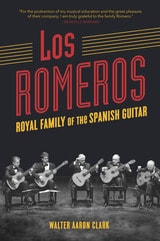
Los Romeros
Royal Family of the Spanish GuitarWalter Aaron Clark
University of Illinois Press, 2018
Los Tucsonenses
The Mexican Community in Tucson, 1854–1941Thomas E. Sheridan
University of Arizona Press, 1986
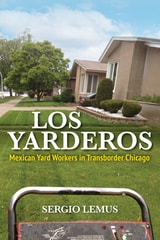
Los Yarderos
Mexican Yard Workers in Transborder ChicagoSergio Lemus
University of Illinois Press, 2025
Sergio Lemus explores the lives of these migrants and looks at the struggles they face as they work to make the city their home. Drawing on fieldwork in South Chicago, Lemus tells the stories of first and second-generation yarderos and discusses the historical, economic, cultural, and political ramifications they face as they acquire their working-class identity. Lemus’s compassionate portrait places them within America’s ongoing tradition as a nation of immigrants while analyzing their place within today’s transborder cultural moment.
Perceptive and humane, Los Yarderos reveals how a group of Mexican immigrants navigates the crossings of the borders that divide class, color hierarchies, gender, and belonging.
Losing the Plot
Film and Feeling in the Modern NovelPardis Dabashi
University of Chicago Press, 2023
The modernist novel sought to escape what Virginia Woolf called the “tyranny” of plot. Yet even as twentieth-century writers pushed against the constraints of plot-driven Victorian novels, plot kept its hold on them through the influence of another medium: the cinema. Focusing on the novels of Nella Larsen, Djuna Barnes, and William Faulkner—writers known for their affinities and connections to classical Hollywood—Pardis Dabashi links the moviegoing practices of these writers to the tensions between the formal properties of their novels and the characters in them. Even when they did not feature outright happy endings, classical Hollywood films often provided satisfying formal resolutions and promoted normative social and political values. Watching these films, modernist authors were reminded of what they were leaving behind—both formally and in the name of aesthetic experimentalism—by losing the plot.
Losing to Win
Why Congressional Majorities Play Politics Instead of Make LawsJeremy Gelman
University of Michigan Press, 2020
Losing to Win answers these questions through a novel theory of agenda-setting. Unlike other research that studies bills that become law, Jeremy Gelman begins from the opposite perspective. He studies why majority parties knowingly take up dead-on-arrival (DOA) bills, the ideas everyone knows are going to lose. In doing so, he argues that congressional parties’ decisions to play politics instead of compromising, and the topics on which they choose to bicker, are strategic and predictable. Gelman finds that legislative dysfunction arises from a mutually beneficial relationship between a majority party in Congress, which is trying to win unified government, and its allied interest groups, which are trying to enact their policies. He also challenges the conventional wisdom that DOA legislation is political theater. By tracking bills over time, Gelman shows that some former dead-on-arrival ideas eventually become law. In this way, ideas viewed as too extreme or partisan today can produce long-lasting future policy changes.
Through his analysis, Gelman provides an original explanation for why both parties pursue the partisan bickering that voters find so frustrating. He moves beyond conventional arguments that our discordant politics are merely the result of political polarization. Instead, he closely examines the specific circumstances that give rise to legislative dysfunction. The result is a fresh, straightforward perspective on the question we have all asked at some point, “Why can’t Democrats and Republicans stop fighting and just get something done?”
Lost Apostles
Forgotten Members of Mormonism's Original Quorum of the TwelveWilliam Shepard
Signature Books, 2013
Of the twelve men selected, nine would eventually be pruned from the vineyard themselves, to varying degrees. Seven were excommunicated, one of whom was reinstated to his position in the Twelve. Of the other six, the subjects of this book, none returned to the apostleship and four never came back to the Church at all. Those who left faded into obscurity except for when they are occasionally still mentioned in sermons as cautionary tales. But two of them made their marks in other areas of society, John Boynton becoming a successful dentist, a popular lecturer, geologist, and inventor with dozens of important patents to his name, while Lyman Johnson became a prominent attorney and business owner. Even though Luke Johnson, Thomas B. Marsh, William McLellin, and William Smith became religious wanderers and tried unsuccessfully to adjust to life outside of the Church, their experiences were interesting and comprise valuable case studies in belief and disaffection.

Lost Boston
Jane Holtz Kay
University of Massachusetts Press, 2006
At once a fascinating narrative and a visual delight, Lost Boston brings the city's past to life. This updated edition includes a new section illustrating the latest gains and losses in the struggle to preserve Boston's architectural heritage.
With an engaging text and more than 350 seldom-seen photographs and prints, Lost Boston offers a chance to see the city as it once was, revealing architectural gems lost long ago. An eminently readable history of the city's physical development, the book also makes an eloquent appeal for its preservation. Jane Holtz Kay traces the evolution of Boston from the barren, swampy peninsula of colonial times to the booming metropolis of today. In the process, she creates a family album for the city, infusing the text with the flavor and energy that makes Boston distinct. Amid the grand landmarks she finds the telling details of city life: the neon signs, bygone amusement parks, storefronts, and windows plastered with images of campaigning politicians-sights common in their time but even more meaningful in their absence today.
Kay also brings to life the people who created Boston-architects like Charles Bulfinch and H. H. Richardson, landscape architect and master park-maker Frederick Law Olmsted, and such colorful political figures as Mayors John “Honey Fitz” Fitzgerald and James Michael Curley.
The new epilogue brings Boston's story to the end of the twentieth century, showing elements of the city's architecture that were lost in recent years as well as those that were saved and others threatened as the city continues to evolve.
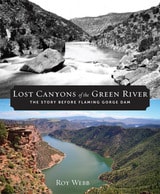
Lost Canyons of the Green River
The Story before Flaming Gorge DamRoy Webb
University of Utah Press, 2012
After more than 50 years of plans to dam the Green River, it finally happened in 1963 as part of the Colorado River Storage Project. Today many people enjoy boating and fishing on the resultant Flaming Gorge Reservoir, but few know about what lies under the water. Compared to Glen Canyon, Flaming Gorge has received little attention. In Lost Canyons of the Green River, Roy Webb takes the reader back in time to discover what lay along this section of the Green River before the Flaming Gorge Dam was built, and provides a historical account of this section of the Colorado River system.
A historian and a lifetime lover of rivers, Webb has spent decades exploring the region, digging into archives, and running the length of the Green River. The book chronicles the history that is most closely linked to the river and its bottomlands, sharing the stories of those who traveled the Green through Flaming Gorge and the other canyons now flooded by the reservoir, as well as those who lived, trapped, farmed, or ranched along its banks. In depicting the river of the past, Webb considers his book “a guidebook for a river you can no longer run.”
Finalist for the Utah Book Award in Nonfiction.
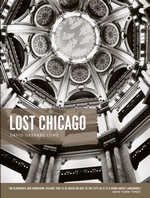
Lost Chicago
David Garrard Lowe
University of Chicago Press, 2010
The City of Big Shoulders has always been our most quintessentially American—and world-class—architectural metropolis. In the wake of the Great Fire of 1871, a great building boom—still the largest in the history of the nation—introduced the first modern skyscrapers to the Chicago skyline and began what would become a legacy of diverse, influential, and iconoclastic contributions to the city’s built environment. Though this trend continued well into the twentieth century, sour city finances and unnecessary acts of demolishment left many previous cultural attractions abandoned and then destroyed.
Lost Chicago explores the architectural and cultural history of this great American city, a city whose architectural heritage was recklessly squandered during the second half of the twentieth century. David Garrard Lowe’s crisp, lively prose and over 270 rare photographs and prints, illuminate the decades when Gustavus Swift and Philip D. Armour ruled the greatest stockyards in the world; when industrialists and entrepreneurs such as Cyrus McCormick, Potter Palmer, George Pullman, and Marshall Field made Prairie Avenue and State Street the rivals of New York City’s Fifth Avenue; and when Louis Sullivan, Daniel Burnham, and Frank Lloyd Wright were designing buildings of incomparable excellence. Here are the mansions and grand hotels, the office buildings that met technical perfection (including the first skyscraper), and the stores, trains, movie palaces, parks, and racetracks that thrilled residents and tourists alike before falling victim to the wrecking ball of progress.
“Lost Chicago is more than just another coffee table gift, more than merely a history of the city’s architecture; it is a history of the whole city as a cultural creation.”—New York Times Book Review
Lost Classroom, Lost Community
Catholic Schools' Importance in Urban AmericaMargaret F. Brinig and Nicole Stelle Garnett
University of Chicago Press, 2014
More than just educational institutions, Catholic schools promote the development of social capital—the social networks and mutual trust that form the foundation of safe and cohesive communities. Drawing on data from the Project on Human Development in Chicago Neighborhoods and crime reports collected at the police beat or census tract level in Chicago, Philadelphia, and Los Angeles, Margaret F. Brinig and Nicole Stelle Garnett demonstrate that the loss of Catholic schools triggers disorder, crime, and an overall decline in community cohesiveness, and suggest that new charter schools fail to fill the gaps left behind.
This book shows that the closing of Catholic schools harms the very communities they were created to bring together and serve, and it will have vital implications for both education and policing policy debates.
Lost Eagles
One Man's Mission to Find Missing Airmen in Two World WarsBlaine Pardoe
University of Michigan Press, 2010
Praise for Lost Eagles
"The pilot and observer stories selected have not previously seen much exposure. Not only are they interesting, but I found myself relishing getting to the next chapter to find out what Frederick Zinn was doing during the next stage of his life."
---Alan Roesler, founding member, League of World War I Aviation Historians, and former Managing Editor, Over the Front
Praise for Blaine Pardoe's previous military histories (which average 4.5-star customer reviews on Amazon.com):
Terror of the Autumn Skies: The True Story of Frank Luke, America's Rogue Ace of World War I
"This painstaking biography of World War I ace Frank Luke will earn Pardoe kudos . . . Pardoe has flown a very straight course in researching and recounting Luke's myth-ridden life. . . . Thorough annotation makes the book that much more valuable to WWI aviation scholars as well as for more casual air-combat buffs."
---Booklist
The Cruise of the Sea Eagle: The Amazing True Story of Imperial Germany's Gentleman Pirate
"This is a gem of a story, well told, and nicely laid out with photos, maps, and charts that cleverly illuminate the lost era of ‘gentlemen pirates' at sea . . . [German commerce raider Felix von Luckner's] legend lives on in this lively and readable biography."
---Admiral James Stavridis, U.S. Navy, Naval History
Few people have ever heard of Frederick Zinn, yet even today airmen's families are touched by this man and the work he performed in both world wars. Zinn created the techniques still in use to determine the final fate of airmen missing in action. The last line of the Air Force Creed reads, "We will leave no airman behind." Zinn made that promise possible.
Blaine Pardoe weaves together the complex story of a man who brought peace and closure to countless families who lost airmen during both world wars. His lasting contribution to warfare was a combination of his methodology for locating the remains of missing pilots (known as the Zinn system) and his innovation of imprinting all aircraft parts with the same serial number so that if a wreck was located, the crewman could be identified. The tradition he established for seeking and recovering airmen is carried on to this day.
Blaine Pardoe is an accomplished author who has published dozens of military fiction novels and other books, including the widely acclaimed Cubicle Warfare: Self-Defense Tactics for Today's Hypercompetitive Workplace; Terror of the Autumn Skies: The True Story of Frank Luke, America's Rogue Ace of World War I; and The Cruise of the Sea Eagle: The Amazing True Story of Imperial Germany's Gentleman Pirate.
Jacket photo: Frederick Zinn's Sopwith aircraft, which crashed during World War I. National Museum of the United States Air Force Archives.
Lost Legacy
THE MORMON OFFICE OF PRESIDING PATRIARCHIrene Bates and E. Gary Smith
University of Illinois Press, 1996
Lost Legacy
The Mormon Office of Presiding PatriarchIrene M. Bates
University of Illinois Press, 2018
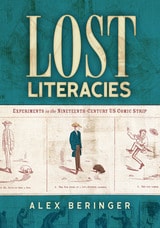
Lost Literacies
Experiments in the Nineteenth-Century US Comic StripAlex Beringer
The Ohio State University Press, 2024
Lost Literacies is the first full-length study of US comic strips from the period prior to the rise of Sunday newspaper comics. Where current histories assume that nineteenth-century US comics consisted solely of single-panel political cartoons or simple “proto-comics,” Lost Literacies introduces readers to an ambitious group of artists and editors who were intent on experimenting with the storytelling possibilities of the sequential strip, resulting in playful comics whose existence upends prevailing narratives about the evolution of comic strips.
Over the course of the nineteenth century, figures such as artist Frank Bellew and editor T. W. Strong introduced sequential comic strips into humor magazines and precursors to graphic novels known as “graphic albums.” These early works reached audiences in the tens of thousands. Their influences ranged from Walt Whitman’s poetry to Mark Twain’s travel writings to the bawdy stage comedies of the Bowery Theatre. Most importantly, they featured new approaches to graphic storytelling that went far beyond the speech bubbles and panel grids familiar to us today. As readers of Lost Literacies will see, these little-known early US comic strips rival even the most innovative modern comics for their diversity and ambition.
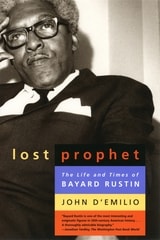
Lost Prophet
The Life and Times of Bayard RustinJohn D'Emilio
University of Chicago Press, 2004
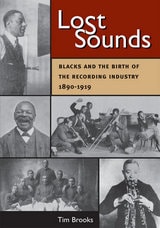
Lost Sounds
Blacks and the Birth of the Recording Industry, 1890-1919Tim Brooks
University of Illinois Press, 2004
Drawing on more than thirty years of scholarship, Tim Brooks identifies key black recording artists and profiles forty audio pioneers. Brooks assesses the careers and recordings of George W. Johnson, Bert Williams, George Walker, Noble Sissle, Eubie Blake, the Fisk Jubilee Singers, W. C. Handy, James Reese Europe, Wilbur Sweatman, Harry T. Burleigh, Roland Hayes, Booker T. Washington, and boxing champion Jack Johnson, plus a host of lesser-known voices. Many of these pioneers struggled to be heard in an era of rampant discrimination. Their stories detail the forces––black and white––that gradually allowed African Americans to enter the mainstream entertainment industry.
Lost Sounds includes Brooks's selected discography of CD reissues and an appendix by Dick Spottswood describing early recordings by black artists in the Caribbean and South America.
Lost Talent
Sandra L. Hanson
Temple University Press, 1996
Lost Wonderland
The Brief and Brilliant Life of Boston's Million Dollar Amusement ParkStephen R. Wilk
University of Massachusetts Press, 2020
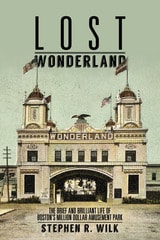
If you take Boston's Blue Line to its northern end, you'll reach the Wonderland stop. Few realize that a twenty-three-acre amusement park once sat nearby—the largest in New England, and grander than any of the Coney Island parks that inspired it. Opened in Revere on Memorial Day in 1906 to great fanfare, Wonderland offered hundreds of thousands of visitors recreation by the sea, just a short distance from downtown Boston.
The story of the park's creation and wild, but brief, success is full of larger-than-life characters who hoped to thrill attendees and rake in profits. Stephen R. Wilk describes the planning and history of the park, which featured early roller coasters, a scenic railway, a central lagoon in which a Shoot-the-Chutes boat plunged, an aerial swing, a funhouse, and more. Performances ran throughout the day, including a daring Fires and Flames show; a Wild West show; a children's theater; and numerous circus acts. While nothing remains of what was once called “Boston's Regal Home of Pleasure” and the park would close in 1910, this book resurrects Wonderland by transporting readers through its magical gates.
Lost and Found
Reclaiming the Japanese American IncarcerationKaren L. Ishizuka
University of Illinois Press, 2006
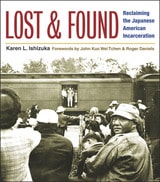
For decades, a fog of governmental cover-ups, euphemisms, and societal silence kept the victims the mass incarceration of Americans of Japanese descent during World War II from understanding their experiences. The Japanese American National Museum mounted a critically acclaimed exhibition with the twin goals of educating the general public and encouraging former inmates to come to grips with and tell their own history.
Combining heartfelt stories with first-rate scholarship, Lost and Found reveals the complexities of a people reclaiming the past. Author/curator Karen L. Ishizuka, a third-generation Japanese American, deftly blends official history with community memory to frame the historical moment of recovery within its cultural legacy. Detailing the interactive strategy that invited visitors to become part of the groundbreaking exhibition, Ishizuka narrates the processes of revelation and reclamation that unfolded as former internees and visitors alike confronted the experience of the camps. She also analyzes how the dual act of recovering—and recovering from—history necessitates private and public mediation between remembering and forgetting, speaking out and remaining silent.
Lost and Found
The Adoption ExperienceBetty Jean Lifton
University of Michigan Press, 2009
"[Looks] at adoption from all sides of the triangle: adoptee, birth mother, adoptive parents . . . A provocative, comprehensive inquiry."
---Kirkus Reviews
"Honest and moving."
---New York Times
"Important and powerful . . . [the author] is concerned not just with adoptees but with the experience of adoptive parents and birth parents."
---Psychology Today
"A moving and powerful plea for open discourse instead of secrecy among the participants in the adoption process."
---Public Welfare, American Public Welfare Association
The first edition of Betty Jean Lifton's Lost and Found advanced the adoption rights movement in this country in 1979, challenging many states' policies of maintaining closed birth records. For nearly three decades the book has topped recommended reading lists for those who seek to understand the effects of adoption---including adoptees, adoptive parents, birth parents, and their friends and families.
This expanded and updated edition, with new material on the controversies concerning adoption, artificial insemination, and newer reproductive technologies, continues to add to the discussion on this important topic. A new preface and afterword by the author have been added, as well as a greatly expanded resources section that in addition to relevant organizations now lists useful Web sites.
Betty Jean Lifton, Ph.D., is a writer, psychotherapist, and leading advocate for adoption reform. Her many books include Journey of the Adopted Self and The King of Children, a New York Times Notable Book. She regularly makes appearances as a lecturer on adoption and has an adoption counseling practice in Cambridge, Massachusetts, and New York City.
Lost in Austin
A Nevada MemoirJim Andersen
University of Nevada Press, 2009
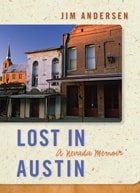
In 1974 Jim Andersen and his wife, tired of the congestion and high taxes in California, decided to start a new life in rural Nevada. They settled on Austin, a town of about 250 people perched on a mountainside along the legendary Highway 50, “the loneliest road in America.” In the middle of the nineteenth century, Austin was a free-wheeling boomtown at the center of a silver bonanza. By the time the Andersens arrived, it had shrunk to a quiet, isolated community of self-sufficient souls who ran their lives, economy, and local government their own way, with ingenuity, wit, and a certain disregard for convention. Andersen’s account of his life in Austin is a charming, sometimes hilarious account of city folks adapting to life in a small town. He addresses such matters as making a living from a variety of odd jobs, some of them odder than others; serving as a deputy sheriff, deputy coroner, and elected justice of the peace, and administering Austin’s unique version of justice; raising a family; finding ways to have fun; and exploring the austerely beautiful backcountry of central Nevada. He also introduces some of Austin’s residents and their stories, and describes the way the community comes together for entertainment or to respond to crises.Lost in Austin is fascinating reading for anyone who cherishes nostalgic memories of living in a small town, or who contemplates moving to one. It offers an engaging portrait of a Nevada that exists far from the glitz and glitter of Las Vegas and Reno, “a happy Bermuda Triangle” where rugged individualism and community spirit flourish amidst sagebrush and vast open spaces.
Lost in the Customhouse
Authorship in the American RenaissanceJerome Loving
University of Iowa Press, 1993
Lost in the Fifties
Recovering Phantom HollywoodWheeler Winston Dixon
Southern Illinois University Press, 2005
Lost in the Fifties: Recovering Phantom Hollywood reveals two 1950s: an era glorified in Hollywood movies and a darker reality reflected in the esoteric films of the decade. Renowned film scholar Wheeler Winston Dixon turns to the margins—the television shows and films of a hidden Hollywood—to offer an authentic view of the 1950s that counters the Tinsel-town version. Dixon examines the lost films and directors of the decade. Contrasting traditional themes of love, marriage, and family, Dixon’s 1950s film world unveils once-taboo issues of rape, prostitution, and gangs. Television shows such as Captain Midnight and Ramar of the Jungle are juxtaposed with the cheerful world of I Love Lucy and Howdy Doody. Highlighting directors including Herbert L. Strock, Leslie Martinson, Arnold Laven, and Charles Haas, Dixon provides new insights on the television series Racket Squad, Topper, and The Rifleman and the teen films I Was a Teenage Werewolf and High School Confidential.
Geared for scholars and students of film and pop culture, Lost in the Fifties includes twenty-five photos—many previously unpublished—and draws on rare interviews with key directors, actors, and producers. The volume provides the first detailed profile of the most prolific producer in Hollywood history, Sam Katzman, and his pop culture classics Rock Around the Clock and Earth vs. The Flying Saucers. Dixon profiles, for the first time, B-movie phenomenon Fred F. Sears, who directed more than fifty touchstone films of a generation, including the noir thriller Chicago Syndicate, the criminal career story Cell 2455 Death Row, and the 3-D color western The Nebraskan. Also profiled is Ida Lupino, the only woman to direct in Hollywood in the 1950s, who tackled issues of bigamy, teenage pregnancy, and sports corruption in The Bigamist, The Hitch-Hiker, Outrage, Never Fear, Not Wanted, and Hard, Fast and Beautiful, when no major studio would touch such controversial topics. Dixon also looks at the era’s social guidance films, which instructed adolescents in acceptable behavior, proper etiquette, and healthy hygiene.
Lost in the USA
American Identity from the Promise Keepers to the Million Mom MarchDeborah Gray White
University of Illinois Press, 2017
Lost in the Yellowstone
"Thirty-Seven Days of Peril" and a Handwritten Account of Being LostTruman Everts; Edited by Lee H. Whittlesey
University of Utah Press, 2015
In 1870, Truman Everts visited what would two years later become Yellowstone National Park, traveling with an exploration party intent on mapping and investigating that mysterious region. Scattered reports of a mostly unexplored wilderness filled with natural wonders had caught the public’s attention and the fifty-four-year-old Everts, near-sighted and an inexperienced woodsman, had determined to join the expedition. He was soon separated from the rest of the party and from his horse, setting him on a grueling quest for survival. For over a month he wandered Yellowstone alone and injured, with little food, clothing, or other equipment. In “Thirty-seven Days of Peril” he recounted his experiences for the readers of Scribner’s Monthly.
In June 1996, Everts’s granddaughter arrived at Mammoth Hot Springs in Yellowstone National Park to meet with park archivist Lee Whittlesey. She brought two documents that her father had kept hidden and both were handwritten by Everts. One was a brief autobiography that gave new insight into his early life. The other was a never-published alternative account of his confused 1870 journey through Yellowstone. Both have been added to this volume, further enhancing Everts’s unlikely tale of survival.
Lost on the Freedom Trail
The National Park Service and Urban Renewal in Postwar BostonSeth C. Bruggeman
University of Massachusetts Press, 2022
Boston National Historical Park is one of America's most popular heritage destinations, drawing in millions of visitors annually. Tourists flock there to see the site of the Boston Massacre, to relive Paul Revere's midnight ride, and to board Old Ironsides—all of these bound together by the iconic Freedom Trail, which traces the city's revolutionary saga.
Making sense of the Revolution, however, was never the primary aim for the planners who reimagined Boston's heritage landscape after the Second World War. Seth C. Bruggeman demonstrates that the Freedom Trail was always largely a tourist gimmick, devised to lure affluent white Americans into downtown revival schemes, its success hinging on a narrow vision of the city's history run through with old stories about heroic white men. When Congress pressured the National Park Service to create this historical park for the nation's bicentennial celebration in 1976, these ideas seeped into its organizational logic, precluding the possibility that history might prevail over gentrification and profit.
Lost
Miscarriage in Nineteenth-Century AmericaWithycombe, Shannon
Rutgers University Press, 2019
In Lost, medical historian Shannon Withycombe weaves together women’s personal writings and doctors’ publications from the 1820s through the 1910s to investigate the transformative changes in how Americans conceptualized pregnancy, understood miscarriage, and interpreted fetal tissue over the course of the nineteenth century. Withycombe’s pathbreaking research reveals how Americans construed, and continue to understand, miscarriage within a context of reproductive desires, expectations, and abilities. This is the first book to utilize women’s own writings about miscarriage to explore the individual understandings of pregnancy loss and the multiple social and medical forces that helped to shape those perceptions. What emerges from Withycombe’s work is unlike most medicalization narratives.
Lou Harrison
Leta E. Miller and Fredric Lieberman
University of Illinois Press, 2010
Leta E. Miller and Fredric Lieberman take readers into Harrison's rich world of cross-fertilization through an exploration of his outspoken stance on pacifism, gay rights, ecology, and respect for minorities--all major influences on his musical works. Though Harrison was sometimes accused by contemporaries of "cultural appropriation," Miller and Lieberman make it clear why musicians and scholars alike now laud him as an imaginative pioneer for his integration of Asian and Western musics. They also delve into Harrison's work in the development of the percussion ensemble, his use of found and invented instruments, and his explorations of alternative tuning systems. An accompanying compact disc of representative recordings allows readers to examine Harrison's compositions in further detail.
Louie Louie
The History and Mythology of the World's Most Famous Rock 'n Roll Song; Including the Full Details of Its Torture and Persecution at the Hands of the Kingsmen, J. Edgar Hoover's FBI, and a Cast of Millions; and Introducing for the First Time Anywhere, theDave Marsh
University of Michigan Press, 2004
"A tale as compelling as any John Grisham thriller."
-Rolling Stone
"Dave Marsh's Louie Louie is part rant, part rock criticism and part cultural analysis, with a good dose of Ripley's Believe It or Not! thrown in."
-The New York Times Book Review
"Marsh keeps the story of one trashy song interesting by revealing how 'three chords and a cloud of dust' contains within it the history and future of rock 'n' roll."
-Booklist
"What you don't know about 'Louie Louie' probably won't hurt you. But everything you need to know is in Marsh's book, including the lyrics-the real ones and the ones people thought they heard. If there is a better measure of your pop-cultural IQ, I don't know where to find it."
-USA Today
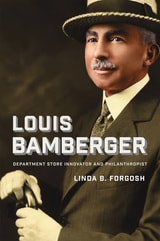
Louis Bamberger
Department Store Innovator and PhilanthropistLinda B. Forgosh
Brandeis University Press, 2016

Louis Bolduc and the French Colonial Settlement at Ste. Genevieve
Carl J. Ekberg
University of Missouri Press, 0
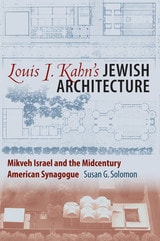
Louis I. Kahn’s Jewish Architecture
Mikveh Israel and the Midcentury American SynagogueSusan G. Solomon
University Press of New England, 2009
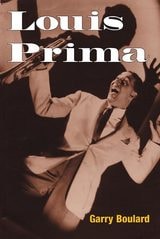
Louis Prima
Garry Boulard
University of Illinois Press, 1998
Louis Prima infused the grit and grace of Dixieland jazz with swing and big band sounds, the first whiffs of rock 'n' roll, and a vaudevillian stage presence. Garry Boulard pens the biography of the underrated jazz musician, Las Vegas mainstay, and popular entertainer.
A native of New Orleans, Prima was a Guy Lombardo protégé known as "The Italian Satchmo" who became the country's new jazz sensation at New York's Famous Door in the 1930s. He went on to success as a big band leader before virtually creating the lounge act as a Las Vegas nightclub staple. Employing and later marrying singer Keely Smith, Prima rode high with a series of hit songs and smash albums in the Fifties. But Boulard also looks past the over-the-top stage antics to restore Prima's legacy as an overlooked jazz musician and vocalist, and as a bandleader with an uncanny ability to fuse disparate styles into music that kept audiences cheering and dancing for decades.
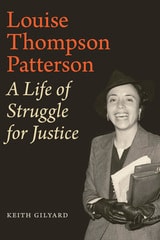
Louise Thompson Patterson
A Life of Struggle for JusticeKeith Gilyard
Duke University Press, 2017
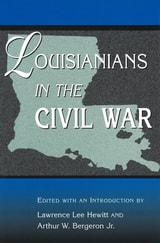
Louisianians in the Civil War
Edited & Intro by Lawrence Lee Hewitt & Arthur W. Bergeron, Jr.
University of Missouri Press, 2002