Results by title
22279 books match the query 'Social Science' and 714 start with l
Louis I. Kahn’s Jewish Architecture
Mikveh Israel and the Midcentury American SynagogueSusan G. Solomon
University Press of New England, 2009
Louis Sébastien Mercier
Revolution and Reform in Eighteenth-Century ParisMichael J. Mulryan
Bucknell University Press, 2023
Louise Thompson Patterson
A Life of Struggle for JusticeKeith Gilyard
Duke University Press, 2017
Louisiana Place Names of Indian Origin
A Collection of WordsWilliam A. Read, edited and with an introduction by George M. Riser
University of Alabama Press, 2008
His writings spanned five decades and have been instrumental across a wide range of academic disciplines. Most importantly, Read devoted a good portion of his research to the meaning of place names in the southeastern United States—especially as they related to Indian word adoption by Europeans.
This volume includes his three Louisiana articles combined: Louisiana: Louisiana Place-Names of Indian Origin (1927), More Indian Place-Names in Louisiana (1928), and Indian Words (1931). Joining Alabama's reprint of Indian Places Names in Alabama and Florida Place Names of Indian Origin and Seminole Personal Names, this volume completes the republication of the southern place name writings of William A. Read.
Lovable Racists, Magical Negroes, and White Messiahs
David Ikard
University of Chicago Press, 2017
In the book, Ikard explodes the fiction of a postracial society while awakening us to the sobering reality that we must continue to fight for racial equality or risk losing the hard-fought gains of the Civil Rights movement. Through his close reading of novels, films, journalism, and political campaigns, he analyzes willful white blindness and attendant master narratives of white redemption—arguing powerfully that he who controls the master narrative controls the perception of reality. The book sounds the alarm about seemingly innocuous tropes of white redemption that abound in our society and generate the notion that blacks are perpetually indebted to whites for liberating, civilizing, and enlightening them. In Lovable Racists, Magical Negroes, and White Messiahs, Ikard expertly and unflinchingly gives us a necessary critical historical intervention.
Love Across the Color Line
Helen Lefkowitz Horowitz
University of Massachusetts Press, 1996
Love Apocalypse
New Intimacies and the Decline of Marriage and FertilityAlex J. Nelson
Rutgers University Press, 2026
Marriage and fertility rates are falling around the world, upending social security planning and threatening economic growth. In Love Apocalypse, anthropologists present their insights into this society-altering demographic shift, drawing on their research into the ways love, romantic relationships, and family are being transformed by cultural, social, and economic forces. Each case study in this volume examines a unique cultural context from either Asia (China, South Korea, Japan, India), Europe (Germany, Lithuania), or Latin America (Cuba, Peru), grounded in years of ethnographic research into how communities’ experiences and perceptions of love, marriage, and family are changing in response to economic precarity, shifting gender relations, status competition, and diversifying cultural norms. It is increasingly clear that marriage and two-parent nuclear families will not be the universal norm of the twenty-first century even if this arrangement was largely idealized a mere generation ago. However, this does not mean the end of love, intimacy, or family but rather its transformation and the emergence of new intimate relationships and adaptations to the challenges and opportunities of life in the twenty-first century.
Love Between Women
Early Christian Responses to Female HomoeroticismBernadette J. Brooten
University of Chicago Press, 1996
"An extraordinary accomplishment. . . . A definitive source for all future discussion of homoeroticism and the Bible."—Mary Rose D'Angelo, Harvard Gay & Lesbian Review
"[Brooten's] convincing analysis . . . not only profoundly reshapes our understanding of the past, but it should also shape the way in which that past, particularly the early Christian texts with their immense normative weight, will be used for the future."—Anne L. Clark, Journal of Lesbian Studies
"Love Between Women gives contemporary debates on sexuality a carefully delineated past. It boldly insists upon a different future, one informed by history but not tyrannized by it."—Susan Ackerman, Lambda Book Report
"Fascinating, provocative and lucid. . . . Brooten has made a fundamental contribution to women's and gender studies, gay and lesbian studies, and classics."—Elizabeth A. Castelli, Women's Review of Books
Winner of the Lambda Literary Award for Best Lesbian Studies Book, 1997
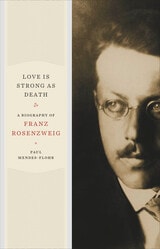
Love Is Strong as Death
A Biography of Franz RosenzweigPaul Mendes-Flohr
University of Chicago Press, 2026
Franz Rosenzweig (1886–1929) was one of the central figures of the Jewish cultural and intellectual renaissance in Weimar Germany. His masterwork, The Star of Redemption (1921), is a classic of existential thought and Jewish philosophy, and his considerable legacy also includes his collaboration with Martin Buber on a key translation of the Hebrew Bible into German and the establishment of an education center in Frankfurt that brought together the most important young German-Jewish intellectuals of its time.
Rosenzweig’s personal biography is no less fascinating than his ideas and accomplishments. Drawing on unprecedented access to Rosenzweig’s unpublished personal correspondence, Paul Mendes-Flohr skillfully weaves together the threads of Rosenzweig’s life to give us a moving portrait of this towering figure—from his near-conversion to Christianity to his tragic diagnosis with ALS. Mendes-Flohr also closely explores Rosenzweig’s relationship with Margrit Huessy, who was a vital intellectual partner for Rosenzweig, as well as a muse and lover. He worked out many of his ideas about love both in conversation and consort with her, and Mendes-Flohr shows the importance of intimacy—both romantic and platonic—in the development of Rosenzweig’s thought.
Love Is Strong as Death provides a unique and insightful look at one of the most important modern Jewish thinkers.
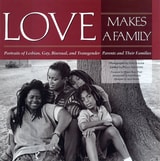
Love Makes a Family
Portraits of Lesbian, Gay, Bisexual, and Transgendered Parents and Their FamiliesGigi Kaeser
University of Massachusetts Press, 1999
This handsome volume combines interviews and photographs to document the experiences of lesbian, gay, bisexual, and transgendered parents and their children. It allows all of the family members to speak candidly about their lives, their relationships, and the ways in which they have dealt with the pressures of homophobia. Included in the book are people from a diverse array of racial, ethnic, and economic backgrounds, representing a wide range of family structures. Together, they provide clear evidence that family roles and responsibilities need not be based on gender, and that children thrive in an atmosphere in which understanding, respect, and love transcend the prejudices of the day.
Love Songs in Motion
Voicing Intimacy in SomalilandChristina J. Woolner
University of Chicago Press, 2023
At first listen, both music and talk about love are conspicuously absent from Somaliland’s public soundscapes. The lingering effects of war, the contested place of music in Islam, and gendered norms of emotional expression limit opportunities for making music and sharing personal feelings. But while Christina J. Woolner was researching peacebuilding in Somaliland’s capital, Hargeysa, she kept hearing snippets of songs. Almost all of these, she learned, were about love. In these songs, poets, musicians, and singers collaborate to give voice to personal love aspirations and often painful experiences of love-suffering. Once in circulation, the intimate and heartfelt voices of love songs provide rare and deeply therapeutic opportunities for dareen-wadaag (feeling-sharing). In a region of political instability, these songs also work to powerfully unite listeners on the basis of shared vulnerability, transcending social and political divisions and opening space for a different kind of politics.
Taking us from 1950s recordings preserved on dusty cassettes to new releases on YouTube and live performances at Somaliland’s first postwar music venue—where the author herself eventually takes the stage—Woolner offers an account of love songs in motion that reveals the capacity of music to connect people and feelings across time and space, creating new possibilities for relating to oneself and others.
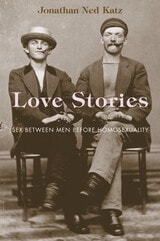
Love Stories
Sex between Men before HomosexualityJonathan Ned Katz
University of Chicago Press, 2001

Love Valley
An American UtopiaConrad Ostwalt
University of Wisconsin Press, 1998
The town boasts a saloon, general store, hitching posts, and rodeos. Yet, above all of this stands a little church—the heart of what Barker conceived as his Christian utopia. This unique combination has led to more than forty years of philanthropic ventures, controversial events such as the Love Valley Rock Festival, stories and legends, and political ambition. Love Valley: An American Utopia captures the history of this town in narrative form while arguing that Love Valley’s founders were motivated by utopian goals.
Love and Globalization
Transformations of Intimacy in the Contemporary WorldMark B. Padilla
Vanderbilt University Press, 2007
The richly-textured ethnographies provoke a series of questions about emerging vocabularies for friendship and romance; the adoption of cultural forms from faraway places; the emergence of new desires, pleasures, and emotions that circulate as commodities in the global marketplace; and the ways economic processes shape public and private expressions of sexual intimacy.

Love and Marriage in the Middle Ages
Georges Duby
University of Chicago Press, 1993
Beautifully written in Duby's characteristically nuanced and powerful style, this collection is an ideal entree into Duby's thinking about marriage and the diversities of love, spousal decorum, family structure, and their cultural context in bodily and spiritual values. Love and Marriage in the Middle Ages will be of great interest to students in social and cultural history, medieval and early modern history, and women's studies, as well as those interested in the nature of social life in the Middle Ages.
Georges Duby (1919-1996) was a member of the Académie française and for many years held the distinguished chair in medieval history at the Collège de France. His books include The Three Orders; The Age of Cathedrals; The Knight, the Lady, and the Priest; Love and Marriage in the Middle Ages; and History Continues, all published by the University of Chicago Press.

Love and Reparation
A Theatrical Response to the Section 377 Litigation in IndiaDanish Sheikh
Seagull Books, 2021
On September 6, 2018, a decades-long battle to decriminalize queer intimacy in India came to an end. The Supreme Court of India ruled that Section 377, the colonial anti-sodomy law, violated the country’s constitution. “LGBT persons,” the Court said, “deserve to live a life unshackled from the shadow of being ‘unapprehended felons.’” But how definitive was this end? How far does the law’s shadow fall? How clear is the line between the past and the future? What does it mean to live with full sexual citizenship?
In Love and Reparation, Danish Sheikh navigates these questions with a deft interweaving of the legal, the personal, and the poetic. The two plays in this volume leap across court transcripts, affidavits (real and imagined), archival research, and personal memoir. Through his re-staging, Sheikh crafts a genre-bending exploration of a litigation battle, and a celebration of defiant love that burns bright in the shadow of the law.
Love in Africa
Edited by Jennifer Cole and Lynn M. Thomas
University of Chicago Press, 2009
In recent years, scholarly interest in love has flourished. Historians have addressed the rise of romantic love and marriage in Europe and the United States, while anthropologists have explored the ways globalization has reshaped local ideas about those same topics. Yet, love in Africa has been peculiarly ignored, resulting in a serious lack of understanding about this vital element of social life—a glaring omission given the intense focus on sexuality in Africa in the wake of HIV/AIDS.
Love in Africa seeks both to understand this failure to consider love and to begin to correct it. In a substantive introduction and eight essays that examine a variety of countries and range in time from the 1930s to the present, the contributors collectively argue for the importance of paying attention to the many different cultural and historical strands that constitute love in Africa. Covering such diverse topics as the reception of Bollywood movies in 1950s Zanzibar, the effects of a Mexican telenovela on young people’s ideas about courtship in Niger, the models of romance promoted by South African and Kenyan magazines, and the complex relationship between love and money in Madagascar and South Africa, Love in Africa is a vivid and compelling look at love’s role in African society.
Love in a Global Village
A Celebration of Intercultural Families in the MidwestJessie Carroll Grearson
University of Iowa Press, 2000
In praise of diversity, Jessie Grearson and Lauren Smith offer Love in a Global Village: A Celebration of Intercultural Families in the Midwest, an account of the triumphs of fifteen intercultural families and the perseverance of their relationships in midwestern America. The couples recount their courtships, their adventures and difficulties, and their individual choices to create families and build lives together despite differences of race, language, religion, and culture.
Welcomed into homes in towns like Kalona, Iowa, and Springfield, Missouri, Grearson and Smith introduce readers to unexpected fusions of culture in middle America. By focusing on small communities where intercultural relationships are exceptions rather than the norm, Smith and Grearson offer affirmation that multicultural households can endure and flourish almost anywhere.

Love in the Drug War
Selling Sex and Finding Jesus on the Mexico-US BorderBy Sarah Luna
University of Texas Press, 2020
2020 — Ruth Benedict Prize – Association for Queer Anthropology, American Anthropological Association
2020 — Gloria E. Anzaldúa Book Prize – National Women’s Studies Association
2020 — Honorable Mention, Sara A. Whaley Book Prize
2021 — Best Book in Social Sciences – Mexico Section, Latin American Studies Association (LASA)
Sex, drugs, religion, and love are potent combinations in la zona, a regulated prostitution zone in the city of Reynosa, across the border from Hidalgo, Texas. During the years 2008 and 2009, a time of intense drug violence, Sarah Luna met and built relationships with two kinds of migrants, women who moved from rural Mexico to Reynosa to become sex workers and American missionaries who moved from the United States to forge a fellowship with those workers.
Luna examines the entanglements, both intimate and financial, that define their lives. Using the concept of obligar, she delves into the connections that tie sex workers to their families, their clients, their pimps, the missionaries, and the drug dealers—and to the guilt, power, and comfort of faith. Love in the Drug War scrutinizes not only la zona and the people who work to survive there, but also Reynosa itself—including the influences of the United States—adding nuance and new understanding to the current Mexico-US border crisis.
Love in the Lav
A Social Biography of Same-Sex Desire in Ireland, 1922-1972Averill Earls
Temple University Press, 2025
Earls uses courtroom testimonies, police records, and family history archives as well as “educated speculation” to show how structures governing male same-sex desire in Ireland played out on the bodies of the men who desired men, the teen boys who sold sex to men, and the way the Catholic-nationalist ethos shaped the Gardaí who policed them.
Love in the Lav examines the experiences of people such as cabbie James Hand, who was put on trial for gross indecency, to provide a window into the queer working-class subculture of 1930s Dublin. Earls also focuses on issues of consent, especially with teens, and the unregulated queer Irish world of public figures, including Micheál Mac Liammóir, Hilton Edwards, Ronald Brown, and John Broderick.
By examining twentieth-century Ireland through the lived experiences of ordinary same-sex-desiring Irish men who were relegated to obscurity by Irish society, Earls reveals the contradictions, possibilities, and magnitude of postcolonial Irish Catholic nationalism.
In the series Sexuality Studies

Love in the Time of Zika
Environmental Crisis and the Future of ReproductionPaige Marie Patchin
Duke University Press, 2026
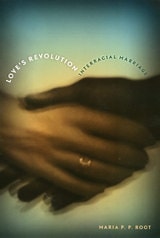
Love's Revolution
Interracial MarriageMaria Root
Temple University Press, 2001
Love's Revolution traces the social changes that account for the growth of intermarriage as well as the lingering prejudices and false beliefs that oppress racially mixed families. For this book, author Maria P. P. Root, a clinical psychologist, interviewed some 200 people from a wide spectrum of racial and ethnic backgrounds. Speaking out about their views and experiences, these partners, family members, and children of mixed race marriages confirm that the barriers are gradually eroding; but they also testify to the heartache caused by family opposition and disapproving strangers.
Root traces race prejudice to the various institutions that were structured to maintain white privilege, but the heart of the book is her analysis of what happens when people of different races decide to marry. Developing an analogy between families and types of businesses, she shows how both positive and negative reactions to such marriages are largely a matter of shared concepts of family rather than individual feelings about race. She probes into the identity issues that multiracial children confront an draws on her clinical experience to offer child-rearing recommendations for multiracial families. Root's "Bill of Rights for Racially Mixed People" is a document that at once empowers multiracial people and educates those who ominously ask, What about the children?
Love's Revolution paints an optimistic but not idealized picture of contemporary relationships. The "Ten Truths about Interracial Marriage" that close the book acknowledges that mixed race couples experience the same stresses as everyone else in addition to those arising from other people's prejudice or curiosity. Their divorce rates are only slightly higher than those of single race couples, which suggests that their success or failure at marriage is not necessarily a racial issue. And that is a revolutionary idea!
Love's Sweet Return
The Harlequin StoryMargaret Ann Jensen
University of Wisconsin Press, 1984
Love’s $weet Return examines the phenomenon of romance fiction, focusing specifically on one of the most successful book publishers in the world, the Canadian-based Harlequin Enterprises. Margaret Jensen details the rise of the company, examines the Harlequin formula, and evaluates the growth and impact of both Harlequin and its competition. She also assesses recent shifts in the content of Harlequins, particularly as they pertain to women's changing roles in society.
Love, Anarchy, & Emma Goldman
A BiographyFalk, Candace
Rutgers University Press, 1990

Love, Anarchy, & Emma Goldman
A BiographyCandace Serena Falk
Rutgers University Press, 2019
“Fascinating …With marvelous clarity and depth, Candace Falk illuminates for us an Emma Goldman shaped by her time yet presaging in her life the situation and conflicts of women in our time.” —Tillie Olsen
One of the most famous political activists of all time, Emma Goldman was also infamous for her radical anarchist views and her “scandalous” personal life. In public, Goldman was a firebrand, confidently agitating for labor reform, anarchism, birth control, and women’s independence. But behind closed doors she was more vulnerable, especially when it came to the love of her life.
Love, Anarchy, & Emma Goldman is an account of Goldman’s legendary career as a political activist. But it is more than that—it is a biography that offers an intimate look at how Goldman’s passion for social reform dovetailed with her passion for one man: Chicago activist, hobo king, and red-light district gynecologist Ben Reitman. Candace Falk takes us into the heart of their tumultuous love affair, finding that even as Goldman lectured on free love, she confronted her own intense jealousy.
As director of the Emma Goldman papers, Falk had access to over 40,000 writings by Goldman—including her private letters and notes—and she draws upon these archives to give us a rare insight into this brilliant, complex woman’s thoughts. The result is both a riveting love story and a primer on an exciting, explosive era in American politics and intellectual life.
Love, Marriage, and Jewish Families
Paradoxes of a Social RevolutionEdited by Sylvia Barack Fishman
Brandeis University Press, 2015

Love, Money and Obligation
Transnational Marriage in a Northeastern Thai VillagePatcharin Lapanun
National University of Singapore Press, 2019
Northeast Thailand has seen an increase in marriages between Thai women and farang (Western) men. Often the women are less well off and from rural areas in the country, while the men largely come from the United States and Europe and settle permanently in Thailand. These unions have created a new social class, with distinctive consumption patterns and lifestyles. And they are challenging gender relations and local perceptions of sexuality, marriage, and family.
In Love, Money and Obligation, Patcharin Lapanun offers an exploration of these marriages and their larger effect on Thai communities. Her interviews with women and men engaging in these transnational relationships highlight the complexities of the associations, as they are shaped by love, money, and gender obligations on the one hand and the dynamics of socio-cultural and historical contexts on the other. Her in-depth and even-handed examination highlights the importance of women’s agency and the strength and creativity of people seeking to forge meaningful lives in the processes of social transition and in the face of local and global encounters.
Love, Sex, Gender, and Superheroes
Jeffrey A. Brown
Rutgers University Press, 2022
Love, Sex, Gender, and Superheroes examines a full range of superhero media, from comics to films to television to merchandising. With a keen eye for the genre’s complex and internally contradictory mythology, comics scholar Jeffrey A. Brown considers its mixed messages. Superhero comics may reinforce sex roles with their litany of phallic musclemen and slinky femme fatales, but they also blur gender binaries with their emphasis on transformation and body swaps. Similarly, while most heroes have heterosexual love interests, the genre prioritizes homosocial bonding, and it both celebrates and condemns gendered and sexualized violence.
With examples spanning from the Golden Ages of DC and Marvel comics up to recent works like the TV series The Boys, this study provides a comprehensive look at how superhero media shapes our perceptions of love, sex, and gender.
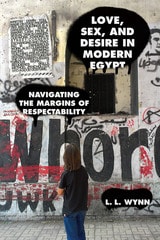
Love, Sex, and Desire in Modern Egypt
Navigating the Margins of RespectabilityBy L. L. Wynn
University of Texas Press, 2018
Cairo is a city obsessed with honor and respectability—and love affairs. Sara, a working-class woman, has an affair with a married man and becomes pregnant, only to be abandoned by him; Ayah and Zeid, a respectably engaged couple, argue over whether Ayah’s friend is a prostitute or a virgin; Malak, a European belly dancer who sometimes gets paid for sex, wants to be loved by a man who won’t treat her like a whore just because she’s a dancer; and Alia, a Christian banker who left her abusive husband, is the mistress of a wealthy Muslim man, Haroun, who encourages business by hosting risqué parties for other men and their mistresses.
Set in transnational Cairo over two decades, Love, Sex, and Desire in Modern Egypt is an ethnography that explores female respectability, male honor, and Western theories and fantasies about Arab society. L. L. Wynn uses stories of love affairs to interrogate three areas of classic anthropological theory: mimesis, kinship, and gift. She develops a broad picture of how individuals love and desire within a cultural and political system that structures the possibilities of, and penalties for, going against sexual and gender norms. Wynn demonstrates that love is at once a moral horizon, an attribute that “naturally” inheres in particular social relations, a social phenomenon strengthened through cultural concepts of gift and kinship, and an emotion deeply felt and desired by individuals.
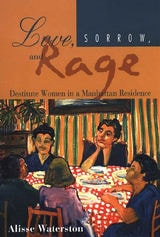
Love, Sorrow, And Rage
Alisse Waterston
Temple University Press, 1999
From drug addiction and the spread of AIDS to the growing gap between rich and poor in the U.S., the topics in this book get front-page coverage in daily newspapers across the country. Waterston seeks to understand, to explain, and to solve the human crisis that surrounds us. Towards this end, she challenges us to look at the ways in which our society and the workings of our political, economic, and popular culture contribute to the suffering experienced by our most vulnerable citizens. An important corrective to popular depictions of the urban poor, Love, Sorrow, and Rage provides a penetrating analysis of the causes and consequences of poverty. It offers a deeper understanding of what leads to and perpetuates poverty and of the human complex of love, sorrow, and rage felt by those who experience it.
Love, Sorrow, and Rage will engage readers interested in urban studies, women's studies, social issues and policies, anthropology, sociology, political economy, and New York City life.
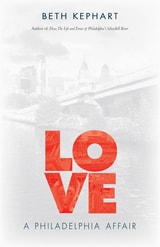
Love
A Philadelphia AffairBeth Kephart
Temple University Press, 2017
Philadelphia has been at the heart of many books by award-winning author Beth Kephart, but none more so than the affectionate collection Love. This volume of personal essays and photographs celebrates the intersection of memory and place. Kephart writes lovingly, reflectively about what Philadelphia means to her. She muses about meandering on SEPTA trains, spending hours among the armor in the Philadelphia Museum of Art, and taking shelter at Independence Mall during a downpour.
In Love, Kephart shares her loveof Reading Terminal Market at Thanksgiving: “This abundant, bristling market is, in November, the most unlonesome place around.” She waxes poetic about the shoulder-to-shoulder crowds, the mustard in a Salumeria sandwich, and the “coins slipped between the lips of Philbert the pig.”
Kephart also extends her journeys to the suburbs, Glenside and Ardmore—and beyond, to Lancaster County, Pennsylvania; Stone Harbor, New Jersey; and Wilmington, Delaware. What emerges is a valentine to the City of Brotherly Love and its environs. In Love, Philadelphia is “more than its icons, bigger than its tagline.”
Loving Animals
Toward a New Animal AdvocacyKathy Rudy
University of Minnesota Press, 2013
The contemporary animal rights movement encompasses a wide range of sometimes-competing agendas from vegetarianism to animal liberation. For people for whom pets are family members—animal lovers outside the fray—extremist positions in which all human–animal interaction is suspect often discourage involvement in the movement to end cruelty to other beings. In Loving Animals, Kathy Rudy argues that in order to achieve such goals as ending animal testing and factory farming, activists need to be better attuned to the profound emotional, even spiritual, attachment that many people have with the animals in their lives.
Offering an alternative to both the acceptance of animal exploitation and radical animal liberation, Rudy shows that a deeper understanding of the nature of our feelings for and about animals can redefine the human–animal relationship in a positive way. Through extended interviews with people whose lives are intertwined with animals, analysis of the cultural representation of animals, and engaging personal accounts, she explores five realms in which humans use animals: as pets, for food, in entertainment, in scientific research, and for clothing. In each case she presents new methods of animal advocacy to reach a more balanced and sustainable relationship association built on reciprocity and connection.
Using this intense emotional bond as her foundation, Rudy suggests that the nearly universal stories we tell of living with and loving animals will both broaden the support for animal advocacy and inspire the societal changes that will improve the lives of animals—and humans—everywhere.
Loving Black Boys
A Black Feminist Bible on Racism and Revolutionary MotheringTamura Lomax
Duke University Press, 2026
Loving Mountains, Loving Men
Memoirs of a Gay AppalachianJeff Mann
Ohio University Press, 2005
Loving Mountains, Loving Men
Memoirs of a Gay AppalachianJeff Mann
Ohio University Press, 2023
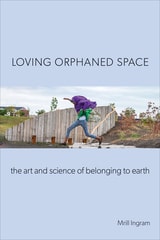
Loving Orphaned Space
The Art and Science of Belonging to EarthMrill Ingram
Temple University Press, 2022
How we relate to orphaned space matters. Voids, marginalia, empty spaces—from abandoned gas stations to polluted waterways—are created and maintained by politics, and often go unquestioned. In Loving Orphaned Space, Mrill Ingram provides a call to action to claim and to cherish these neglected spaces and make them a source of inspiration through art and/or remuneration.
Ingram advocates not only for “urban greening” and “green planning,” but also for “radical caring.” These efforts create awareness and understanding of ecological connectivity and environmental justice issues—from the expropriation of land from tribal nations, to how race and class issues contribute to creating orphaned space. Case studies feature artists, scientists, and community collaborations in Chicago, New York, and Fargo, ND, where grounded and practical work of a fundamentally feminist nature challenges us to build networks of connection and care.
The work of environmental artists who venture into and transform these disconnected sites of infrastructure allow us to rethink how to manage the enormous amount of existing overlooked and abused space. Loving Orphaned Space provides new ways humans can negotiate being better citizens of Earth.
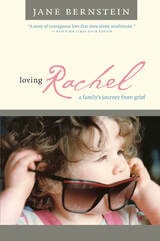
Loving Rachel
A Family's Journey from GriefJane Bernstein
University of Illinois Press, 2007
In 1983, Jane Bernstein had everything she ever wanted: a healthy four-year-old daughter, Charlotte; a happy marriage; a highly praised first novel; and a brand new baby, Rachel. But by the time Rachel was six weeks old,
a neuro-ophthalmologist told Jane and her husband that their baby was blind. Although there was some hope that Rachel might gain partial vision as she grew, her condition was one that often resulted in seizure disorders and intellectual impairment. So began a series of medical and emotional setbacks that were to plague Rachel and her parents and strain their marriage to the breaking point. Spanning the first four years of Rachel’s life, Loving Rachel is a heartbreaking chronicle of a marriage and a compelling story of parental love told with searing honesty and surprising humor.
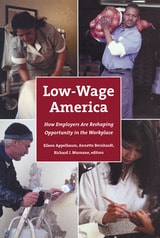
Low-Wage America
How Employers Are Reshaping Opportunity in the WorkplaceEileen Appelbaum
Russell Sage Foundation, 2003

Low-Wage Work in Denmark
Niels Westergaard-Nielsen
Russell Sage Foundation, 2008
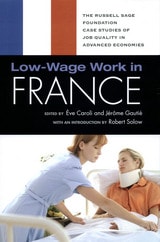
Low-Wage Work in France
Eve Caroli
Russell Sage Foundation, 2008
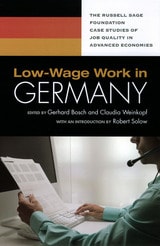
Low-Wage Work in Germany
Gerhard Bosch
Russell Sage Foundation, 2008
Low-Wage Work in the Netherlands
Weimer Salverda
Russell Sage Foundation, 2008

Low-Wage Work in the United Kingdom
Caroline LLoyd
Russell Sage Foundation, 2008
Lowering the Bar
Lawyer Jokes and Legal CultureMarc Galanter
University of Wisconsin Press, 2006
Lowest White Boy
Greg Bottoms
West Virginia University Press, 2019
An innovative, hybrid work of literary nonfiction, Lowest White Boy takes its title from Lyndon Johnson’s observation during the civil rights era: “If you can convince the lowest white man he’s better than the best colored man, he won’t notice you’re picking his pocket.”
Greg Bottoms writes about growing up white and working class in Tidewater, Virginia, during school desegregation in the 1970s. He offers brief stories that accumulate to reveal the everyday experience of living inside complex, systematic racism that is often invisible to economically and politically disenfranchised white southerners—people who have benefitted from racism in material ways while being damaged by it, he suggests, psychologically and spiritually. Placing personal memories against a backdrop of documentary photography, social history, and cultural critique, Lowest White Boy explores normalized racial animus and reactionary white identity politics, particularly as these are collected and processed in the mind of a child.
Lowrider Space
Aesthetics and Politics of Mexican American Custom CarsBy Ben Chappell
University of Texas Press, 2012
Loyal but French
The Negotiation of Identity by French-Canadian Descendants in the United StatesMark Paul Richard
Michigan State University Press, 2008
Richard’s work challenges prevailing notions of "assimilation." As he shows, “acculturation” better describes the roundabout process by which some ethnic groups join their host society. He argues that, for more than a century, the French- Canadians in Lewiston, Maine, pursued the twin objectives of ethnic preservation and acculturation. These were not separate goals but rather intertwined processes. Underscored with statistics compiled by the author, Loyal but French portrays the French-Canadian history of Lewiston, from the 1880s through the 1990s, in this light.
Lucia
Testimonies Of A BrazilianRobert Gay
Temple University Press, 2005
Luckpilled
Compassion, Justice, and Hope in a World Nobody DeservesAaron Rabinowitz
Rutgers University Press, 2027
What if everything we experience comes down to luck? Humans have struggled with anxiety about the pervasiveness of luck since the concept first arose in ancient societies, and attempts to address the problem have shaped the modern world. Yet the problem of luck has persisted because resolving it requires letting go of a tenacious group of deeply rooted illusions centered on the need to feel that people mostly get what they deserve.
In Luckpilled: Compassion, Justice, and Hope in a World Nobody Deserves, Aaron Rabinowitz combines cutting-edge work on the philosophy, psychology, politics, and pedagogy of luck to argue that we are better off embracing the pervasiveness of luck and abandoning harmful illusions that preserve an unjust status-quo. Using the luckpilling techniques offered in this book can help readers to cultivate compassion, empathy, gratitude and humility, as well as a stronger connection to activities they find meaningful.
Ludic Feminism and After
Postmodernism, Desire, and Labor in Late CapitalismTeresa L. Ebert
University of Michigan Press, 1995