Results by title
3703 books match the query '19th Century' and 132 start with l
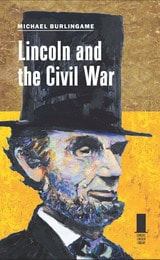
Lincoln and the Civil War
Michael Burlingame
Southern Illinois University Press, 2011
When war erupted in 1861, the North—despite its superior economic resources and manpower—was considered the underdog of the conflict. The need to invade the South brought no advantage to the inefficient, poorly led Union Army. In contrast, Southerners’ knowledge of their home terrain, access to railroads, familiarity with firearms, and outdoor lifestyles, along with the presumed support of foreign nations, made victory over the North seem a likely outcome. In the face of such daunting obstacles, only one person could unite disparate Northerners and rally them to victory in the darkest moments of the war: Abraham Lincoln.
While Lincoln is often remembered today as one of America’s wisest presidents, he was not always considered so sage. Burlingame demonstrates how, long before the rigors of his presidency and the Civil War began to affect him, Lincoln wrestled with the demons of midlife to ultimately emerge as arguably the most self-aware, humble, and confident leader in American history. This metamorphosis from sarcastic young politician to profound statesman uniquely prepared him for the selfless dedication the war years would demand. Whereas his counterpart, Jefferson Davis, became mired in personal power plays, perceived slights, and dramas, Lincoln rose above personal concerns to always place the preservation of the Union first. Lincoln’s ability, along with his eloquence, political savvy, and grasp of military strategy made him a formidable leader whose honesty and wisdom inspired undying loyalty.
In addition to offering fresh perspectives on Lincoln’s complex personality and on the other luminaries of his administration, Lincoln and the Civil War takes readers on a brief but thorough tour of the war itself, from the motivations and events leading to Southern secession and the first shots at Fort Sumter to plans for Reconstruction and Lincoln’s tragic assassination. Throughout the journey, Burlingame demonstrates how Lincoln’s steady hand at the helm navigated the Union through the most perilous events of the war and held together the pieces of an unraveling nation.
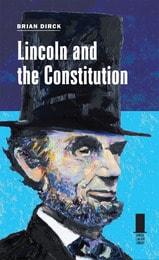
Lincoln and the Constitution
Brian R. Dirck
Southern Illinois University Press, 2012
In this highly readable study of Abraham Lincoln’s thoughts and actions concerning the U.S. Constitution, Brian R. Dirck combines extensive primary research and thoughtful, accessible consideration of Lincoln’s views to reveal new insights into Lincoln’s impact on the U.S. Constitution. In the statesman’s roles as a leading antebellum politician, an ardent critic of slavery, and the president of the United States during the Civil War, Lincoln fashioned a strong antislavery constitutional ideology and articulated a constitutional vision of the Civil War that reinforced his determination to restore the Union.
Grounding Lincoln’s constitutionalism in his reading habits and early legal career, Dirck masterfully balances biographical details, Lincoln’s value system, the opinions of his supporters and critics, and key events and ideas to show how his thinking about the U.S. Constitution changed over time. From Lincoln’s deep reverence for the work of the Founding Fathers to his innovative interpretation of presidential war powers, Dirck reveals Lincoln’s understanding of the Constitution to be progressive, emphasizing federal power as a tool to develop the economy, and pragmatic, in that he was often forced to make decisions on the fly during a remarkably volatile period in American history. Lincoln used his conception of presidential war powers to advance the twin causes of Union and emancipation, and Dirck explores the constitutional problems stirred by curbs Lincoln placed on civil liberties, internal security, and freedom of expression during wartime.
More than a straightforward overview of Lincoln’s constitutional views, Lincoln and the Constitution provides a starting point for further inquiry into interpretations and defenses as well as the political, intellectual, and cultural traditions of the founding document of the United States. In the end, Dirck shows, Lincoln viewed the political and legal traditions of the Constitution with optimism, emphasizing
throughout his life the possibilities he believed the document held—always keeping faith in it and swearing to protect it, even as he was awash in a sea of blood and controversy.
Univeristy Press Books for Public and Secondary Schools 2013 edition
Lincoln and the Economics of the American Dream
Gabor S. Boritt
University of Illinois Press, 1994
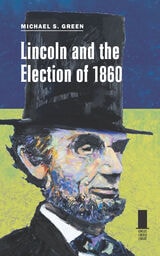
Lincoln and the Election of 1860
Michael S. Green
Southern Illinois University Press, 2011
Although Lincoln rose to national prominence in 1858 during his debates with Stephen Douglas, he was unable to publicly stump for the presidency in a time when personal campaigning for the office was traditionally rejected. This limitation did nothing to check Lincoln’s ambitions, however, as he consistently endeavored to place himself in the public eye while stealthily pulling political strings behind the scenes. Green demonstrates how Lincoln drew upon his considerable communication abilities and political acumen to adroitly manage allies and enemies alike, ultimately uniting the Republican Party and catapulting himself from his status as one of the most unlikely of candidates to his party’s nominee at the national convention.
As the general election campaign progressed, Lincoln continued to draw upon his experience from three decades in Illinois politics to unite and invigorate the Republican Party. Democrats fell to divisions between North and South, setting the stage for a Republican victory in November—and for the most turbulent times in U.S. history.
Moving well beyond a study of the man to provide astute insight into the era’s fiery political scene and its key players, Green offers perceptive analysis of the evolution of American politics and Lincoln’s political career, the processes of the national and state conventions, how political parties selected their candidates, national developments of the time and their effects on Lincoln and his candidacy, and Lincoln’s own sharp—and often surprising—assessments of his opponents and colleagues. Green frequently employs Lincoln’s own words to afford an intimate view into the political savvy of the future president.
The pivotal election of 1860 previewed the intelligence, patience, and shrewdness that would enable Lincoln to lead the United States through its greatest upheaval. This exciting new book brings to vivid life the cunning and strength of one of America’s most intriguing presidents during his journey to the White House.
Lincoln and the Immigrant
Jason H. Silverman
Southern Illinois University Press, 2015
From an early age, Silverman shows, Lincoln developed an awareness of and a tolerance for different peoples and their cultures, and he displayed an affinity for immigrants throughout his legal and political career. Silverman reveals how immigrants affected not only Lincoln’s day-to-day life but also his presidential policies and details Lincoln’s opposition to the Know Nothing Party and the antiforeign attitudes in his own Republican Party, his reliance on German support for his 1860 presidential victory, his appointment of political generals of varying ethnicities, and his reliance on an immigrant for the literal rules of war.
Examining Lincoln's views on the place of the immigrant in America’s society and economy, Silverman’s pioneering work offers a rare new perspective on the renowned sixteenth president.
Lincoln and the Military
John F. Marszalek
Southern Illinois University Press, 2014
When Abraham Lincoln was elected president of the United States in 1860, he came into office with practically no experience in military strategy and tactics. Consequently, at the start of the Civil War, he depended on leading military men to teach him how to manage warfare. As the war continued and Lincoln matured as a military leader, however, he no longer relied on the advice of others and became the major military mind of the war. In this brief overview of Lincoln’s military actions and relationships during the war, John F. Marszalek traces the sixteenth president’s evolution from a nonmilitary politician into the commander in chief who won the Civil War, demonstrating why Lincoln remains America’s greatest military president.
As tensions erupted into conflict in 1861, Lincoln turned to his generals, including Winfield Scott, George B. McClellan, and Henry W. Halleck, for guidance in running the war. These men were products of the traditional philosophy of war, which taught that armies alone wage war and the way to win was to maneuver masses of forces against fractions of the enemy at the key point in the strategic area. As Marszalek shows, Lincoln listened at first, and made mistakes along the way, but he increasingly came to realize that these military men should no longer direct him. He developed a different philosophy of war, one that advocated attacks on all parts of the enemy line and war between not just armies but also societies. Warfare had changed, and now the generals had to learn from their commander in chief. It was only when Ulysses S. Grant became commanding general, Marszalek explains, that Lincoln had a leader who agreed with his approach to war. Implementation of this new philosophy, he shows, won the war for the Union forces.
Tying the necessity of emancipation to preservation of the Union, Marszalek considers the many presidential matters Lincoln had to face in order to manage the war effectively and demonstrates how Lincoln’s determination, humility, sense of humor, analytical ability, and knack for quickly learning important information proved instrumental in his military success. Based primarily on Lincoln’s own words, this succinct volume offers an easily-accessible window into a critical period in the life of Abraham Lincoln and the history of the nation.
Lincoln and the Natural Environment
James Tackach
Southern Illinois University Press, 2019
In this groundbreaking environmental biography of Abraham Lincoln, James Tackach maps Lincoln’s lifelong relationship with the natural world from his birth and boyhood on Midwestern farms through his political career and presidency dealing with the effects of the Industrial Revolution and the Civil War.
Lincoln was born in a generation that grew up on farms but began to move to cities as industrialization transformed the American economy. Turning away from the outdoor, manual labor of his youth, he chose careers in law and politics but always found solace outside first on the prairies of Illinois and, later, at the woodsy presidential retreat. As Tackach shows, Lincoln relied on examples and metaphors from the natural world in his speeches and writings.
As a member of the Whig Party Lincoln endorsed the Industrial Revolution, which transformed the nation’s economy and its physical, social, and cultural landscapes, and advocated for the creation of railroads, canals, roads, and bridges to facilitate growth and the distribution of products. But he and his party failed to take steps to protect the natural environment. Surveying the destruction of the environment in the mid-nineteenth century, Tackach outlines how some American writers, the first voices for protection and conservation, began to call attention to the results of deforestation and the overhunting of animals during Lincoln’s lifetime.
As commander in chief during the Civil War, Lincoln approved a strategy that included significant infrastructure and environmental damage. In the South, where most of the battles occurred, Union troops burned cities and towns and destroyed plantations, farms, and natural landscapes. Tackach argues that, midway through his presidency, Lincoln seemed to sense that postwar Reconstruction would have to be spiritual, political, economic, and environmental in order to heal the nation’s wounds. He signed the Morrill Act, creating the land-grant colleges, and the environmentally progressive Yosemite Grant Act, which preserved thousands of acres of forest in California.
The first scholar to thoroughly investigate Lincoln’s lifelong relationship with the natural environment, Tackach paints Lincoln’s personal and professional life against the backdrop of nineteenth-century American environmental history, issues, and writers, providing insights into contemporary environmental issues.
Lincoln and the Politics of Christian Love
Grant N. Havers
University of Missouri Press, 2009
In this provocative book, Grant Havers argues that charity is a central tenet of what Lincoln once called America’s “political religion.” He explores the implications of making Christian love the highest moral standard for American democracy, showing how Lincoln’s legacy demands that a true democracy be charitable toward all—and that only a people who lived according to such ideals could succeed in building democracy as Lincoln understood it.
Havers argues that it is simplistic to conflate Lincoln’s invocation of “with charity for all” with his abiding support for the ideal of human equality. The ethic of charity in his view also brought a uniquely Christian realism to the universalism of democracy. He also describes how, since World War I, intellectuals and political leaders have denied that there exists a necessary relation between democracy and Christian love, proposing that democracy is sufficiently ethical without reliance on a specific religious tradition. Today’s neoconservatives and liberals instead posit a universal yearning for democracy that requires no foundation in the ethic of charity. Havers shows that this democratic universalism, espoused by those who believe a “chosen people” should uphold the natural rights of humanity, is alien to the sober thought of both the founders and Lincoln.
This carefully argued work defends Lincoln’s understanding of charity as essential to democracy while emphasizing the difficulty of fusing this ethic with the desire to spread democracy to people who do not share America’s Christian heritage. In considering the prospect of America’s leaders rediscovering a moral foreign policy based on charity rather than the costly idolization of democracy, Lincoln and the Politics of Christian Love makes a timely contribution to the wider debate over both the meaning of religion in American politics and the mission of America in the world—and opens a new window on Lincoln’s lasting legacy.
Lincoln and the Thirteenth Amendment
Christian G. Samito
Southern Illinois University Press, 2015
Long before the Civil War, Abraham Lincoln recognized the challenge American slavery posed to the ideals of the Declaration of Independence. A constitutional amendment would be the ideal solution to ending slavery, yet the idea of such an amendment conflicted with several of Lincoln’s long-held positions. In this study, Christian G. Samito examines how Lincoln’s opposition to amending the United States Constitution shaped his political views before he became president, and how constitutional arguments overcame Lincoln’s objections, turning him into a supporter of the Thirteenth Amendment by 1864.
For most of his political career, Samito shows, Lincoln opposed changing the Constitution, even to overturn Supreme Court rulings with which he disagreed. Well into his presidency, he argued that emancipation should take place only on the state level because the federal government had no jurisdiction to control slavery in the states. Between January 1863 and mid-1864, however, Lincoln came to support a constitutional amendment to abolish slavery because it worked within the constitutional structure and preserved key components of American constitutionalism in the face of Radical Republican schemes. Samito relates how Lincoln made the amendment an issue in his 1864 reelection campaign, chronicles lobbying efforts and the final vote in the House on the amendment resolution, and interrogates various charges of corruption and back-room deals. He also considers the Thirteenth Amendment in the context of the Hampton Roads conference, Lincoln’s own thoughts on the meaning of the amendment, and the impact of Lincoln’s assassination on the reading of the amendment. Samito provides the authoritative historical treatment of a story so compelling it was recently dramatized in the movie Lincoln.
Closing with a lively discussion that applies the Thirteenth Amendment to current events, this concise yet comprehensive volume demonstrates how the constitutional change Lincoln helped bring about continues to be relevant today.
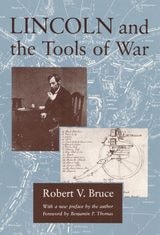
Lincoln and the Tools of War
Robert V. Bruce
University of Illinois Press, 1989
Lincoln and the U.S. Colored Troops
John David Smith
Southern Illinois University Press, 2013
Though scholars have written much on emancipation and the USCT, Smith’s work frames the evolution of Lincoln’s ideas on emancipation and arming blacks within congressional actions, explaining how, when, and why the president seemed to be so halting in his progression to military emancipation. After tracing Lincoln’s evolution from opposing to supporting emancipation as a necessary war measure and to championing the recruitment of black troops for the Union Army, Smith details the creation, mobilization, and diverse military service of the USCT. He assesses the hardships under which the men of the USCT served, including the multiple forms of discrimination from so-called friends and foes alike, and examines the broad meaning of Lincoln’s military emancipation project and its place in African American historical memory.
Lincoln and the Union Governors
William C. Harris
Southern Illinois University Press, 2013
Over the course of the Civil War, fifty-nine men served as governors of the twenty-five Union states. Although these state executives were occasionally obstructionist and often disagreed amongst themselves, their overall cooperation and counsel bolstered the policies put forth by Abraham Lincoln and proved essential to the Union’s ultimate victory. In this revealing volume, award-winning historian William C. Harris explores the complex relationship between Lincoln and the governors of the Union states, illuminating the contributions of these often-overlooked state leaders to the preservation of the nation.
Lincoln recognized that in securing the governors’ cooperation in the war he had to tread carefully and, as much as possible, respect their constitutional authority under the federal system of government. Contributing to the success of the partnership, Harris shows, was the fact that almost all of the governors were members of Lincoln’s Republican or Union Party, and most had earlier associated with his Whig party. Despite their support for the war, however, the governors reflected different regional interests, and Lincoln understood and attempted to accommodate these differences in order to maintain a unified war effort.
Harris examines the activities of the governors, who often worked ahead of Lincoln in rallying citizens for the war, organizing state regiments for the Union army, and providing aid and encouragement to the troops in the field. The governors kept Lincoln informed about political conditions in their states and lobbied Lincoln and the War Department to take more vigorous measures to suppress the rebellion. Harris explores the governors’ concerns about many issues, including the divisions within their states over the war and Lincoln’s most controversial policies, especially emancipation and military conscription. He also provides the first modern account of the 1862 conference of governors in Altoona, Pennsylvania, which provided important backing for Lincoln’s war leadership.
By emphasizing the difficult tasks that both the governors and President Lincoln faced in dealing with the major issues of the Civil War, Harris provides fresh insight into the role this dynamic partnership played in preserving the nation’s democratic and constitutional institutions and ending the greatest blight on the republic—chattel slavery.
Lincoln and the War's End
John C. Waugh
Southern Illinois University Press, 2014
On the night of his reelection on November 8, 1864, President Abraham Lincoln called on the nation to “re-unite in a common effort, to save our common country.” By April 9 of the following year, the Union had achieved this goal with the surrender of the Army of Northern Virginia to General Ulysses S. Grant at Appomattox Court House. In this lively volume, John C. Waugh chronicles in detail Lincoln’s role in the final five months of the war, revealing how Lincoln and Grant worked together to bring the war to an end.
Beginning with Lincoln’s reelection, Waugh highlights the key military and political events of those tumultuous months. He recounts the dramatic final military campaigns and battles of the war, including William T. Sherman’s march through Georgia to the sea; the Confederate army’s attempt to take Nashville and its loss at the battle of Franklin; and the Union victory at Fort Fisher that closed off the Confederacy’s last open port. Other events also receive attention, including Sherman’s march through the Carolinas and the burning of Columbia; Grant’s defeat of the Army of Northern Virginia at the Battle of Five Forks, and Lincoln’s presence at the seat of war during that campaign; the Confederate retreat from Petersburg and Richmond; and Lee’s surrender at Appomattox.
Weaving the stories together chronologically, Waugh also presents the key political events of the time, particularly Lincoln’s final annual message to Congress, passage of the Thirteenth Amendment, the Second Inaugural, Lincoln’s visit to Richmond the day after it fell, and Lincoln’s final days and speeches in Washington after the Confederate surrender. An epilogue recounts the farewell march of all the Union armies through Washington, D.C., in May 1865. Throughout, Waugh enlivens his narrative with illuminating quotes from a wide variety of Civil War participants and personalities, including New Yorker George Templeton Strong, southerner Mary Boykin Chesnut, Lincoln’s secretary John Hay, writer Noah Brooks, and many others.
Lincoln as Hero
Frank J. Williams
Southern Illinois University Press, 2012
Lincoln as Hero shows how—whether it was as president, lawyer, or schoolboy—Lincoln extolled the foundational virtues of American society. Williams describes the character and leadership traits that define American heroism, including ideas and beliefs, willpower, pertinacity, the ability to communicate, and magnanimity. Using both celebrated episodes and lesser-known anecdotes from Lincoln’s life and achievements, Williams presents a wide-ranging analysis of these traits as they were demonstrated in Lincoln’s rise, starting with his self-education as a young man and moving on to his training and experience as a lawyer, his entry onto the political stage, and his burgeoning grasp of military tactics and leadership.
Williams also examines in detail how Lincoln embodied heroism in standing against secession and fighting to preserve America’s great democratic experiment. With a focused sense of justice and a great respect for the mandates of both the Declaration of Independence and the Constitution, Lincoln came to embrace freedom for the enslaved, and his Emancipation Proclamation led the way for the Thirteenth Amendment, which abolished slavery. Lincoln’s legacy as a hero and secular saint was secured when his lifeended by assassination as the Civil War was drawing to a close
Touching on Lincoln’s humor and his quest for independence, justice, and equality, Williams outlines the path Lincoln took to becoming a great leader and an American hero, showing readers why his heroism is still relevant. True heroes, Williams argues, are successful not just by the standards of their own time but also through achievements that transcend their own eras and resonate throughout history—with their words and actions living on in our minds, if we are imaginative, and in our actions, if we are wise.
Univeristy Press Books for Public and Secondary Schools 2013 edition
Lincoln in Indiana
Brian R. Dirck
Southern Illinois University Press, 2017
Lincoln in Indiana tells the story of Lincoln’s life in Indiana, from his family’s arrival to their departure. Dirck explains the Lincoln family’s ancestry and how they and their relatives came to settle near Pigeon Creek. He shows how frontier families like the Lincolns created complex farms out of wooded areas, fashioned rough livelihoods, and developed tight-knit communities in the unforgiving Indiana wilderness. With evocative prose, he describes the youthful Lincoln’s relationship with members of his immediate and extended family. Dirck illuminates Thomas Lincoln by setting him into his era, revealing the concept of frontier manhood, and showing the increasingly strained relationship between father and son. He illustrates how pioneer women faced difficulties as he explores Nancy Lincoln’s work and her death from milk sickness; how Lincoln’s stepmother, Sarah Bush, fit into the family; and how Lincoln’s sister died in childbirth. Dirck examines Abraham’s education and reading habits, showing how a farming community could see him as lazy for preferring book learning over farmwork. While explaining how he was both similar to and different from his peers, Dirck includes stories of Lincoln’s occasional rash behavior toward those who offended him. As Lincoln grew up, his ambitions led him away from the family farm, and Dirck tells how Lincoln chafed at his father’s restrictions, why the Lincolns decided to leave Indiana in 1830, and how Lincoln eventually broke away from his family.
In a triumph of research, Dirck cuts through the myths about Lincoln’s early life, and along the way he explores the social, cultural, and economic issues of early nineteenth-century Indiana. The result is a realistic portrait of the youthful Lincoln set against the backdrop of American frontier culture.
Lincoln in the Illinois Legislature
Ron J Keller
Southern Illinois University Press, 2019
Due partly to Lincoln’s own reserve and partly to an unimpressive legislative tally, Lincoln’s time in the state legislature has been largely neglected by historians more drawn to other early hallmarks of his life, including his law career, his personal life, and his single term as a U.S. congressman in the 1840s. Of about sixteen hundred bills, resolutions, and petitions passed from 1834 to 1842, Lincoln introduced only about thirty of them. The issue he most ardently championed and shepherded through the legislature—the internal improvements system—left the state in debt for more than a generation.
Despite that spotty record, Keller argues, it was during these early years that Lincoln displayed and honed the traits that would allow him to excel in politics and ultimately define his legacy: honesty, equality, empathy, and leadership. Keller reanimates Lincoln’s time in the Illinois legislature to reveal the formation of Lincoln’s strong character and political philosophy in those early years, which allowed him to rise to prominence as the Whig party’s floor leader regardless of setbacks and to build a framework for his future.
Lincoln in the Illinois Legislature details Lincoln’s early political platform and the grassroots campaigning that put him in office. Drawing on legislative records, newspaper accounts, speeches, letters, and other sources, Keller describes Lincoln’s positions on key bills, highlights his colleagues’ perceptions of him, and depicts the relationships that grew out of his statehouse interactions. Keller’s research delves into Lincoln’s popularity as a citizen of New Salem, his political alliances and victories, his antislavery stirrings, and his personal joys and struggles as he sharpened his political shrewdness.
Keller argues Lincoln’s definitive political philosophies—economic opportunity and the right to rise, democratic equality, and to a lesser extent his hatred of slavery—took root during his legislative tenure in Illinois. Situating Lincoln’s tenure and viewpoints within the context of national trends, Keller demonstrates that understanding Lincoln’s four terms as a state legislator is vital to understanding him as a whole.
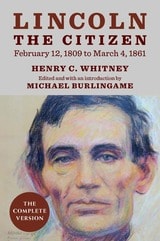
Lincoln the Citizen, February 12, 1809 to March 4, 1861
The Complete VersionHenry C. Whitney. Edited and with an introduction by Michael Burlingame
University of Illinois Press, 2025
Whitney’s work reveals the legal and political spheres where Lincoln moved while providing eyewitness accounts and intimate stories shared by Lincoln himself. Whitney’s unique vantage point informs analyses of everything from Lincoln’s melancholic temperament to his colorful early career to views on his marriage and family life. Burlingame places Whitney’s singular contributions within Lincoln studies but also weighs criticisms of the book and disputes over what information the author may or may not have invented.
A restored edition of an invaluable memoir, Lincoln the Citizen presents a wealth of overlooked biographical detail by one of the people who knew Lincoln best.
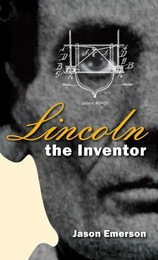
Lincoln the Inventor
Jason Emerson
Southern Illinois University Press, 2009
In Lincoln the Inventor, Jason Emerson offers the first treatment of Abraham Lincoln’s invention of a device to buoy vessels over shoals and its subsequent patent as more than mere historical footnote.
In this book, Emerson shows how, when, where, and why Lincoln created his invention; how his penchant for inventions and inventiveness was part of his larger political belief in internal improvements and free labor principles; how his interest in the topic led him to try his hand at scholarly lecturing; and how Lincoln, as president, encouraged and even contributed to the creation of new weapons for the Union during the Civil War.
During his extensive research, Emerson also uncovered previously unknown correspondence between Lincoln’s son, Robert, and his presidential secretary, John Nicolay, which revealed the existence of a previously unknown draft of Abraham Lincoln’s lecture “Discoveries and Inventions.” Emerson not only examines the creation, delivery, and legacy of this lecture, but also reveals for the first time how Robert Lincoln owned this unknown version, how he lost and later tried to find it, the indifference with which Robert and Nicolay both held the lecture, and their decision to give it as little attention as possible when publishing President Lincoln’s collected works.
The story of Lincoln’s invention extends beyond a boat journey, the whittling of some wood, and a trip to the Patent Office; the invention had ramifications for Lincoln’s life from the day his flatboat got stuck in 1831 until the day he died in 1865. Besides giving a complete examination of this important—and little known—aspect of Lincoln’s life, Lincoln the Inventor delves into the ramifications of Lincoln’s intellectual curiosity and inventiveness, both as a civilian and as president, and considers how it allows a fresh insight into his overall character and contributed in no small way to his greatness. Lincoln the Inventor is a fresh contribution to the field of Lincoln studies about a topic long neglected. By understanding Lincoln the inventor, we better understand Lincoln the man.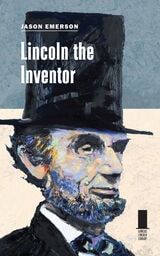
Lincoln the Inventor
Jason Emerson
Southern Illinois University Press, 2009
The book that inspired the popular Concise Lincoln Library series
In April 1831, on a flatboat grounded on the Rutledge milldam below the town of New Salem, Abraham Lincoln worked to pry the boat loose, directed the crew, and ran into the village to borrow an augur to bore a hole in the end hanging over the dam, causing the water to drain and the boat to float free. Seventeen years later, while traveling home from a round of political speeches, Lincoln witnessed another similar occurrence. For the rest of his journey, he considered how to construct a device to free stranded boats from shallow waters.
In this first thorough examination of Abraham Lincoln’s mechanical mind, Jason Emerson brings forth the complete story of Lincoln’s invention and patent as more than mere historical footnote. Emerson shows how, when, where, and why Lincoln developed his invention; how his penchant for inventions and innovation was part of his larger political belief in internal improvements and free labor principles; how his interest in the topic led him to try his hand at scholarly lecturing; and how Lincoln, as president, encouraged and even contributed to the creation of new weapons for the Union during the Civil War.
Lincoln the Inventor delves into the ramifications of Lincoln’s intellectual curiosity and inventiveness, both as a civilian and as president, and considers how they allow a fresh insight into his overall character and contributed in no small way to his greatness. By understanding Lincoln the inventor, we better understand Lincoln the man.
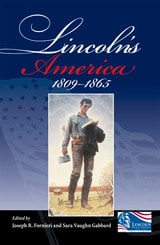
Lincoln's America
1809 - 1865Edited by Joseph R. Fornieri and Sara Vaughn Gabbard
Southern Illinois University Press, 2008
To fully understand and appreciate Abraham Lincoln’s legacy, it is important to examine the society that influenced the life, character, and leadership of the man who would become the Great Emancipator. Editors Joseph R. Fornieri and Sara Vaughn Gabbard have done just that in Lincoln’s America: 1809–1865, a collection of original essays by ten eminent historians that place Lincoln within his nineteenth-century cultural context.
Among the topics explored in Lincoln’s America are religion, education, middle-class family life, the antislavery movement, politics, and law. Of particular interest are the transition of American intellectual and philosophical thought from the Enlightenment to Romanticism and the influence of this evolution on Lincoln's own ideas.
By examining aspects of Lincoln’s life—his personal piety in comparison with the beliefs of his contemporaries, his success in self-schooling when frontier youths had limited opportunities for a formal education, his marriage and home life in Springfield, and his legal career—in light of broader cultural contexts such as the development of democracy, the growth of visual arts, the question of slaves as property, and French visitor Alexis de Tocqueville’s observations on America, the contributors delve into the mythical Lincoln of folklore and discover a developing political mind and a changing nation.
As Lincoln’s America shows, the sociopolitical culture of nineteenth-century America was instrumental in shaping Lincoln’s character and leadership. The essays in this volume paint a vivid picture of a young nation and its sixteenth president, arguably its greatest leader.
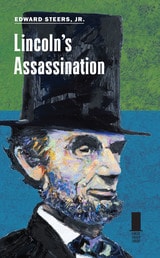
Lincoln's Assassination
Edward Steers, Jr.
Southern Illinois University Press, 2014
For 150 years, the assassination of Abraham Lincoln has fascinated the American people. Relatively few academic historians, however, have devoted study to it, viewing the murder as a side note tied to neither the Civil War nor Reconstruction. Over time, the traditional story of the assassination has become littered with myths, from the innocence of Mary Surratt and Samuel Mudd to John Wilkes Booth’s escape to Oklahoma or India, where he died by suicide several years later. In this succinct volume, Edward Steers, Jr. sets the record straight, expertly analyzing the historical evidence to explain Lincoln’s assassination.
The decision to kill President Lincoln, Steers shows, was an afterthought. John Wilkes Booth’s original plan involved capturing Lincoln, delivering him to the Confederate leadership in Richmond, and using him as a bargaining chip to exchange for southern soldiers being held in Union prison camps. Only after Robert E. Lee surrendered the Army of Northern Virginia and Richmond fell to Union forces did Booth change his plan from capture to murder. As Steers explains, public perception about Lincoln’s death has been shaped by limited but popular histories that assert, alternately, that Secretary of War Edwin Stanton engineered the assassination or that John Wilkes Booth was a mad actor fueled by delusional revenge. In his detailed chronicle of the planning and execution of Booth’s plot, Steers demonstrates that neither Stanton nor anyone else in Lincoln’s sphere of political confidants participated in Lincoln’s death, and Booth remained a fully rational person whose original plan to capture Lincoln was both reasonable and capable of success. He also implicates both Mary Surratt and Samuel Mudd, as well as other conspirators, clarifying their parts in the scheme.
At the heart of Lincoln’s assassination, Steers reveals, lies the institution of slavery. Lincoln’s move toward ending slavery and his unwillingness to compromise on emancipation spurred the white supremacist Booth and ultimately resulted in the president’s untimely death. With concise chapters and inviting prose, this brief volume will prove essential for anyone seeking a straightforward, authoritative analysis of one of the most dramatic events in American history.
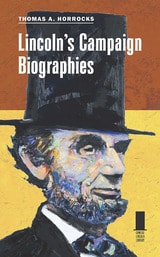
Lincoln's Campaign Biographies
Thomas A. Horrocks
Southern Illinois University Press, 2014
During the 1860 and 1864 presidential campaigns, Abraham Lincoln was the subject of over twenty campaign biographies. In this innovative study, Thomas A. Horrocks examines the role that these publications played in shaping an image of Lincoln that would resonate with voters and explores the vision of Lincoln that the biographies crafted, the changes in this vision over the course of four years, and the impact of these works on the outcome of the elections.
Horrocks investigates Lincoln’s campaign biographies within the context of the critical relationship between print and politics in nineteenth-century America and compares the works about Lincoln with other presidential campaign biographies of the era. Horrocks shows that more than most politicians of his day, Lincoln deeply appreciated and understood the influence and the power of the printed word.
The 1860 campaign biographies introduced to America “Honest Abe, the Rail Splitter,” a trustworthy, rugged candidate who appealed to rural Americans. When Lincoln ran for reelection in 1864, the second round of campaign biographies complemented this earlier portrait of Lincoln with a new, paternal figure, “Father Abraham,” more appropriate for Americans enduring a bloody civil war. Closing with a consideration of the influence of these publications on Lincoln’s election and reelection, Lincoln’s Campaign Biographies provides a new perspective for those seeking a better understanding of the sixteenth president and two of the most critical elections in American history.
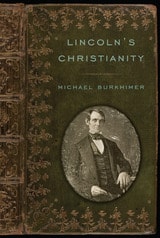
Lincoln's Christianity
Michael Burkhimer
Westholme Publishing, 2007
After listening to Abraham Lincoln’s second inaugural address, many in the audience were stunned. Instead of a positive message about the coming Union victory, the president implicated the entire country in the faults and responsibility for slavery. Using Old Testament references, Lincoln explained that God was punishing all Americans for their role in the calamity with a bloody civil war.
These were surprising words from a man who belonged to no church, did not regularly attend services, and was known to have publicly and privately questioned some of Christianity’s core beliefs. But Lincoln’s life was one with supreme sadness—the death of his first fiancee, the subsequent loss of two of his sons—and these events, along with the chance encounter with a book in Mary Todd’s father’s library, The Christian’s Defense, are all part of the key to understanding Lincoln’s Christianity. Biblical quotations soon entered his speeches—a point noted by Stephen Douglas in their debates—but it is unclear whether Lincoln’s use of scripture was a signal that American politicians should openly embrace religion in their public lives, or a rhetorical tool to manipulate his audience, or a result of a personal religious transformation. After his death both secular and religious biographers claimed Lincoln as one of their own, touching off a controversy that remains today.
In Lincoln’s Christianity, Michael Burkhimer examines the entire history of the president’s interaction with religion—accounts from those who knew him, his own letters and writings, the books he read—to reveal a man who did not believe in orthodox Christian precepts (and might have had a hard time getting elected today) yet, by his example, was a person and president who most truly embodied Christian teachings.
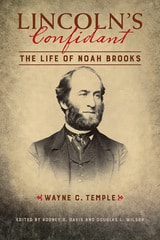
Lincoln's Confidant
The Life of Noah BrooksWayne C. Temple, Edited by Douglas L. Wilson and Rodney O. Davis: Introduction by Michael Burlingame
University of Illinois Press, 2019
Best remembered as one of the president's few true intimates, Brooks was also a nationally recognized man of letters, who mingled with the likes of Mark Twain and Bret Harte. Temple draws on archives and papers long thought lost to re-create Brooks's colorful life and relationship with Lincoln. Brooks's closeness to the president made him privy to Lincoln's thoughts on everything from literature to spirituality. Their frank conversations contributed to the wealth of journalism and personal observations that would make Brooks's writings a much-quoted source for historians and biographers of Lincoln.
A carefully researched and well-documented scholarly resource, Lincoln's Confidant is the story of an extraordinary friendship by one of the luminaries of Lincoln scholarship.
Lincoln's Constitution
Daniel A. Farber
University of Chicago Press, 2003
Lincoln's Defense of Politics
The Public Man and His Opponents in the Crisis Over SlaveryThomas E. Schneider
University of Missouri Press, 2005
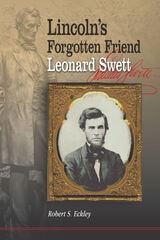
Lincoln's Forgotten Friend, Leonard Swett
Robert S. Eckley
Southern Illinois University Press, 2012
In 1849, while traveling as an attorney on the Eighth Judicial Circuit in Illinois, Abraham Lincoln befriended Leonard Swett (1825–89), a fellow attorney sixteen years his junior. Despite this age difference, the two men built an enduring friendship that continued until Lincoln’s assassination in 1865. Until now, no historian has explored Swett’s life or his remarkable relationship with the sixteenth president. In this welcome volume, Robert S. Eckley provides the first biography of Swett, crafting an intimate portrait of his experiences as a loyal member of Lincoln’s inner circle.
Eckley chronicles Swett’s early life and the part he played in Lincoln’s political campaigns, including his role as an essential member of the team behind Lincoln’s two nominations and elections for the presidency. Swett counseled Lincoln during the formation of his cabinet and served as an unofficial advisor and sounding board during Lincoln’s time in office. Throughout his life, Swett wrote a great deal on Lincoln, and planned to write a biography about him, but Swett’s death preempted the project. His eloquent and interesting writings about Lincoln are described and reproduced in this volume, some for the first time.
With Lincoln’s Forgotten Friend, Eckley removes Swett from the shadows of history and sheds new light on Lincoln’s personal relationships and their valuable contributions to his career.
Superior Achievement from the Illinois State Historical Society, 2013
Lincoln's Gettysburg Address
Echoes of the Bible and Book of Common PrayerA. E. Elmore
Southern Illinois University Press, 2009
While it has long been determined that Abraham Lincoln’s writings were influenced by the King James Bible, until now no full-length study has shown the precise ways in which the Gettysburg Address uses its specific language. Refuting the view that the address was crafted with traditional classical references, this revealing investigation provides a new way to think about the speech and the man who wrote it. A. E. Elmore offers chapter and verse evidence from the Bible as well as specific examples from the Episcopal Book of Common Prayer to illustrate how Lincoln borrowed from these sources to imbue his speech with meanings that would resonate with his listeners. He cites every significant word and phrase—conceived, brought forth, struggled, remaining, consecrate, dedicate, hallow, devotion, new birth, to name a few—borrowed by Lincoln from these two religious texts for use in his dedication of the Gettysburg National Cemetery.
Lincoln’s Gettysburg Address focuses on a number of overlooked themes and ideas, such as the importance of literary allusion and the general public’s knowledge of the Bible in the age of Lincoln. It provides fresh answers to old questions and poses new questions: Was Lincoln a common thief who made use of words from previously published materials as well as from works by his contemporaries? Was he a genius whose literary and political skills were unmatched? No one who reads this highly engaging study will ever think about Lincoln or the Gettysburg Address the same way again.
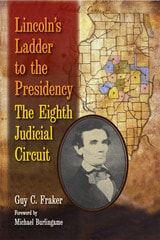
Lincoln's Ladder to the Presidency
The Eighth Judicial CircuitGuy C. Fraker, with a foreword by Michael Burlingame
Southern Illinois University Press, 2012
University Press Books for Public and Secondary Schools, 2013 edition
Superior Achievement by the Illinois State Historical Society, 2013
Throughout his twenty-three-year legal career, Abraham Lincoln spent nearly as much time on the road as an attorney for the Eighth Judicial Circuit as he did in his hometown of Springfield, Illinois. Yet most historians gloss over the time and instead have Lincoln emerge fully formed as a skillful politician in 1858. In this innovative volume, Guy C. Fraker provides the first-ever study of Lincoln’s professional and personal home away from home and demonstrates how the Eighth Judicial Circuit and its people propelled Lincoln to the presidency.
Each spring and fall, Lincoln traveled to as many as fourteen county seats in the Eighth Judicial Circuit to appear in consecutive court sessions over a ten- to twelve-week period. Fraker describes the people and counties that Lincoln encountered, discusses key cases Lincoln handled, and introduces the important friends he made, friends who eventually formed the team that executed Lincoln’s nomination strategy at the Chicago Republican Convention in 1860 and won him the presidential nomination.
As Fraker shows, the Eighth Judicial Circuit provided the perfect setting for the growth and ascension of Lincoln. A complete portrait of the sixteenth president depends on a full understanding of his experience on the circuit, and Lincoln’s Ladder to the Presidency provides that understanding as well as a fresh perspective on the much-studied figure, thus deepening our understanding of the roots of his political influence and acumen.
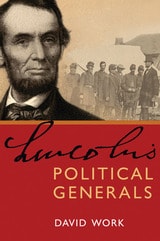
Lincoln's Political Generals
David Work
University of Illinois Press, 2012
As the war proceeded, the value of the political generals became a matter of serious dispute. Could politicians make the shift from a political campaign to a military one? Could they be trusted to fight? Could they avoid destructive jealousies and the temptations of corruption? And with several of the generals being Irish or German immigrants, what effect would ethnic prejudices have on their success or failure?
In this book, David Work examines Lincoln's policy of appointing political generals to build a national coalition to fight and win the Civil War. Work follows the careers of sixteen generals through the war to assess their contributions and to ascertain how Lincoln assessed them as commander-in-chief. Eight of the generals began the war as Republicans and eight as Democrats. Some commanded armies, some regiments. Among them were some of the most famous generals of the Union--such as Francis P. Blair Jr., John A. Dix, John A. Logan, James S. Wadsworth--and others whose importance has been obscured by more dramatic personalities.
Work finds that Lincoln's policy was ultimately successful, as these generals provided effective political support and made important contributions in military administration and on the battlefield. Although several of them proved to be poor commanders, others were effective in exercising influence on military administration and recruitment, slavery policy, and national politics.
Lincoln's Preparation for Greatness
THE ILLINOIS LEGISLATIVE YEARSPaul Simon
University of Illinois Press, 1971
"Abraham Lincoln was a member of the Illinois Legislature from
1834 to 1842 -- one of the Long Nine, as the Sangamon County delegation
was known, all its members being more than six feet tall. It was during
these eight years that he came as close to scandal as he was ever to come
in his public or private life. Did he, or did he not, engage in shameless
logrolling to get the state capital moved to Springfield? This and other
aspects of Lincoln's apprenticeship in the legislator . . . are thoroughly
investigated."
-- Chicago Sun-Times
"The wealth of detail it contains makes it a worthwhile addition
to the study of Lincoln's legislative career."
-- Los Angeles Times
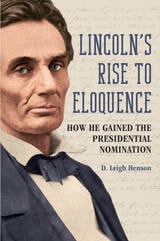
Lincoln's Rise to Eloquence
How He Gained the Presidential NominationD. Leigh Henson
University of Illinois Press, 2024
Insightful and revealing, Lincoln’s Rise to Eloquence follows Lincoln from his early career through the years-long clashes with Stephen A. Douglas to trace the future president’s evolution as a communicator and politician.

Lincoln's Supreme Court
David M. Silver
University of Illinois Press, 1956
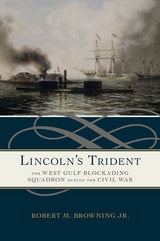
Lincoln's Trident
The West Gulf Blockading Squadron during the Civil WarRobert M. Browning Jr.
University of Alabama Press, 2014
Lincoln’s Trident is the definitive account of the US Navy’s West Gulf Blockading Squadron’s quarantine of the Confederacy in the central and western Gulf of Mexico and adjacent river systems.
In Lincoln’s Trident, Coast Guard historian Robert M. Browning Jr. continues his magisterial series about the Union’s naval blockade of the Confederacy during the American Civil War. Established by the Navy Department in 1862, the West Gulf Blockading Squadron operated from St. Andrews Bay (Panama City), Florida to the Rio Grande River. As with the Navy’s blockade squadrons operating in the Atlantic, the mission of the West Gulf Blockading Squadron was to cripple the South’s economy by halting imports and disrupting cotton exports, the South’s main source of hard currency. The blockade also limited transportation within the South and participated in combined operations with Union land forces.
The history of the squadron comprises myriad parts and players, deployed in a variety of missions across the thousand-mile-wide Western Theater. From disorganized beginnings, the squadron’s leaders and sailors had to overcome setbacks, unfulfilled expectations, and lost opportunities. Browning masterfully captures the many variables that influenced the strategic choices of Navy commanders as they both doggedly pursued unchanging long-term goals as well as improvised and reacted to short-term opportunities.
Notable among its leaders was David Glasgow Farragut, believed by many to be America’s greatest naval hero, who led the squadron through most of the war and the climactic Battle of Mobile Bay. Under his legendary leadership, the squadron not only sealed Confederate sea ports, but also made feints and thrusts up the Mississippi River as far north as Vicksburg, Mississippi.
Knowing the Navy’s role in isolating the Confederate economy and preventing the movement of troops and supplies within the South is crucial to understanding of the outcomes of the Civil War, as well as the importance of naval power in military conflicts. With thirty-five maps and illustrations, Lincoln’s Trident expounds upon an essential part of the Civil War as well as naval and American history.
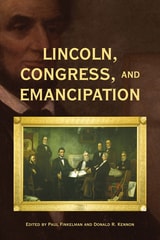
Lincoln, Congress, and Emancipation
Paul Finkelman
Ohio University Press, 2016
“When Lincoln took office, in March 1861, the national government had no power to touch slavery in the states where it existed. Lincoln understood this, and said as much in his first inaugural address, noting: ‘I have no purpose, directly or indirectly, to interfere with the institution of slavery in the States where it exists.’” How, then, asks Paul Finkelman in the introduction to Lincoln, Congress, and Emancipation, did Lincoln—who personally hated slavery—lead the nation through the Civil War to January 1865, when Congress passed the constitutional amendment that ended slavery outright?
The essays in this book examine the route Lincoln took to achieve emancipation and how it is remembered both in the United States and abroad. The ten contributors—all on the cutting edge of contemporary scholarship on Lincoln and the Civil War—push our understanding of this watershed moment in US history in new directions. They present wide-ranging contributions to Lincoln studies, including a parsing of the sixteenth president’s career in Congress in the 1840s and a brilliant critique of the historical choices made by Steven Spielberg and writer Tony Kushner in the movie Lincoln, about the passage of the Thirteenth Amendment.
As a whole, these classroom-ready readings provide fresh and essential perspectives on Lincoln’s deft navigation of constitutional and political circumstances to move emancipation forward.
Contributors: L. Diane Barnes, Jenny Bourne, Michael Burlingame, Orville Vernon Burton, Seymour Drescher, Paul Finkelman, Amy S. Greenberg, James Oakes, Beverly Wilson Palmer, Matthew Pinsker
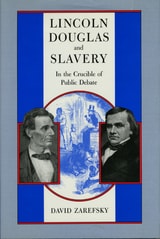
Lincoln, Douglas, and Slavery
In the Crucible of Public DebateDavid Zarefsky
University of Chicago Press, 1990
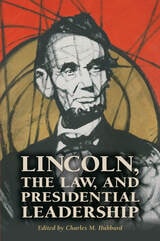
Lincoln, the Law, and Presidential Leadership
Edited by Charles M. Hubbard
Southern Illinois University Press, 2015
The volume’s contributors not only address specific situations and issues that assisted in Lincoln’s development of a new understanding of law and its application but also show Lincoln’s remarkable presidential leadership. Among the topics covered are civil liberties during wartime; presidential pardons; the law and Lincoln’s decision-making process; Lincoln’s political ideology and its influence on his approach to citizenship; Lincoln’s defense of the Constitution, the Union, and popular government; constitutional restraints on Lincoln as he dealt with slavery and emancipation; the Lieber codes, which set forth how the military should deal with civilians and with prisoners of war; the loyalty (or treason) of government employees, including Lincoln’s domestic staff; and how Lincoln’s image has been used in presidential rhetoric. Although varied in their strategies and methodologies, these essays expand the understanding of Lincoln’s vision for a united nation grounded in the Constitution.
Lincoln, the Law, and Presidential Leadership shows how the sixteenth president’s handling of complicated legal issues during the Civil War, which often put him at odds with the Supreme Court and Congress, brought the nation through the war intact and led to a transformation of the executive branch and American society.
Lincoln’s Conservative Advisor
Attorney General Edward BatesMark A. Neels
Southern Illinois University Press, 2025
How a traditionalist became part of Lincoln's volatile team of rivals
Edward Bates, a founding father of Missouri and leader of the Missouri Whig Party, served as Abraham Lincoln’s attorney general during the American Civil War. The first full biography of Bates in nearly sixty years, Lincoln’s Conservative Advisor reveals a striking portrait of this complex figure in Lincoln’s cabinet.
Author Mark A. Neels begins with Bates’s youth in Virginia and follows him through his political and judicial career, his candidacy as a Republican presidential nominee in 1860, and his appointment to Abraham Lincoln’s cabinet as attorney general. Bates became an essential advisor to the president on key legal, military, and political matters from emancipation to civil liberties and equal rights, and his official opinion on Habeas Corpus would have a permanent effect on presidential authority and separation of powers. When Lincoln drafted the Emancipation Proclamation, Bates found himself at odds with the president and the radical anti-slavery members of the cabinet. But more than simply highlighting the conflict within Lincoln’s administration, Bates’s example lays bare the strong philosophical divisions within the Republican Party during the Civil War era. These divisions were present at the party’s inception, crystallized during the war, and ultimately sparked a political realignment during Reconstruction. Bates was at the center of this divide for most of its existence, and in some cases assisted in its promulgation.
Bates, a fierce opponent of radical Republicanism, embodies the conflict among Republicans over issues of slavery and citizenship. In both judicial and elective office, he was compelled by a sense of duty to defy the populism of President Andrew Jackson and Senator Thomas Hart Benton, and, later, the proslavery forces that threatened to tear the nation apart. Though he had owned slaves, Bates represented at least one enslaved woman’s suit for freedom, released from bondage the people he had enslaved, and aided Lincoln in his efforts to end slavery nationwide. Bates’s opinion on citizenship as attorney general helped pave the way for equal rights. His opinions were not always popular with either his colleagues or the greater populace, but Bates remained true to his conservative principles—a set of values shared by a large swath of Lincoln’s Republican Party—which positioned him as a leading opponent of radical Republicanism during the Reconstruction Era.
Lincoln’s Legal Ethics
How Abraham Lincoln Pioneered Modern Rules for the Practice of LawRoger D. Billings Jr.
University of Illinois Press, 2027
Roger D. Billings Jr. examines how Lincoln’s practices in Illinois helped shape the development of the legal standards that lawyers follow today. Lincoln learned the law through self-study, experience, and mentorship. Billings focuses on actual cases to show Lincoln’s ethical choices when confronted with issues like conflict of interest, client trust, and honesty with the court. In addition, the studies shine a light on the future president’s on-the-job performance. Though an imperfect practitioner, Lincoln and his energetic work on behalf of clients and way of doing business, among other practices, influenced the evolution of the ABA Model Rules of Professional Conduct in the United States.
An original study of Lincoln’s years at the bar, Lincoln’s Legal Ethics connects the self-styled country lawyer with modern legal standards.
Listening to China
Sound and the Sino-Western Encounter, 1770-1839Thomas Irvine
University of Chicago Press, 2020
Through these stories, Irvine not only investigates how the Sino-Western encounter sounded, but also traces the West’s shifting response to China. As the trading relationships between China and the West broke down, travelers and music theorists abandoned the vision of shared musical approaches, focusing instead on China’s noisiness and sonic disorder and finding less to like in its music. At the same time, Irvine reconsiders the idea of a specifically Western music history, revealing that it was comparison with China, the great “other,” that helped this idea emerge. Ultimately, Irvine draws attention to the ways Western ears were implicated in the colonial and imperial project in China, as well as to China’s importance to the construction of musical knowledge during and after the European Enlightenment. Timely and original, Listening to China is a must-read for music scholars and historians of China alike.
Literary Conclusions
The Poetics of Ending in Lessing, Goethe, and KleistOliver Simons
Northwestern University Press, 2022
Simons examines the interrelations of Lessing’s literary endings with modes of logical conclusion; he highlights how Goethe’s narrative closures are forestalled by an uncontrollable vital force that was discussed in the sciences of the time; and he reveals that Kleist conceived of literary genres themselves as forms of reasoning. Kleist’s endings, Simons demonstrates, mark the beginning of modernism. Through close readings of these authors and supplemental analyses of works by Walter Benjamin, Friedrich Hölderlin, and Georg Wilhelm Friedrich Hegel, he crafts an elegant theory of conclusions that revises established histories of literary genres and forms.
Literary Publishing in America, 1790-1850
William Charvat
University of Massachusetts Press, 1993
Available for the first time in paperback, this book is a succinct distillation of the work and thought of William Charvat, a pioneer in the study of the history of the American book. This burgeoning field of inquiry investigates the social and cultural context of the act of literary creation by relating it to the modes of its production and distribution. This new edition of Literary Publishing in America contains an afterword by Michael Winship that discusses scholarship in the field since publication of Charvat's groundbreaking work.
Literature Incorporated
The Cultural Unconscious of the Business Corporation, 1650-1850John O'Brien
University of Chicago Press, 2015
Examining British and American essays, poems, novels, and stories from the seventeenth through the nineteenth centuries, O’Brien pursues the idea of incorporation as a trope discernible in a wide range of texts. Key authors include John Locke, Eliza Haywood, Harriet Martineau, and Edgar Allan Poe, and each chapter is oriented around a type of corporation reflected in their works, such as insurance companies or banks. In exploring issues such as whether sentimental interest is the same as economic interest, these works bear witness to capitalism’s effect on history and human labor, desire, and memory. This period’s imaginative writing, O’Brien argues, is where the unconscious of that process left its mark. By revealing the intricate ties between literary models and economic concepts, Literature Incorporated shows us how the business corporation has shaped our understanding of our social world and ourselves.
Literature and Criminal Justice in Antebellum America
Carl Ostrowski
University of Massachusetts Press, 2016
Drawing on an eclectic range of sources including newspaper arrest reports, prison reform periodicals, popular literary magazines, transatlantic travel narratives, popular crime novels, anthologies of prison poetry, and the memoirs of prison chaplains, Ostrowski analyzes how authors as canonical as Nathaniel Hawthorne and as obscure as counterfeiter/poet/prison inmate Christian Meadows adapted, manipulated, or rejected prevailing narratives about criminality to serve their artistic and rhetorical ends. These narratives led to the creation of new literary subgenres while also ushering in psychological interiority as an important criterion by which serious fiction was judged. Ostrowski joins and extends recent scholarly conversations on subjects including African American civic agency, literary sentimentalism, outsider authorship, and the racial politics of antebellum prison reform.
Literature and Revolution
British Responses to the Paris Commune of 1871Owen Holland
Rutgers University Press, 2022
This book examines how a heterogeneous group of authors in Britain responded to the Commune. In doing so, it provides the first full-length critical study of the reception and representation of the Commune in Britain during the closing decades of the nineteenth century, showing how discussions of the Commune functioned as a screen to project hope and fear, serving as a warning for some and an example to others. Writers considered in the book include John Ruskin, Edward Bulwer-Lytton, Eliza Lynn Linton, Mary Elizabeth Braddon, Anne Thackeray Ritchie, Margaret Oliphant, George Gissing, Henry James, William Morris, Alfred Austin and H.G. Wells. As the book shows, many, but not all, of these writers responded to the Commune with literary strategies that sought to stabilize bourgeois subjectivity in the wake of the traumatic shock of a revolutionary event. The book extends critical understanding of the Commune’s cultural afterlives and explores the relationship between literature and revolution.
Little Tools of Knowledge
Historical Essays on Academic and Bureaucratic PracticesPeter Becker and William Clark, Editors
University of Michigan Press, 2001
Living Liberalism
Practical Citizenship in Mid-Victorian BritainElaine Hadley
University of Chicago Press, 2010
In the mid-Victorian era, liberalism was a practical politics: it had a party, it informed legislation, and it had adherents who identified with and expressed it as opinion. It was also the first British political movement to depend more on people than property, and on opinion rather than interest. But how would these subjects of liberal politics actually live liberalism?
To answer this question, Elaine Hadley focuses on the key concept of individuation—how it is embodied in politics and daily life and how it is expressed through opinion, discussion and sincerity. These are concerns that have been absent from commentary on the liberal subject. Living Liberalism argues that the properties of liberalism—citizenship, the vote, the candidate, and reform, among others—were developed in response to a chaotic and antagonistic world. In exploring how political liberalism imagined its impact on Victorian society, Hadley reveals an entirely new and unexpected prehistory of our modern liberal politics. A major revisionist account that alters our sense of the trajectory of liberalism, Living Liberalism revises our understanding of the presumption of the liberal subject.
Living in the Land of Death
The Choctaw Nation, 1830-1860Donna L. Akers
Michigan State University Press, 2004
With the Indian Removal Act of 1830, the Choctaw people began their journey over the Trail of Tears from their homelands in Mississippi to the new lands of the Choctaw Nation. Suffering a death rate of nearly 20 percent due to exposure, disease, mismanagement, and fraud, they limped into Indian Territory, or, as they knew it, the Land of the Dead (the route taken by the souls of Choctaw people after death on their way to the Choctaw afterlife). Their first few years in the new nation affirmed their name for the land, as hundreds more died from whooping cough, floods, starvation, cholera, and smallpox.
Living in the Land of the Dead depicts the story of Choctaw survival, and the evolution of the Choctaw people in their new environment. Culturally, over time, their adaptation was one of homesteads and agriculture, eventually making them self-sufficient in the rich new lands of Indian Territory. Along the Red River and other major waterways several Choctaw families of mixed heritage built plantations, and imported large crews of slave labor to work cotton fields. They developed a sub-economy based on interaction with the world market. However, the vast majority of Choctaws continued with their traditional subsistence economy that was easily adapted to their new environment.
The immigrant Choctaws did not, however, move into land that was vacant. The U.S. government, through many questionable and some outright corrupt extralegal maneuvers, chose to believe it had gained title through negotiations with some of the peoples whose homelands and hunting grounds formed Indian Territory. Many of these indigenous peoples reacted furiously to the incursion of the Choctaws onto their rightful lands. They threatened and attacked the Choctaws and other immigrant Indian Nations for years. Intruding on others’ rightful homelands, the farming-based Choctaws, through occupation and economics, disrupted the traditional hunting economy practiced by the Southern Plains Indians, and contributed to the demise of the Plains ways of life.
Living with Lynching
African American Lynching Plays, Performance, and Citizenship, 1890-1930Koritha Mitchell
University of Illinois Press, 2012
In closely analyzing the political and spiritual uses of black theatre during the Progressive Era, Mitchell demonstrates that audiences were shown affective ties in black families, a subject often erased in mainstream images of African Americans. Examining lynching plays as archival texts that embody and reflect broad networks of sociocultural activism and exchange in the lives of black Americans, Mitchell finds that audiences were rehearsing and improvising new ways of enduring in the face of widespread racial terrorism. Images of the black soldier, lawyer, mother, and wife helped readers assure each other that they were upstanding individuals who deserved the right to participate in national culture and politics. These powerful community coping efforts helped African Americans band together and withstand the nation's rejection of them as viable citizens.
The Left of Black interview with author Koritha Mitchell begins at 14:00.
An interview with Koritha Mitchell at The Ohio Channel.
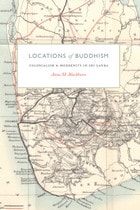
Locations of Buddhism
Colonialism and Modernity in Sri LankaAnne M. Blackburn
University of Chicago Press, 2010
Modernizing and colonizing forces brought nineteenth-century Sri Lankan Buddhists both challenges and opportunities. How did Buddhists deal with social and economic change; new forms of political, religious, and educational discourse; and Christianity? And how did Sri Lankan Buddhists, collaborating with other Asian Buddhists, respond to colonial rule? To answer these questions, Anne M. Blackburn focuses on the life of leading monk and educator Hikkaduve Sumangala (1827–1911) to examine more broadly Buddhist life under foreign rule.
In Locations of Buddhism, Blackburn reveals that during Sri Lanka’s crucial decades of deepening colonial control and modernization, there was a surprising stability in the central religious activities of Hikkaduve and the Buddhists among whom he worked. At the same time, they developed new institutions and forms of association, drawing on pre-colonial intellectual heritage as well as colonial-period technologies and discourse. Advocating a new way of studying the impact of colonialism on colonized societies, Blackburn is particularly attuned here to human experience, paying attention to the habits of thought and modes of affiliation that characterized individuals and smaller scale groups. Locations of Buddhism is a wholly original contribution to the study of Sri Lanka and the history of Buddhism more generally.