Results by title
1713 books match the query '21St Century' and 60 start with l

Lookalikes
Thomas Meinecke
Diaphanes, 2026
A literary tour de force through the symbolic landscapes of recent cultural history, Lookalikes is a text in which everything is as it seems and nothing is as it is.
Thomas Meinecke’s lookalikes resemble many people––Marlon Brando, Shakira, Justin Timberlake, or Josephine Baker to name a few––but never themselves. Illusion is their capital; imitation is their business. They stroll through Düsseldorf's posh Königsallee, reading, quoting, and plagiarizing their way through the history of pop culture and philosophy, exploring categories of realness in parallel worlds and digital chat forums. At the same time, yet another Thomas wanders Brazil in disguise, tracing the journey of Hubert Fichte and his doppelgänger Jäcki. In this endless play of similarities, all identity is lost.
Between literary and sexual genres, mimesis and authenticity, fiction and reality, these lookalikes only ever find the Other, just as Meinecke’s text duplicates itself in the furor of allusions and reference systems, constantly branching out anew, never remaining the same, always changing these so-called original signs.

Looking and Seeing/Seeing and Looking
Damon Potter and Truong Tran
Omnidawn, 2023
This book brings together different perspectives under two titles, considering the lives and experiences of two friends, one Vietnamese American and one white. Looking And Seeing is a poetic work of yearning, regret, and righteous indignation. In Truong Tran’s poetry, what is said and what is written reveal our complexities. Composed as an investigation of his own being and body as a brown person moving through white spaces, this collection moves alongside Tran’s friend and collaborator Damon Potter. Seeing and Looking offers a record of Potter’s perspective as a white man examining who he is and wants to be and the complications of trying to be good while also benefiting from histories of oppression. Potter considers death—both his own future death and the deaths of his friends—while grappling with how to witness horrors, wonders, and his self.

Losing Control
Global Security in the 21st CenturyPaul Rogers
Pluto Press, 2010
When Losing Control was first published a decade ago it was years ahead of its time. Its argument was simple - the real causes of global insecurity were the widening socio-economic divide, global marginalisation and environmental limitations, especially climate change and conflict over energy resources.
Paul Rogers, one of the most original thinkers on international security, pointed to a world in which irregular warfare from the margins would prevent powerful states from maintaining their position. He even predicted accurately how the United States would respond to a catastrophic attack.
The new edition brings the whole analysis right up to date, arguing persuasively that the world’s elite cannot maintain control and that a far more emancipatory and sustainable approach to global security has to be developed.
Loss and Wonder at the World’s End
Laura A. Ogden
Duke University Press, 2021
Love Writ Large
Navid Kermani
Seagull Books, 2018
For a fifteen-year-old, falling in love can eclipse everything else in the world, and make a few short weeks feel like a lifetime of experience. In Love Writ Large, Navid Kermani captures those intense feelings, from the emotional explosion of a first kiss to the staggering loss of a first breakup. As his teenage protagonist is wrapped up in these all-consuming feelings, however, Germany is in the crosshairs of the Cold War—and even the personal dramas of a small-town grammar school are shadowed by the threat of the nuclear arms race. Kermani’s novel manages to capture these social tensions without sacrificing any of the all-consuming passion of first love and, in a unique touch, sets the boy’s struggles within the larger frame of the stories and lives of numerous Arabic and Persian mystics. His becomes a timeless tale that reflects on the multiple ways love, loss, and risk weigh on our everyday lives.
Love and Abolition
The Social Life of Black Queer PerformanceAlison Rose Reed
The Ohio State University Press, 2022
Reed identifies abolition literature as an emergent field of inquiry that emphasizes social relationships in the ongoing struggle to dismantle systems of coercion, criminalization, and control. Focusing on love as an affective modality and organizing tool rooted in the Black radical tradition’s insistence on collective sociality amidst unrelenting state violence, Reed provides fresh readings of visionaries such as James Baldwin, Ntozake Shange, Sharon Bridgforth, and vanessa german. Both abolitionist manifesto and examination of how Black queer performance offers affective modulations of tough and tender love, Love and Abolition ultimately calls for a critical reconsideration of the genre of prison literature—and the role of the humanities—during an age of mass incarceration.
Love, Marriage, and Jewish Families
Paradoxes of a Social RevolutionEdited by Sylvia Barack Fishman
Brandeis University Press, 2015
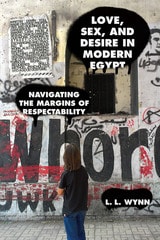
Love, Sex, and Desire in Modern Egypt
Navigating the Margins of RespectabilityBy L. L. Wynn
University of Texas Press, 2018
Cairo is a city obsessed with honor and respectability—and love affairs. Sara, a working-class woman, has an affair with a married man and becomes pregnant, only to be abandoned by him; Ayah and Zeid, a respectably engaged couple, argue over whether Ayah’s friend is a prostitute or a virgin; Malak, a European belly dancer who sometimes gets paid for sex, wants to be loved by a man who won’t treat her like a whore just because she’s a dancer; and Alia, a Christian banker who left her abusive husband, is the mistress of a wealthy Muslim man, Haroun, who encourages business by hosting risqué parties for other men and their mistresses.
Set in transnational Cairo over two decades, Love, Sex, and Desire in Modern Egypt is an ethnography that explores female respectability, male honor, and Western theories and fantasies about Arab society. L. L. Wynn uses stories of love affairs to interrogate three areas of classic anthropological theory: mimesis, kinship, and gift. She develops a broad picture of how individuals love and desire within a cultural and political system that structures the possibilities of, and penalties for, going against sexual and gender norms. Wynn demonstrates that love is at once a moral horizon, an attribute that “naturally” inheres in particular social relations, a social phenomenon strengthened through cultural concepts of gift and kinship, and an emotion deeply felt and desired by individuals.
Love’s Austere and Lonely Offices
Street Portraits and PoemsMarcus Jackson
Northwestern University Press, 2026
An astounding collection of photographs from a renowned poet
Created during the tumultuous years of 2020 and 2021, Love’s Austere and Lonely Offices: Street Portraits and Poems intersects the lens of accomplished poet and photographer Marcus Jackson with his words. The focus: the Black experience and existence. Amid isolation, protest, and survival, Jackson is the aperture and scribe giving visual consciousness and breath to these human portraits. His camera strips the view of endless cycles of social and moral injustices, presenting a resonant collection of photographs that make space for the moments and the people whose beings represent the ongoing interplay between history, society, and the individual soul.
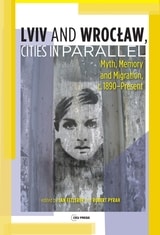
Lviv – Wroclaw, Cities in Parallel?
Myth, Memory and Migration, c. 1890-PresentJan Fellerer
Central European University Press, 2020
After World War II, Europe witnessed the massive redrawing of national borders and the efforts to make the population fit those new borders. As a consequence of these forced changes, both Lviv and Wrocław went through cataclysmic changes in population and culture. Assertively Polish prewar Lwów became Soviet Lvov, and then, after 1991, it became assertively Ukrainian Lviv. Breslau, the third largest city in Germany before 1945, was in turn "recovered" by communist Poland as Wrocław. Practically the entire population of Breslau was replaced, and Lwów's demography too was dramatically restructured: many Polish inhabitants migrated to Wrocław and most Jews perished or went into exile. The forced migration of these groups incorporated new myths and the construction of official memory projects.
The chapters in this edited book compare the two cities by focusing on lived experiences and "bottom-up" historical processes. Their sources and methods are those of micro-history and include oral testimonies, memoirs, direct observation and questionnaires, examples of popular culture, and media pieces. The essays explore many manifestations of the two sides of the same coin—loss on the one hand, gain on the other—in two cities that, as a result of the political reality of the time, are complementary.