Results by title
1677 books match the query 'Archaeology' and 64 start with l
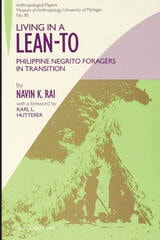
Living in a Lean-To
Philippine Negrito Foragers in TransitionNavin K. Rai with a foreword by Karl L. Hutterer
University of Michigan Press, 1990
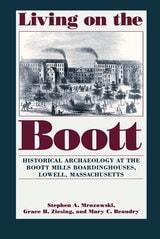
Living on the Boott
Historical Archaeology at the Boott Mills Boardinghouses of Lowell, MassachusettsStephen A. Mrozowski
University of Massachusetts Press, 1996
Lowell, Massachusetts was the first fully planned industrial city in the United States, and the Boott Mill, established in the 1820s along the Merrimack River, stood at the center of this bold experiment in industrial capitalism. For decades, the company-owned boardinghouses that housed the mills' workers were as much a part of the Lowell system as the looms themselves: a managed, closely supervised domestic world where the rhythms of mill life extended from the factory floor into every corner of daily existence.
Living on the Boott brings this vanished world back to life through rigorous historical archaeology. Drawing on excavations conducted at the Boott Mills boardinghouse complex, Stephen A. Mrozowski, Grace H. Ziesing, and Mary C. Beaudry examine the material remains of the men and women who lived and worked in Lowell's textile industry from the early nineteenth century through its long decline. Through painstaking analysis of ceramics, faunal assemblages, tobacco-related artifacts, and other recovered objects, the authors reconstruct the daily lives, diets, domestic routines, and social relationships of successive generations of boardinghouse residents—from the young "mill girls" recruited from rural New England who made Lowell famous, to the Irish immigrant workers who increasingly replaced them as the century progressed.
The result is a richly documented social history written not from official records alone, but from the objects people actually used, discarded, and left behind. The book illuminates how class, gender, ethnicity, and labor intersected in the intimate spaces of the boardinghouse, and documents the profound changes in living conditions as the Lowell system evolved and the workforce transformed. A landmark contribution to historical archaeology, industrial archaeology, and the history of American labor, Living on the Boott demonstrates the unique power of archaeological evidence to recover the lives of those too often overlooked by conventional historical sources.
Living with Pottery
Ethnoarchaeology among the Gamo of Southwest EthiopiaArthur, John W
University of Utah Press, 2006
The southwestern region of Ethiopia is one of the few places in the world where locally made pottery is still the dominant choice for everyday domestic use. The Gamo people continue to produce and use pottery for transporting water, cooking, storing, and serving. Ethnoarchaeology undertaken in a society where people still use low-fired ceramics in daily life provides a powerful framework for archaeological inferences, especially since little behavioral information exists concerning the relationship between status, wealth, and household pottery.
Based on John Arthur’s extensive fieldwork, this study sheds light on some of the puzzles common to archaeology in any region. It also helps decipher evidence of inter- and intravillage social and economic organization and offers insight on markers for pottery-producing and nonproducing villages and socioeconomic variability.
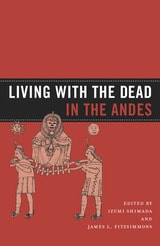
Living with the Dead in the Andes
Edited by Izumi Shimada and James L. Fitzsimmons
University of Arizona Press, 2015
Living with the Dead in the Andes considers recent research by archaeologists, bioarchaeologists, ethnographers, and ethnohistorians whose work reveals the diversity and complexity of the dead-living interaction. The book’s contributors reap the salient results of this new research to illuminate various conceptions and treatments of the dead: “bad” and “good” dead, mummified and preserved, the body represented by art or effigies, and personhood in material and symbolic terms.
Death does not end or erase the emotional bonds established in life, and a comprehensive understanding of death requires consideration of the corpse, the soul, and the mourners. Lingering sentiment and memory of the departed seems as universal as death itself, yet often it is economic, social, and political agendas that influence the interactions between the dead and the living.
Nine chapters written by scholars from diverse countries and fields offer data-rich case studies and innovative methodologies and approaches. Chapters include discussions on the archaeology of memory, archaeothanatology (analysis of the transformation of the entire corpse and associated remains), a historical analysis of postmortem ritual activities, and ethnosemantic-iconographic analysis of the living-dead relationship. This insightful book focuses on the broader concerns of life and death.
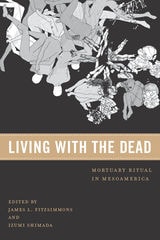
Living with the Dead
Mortuary Ritual in MesoamericaEdited by James L. Fitzsimmons and Izumi Shimada
University of Arizona Press, 2011
This book results from a symposium organized by the editors for an annual meeting of the Society for American Archaeology. The contributors employ historical sources, comparative art history, anthropology, and sociology, as well as archaeology and anthropology, to uncover surprising commonalities across cultures, including the manner in which the dead were politicized, the perceptions of reciprocity between the dead and the living, and the ways that the dead were used by the living to create, define, and renew social as well as family ties. In exploring larger issues of a “good death” and the transition from death to ancestry, the contributors demonstrate that across Mesoamerica death was almost never accompanied by the extinction of a persona; it was more often the beginning of a social process than a conclusion.
Local Exchange and Early State Development in Southwestern Iran
Gregory Alan Johnson
University of Michigan Press, 1973
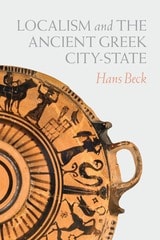
Localism and the Ancient Greek City-State
Hans Beck
University of Chicago Press, 2020
Drawing on a staggering range of materials—including texts by both known and obscure writers, numismatics, pottery analysis, and archeological records—Beck develops fine-grained case studies that illustrate the significance of the local experience. Localism and the Ancient Greek City-State builds bridges across disciplines and ideas within the humanities and shows how looking back at the history of Greek localism is important not only in the archaeology of the ancient Mediterranean, but also in today’s conversations about globalism, networks, and migration.
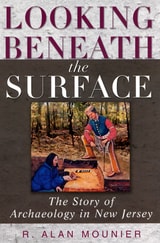
Looking Beneath the Surface
The Story of Archaeology in New JerseyMounier, R. Alan
Rutgers University Press, 2002
For more than ten thousand years, humans have lived in New Jersey. From Summit to Cape May, from Trenton to the Jersey Shore, the state is a treasure trove of archaeological artifacts, revealing much about those who occupied the region prior to European settlement. As a rule, only the most durable of human creations¾items of stone and pottery¾survive the ravages of time. To complicate matters, the onslaught of our own culture and the indiscriminate looting of sites by greedy collectors have further diminished the cultural materials left behind. The task of the archaeologist is to gather and interpret these scraps for the benefit of science and the public. But digging up relics is a trivial pursuit if the only outcome is a collection of artifacts, however attractive or valuable they may be. Understanding what those relics mean in human terms is crucial.
In Looking beneath the Surface, R. Alan Mounier looks at the human past of New Jersey. With particular focus on the ancient past and native cultures, the author tells the story of archaeology in the state as it has unfolded, and as it continues to unfold. New investigations and discoveries continually change our views and interpretations of the past. In jargon-free language, Mounier provides an in-depth introduction offering information to understand general archaeological practices as well as research in New Jersey. Subsequent chapters describe artifact types, archaeological settlements, and burial practices in detail. He concludes with vignettes of twenty-one archaeological investigations throughout the state to illustrate the variability of sites and the accomplishments of dedicated archaeologists, both professional and amateur.
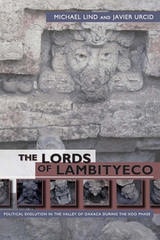
Lords of Lambityeco
Political Evolution in the Valley of Oaxaca during the Xoo PhaseMichael Lind
University Press of Colorado, 2010
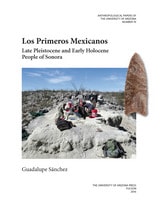
Los Primeros Mexicanos
Late Pleistocene and Early Holocene People of SonoraGuadalupe Sánchez
University of Arizona Press, 2016
Los Primeros Mexicanos explores the Clovis occupation of Mexico’s northwest region of Sonora. Using extensive primary data concerning specific artifacts, assemblages, and Paleoindian archaeology, Mexican archaeologist Guadalupe Sánchez presents a synopsis and critical review of current data and a unique summary of information about the First People of México that is difficult to find in Spanish and until now not available in English.
Sánchez’s essential framework for early Sonora prehistory includes the Sonoran landscape, the biotic communities, a history of investigations, the regional cultural-historical chronology of Sonora, and the Clovis record in the surrounding area. The Sonoran settlement pattern, she asserts, indicates that Clovis groups were hunter-gatherers who exploited a wide range of environments, locating their settlements near lithic sources for tool-making, water sources, large-prey animals, and a variety of edible plants and small animals.
In 1592, a Jesuit priest, José de Acosta, chronicled his puzzlement over when man first arrived in the New World. Four hundred years later, the peopling of the American continent is still intensely interesting to scientists and researchers. Los Primeros Mexicanos offers an exhaustive synthesis of available archaeological evidence to shed light on Clovis occupation in Sonora, Mexico.
Lost City, Found Pyramid
Understanding Alternative Archaeologies and Pseudoscientific PracticesEdited by Jeb J. Card and David S. Anderson
University of Alabama Press, 2016
A critical investigation into how modern myths shape interpretations of the ancient past.
Lost City, Found Pyramid delves into the fascinating world of sensational “pseudoarchaeology,” from perennial discoveries of lost pyramids or civilizations to contemporary ghost-hunting and reality TV. It examines how nonscientific pursuit of myths and legends warps both public perceptions of archaeology and of human history itself.
A collection of twelve engaging and insightful essays, Lost City, Found Pyramid does far more than argue for the simple debunking of false archaeology. Rather, it brings into focus the value of understanding how and why pseudoarchaeology captures the public imagination. By comprehending pseudoarchaeology’s appeal as a media product, cultural practice, and communication strategy, archaeologists can enhance and enliven how they communicate about real archaeology in the classroom and in the public arena.
The first part of Lost City, Found Pyramid provides numerous case studies. Some examine the work of well-intentioned romantics who project onto actual archaeological data whimsical interpretative frameworks or quixotic “proofs” that confirm legends, such as that of the Lost White City of Honduras, or other alternative claims. Other case studies lay bare how false claims may inadvertently lead to the perpetuation of ethnic stereotypes, economic exploitation, political adventurism, and a misunderstanding of science.
Offering much of interest to scholars and students of archaeology, archaeology buffs, as well as policy-makers involved in the discovery, curation, and care of archaeological sites and relics, Lost City, Found Pyramid provides an invaluable corrective and hopeful strategy for engaging the public’s curiosity with the compelling world of archaeological discovery.
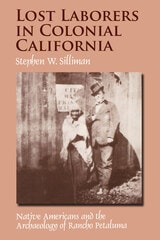
Lost Laborers in Colonial California
Native Americans and the Archaeology of Rancho PetalumaStephen W. Silliman
University of Arizona Press, 2004
This study focuses on Rancho Petaluma north of San Francisco Bay, a large livestock, agricultural, and manufacturing operation on which several hundred—perhaps as many as two thousand—Native Americans worked as field hands, cowboys, artisans, cooks, and servants. One of the largest ranchos in the region, it was owned from 1834 to 1857 by Mariano Guadalupe Vallejo, one of the most prominent political figures of Mexican California. While historians have studied Vallejo, few have considered the Native Americans he controlled, so we know little of what their lives were like or how they adjusted to the colonial labor regime.
Because Vallejo’s Petaluma Adobe is now a state historic park and one of the most well-protected rancho sites in California, this site offers unparalleled opportunities to investigate nineteenth-century rancho life via archaeology. Using the Vallejo rancho as a case study, Stephen W. Silliman examines this California rancho with a particular eye toward Native American participation. Through the archaeological record—tools and implements, containers, beads, bone and shell artifacts, food remains—he reconstructs the daily practices of Native peoples at Rancho Petaluma and the labor relations that structured indigenous participation in and experience of rancho life. This research enables him to expose the multi-ethnic nature of colonialism, counterbalancing popular misconceptions of Native Americans as either non-participants in the ranchos or passive workers with little to contribute to history.
Lost Laborers in Colonial California draws on archaeological data, material studies, and archival research, and meshes them with theoretical issues of labor, gender, and social practice to examine not only how colonial worlds controlled indigenous peoples and practices but also how Native Americans lived through and often resisted those impositions. The book fills a gap in the regional archaeological and historical literature as it makes a unique contribution to colonial and contact-period studies in the Spanish/Mexican borderlands and beyond.
Lulu Linear Punctated
Essays in Honor of George Irving QuimbyEdited by Robert C. Dunnell, Donald K. Grayson, and Walter N. Koelz
University of Michigan Press, 1983
Lumbar Breakdown Caused by Erect Posture in Man
Frederick P. Thieme
University of Michigan Press, 1950