Results by title
767 books match the query 'Hispanic & Latino Studies' and 64 start with l
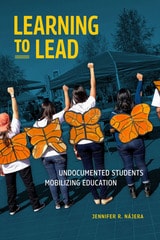
Learning to Lead
Undocumented Students Mobilizing EducationJennifer R. Nájera
Duke University Press, 2024
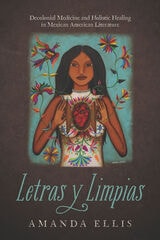
Letras y Limpias
Decolonial Medicine and Holistic Healing in Mexican American LiteratureAmanda Ellis
University of Arizona Press, 2021
Ellis explores the curandera in relationship to decoloniality, bioethics, and the topic of healing while recognizing the limitations and spiritual shortcomings of Western medicine. Ellis argues that our contemporary western health-care system does not know how to fully grapple with illnesses that patients face. Ellis reads the curandera’s perennial representation as an ongoing example of decolonial love useful for deconstructing narrow definitions of health and personhood, and for grappling with the effects of neoliberalism and colonialism on the health-care industry.
Letras y Limpias draws from Chicana feminist theory to assert the importance of the mindbodyspirit connection. Ellis conveys theoretical insights about the continual reimagining of the figure of the curandera as a watermark across Mexican American literary texts. This literary figure points to the oppressive forces that create susto and reminds us that healing work requires specific attention to colonialism, its legacy, and an intentional choice to carry forward the traditional practices rooted in curanderismo passed on from prior generations. By turning toward the figure of the curandera, readers are better poised to challenge prevailing ideas about health, and imagine ways to confront the ongoing problems that coloniality creates. Letras y Limpias shows how the figure of the curandera offers us ways to heal that have nothing to do with copays or medical professionals refusing care, and everything to do with honoring the beauty and complexity of any, every, and all humans.
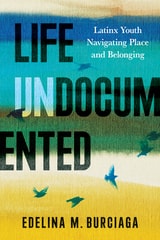
Life Undocumented
Latinx Youth Navigating Place and BelongingEdelina M. Burciaga
University of Arizona Press, 2025
The book is about how undocumented young adults in these two contexts navigate the pathway to and through adulthood, and the powerful role state laws and policies play in shaping their prospects for social mobility and their sense of belonging. Edelina M. Burciaga examines how state laws and policies in California and Georgia shape the pathways to adulthood for these individuals. California, with its supportive legal frameworks, contrasts sharply with Georgia’s restrictive environment, highlighting the significant impact of state-level immigration policies.
The book highlights the complexities and contradictions that emerge from these distinct legal ecologies, which include the intersections of federal, state, local, familial, and individual dynamics, and shape the daily lives and future orientations of undocumented young adults. This book underscores the resilience and agency of undocumented youth as they confront and resist the structural constraints imposed by immigration laws, offering a vivid portrayal of their emotional and social journeys. This book is a vital resource for anyone committed to creating equitable and inclusive systems for undocumented students.
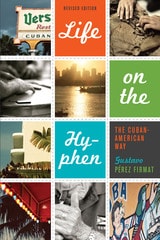
Life on the Hyphen
The Cuban-American WayBy Gustavo Pérez Firmat
University of Texas Press, 2012
An expanded, updated edition of the classic study of Cuban-American culture, this engaging book, which mixes the author’s own story with his reflections as a trained observer, explores how both famous and ordinary members of the “1.5 Generation” (Cubans who came to the United States as children or teens) have lived “life on the hyphen”—neither fully Cuban nor fully American, but a fertile hybrid of both. Offering an in-depth look at Cuban-Americans who have become icons of popular and literary culture—including Desi Arnaz, Oscar Hijuelos, musician Pérez Prado, and crossover pop star Gloria Estefan, as well as poets José Kozer and Orlando González Esteva, performers Willy Chirino and Carlos Oliva, painter Humberto Calzada, and others—Gustavo Pérez Firmat chronicles what it means to be Cuban in America.
The first edition of Life on the Hyphen won the Eugene M. Kayden National University Press Book Award and received honorable mentions for the Modern Language Association’s Katherine Singer Kovacs Prize and the Latin American Studies Association’s Bryce Wood Book Award.
Light in the Dark/Luz en lo Oscuro
Rewriting Identity, Spirituality, RealityGloria E. Anzaldua
Duke University Press, 2015
Liquid Relations
Contested Water Rights and Legal ComplexityRoth, Dik
Rutgers University Press, 2005
Water management plays an increasingly critical role in national and international policy agendas. Growing scarcity, overuse, and pollution, combined with burgeoning demand, have made socio-political and economic conflicts almost unavoidable. Proposals to address water shortages are usually based on two key assumptions: (1) water is a commodity that can be bought and sold and (2) “states,” or other centralized entities, should control access to water.
Liquid Relations criticizes these assumptions from a socio-legal perspective. Eleven case studies examine laws, distribution, and irrigation in regions around the world, including the United States, Nepal, Indonesia, Chile, Ecuador, India, and South Africa. In each case, problems are shown to be both ecological and human-made. The essays also consider the ways that gender, ethnicity, and class differences influence water rights and control.
In the concluding chapter, the editors draw on the essays’ findings to offer an alternative approach to water rights and water governance issues. By showing how issues like water scarcity and competition are embedded in specific resource use and management histories, this volume highlights the need for analyses and solutions that are context-specific rather than universal.
Lives on the Line
Dispatches from the U.S.-Mexico BorderMiriam Davidson
University of Arizona Press, 2000
In Lives on the Line, Miriam Davidson tells five true stories from these border cities to show the real-life effects that the maquiladora boom and the law enforcement crackdown have had on the people of "Ambos (Both) Nogales." Readers will meet Yolanda Sánchez, a single mother who came to work in the factories; Jimmy Teyechea, a cancer victim who became an outspoken environmental activist; Dario Miranda Valenzuela, an undocumented immigrant who was shot and killed by a U.S. Border Patrol agent; Cristina, a "tunnel kid" who aspired to flee the gang lifestyle; and Hope Torres and Tom Higgins, maquiladora managers who have made unique contributions to the community.
In sharing these stories of people transformed by love and faith, by pain and loss, Davidson relates their experiences to larger issues and shows that, although life on the border is tough, it is not without hope.
Lives on the Line is an impassioned look at the changes that have swept the U.S.-Mexico border: the rising tension concerning free trade and militarization, the growing disparity between the affluent and the impoverished. At the same time, the book highlights the positive aspects of change, revealing challenges and opportunities not only for the people who live on the border but for all Americans.
Living Ideology in Cuba
Socialism in Principle and PracticeKatherine A. Gordy
University of Michigan Press, 2015
Local Governments and Rural Development
Comparing Lessons from Brazil, Chile, Mexico, and PeruKrister Andersson, Gustavo Gordillo de Anda, and Frank van Laerhoven
University of Arizona Press, 2009
Based on interviews with more than 1,200 mayors, local officials, and farmers in 390 municipal territories in four Latin American nations, the authors analyze the ways in which different forms of decentralization affect the governance arrangements for rural development “on the ground.” Their comparative analysis suggests that rural development outcomes are systemically linked to locally negotiated institutional arrangements—formal and informal—between government officials, NGOs, and farmer groups that operate in the local sphere. They find that local-government actors contribute to public services that better assist the rural poor when local actors cooperate to develop their own institutional arrangements for participatory planning, horizontal learning, and the joint production of services.
This study brings substantive data and empirical analysis to a discussion that has, until now, more often depended on qualitative research in isolated cases. With more than 60 percent of Latin America’s rural population living in poverty, the results are both timely and crucial.
Looking High and Low
Art and Cultural IdentityBrenda Jo Bright
University of Arizona Press, 1995
Arguing that art is constituted across cultural boundaries rather than merely inside them, the contributors explore the relations between art, cultural identity, and the social languages of evaluation—among artists, art critics, art institutions, and their audiences—in the Southwest and in Mexico. The authors use anthropological methods in art communities to uncover compelling evidence of how marginalized populations make meaning for themselves, how images of ethnicity function in commercial culture, how Native populations must negotiate sentimental marketing and institutional appropriation of their art work, and how elite populations use culture and ritual in ways that both reveal and obscure their power and status. The authors make dramatic revelations concerning the construction and contestation of ideas of art as they circulate between groups where notions of what art "should" be are often at odds with each other.
This volume challenges conventional modes of analyzing art. Its ethnographic explorations illuminate the importance of art as a cultural force while creating a greater awareness of the roles that scholars, museum curators, and critics play in the evaluation of art.
Contents
Introduction: Art Hierarchies, Cultural Boundaries, and Reflexive Analysis, Brenda Jo Bright
Bellas Artes and Artes Populares: The Implications of Difference in the Mexico City Art World, Liza Bakewell
Space, Power, and Youth Culture: Mexican American Graffiti and Chicano Murals in East Los Angeles, 1972-1978, Marcos Sanchez-Tranquilino
Remappings: Los Angeles Low Riders, Brenda Jo Bright
Marketing Maria: The Tribal Artist in the Age of Mechanical Reproduction, Barbara Babcock
Aesthetics and Politics: Zuni War God Repatriation and Kachina Representation, Barbara Tedlock
Middlebrow into Highbrow at the J. Paul Getty Trust, Los Angeles, George E. Marcus
Los Yarderos
Mexican Yard Workers in Transborder ChicagoSergio Lemus
University of Illinois Press, 2025
Sergio Lemus explores the lives of these migrants and looks at the struggles they face as they work to make the city their home. Drawing on fieldwork in South Chicago, Lemus tells the stories of first and second-generation yarderos and discusses the historical, economic, cultural, and political ramifications they face as they acquire their working-class identity. Lemus’s compassionate portrait places them within America’s ongoing tradition as a nation of immigrants while analyzing their place within today’s transborder cultural moment.
Perceptive and humane, Los Yarderos reveals how a group of Mexican immigrants navigates the crossings of the borders that divide class, color hierarchies, gender, and belonging.
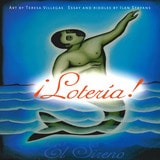
Lotería
Art by Theresa Villegas, Essay and Riddles by Ilan Stavans
University of Arizona Press, 2004
Chips, cards, and a table.
The riddles insightful,
the future, unstable! What is it?
It's Lotería, the Mexican game of chance! For the uninitiated, it might seem like bingo played with a riddling tarot deck. But this enthralling board game is more than entertainment. The images found on its cards—La Virgen, El Pan Dulce, La Telenovela—are miniature reflections of an entire culture, capturing the joys and sorrows of the Mexican people.
Wildly popular on both sides of the border, Lotería cards originated in the Iberian peninsula in the eighteenth century but have been redesigned so many times as to defy expectation, with boards devoted to ecclesiastical figures, soccer idols, and even vaudeville starlets. With the dawn of a new millennium, American artist Teresa Villegas created a new Lotería set that is already gaining popularity in Mexico, and her striking images are also widely exhibited in galleries across the United States.
This gift book, which will bring pleasure and bewilderment to children and adults alike, reproduces more than two dozen of Villegas's 54 colorful cards, pairing them with insightful, humorous riddles written by award-winning author Ilan Stavans. Stavans also revisits his childhood in an essay that examines the role of luck in Mexican life and recreates the sort of poetry jam that often accompanies Lotería contests wherever they might take place. Delve into the emblematic pages of this marvelous volume to find your own Calavera. Let yourself unravel the paths of El Deseo and the mysteries of El Corazón. Before too long, you'll realize that luck is never truly accidental—for a turn at ¡Lotería! is always an opportunity to come face to face with El Destino.
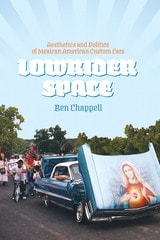
Lowrider Space
Aesthetics and Politics of Mexican American Custom CarsBy Ben Chappell
University of Texas Press, 2012
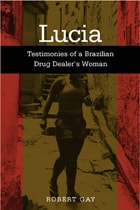
Lucia
Testimonies Of A BrazilianRobert Gay
Temple University Press, 2005