Results by title
138 books match the query 'Lincoln, Abraham' and 66 start with l
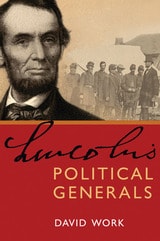
Lincoln's Political Generals
David Work
University of Illinois Press, 2012
As the war proceeded, the value of the political generals became a matter of serious dispute. Could politicians make the shift from a political campaign to a military one? Could they be trusted to fight? Could they avoid destructive jealousies and the temptations of corruption? And with several of the generals being Irish or German immigrants, what effect would ethnic prejudices have on their success or failure?
In this book, David Work examines Lincoln's policy of appointing political generals to build a national coalition to fight and win the Civil War. Work follows the careers of sixteen generals through the war to assess their contributions and to ascertain how Lincoln assessed them as commander-in-chief. Eight of the generals began the war as Republicans and eight as Democrats. Some commanded armies, some regiments. Among them were some of the most famous generals of the Union--such as Francis P. Blair Jr., John A. Dix, John A. Logan, James S. Wadsworth--and others whose importance has been obscured by more dramatic personalities.
Work finds that Lincoln's policy was ultimately successful, as these generals provided effective political support and made important contributions in military administration and on the battlefield. Although several of them proved to be poor commanders, others were effective in exercising influence on military administration and recruitment, slavery policy, and national politics.
Lincoln's Preparation for Greatness
THE ILLINOIS LEGISLATIVE YEARSPaul Simon
University of Illinois Press, 1971
"Abraham Lincoln was a member of the Illinois Legislature from
1834 to 1842 -- one of the Long Nine, as the Sangamon County delegation
was known, all its members being more than six feet tall. It was during
these eight years that he came as close to scandal as he was ever to come
in his public or private life. Did he, or did he not, engage in shameless
logrolling to get the state capital moved to Springfield? This and other
aspects of Lincoln's apprenticeship in the legislator . . . are thoroughly
investigated."
-- Chicago Sun-Times
"The wealth of detail it contains makes it a worthwhile addition
to the study of Lincoln's legislative career."
-- Los Angeles Times

Lincoln's Rail-Splitter
GOVERNOR RICHARD J. OGLESBYMark A. Plummer
University of Illinois Press, 2001
Like Lincoln, Oglesby was born in Kentucky and spent most of his youth in central Illinois, apprenticing as a lawyer in Springfield and standing for election to the Illinois legislature, Congress, and U.S. Senate. Oglesby participated in the battles of Cerro Gordo and Vera Cruz during the Mexican-American War and made a small fortune in the gold rush of 1849. A superlative speaker, he ran unsuccessfully for Congress in a campaign that featured the Lincoln-Douglas debates of 1858, then was elected to the Illinois senate as Lincoln was being elected president.
When the Civil War came, Oglesby resigned his senate seat to lead a regiment of the Union Army. Critically wounded at the Battle of Corinth, he was promoted to major general before resigning his commission to run successfully for governor of Illinois. Oglesby was at Lincoln's deathbed and led the effort to build the sixteenth president's tomb in Springfield, delivering the major oration at its dedication. In the postwar years, Oglesby drew on his popularity, his association with the martyred Lincoln, and his extraordinary stump-speaking skills to rescue the Illinois Republican Party in a time of political crisis. In his third term as governor, Oglesby faced massive labor unrest in the aftermath of the Haymarket affair.
A mature and thoughtful biography, Lincoln's Rail-Splitter chronicles Oglesby's pivotal contribution to American political life while also providing a sensitive portrait of this able, energetic man.
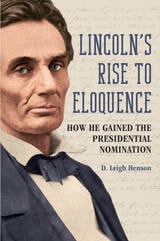
Lincoln's Rise to Eloquence
How He Gained the Presidential NominationD. Leigh Henson
University of Illinois Press, 2024
Insightful and revealing, Lincoln’s Rise to Eloquence follows Lincoln from his early career through the years-long clashes with Stephen A. Douglas to trace the future president’s evolution as a communicator and politician.
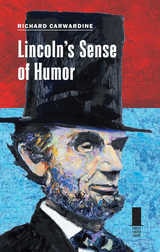
Lincoln's Sense of Humor
Richard Carwardine
Southern Illinois University Press, 2017
Winner, ISHS Annual Award for a Scholarly Publication, 2018
Abraham Lincoln was the first president to make storytelling, jokes, and laughter tools of the office, and his natural sense of humor has become legendary. Lincoln’s Sense of Humor registers the variety, complexity of purpose, and ethical dimension of Lincoln’s humor and pinpoints the political risks Lincoln ran in telling jokes while the nation was engaged in a bloody struggle for existence.
Complete with amusing anecdotes, this book shows how Lincoln’s uses of humor evolved as he matured and explores its versatility, range of expressions, and multiple sources: western tall tales, morality stories, bawdy jokes, linguistic tricks, absurdities, political satire, and sharp wit. While Lincoln excelled at self-mockery, nothing gave him greater pleasure than satirical work lampooning hypocrisy and ethical double standards. He particularly enjoyed David R. Locke’s satiric writings by Petroleum V. Nasby, a fictional bigoted secessionist preacher, and the book explores the nuances of Lincoln’s enthusiasm for what he called Locke’s genius, showing the moral springs of Lincoln’s humor.
Richard Carwardine methodically demonstrates that Lincoln’s funny stories were the means of securing political or personal advantage, sometimes by frontal assault on opponents but more often by depiction through parable, obfuscation through hilarity, refusal through wit, and diversion through cunning. Throughout his life Lincoln worked to develop the humorist’s craft and hone the art of storytelling. His jokes were valuable in advancing his careers as politician and lawyer and in navigating his course during a storm-tossed presidency. His merriness, however, coexisted with self-absorbed contemplation and melancholy. Humor was his lifeline; dark levity acted as a tonic, giving Lincoln strength to tackle the severe challenges he faced. At the same time, a reputation for unrestrained, uncontrollable humor gave welcome ammunition to his political foes. In fact, Lincoln’s jocularity elicited waves of criticism during his presidency. He was dismissed as a “smutty joker,” a “first rate second rate man,” and a “joke incarnated.”
Since his death, Lincoln’s anecdotes and jokes have become detached from the context that had given them their political and cultural bite, losing much of the ironic and satiric meaning that he had intended. With incisive analysis and laugh-inducing examples, Carwardine helps to recapture a strong component of Lincoln’s character and reanimates the good humor of our sixteenth president.
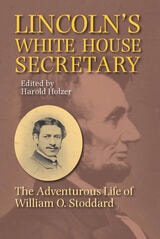
Lincoln's White House Secretary
The Adventurous Life of William O.StoddardEdited by Harold Holzer
Southern Illinois University Press, 2007

Lincoln's Youth
Indiana Years, 1816-1830Louis A. Warren
Indiana Historical Society Press, 1991
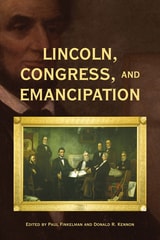
Lincoln, Congress, and Emancipation
Paul Finkelman
Ohio University Press, 2016
“When Lincoln took office, in March 1861, the national government had no power to touch slavery in the states where it existed. Lincoln understood this, and said as much in his first inaugural address, noting: ‘I have no purpose, directly or indirectly, to interfere with the institution of slavery in the States where it exists.’” How, then, asks Paul Finkelman in the introduction to Lincoln, Congress, and Emancipation, did Lincoln—who personally hated slavery—lead the nation through the Civil War to January 1865, when Congress passed the constitutional amendment that ended slavery outright?
The essays in this book examine the route Lincoln took to achieve emancipation and how it is remembered both in the United States and abroad. The ten contributors—all on the cutting edge of contemporary scholarship on Lincoln and the Civil War—push our understanding of this watershed moment in US history in new directions. They present wide-ranging contributions to Lincoln studies, including a parsing of the sixteenth president’s career in Congress in the 1840s and a brilliant critique of the historical choices made by Steven Spielberg and writer Tony Kushner in the movie Lincoln, about the passage of the Thirteenth Amendment.
As a whole, these classroom-ready readings provide fresh and essential perspectives on Lincoln’s deft navigation of constitutional and political circumstances to move emancipation forward.
Contributors: L. Diane Barnes, Jenny Bourne, Michael Burlingame, Orville Vernon Burton, Seymour Drescher, Paul Finkelman, Amy S. Greenberg, James Oakes, Beverly Wilson Palmer, Matthew Pinsker
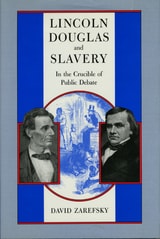
Lincoln, Douglas, and Slavery
In the Crucible of Public DebateDavid Zarefsky
University of Chicago Press, 1990
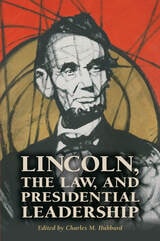
Lincoln, the Law, and Presidential Leadership
Edited by Charles M. Hubbard
Southern Illinois University Press, 2015
The volume’s contributors not only address specific situations and issues that assisted in Lincoln’s development of a new understanding of law and its application but also show Lincoln’s remarkable presidential leadership. Among the topics covered are civil liberties during wartime; presidential pardons; the law and Lincoln’s decision-making process; Lincoln’s political ideology and its influence on his approach to citizenship; Lincoln’s defense of the Constitution, the Union, and popular government; constitutional restraints on Lincoln as he dealt with slavery and emancipation; the Lieber codes, which set forth how the military should deal with civilians and with prisoners of war; the loyalty (or treason) of government employees, including Lincoln’s domestic staff; and how Lincoln’s image has been used in presidential rhetoric. Although varied in their strategies and methodologies, these essays expand the understanding of Lincoln’s vision for a united nation grounded in the Constitution.
Lincoln, the Law, and Presidential Leadership shows how the sixteenth president’s handling of complicated legal issues during the Civil War, which often put him at odds with the Supreme Court and Congress, brought the nation through the war intact and led to a transformation of the executive branch and American society.

Lincoln-Lore
Lincoln in the Popular MindRay B. Browne
University of Wisconsin Press, 1996
The people’s lore about Lincoln has through the years continued to grow and to assume ever greater importance both for what it tells about the man and the age in which he lived and for its amusement value.
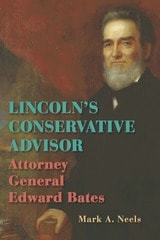
Lincoln’s Conservative Advisor
Attorney General Edward BatesMark A. Neels
Southern Illinois University Press, 2025
How a traditionalist became part of Lincoln's volatile team of rivals
Edward Bates, a founding father of Missouri and leader of the Missouri Whig Party, served as Abraham Lincoln’s attorney general during the American Civil War. The first full biography of Bates in nearly sixty years, Lincoln’s Conservative Advisor reveals a striking portrait of this complex figure in Lincoln’s cabinet.
Author Mark A. Neels begins with Bates’s youth in Virginia and follows him through his political and judicial career, his candidacy as a Republican presidential nominee in 1860, and his appointment to Abraham Lincoln’s cabinet as attorney general. Bates became an essential advisor to the president on key legal, military, and political matters from emancipation to civil liberties and equal rights, and his official opinion on Habeas Corpus would have a permanent effect on presidential authority and separation of powers. When Lincoln drafted the Emancipation Proclamation, Bates found himself at odds with the president and the radical anti-slavery members of the cabinet. But more than simply highlighting the conflict within Lincoln’s administration, Bates’s example lays bare the strong philosophical divisions within the Republican Party during the Civil War era. These divisions were present at the party’s inception, crystallized during the war, and ultimately sparked a political realignment during Reconstruction. Bates was at the center of this divide for most of its existence, and in some cases assisted in its promulgation.
Bates, a fierce opponent of radical Republicanism, embodies the conflict among Republicans over issues of slavery and citizenship. In both judicial and elective office, he was compelled by a sense of duty to defy the populism of President Andrew Jackson and Senator Thomas Hart Benton, and, later, the proslavery forces that threatened to tear the nation apart. Though he had owned slaves, Bates represented at least one enslaved woman’s suit for freedom, released from bondage the people he had enslaved, and aided Lincoln in his efforts to end slavery nationwide. Bates’s opinion on citizenship as attorney general helped pave the way for equal rights. His opinions were not always popular with either his colleagues or the greater populace, but Bates remained true to his conservative principles—a set of values shared by a large swath of Lincoln’s Republican Party—which positioned him as a leading opponent of radical Republicanism during the Reconstruction Era.
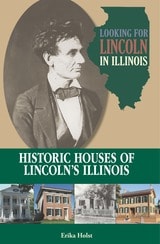
Looking for Lincoln in Illinois
Historic Houses of Lincoln’s IllinoisErika Holst
Southern Illinois University Press, 2018
This richly illustrated compendium of twenty-two historic buildings in the Abraham Lincoln National Heritage Area includes houses, a hotel, and an art center, all of which are open to the public. Each site links today’s visitors with a place Lincoln lived, a home of a Lincoln friend or colleague, or a spot that illuminates Lincoln’s era and legacy in central Illinois. Along with dozens of modern and historical photographs, entries contain explorations of historical connections to Lincoln and detailed information about exceptional features and artifacts. Complete with maps, this showcase of Illinois heritage is a handy guide for day trips, extended tours, or armchair adventures.
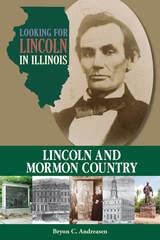
Looking for Lincoln in Illinois
Lincoln and Mormon CountryBryon C. Andreasen
Southern Illinois University Press, 2015
Although they inhabited different political, social, and cultural arenas, Abraham Lincoln and the pioneer generation of Latter-day Saints, or Mormons, shared the same nineteenth-century world. Bryon C. Andreasen’s Looking for Lincoln in Illinois: Lincoln and Mormon Country relates more than thirty fascinating and surprising stories that show how the lives of Lincoln and the Mormons intersected.
This richly illustrated and carefully researched book expands on some of the storyboards found on the Looking for Lincoln Story Trail, from the Mormon capital of Nauvoo to the state capital of Springfield. Created by the Looking for Lincoln Heritage Coalition, this trail consists of wayside exhibits posted in sites of significance to Lincoln’s life and career across fifty-two communities in Illinois. The book’s keyed maps, historic photos, and descriptions of battles, Mormon expeditions, and events at inns, federal buildings, and even Lincoln’s first Illinois log cabin connect the stories to their physical locations.
Exploring the intriguing question of whether Lincoln and Mormon founder Joseph Smith ever met, the book reveals that they traveled the same routes and likely stayed at the same inns. The book also includes colorful and engaging looks at key figures such as Brigham Young, various Mormon apostles, and more. Anyone inspired by Lincoln, as well as Mormon and Illinois history enthusiasts, will appreciate this look back at a long-past, but not forgotten, landscape.
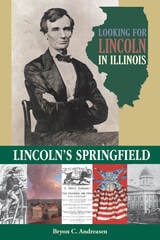
Looking for Lincoln in Illinois
Lincoln's SpringfieldBryon C. Andreasen
Southern Illinois University Press, 2015
Winner, ISHS Certificate of Excellence Award, 2016
Presenting fifty Abraham Lincoln stories—some familiar and beloved, some fresh and unexpected—Looking for Lincoln in Illinois: Lincoln’s Springfield is a carefully researched, richly illustrated guide to the Springfield, Illinois, locations on the Looking for Lincoln Story Trail. Created by the Looking for Lincoln Heritage Coalition, this trail consists of more than two hundred illustrated storyboards posted at sites of significance to Lincoln’s life and career across fifty-two communities in Illinois. The storyboards connect Lincoln-related tales to the geographical locations where they occurred, giving visitors, and now readers, a tour of the social and cultural landscape of Lincoln’s nineteenth-century world while revealing the very human Lincoln known by friends and associates.
This book celebrates the trail as a rich historical resource, featuring the original storyboards produced for Springfield and including twelve additional stories and more than 150 illustrations. Engaging stories in the book bring Lincoln’s Springfield to life: Lincoln created controversy with his Temperance Address, which he delivered in a church on Fourth Street in February 1842. He unexpectedly married Mary Todd in her sister’s home on the edge of Springfield later that year. The Lincolns’ sons used to harness dogs and cats to small wagons and drive them around the dirt streets of town. When Lincoln visited his dentist, he applied his own chloroform, because the practice of analgesia was not yet common. He reportedly played the ball game Fives in a downtown alley while waiting for news of his presidential nomination. And boxing heavyweight champion John C. Heenan visited the presidential candidate in October 1860. Through texts, historic photographs and images, and maps, including one keyed to the story locations in downtown Springfield, readers of this fascinating volume are invited to imagine social and cultural landscapes that have been lost in time.
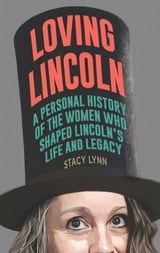
Loving Lincoln
A Personal History of the Women Who Shaped Lincoln's Life and LegacyStacy Lynn
Southern Illinois University Press, 2025
WINNER, 2026 Illinois State Historical Society Russell P. Strange Book of the Year Award!
Rediscovering Lincoln through the female gaze
Abraham Lincoln belongs to everybody. The women he interacted with helped forge the outstanding moral character of America's greatest president. This unique Abraham Lincoln biography features thirty historical and personal essays, and within them, the stories of more than ninety women, each with their own mini biographies in an appendix. Among them are Lincoln’s friends, clients, and extended family, as well as writers, artists, and—blurring the lines between history and memoir—author Stacy Lynn herself.
As a professional Lincoln scholar and editor, Lynn was often frustrated that male historians often overlooked Lincoln’s love for and friendship with women. Here, she posits a new paradigm—one that, instead of downplaying women, lifts up their interactions with Lincoln.
Lincoln understood the importance of the women in his life, and he put women’s wellbeing at the center of his personal, professional, and political ethos. He was loved by two strong pioneer mothers as well as sisters, friends, nieces, friends’ daughters, and his wife. He served women clients during his long legal career. As president, he met with women, dedicating time to hear their concerns despite the burdens of office. He replied to letters women wrote him. He believed in their capabilities and revolutionized the role of women in the workforce. After Lincoln’s death, women continued to shape his legacy. Mary Lincoln ensured his burial among friends, artist Vinnie Ream sculpted his statue in the US Capitol, and biographer Ida Tarbell provided a nuanced portrayal of his life. Harriet Monroe and Ruth Painter Randall further cemented his place in literature and history.
Lynn presents a fresh perspective on Lincoln, connecting his story to the stories of women and showcasing his kindness, sensitivity, and moral center. She explores how women shaped Lincoln’s inspirational legacy and pays homage to all the women who gave Lincoln to the world. Lynn’s unique blending of history, biography, and her own story reveals the ways in which an emotional connection to the historical figures one studies opens the door to richer human and historical understanding. By inviting readers to feel the past as well as read it, Lynn demonstrates that history matters most when it engages our minds and hearts.