Results by title
163 books match the query 'Living' and 83 start with l

Living with Earthquakes in the Pacific Northwest
Robert S. Yeats
Oregon State University Press, 1998
Living with Earthquakes in the Pacific Northwest
A Survivor's Guide, Second Edition, Revised and ExpandedRobert S. Yeats
Oregon State University Press, 2004
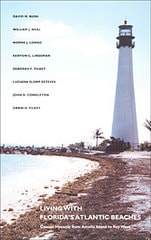
Living with Florida's Atlantic Beaches
Coastal Hazards from Amelia Island to Key WestDavid M. Bush, William J. Neal, Norma J. Longo, Kenyon C. Lindeman, Deborah F. Pilkey, Luciana Slomp Esteves, John D. Congleton, and Orrin H. Pilkey
Duke University Press, 2004
From Amelia Island just south of Georgia to Key West's southern tip, beaches are one of Florida's greatest assets. Yet these beaches are in danger: rapid structural development on a highly erodible coast make them vulnerable to some of nature's greatest storms. The same development that has been driven by the attraction of beautiful beaches and coastal amenities now threatens those very resources. In turn, coastal structures are at risk from sea-level rise, shoreline retreat, winter storms, and hurricanes. Most of the methods for reducing losses associated with storms protect property only in the short term—at a growing cost in dollars and loss of natural habitat in the long term.
Living with Florida's Atlantic Beaches is a guide to mitigating or reducing losses of property, human life, and natural resources by living with, rather than just at, the shore. This illustrated volume provides an introduction to coastal processes and geology as well as a brief history of coastal hazards and short-sighted human responses. This is the first volume in the Living with the Shore series to discuss the significant long-term impact of dredge-and-fill beach construction on living marine resources. Guidance is provided for long-term risk reduction in the form of tips on storm-resistant construction and site evaluation; maps for evaluating relative vulnerability to hazards are also included. A brief review of coastal regulations will help property owners understand and navigate the various permit requirements for developing coastal property. Living with Florida's Atlantic Beaches is an invaluable source of information for everyone from the curious beach visitor to the community planner, from the prudent property investor to the decision-making public official.
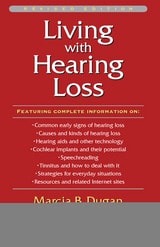
Living with Hearing Loss
Marcia B. Dugan
Gallaudet University Press, 2003
Living with Hearing Loss also suggests strategies for everyday situations and times of emergency. Chapters on speechreading, oral interpreters, assertive communication, and other tips for improving communication can enable people with hearing loss to make changes at work, home, and while traveling to cope with most situations. It can raise significantly the quality of the lives of hard of hearing people while also helping them to avoid dependency upon others.

Living with His Camera
Jane Gallop
Duke University Press, 2003
Living with His Camera is Gallop’s nuanced meditation on photography and the place it has in her private life and in her family. A reflection on family, it attempts—like Blau’s photographs themselves—to portray the realities of family life beyond the pieties of conventional representations. Living with His Camera is about some of the most pressing issues of visuality and some of the most basic issues of daily life. Gallop considers intimate photographs of moments both dramatic and routine: of herself giving birth to son Max or crying in the midst of an argument with Blau, pouring herself cereal as Max colors at the breakfast table, or naked, sweeping the floor. With her trademark candor, humor, and critical acumen, Gallop mixes personal reflection with close readings of Roland Barthes’s Camera Lucida, Susan Sontag’s On Photography, Kathryn Harrison’s novel Exposure, and Pierre Bourdieu’s Photography.
Presenting his photographs and her text, Living with His Camera is a portrait of a couple whose professional activity is part of their private lives and whose private life is viewed through their professional gazes. While most of us set aside rigorous thought when we turn to the sentimental realm of home life, Gallop and Blau look at each other not only with great affection but also with the keen focus of a sharp, critical gaze.
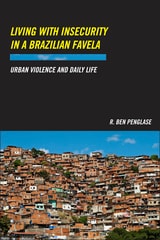
Living with Insecurity in a Brazilian Favela
Urban Violence and Daily LifePenglase, R. Ben
Rutgers University Press, 2015
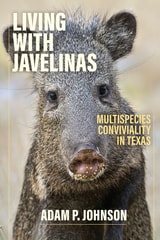
Living with Javelinas
Multispecies Conviviality in TexasAdam P. Johnson
University of Texas Press, 2026
An ethnography on how both humans and javelinas can thrive in shared space.
As human settlements expand into formerly wild lands, coexistence with wildlife is no longer optional––it’s a daily negotiation. In Living with Javelinas, Adam Johnson explores what it means to share space and adapt in a more-than-human world. Often mistaken for wild pigs, javelinas unsettle the boundaries between nuisance and neighbor. Johnson traces the other species that shape their lives––feral hogs, prickly pear, mountain cedar––and examines how folklore, perception, and memory influence human–javelina encounters. Drawing on ethnographic, ecological, and ethological research across Texas, he shows how coexistence becomes a practical, albeit often uneasy, conviviality.
In much of Texas, decades of hunting have made javelinas wary. Through extended time with rancher Roger Gray, who encounters and feeds javelinas daily, Johnson reveals how repeated contact can foster a mutually responsive relationship. Bringing anthropology into dialogue with ecology, Living with Javelinas argues that coexistence is not harmony but an ongoing adjustment. In a time of ecological strain, situated acts of accommodation point toward more ethical and sustainable ways of living together.
Living with Long Island's South Shore
Larry McCormick, William Neal, Orrin Pilkey Jr., and Orrin Pilkey, Sr.
Duke University Press, 1984
The south shore of Long Island, one of New York's greatest recreational assets, is receding at the rate of up to six feet per year. In many cases, efforts to halt this erosion actually have increased it. Buildings cone thought safely constructed back from high tidemarks today protrude far into the water.
Even more, the number of homes an facilities built too close to the sea's edge has dramatically increased, making the south shore probably less ready to withstand a major storm than at the time of the cataclysmic hurricane of 1938.
Thus, the question of what to do now to overcome and avoid these hazards takes on real urgency. Pointing to past mistakes, many Long Islanders insist that only by acting in an informed reasonable way can safe and environmentally sound development be possible for everyone.
Living with Lupus
Women and Chronic Illness in EcuadorBy Ann Miles
University of Texas Press, 2013
Once associated only with the wealthy and privileged in Latin America, lifelong illnesses are now emerging among a wider cross section of the population as an unfortunate consequence of growing urbanization and increased life expectancy. One of these diseases is the chronic autoimmune disorder lupus erythematosus. Difficult to diagnose and harder still to effectively manage, lupus challenges the very foundations of women’s lives, their real and imagined futures, and their carefully constructed gendered identities. While the illness is validated by medical science, it is poorly understood by women, their families, and their communities, which creates multiple tensions as women attempt to make sense of an unpredictable, expensive, and culturally suspect medically managed illness.
Living with Lupus vividly chronicles the struggles of Ecuadorian women as they come to terms with the experience of debilitating chronic illness. Drawing on years of ethnographic research, Ann Miles sensitively portrays the experiences and stories of Ecuadorian women who suffer with the intractable and stigmatizing disease. She uses in-depth case histories, rich in ethnographic detail, to explore not only how chronic illness can tear at the seams of women’s precarious lives, but also how meanings are reconfigured when a biomedical illness category moves across a cultural landscape. One of the few books that deals with the meanings and experiences of chronic illness in the developing world, Living with Lupus contributes to our understanding of a significant global health transition.

Living with Lynching
African American Lynching Plays, Performance, and Citizenship, 1890-1930Koritha Mitchell
University of Illinois Press, 2012
In closely analyzing the political and spiritual uses of black theatre during the Progressive Era, Mitchell demonstrates that audiences were shown affective ties in black families, a subject often erased in mainstream images of African Americans. Examining lynching plays as archival texts that embody and reflect broad networks of sociocultural activism and exchange in the lives of black Americans, Mitchell finds that audiences were rehearsing and improvising new ways of enduring in the face of widespread racial terrorism. Images of the black soldier, lawyer, mother, and wife helped readers assure each other that they were upstanding individuals who deserved the right to participate in national culture and politics. These powerful community coping efforts helped African Americans band together and withstand the nation's rejection of them as viable citizens.
The Left of Black interview with author Koritha Mitchell begins at 14:00.
An interview with Koritha Mitchell at The Ohio Channel.
Living with Moral Disagreement
The Enduring Controversy about Affirmative ActionMichele S. Moses
University of Chicago Press, 2016
Central to Moses’s analysis is the argument that we need to understand disagreements about affirmative action as inherently moral, products of conflicts between deeply held beliefs that shape differing opinions on what justice requires of education policy. As she shows, differing opinions on affirmative action result from different conceptual values, for instance, between being treated equally and being treated as an equal or between seeing race-consciousness as a pernicious political force or as a necessary variable in political equality. As Moses shows, although moral disagreements about race-conscious policies and similar issues are often seen as symptoms of dysfunctional politics, they in fact create rich opportunities for discussions about diversity that nourish democratic thought and life.
Living with Nkrumahism
Nation, State, and Pan-Africanism in GhanaJeffrey S. Ahlman
Ohio University Press, 2017
Living with Oil
Promises, Peaks, and Declines on Mexico’s Gulf CoastBy Lisa Breglia
University of Texas Press, 2013
For decades, Mexico has been one of the world’s top non-OPEC oil exporters, but since the 2004 peak and subsequent decline of the massive offshore oilfield—Cantarell—the prospects for the country have worsened. Living with Oil takes a unique look at the cultural and economic dilemmas in this locale, focusing on residents in the fishing community of Isla Aguada, Campeche, who experienced the long-term repercussions of a 1979 oil spill that at its height poured out 30,000 barrels a day, a blowout eerily similar to the 2010 Deepwater Horizon disaster.
Tracing the interplay of the global energy market and the struggle it creates between citizens, the state, and multinational corporations, this study also provides lessons in the tug-of-war between environmentalism and the lure of profits. In Mexico, oil has held status as a symbol of nationalist pride as well as a key economic asset that supports the state’s everyday operations. Capturing these dilemmas in a country now facing a national security crisis at the hands of violent drug traffickers, cultural anthropologist Lisa Breglia covers issues of sovereignty, security, and stability in Mexico’s post-peak future.
The first in-depth account of the local effects of peak oil in Mexico, emphasizing the everyday lives and livelihoods of coastal Campeche residents, Living with Oil demonstrates important aspects of the political economy of energy while showing vivid links between the global energy marketplace and the individual lives it affects.

Living with Polio
The Epidemic and Its SurvivorsDaniel J. Wilson
University of Chicago Press, 2005
Living with Polio is the first book to focus primarily on the personal stories of the men and women who had acute polio and lived with its crippling consequences. Writing from personal experience, polio survivor Daniel J. Wilson shapes this impassioned book with the testimonials of more than one hundred polio victims, focusing on the years between 1930 and 1960. He traces the entire life experience of the survivors—from the alarming diagnosis all the way to the recent development of post-polio syndrome, a condition in which the symptoms of the disease may return two or three decades after they originally surfaced.
Living with Polio follows every physical and emotional stage of the disease: the loneliness of long separations from family and friends suffered by hospitalized victims; the rehabilitation facilitieswhere survivors spent a full year or more painfully trying to regain the use of their paralyzed muscles; and then the return home, where they were faced with readjusting to school or work with the aid of braces, crutches, or wheelchairs while their families faced the difficult responsibilities of caring for and supporting a child or spouse with a disability.
Poignant and gripping, Living with Polio is a compelling history of the enduring physical and psychological experience of polio straight from the rarely heard voices of its survivors.

Living with Pottery
Ethnoarchaeology among the Gamo of Southwest EthiopiaArthur, John W
University of Utah Press, 2006
The southwestern region of Ethiopia is one of the few places in the world where locally made pottery is still the dominant choice for everyday domestic use. The Gamo people continue to produce and use pottery for transporting water, cooking, storing, and serving. Ethnoarchaeology undertaken in a society where people still use low-fired ceramics in daily life provides a powerful framework for archaeological inferences, especially since little behavioral information exists concerning the relationship between status, wealth, and household pottery.
Based on John Arthur’s extensive fieldwork, this study sheds light on some of the puzzles common to archaeology in any region. It also helps decipher evidence of inter- and intravillage social and economic organization and offers insight on markers for pottery-producing and nonproducing villages and socioeconomic variability.
Living with Stories
Telling, Re-telling, and RememberingSchneider, William
Utah State University Press, 2008

Living with Thunder
Exploring the Geologic Past, Present, and Future of the Pacific NorthwestEllen Morris Bishop
Oregon State University Press, 2025
“In geology, the present is the key to the past. And the past is also a touchstone of the future. We would do well to heed the stories the stones have to tell.” —from the Introduction
Updated throughout, this second edition of Living with Thunder provides readers with a robust introduction to the geological history of the Pacific Northwest—a landscape born of thunderous volcanic eruptions, earthquakes, and island-continent collisions. By combining engaging science writing with stunning color photographs, Ellen Morris Bishop presents an up-to-date geologic survey of Washington, Oregon, Northern California, and western Idaho. Whether examining new findings about the Yellowstone hotspot's rampage across Oregon, an updated history of Cascadia earthquakes, Mount Hood's 1793-1795 eruptions, the arrival of Indigenous peoples at least 18,000 years ago, or how Pacific Northwest eruptions and tectonics influenced past climate changes, Bishop’s gift as a scientist and storyteller engages general readers, geological nonspecialists, and students of the Earth sciences, alike.
Highlighting the Northwest’s exceptional record of past climate changes and the implications for our future, the book outlines new understandings about the climatic consequences of major geologic events and their dramatic influences on ecosystems and ancient life. It also examines the confluence of scientific findings with Native American experience, stories, and traditional knowledge of earthquakes, eruptions, and more. With new illustrations, enhanced maps, the latest geologic timescale, and an extensive list of updated references and recommended readings, Living with Thunder offers a key to understanding the Northwest’s unique, long-term geologic heritage by giving voice to the rocks and their histories.
Living with Whales
Documents and Oral Histories of Native New England Whaling HistoryNancy Shoemaker
University of Massachusetts Press, 2014
Native Americans along the coasts of southern New England and Long Island have had close ties to whales for thousands of years. They made a living from the sea and saw in the world's largest beings special power and meaning. After English settlement in the early seventeenth century, the region's natural bounty of these creatures drew Natives and colonists alike to develop whale hunting on an industrial scale. By the nineteenth century, New England dominated the world in whaling, and Native Americans contributed substantially to whaleship crews.
In Living with Whales, Nancy Shoemaker reconstructs the history of Native whaling in New England through a diversity of primary documents: explorers' descriptions of their “first encounters,” indentures, deeds, merchants' accounts, Indian overseer reports, crew lists, memoirs, obituaries, and excerpts from journals kept by Native whalemen on their voyages. These materials span the centuries-long rise and fall of the American whalefishery and give insight into the far-reaching impact of whaling on Native North American communities. One chapter even follows a Pequot Native to New Zealand, where many of his Maori descendants still reside today.
Whaling has left behind a legacy of ambivalent emotions. In oral histories included in this volume, descendants of Wampanoag and Shinnecock whalemen reflect on how whales, whaling, and the ocean were vital to the survival of coastal Native communities in the Northeast, but at great cost to human life, family life, whales, and the ocean environment.
Living with the Alabama/Mississippi Shore
Wayne F. Canis, William F. Neal, Orrin H. Pilkey Jr. and Orrin H. Pilkey Sr.
Duke University Press, 1985
Yet this same serene shoreline has been ravaged by seven major hurricanes during this century. Several years more than one fearful storm has come hurtling in during a single "season." Loss of life an property damage have been devastating. And newcomers seem almost unaware of the potential dangers.
The authors of this book offer a vivid, historical overview for understanding the environment of the Alabama-Mississippi shore. They describe the risks faced by new residents, and they point the way toward safe and sane coastal development.

Living with the Chesapeake Bay and Virginia's Ocean Shores
Larry G. Ward, Peter S. Rosen, William J. Neal. Orrin H. Pilkey Jr., Orrin H. Pilkey Sr., Gary L. Anderson, and Stephen J. Howie
Duke University Press, 1989
Living with the Coast of Alaska
Owen Mason, William Neal, and Orrin H. Pilkey
Duke University Press, 1997
Facing two oceans and three seas, Alaska's coastline stretches through bays, fjords, and around islands for 45,000 miles. Living with the Coast of Alaska, a new volume in the Living with the Shore series, is a user's guide for both present and future inhabitants of Alaska. Providing individual property owners in all regions of the state with the fundamentals of hazard recognition and mitigation strategy, the authors discuss the geological history of Alaska and its relation to the area's cultural history and present customized hazard risk assessments for coastal communities.
Describing the dynamic nature of natural seismic events and coastal processes in Alaska, the authors emphasize the multiplicity of potential effects that result from a unique combination of geology, climate, and the sea. Earthquakes, volcanic eruptions, tsunami waves, avalanches, glacial advances, storm surges, flash flooding, wind channeling, and shoreline erosion combined with human-induced hazards such as oil spills, fire, and beach and offshore mining accidents make living with danger a way of life in Alaska. The authors provide information on federal and state laws and programs regarding natural disasters and coastal zone management as well as practical suggestions for the design and construction of buildings. For private, commercial, and public developments, this book offers a manual to help Alaskans make informed decisions to minimize, if not avoid, damage and danger.
Living with the Coast of Maine
Joseph T. Kelley and Alice R. Kelley
Duke University Press, 1989
Maine is known for its rockbound coast and pristine shoreline. Yet there is more to this shore than rocky cliffs. This book describes the origin of the more common "soft coast" of eroding bluffs, sand beaches, and salt marshes. A central theme is the formation of the present shoreline during the current ongoing rise in sea level and the ways in which coastal residents can best cope with the changes to come. Although it is not widely known, Maine is experiencing a rapid, uneven drowning of its shore at the same time that coastal development is at an all-time high. The authors explain how the shoreline is changing and provide a series of highly detailed maps that show the relative safety of particular locations on the coast.
Specific guidelines for recognizing various safe and unsafe coastal settings are presented, as are recommendations for sound construction techniques in hazardous coastal areas. Photographs and drawings illustrate the danger of living too near the shoreline, and an up-to-date review of Maine's regulations governing coastal construction is simply and readably described. A bibliography of important coastal literature is also included, as well as a guide to federal, state, and local sources of information.
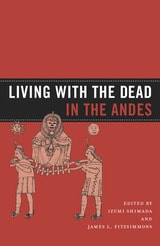
Living with the Dead in the Andes
Edited by Izumi Shimada and James L. Fitzsimmons
University of Arizona Press, 2015
Living with the Dead in the Andes considers recent research by archaeologists, bioarchaeologists, ethnographers, and ethnohistorians whose work reveals the diversity and complexity of the dead-living interaction. The book’s contributors reap the salient results of this new research to illuminate various conceptions and treatments of the dead: “bad” and “good” dead, mummified and preserved, the body represented by art or effigies, and personhood in material and symbolic terms.
Death does not end or erase the emotional bonds established in life, and a comprehensive understanding of death requires consideration of the corpse, the soul, and the mourners. Lingering sentiment and memory of the departed seems as universal as death itself, yet often it is economic, social, and political agendas that influence the interactions between the dead and the living.
Nine chapters written by scholars from diverse countries and fields offer data-rich case studies and innovative methodologies and approaches. Chapters include discussions on the archaeology of memory, archaeothanatology (analysis of the transformation of the entire corpse and associated remains), a historical analysis of postmortem ritual activities, and ethnosemantic-iconographic analysis of the living-dead relationship. This insightful book focuses on the broader concerns of life and death.
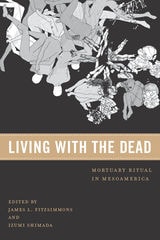
Living with the Dead
Mortuary Ritual in MesoamericaEdited by James L. Fitzsimmons and Izumi Shimada
University of Arizona Press, 2011
This book results from a symposium organized by the editors for an annual meeting of the Society for American Archaeology. The contributors employ historical sources, comparative art history, anthropology, and sociology, as well as archaeology and anthropology, to uncover surprising commonalities across cultures, including the manner in which the dead were politicized, the perceptions of reciprocity between the dead and the living, and the ways that the dead were used by the living to create, define, and renew social as well as family ties. In exploring larger issues of a “good death” and the transition from death to ancestry, the contributors demonstrate that across Mesoamerica death was almost never accompanied by the extinction of a persona; it was more often the beginning of a social process than a conclusion.
Living with the East Florida Shore
Orrin H. Pilkey, Dinesh Sharma, Harold Wanless, Larry Doyle, Orrin H. Pilkey Sr., William J. Neal, and Barbara Gruver
Duke University Press, 1984
More than one transplanted Floridian has paid $150,000 for a beautiful condominium with a sea view only to learn that, to keep the building from becoming part of the view, considerable additional money must be spent to build and repair seawalls or to pump up new beaches by dredging sand from offshore.
Most of Florida's beachfront property lies on narrow strips of sand called barrier islands, which are low in elevation and subject to flooding during storms and hurricanes. Some of the construction is poor, adding to the problems facing homeowners, most whom came from other parts of the country with little awareness of the hazards of beaches. In Living with the East Florida Shore, Orrin H. Pilkey, Jr., of Duke University, along with his co-authors, has described the varied problems that confront the east shore of Florida today.
Living with the Georgia Shore
Tonya D. Clayton, Lewis A. Taylor Jr., William J. Cleary, Paul Hosier, Peter H.F. Graber, and Orrin H. Pilkey Sr.
Duke University Press, 1992
Recounting the human and natural history of the islands, the authors look in particular at the phenomenon of coastal erosion and the implications of various responses to this process. In Georgia, as elsewhere in the United States, the future of the shore is in doubt as recreational and residential development demands increase. This book provides guidelines for living with the shore, as opposed to simply living on it. The former requires planning and a wise choice of property or house site. The latter ignores the potential hazards unique to coastal life and may make inadequate allowance for the dramatic changes that can occur on any sandy ocean shore.
Living with the Georgia Shore includes an introduction to each of the Georgia isles, an overview of federal and state coastal land-use regulations, pointers on buying and building at the shore, a hurricane preparation checklist, a history of recent hurricanes in Georgia, an extensive annotated bibliography, and a guide to government agencies and private groups involved in issues of coastal development.
Living with the Lake Erie Shore
Charles H. Carter, William J. Neal, William Haras, Orrin H. Pilkey
Duke University Press, 0
Living with the Lake Erie Shore
Charles H. Carter, William J. Neal, William Haras, Orrin H. Pilkey
Duke University Press, 0
Living with the Louisiana Shore
Joseph T. Kelley, Alice R. Kelley, Orrin Pilkey Sr., and Albert Clark
Duke University Press, 1984
But the most striking feature of Louisiana's coastline is rapidly accelerating change, which means (1) some coastal parishes may literally disappear by the year 2000; (2) the loss of marshland will damage the prolific seafood industry; (3) a retreating coastline could cost the state hundreds of millions of dollars in tax revenues from offshore oil facilities; (4) present and potential shoreline residents will face many new problems and possibilities.
Living with the New Jersey Shore
Karl Nordstrom, Paul A. Garés, Norbert P. Psuty, Orrin H. Pilkey Jr., William Neal, and Orrin H. Pilkey Sr.
Duke University Press, 1986
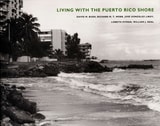
Living with the Puerto Rico Shore
David M. Bush, Richard M. T. Webb, José González Liboy, Lisbeth Hyman, and William J. Neal
Duke University Press, 1995
The book provides detailed descriptions of the entire shoreline, noting the specific coastal hazards of each coastal reach. These hazards include coastal erosion, storm surge flooding, and potential damage from earthquakes. Where high-density development or significant roads and utilities are particularly at risk, these are also noted. The effects that sand mining, seawalls, jetties, and other attempts at coastal engineering have had on the island are examined. Finally, the authors discuss historical and legal aspects of coastal planning in Puerto Rico, presenting guidelines for selecting building sites.
Of interest to all concerned with protecting our shores and beaches and useful to the coastal planner and manager, Living With the Puerto Rico Shore contains an extensive bibliography and a list of agencies involved in coastal issues.

Living with the Shore of Puget Sound and the Georgia Strait
Thomas A. Terich
Duke University Press, 1987
Living with the South Carolina Coast
Gered Lennon, William J. Neal, David Bush, Orrin H. Pilkey, Matthew Stutz and Jane Bullock
Duke University Press, 1996
Powerful storms have always played a major role in coastal processes in South Carolina, and the effects of Hurricane Hugo, the storm that ravaged the area in 1989, are thoroughly discussed. A series of Coastal Risk Maps are also included. These maps, graphically depicting areas of predictable erosion and storm damage potential, have been provided for every developed beach or barrier island in the state. Beyond the threat of hurricanes and coastal erosion, South Carolina, home of the Charleston Seismic Region, is also at risk for earthquakes. An entire chapter is devoted to earthquake-resistant construction, and the great Charleston earthquake of 1886 is examined in detail. Fires and floods are discussed. The Beachfront Management Act of 1990—the first state legislation of its kind that provides a system for dealing with migrating shorelines while preserving beaches for future generations—is also explained.
Covering everything from a history of the development of South Carolina's coast to recommendations on how to select an island homesite, this book will be a resource to professional coastal planners and managers, residents, prospective homeowners, and naturalists.