Results by title
4743 books match the query 'Religion' and 136 start with l
Letters, 151-180
Owen J. Peter Damian
Catholic University of America Press, 2005
Letters, 31-60
Peter Damian
Catholic University of America Press, 1990
Letters, 61-90
Peter Damian
Catholic University of America Press, 1992
Letters, Volume 1
John Barsanuphius and John
Catholic University of America Press, 2006
Letters, Volume 1 (1–185)
Saint Basil
Catholic University of America Press, 1951
Letters, Volume 1 (1–82)
Saint Augustine
Catholic University of America Press, 1951
Letters, Volume 2
John Barsanuphius and John
Catholic University of America Press, 2006
Letters, Volume 2 (186–368)
Saint Basil
Catholic University of America Press, 1955
Letters, Volume 2 (83–130)
Saint Augustine
Catholic University of America Press, 1953
Letters, Volume 3 (131-164)
Saint Augustine
Catholic University of America Press, 1953
Letters, Volume 4 (165–203)
Saint Augustine
Catholic University of America Press, 1955
Letters, Volume 5 (204–270)
Saint Augustine
Catholic University of America Press, 1956
Letters, Volume 6 (1*–29*)
Saint Augustine
Catholic University of America Press, 1989
Liars, Brutes, and Gluttons
A Relevance-Theory Solution for Titus 1:12Isaiah Allen
SBL Press, 2025
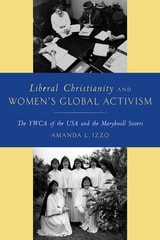
Liberal Christianity and Women's Global Activism
The YWCA of the USA and the Maryknoll SistersAmanda L. Izzo
Rutgers University Press, 2018
Focusing on the histories of two highly influential groups, the Young Women’s Christian Association of the USA, an interdenominational Protestant organization, and the Maryknoll Sisters, a Roman Catholic religious order, Izzo offers new perspectives on the contributions of these women to transnational social movements, women’s history, and religious studies, as she traces the connections between turn-of-the-century Christian women’s reform culture and liberal and left-wing religious social movements of the 1960s and 1970s. Izzo suggests that shared ethical, theological, and institutional underpinnings can transcend denominational divides, and that strategies for social change often associated with secular feminism have ties to spiritually inspired social movements.
Liberal Suppression
Section 501(c)(3) and the Taxation of SpeechPhilip Hamburger
University of Chicago Press, 2018
Tracing the history of American liberalism, including theological liberalism and its expression in nativism, Hamburger shows the centrality of turbulent popular anxieties about the Catholic Church and other potentially orthodox institutions. He argues persuasively that such theopolitical fears about the political speech of churches and related organizations underlay the adoption, in 1934 and 1954, of section 501(c)(3)’s speech limits. He thereby shows that the speech restrictions have been part of a broad majority assault on minority rights and that they are grossly unconstitutional.
Along the way, Hamburger explores the role of the Ku Klux Klan and other nativist organizations, the development of American theology, and the cultural foundations of liberal “democratic” political theory. He also traces important legal developments such as the specialization of speech rights and the use of law to homogenize beliefs. Ultimately, he examines a wide range of contemporary speech restrictions and the growing shallowness of public life in America.
His account is an unflinching look at the complex history of American liberalism and at the implications for speech, the diversity of belief, and the nation’s future.
Liberals, Conservatives, and Mavericks
On Christian Churches of Eastern Europe since 1980. A Festschrift for Sabrina P. RametFrank Cibulka
Central European University Press, 2025
No Church is monolithic—this is the preliminary premise of this volume on the public place of religion in a representative number of post-communist countries. The studies confirm that within any religious organization we can expect to find fissures, factions, theological or ideological quarrels, and perhaps even competing interest groups, such as missionary workers, regular clergy versus secular clergy, and sometimes even competing ecclesiastical hierarchies. The main focus of the book rests on the divisions arising within select Christian Churches, as they confront the processes of secularization and atheization. The coverage area includes Russia and the Ukraine, East-Central Europe and South-Eastern Europe. Some chapters focus on individual clergy who challenge the mainstream of their given Church either from a more liberal or from a more conservative perspective, while others deal with the divisive forces impacting the religious organizations.
This festschrift to honor Sabrina Ramet’s seminal contribution to the study of religion in the politics of the communist and post-communist world, brings together several generations of scholars from a variety of countries, both those well established in their fields of study as well as young promising academics.
Liberating Our Imaginations
The Bible and Minoritized LiteratureDavid Janzen
SBL Press, 2025
Liberation Theology
Phillip Berryman
Temple University Press, 1987

Liberation Theology and Praxis in Contemporary Latin America
As It Was in the Beginning?Edited by Pablo Bradbury and Niall H.D. Geraghty
University of London Press, 2025
This highly interdisciplinary collection brings together diverse and complementary approaches from history, theology, cultural studies, architecture, sociology, and anthropology to reevaluate the legacy of liberation theology in Latin America.
Liberation theology was born in the 1960s at a time of Church renewal and socio-economic ferment, as many sought more radical solutions in the context of the exhaustion of developmentalist projects and the institutionalized violence of capitalism. The book’s central focus on the lived experiences and embodied practices of those engaged in social action in the region challenges the narrative that suggests that liberation theology had reached its decline by the end of the 1970s. It demonstrates that liberationist Christianity was at once more diverse and internally conflicted, more widely resonant outside ecclesial confines, and more interconnected over time than often allowed.
The chapters investigate a range of topics: the ecclesiology of a revolutionary movement of Argentine priests in the 1960s and ́1970s, the engagement of liberation theology with Participatory Action Research and its influence on architectural approaches and urbanism, 1980s feminist liberation theology, encounters with Western human rights at a time of Cold War repression and exile, and ecofeminist political theology in contemporary Latin America. Pulling these threads together, Liberation Theology and Praxis in Contemporary Latin America invites us to reconsider how we understand liberation theology’s history as well as its reach into the present day.
Liberty and Law
Brian Tierney
Catholic University of America Press, 2014
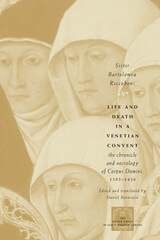
Life and Death in a Venetian Convent
The Chronicle and Necrology of Corpus Domini, 1395-1436Sister Bartolomea Riccoboni
University of Chicago Press, 2000
While the chronicle recounts the history of the nuns' collective life, the necrology provides highly individualized biographies of nearly fifty women who died in the convent between 1395 and 1436. We follow the fascinating stories that led these women, from adolescent girls to elderly widows, to join the convent; and we learn of their cultural backgrounds and intellectual accomplishments, their ascetic practices and mystical visions, their charity and devotion to each other and their fortitude in the face of illness and death.
The personal and social meaning of religious devotion comes alive in these texts, the first of their kind to be translated into English.
Life and Works
Saint Gregory Thaumaturgus
Catholic University of America Press, 1998
Life in Kings
Reshaping the Royal Story in the Hebrew BibleA. Graeme Auld
SBL Press, 2017
Follow the words with an expert
Building on a lifetime of research and writing, A. Graeme Auld examines passages in Samuel, Kings, Chronicles, and Isaiah that recount the same stories or contain similar vocabulary. He advances his argument that Samuel and Kings were organic developments from a deftly crafted, prophetically interpreted, shared narrative he calls the Book of Two Houses—a work focused on the house of David and the house of Yahweh in Jerusalem. At the end of the study he reconstructs the synoptic material within Kings in Hebrew with an English translation.
Features
- aAcritique of the dominant approach to the narrative books in the Hebrew Bible
- A solid challenge to the widely accepted relationship between Deuteronomy, cultic centralization, and King Josiah’s reform
- Key evidence in the heated contemporary debate over the historical development of Biblical Hebrew
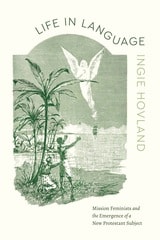
Life in Language
Mission Feminists and the Emergence of a New Protestant SubjectIngie Hovland
University of Chicago Press, 2025
The language of the Bible is a powerful lens through which many Protestants understand themselves and their world, and its prohibitions on women’s speech pose complicated challenges to women. Nevertheless, women frequently serve as vocal leaders in Protestant organizations, including the early twentieth-century Norwegian Mission Society. In Life in Language, Ingie Hovland offers a unique biography of Henny Dons, a leader of the society’s so-called mission feminists, that grapples with ways Protestant women crafted innovative, expansive self-understandings through Christian language. More than their male peers, the mission feminists turned to religious speech to express material, as well as heavenly, desires for paid work, voting rights, and more, and Hovland argues that these experiments in women speaking, reading, writing, and listening paved the way for a new way of being in the world.
Life of Aesop the Philosopher
Grammatiki A. Karla
SBL Press, 2024
The Life of Aesop the Philosopher, an anonymous Greek literary work, presents one version of the novelistic biography of Aesop, which dates to the fourth to fifth century CE. In this volume, Grammatiki A. Karla offers an extended introduction to the Life of Aesop in general, the history of the textual tradition, and the MORN manuscript family and its relationship to other versions and papyrus fragments. She then presents a new edition of the late antique version (MORN) alongside David Konstan’s English translation. A commentary addresses editorial choices and focuses on words and phrases that are of interest for the history of the Greek language.
Lift High the Cross
Where White Supremacy and the Christian Right ConvergeAnn Burlein
Duke University Press, 2002
Arguing that today’s right engenders its popularity not by overt bigotry or hatred but by focusing on people’s hopes for their children, Burlein finds a politics of grief at the heart of such rhetoric. While demonstrating how religious symbols, rituals, texts, and practices shape people’s memories and their investment in society, she shows how Peters and Dobson each construct countermemories for their followers that reframe their histories and identities—as well as their worlds—by reversing mainstream perspectives in ways that counter existing power relations. By employing the techniques of niche marketing, the politics of scandal, and the transformation of political issues into “gut issues” and by remasculinizing the body politic, Burlein shows, such groups are able to move people into their realm of influence without requiring them to agree with all their philosophical, doctrinal, or political positions.
Lift High the Cross will appeal to students and scholars of religion, American cultural studies, women’s studies, sociology, and gay and lesbian studies, as well as to non-specialists interested in American politics and, specifically, the right.
Light and Glory
The Transfiguration of Christ in Early Franciscan and Dominican TheologyAaron Canty
Catholic University of America Press, 2011
Light for the Nations
The Scriptures on the Universal Mission of Israel and the ChurchLuis Sanchez-Navarro
Catholic University of America Press, 2024
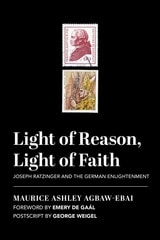
Light of Reason, Light of Faith
Joseph Ratzinger and the German EnlightenmentMaurice Ashley Agbaw-Ebai
St. Augustine's Press, 2021
Ratzinger’s extraordinary and sympathetic understanding of the sources of contemporary secularism equipped him to appreciate the gains of the Enlightenment, while still being a fierce critic of the losses humanity has suffered when reason falsely excludes faith. Fr. Agbaw-Ebai’s account reveals Ratzinger, in relation to his various interlocutors, to be the truly “enlightened” one because he demonstrates a truly balanced understanding of the human mind. To be truly rational one must be able to hold to faith and reason both, reason informed by faith in Jesus Christ.
A particular merit of this book is Agbaw-Ebai’s presentation of Ratzinger’s treatment of the German Enlightenment’s greatest contributors: Kant, Nietzche, Hegel and Habermas, among others. In the postscript George Weigel characterizes what this study accomplishes in the larger framework of scholarship. “[Ratzinger’s] position remains too often misunderstood, and sometimes deliberately misinterpreted, throughout the whole Church. And to misunderstand, or misinterpret, Ratzinger is to misunderstand or misinterpret both the modern history of theology and the Second Vatican Council.” Agbaw-Ebai masterfully positions Ratzinger correctly in the history of ideas, and exhibits why Ratzinger will be remembered as one of its main players. Pure rationalists and true believers are equally indebted to him.
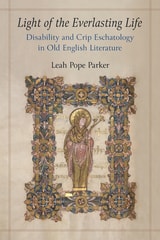
Light of the Everlasting Life
Disability and Crip Eschatology in Old English LiteratureLeah Pope Parker
University of Michigan Press, 2025
From disability metaphors to narratives structured around bodies presented as aberrant, early medieval English thoughtworlds conveyed the promise of resurrection and the hope of salvation through crip and disabled bodies. Light of the Everlasting Life argues that early medieval Christian eschatology, as manifested in Old English literary texts, was a crip eschatology: a theology of the afterlife that relied upon disabled bodies and concepts related to disability in order to convey promises of resurrection and salvation. In addition to demonstrating how literature manifested theological approaches to the afterlife, Leah Pope Parker articulates the ways of thinking about bodies and disability that were available to ordinary early medieval people, many of whom experienced their bodies in ways that resonate with what we call disability today, but who rarely appear in the historical record.
By analyzing Old English texts, including Alfredian translations, Ælfric’s saints’ lives, and poetry from the Exeter and Vercelli Books, Parker introduces novel ways of characterizing disability’s effects in literature. “Spiritual prosthesis” reveals rhetorical, narrative, and theological reliance upon disability to convey the promise of a Christian afterlife. “Systems of aberrance” emerge as a result, in which bodies marked as deviant—including disabled, monstrous, heroic, saintly, and dead bodies—form a network of embodiments that reinforce the narratives they inhabit and that of Christian salvation history. Locating crip eschatology in early medieval literature, Light of the Everlasting Life rewrites standard histories of disability, of the body, and of medieval Christian eschatology.
Lights in the Forest
Rabbis Respond to Twelve Essential Jewish QuestionsRabbi Paul Citrin
Central Conference of American Rabbis, 2014
Perfect for self-study, group study, adult learning, and conversion, the collection strives to encourage further study and ongoing discussion through presenting Judaism's intellectual and spiritual tools as means for leading a life full of purpose and commitment.
Questions addressed by the anthology can found below:
-Questions about God
-Questions about Our Humanity
-Questions about the Jewish People
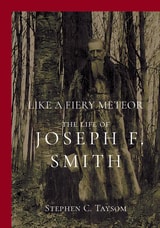
Like a Fiery Meteor
The Life of Joseph F. SmithStephen C. Taysom
University of Utah Press, 2023
Joseph F. Smith was born in 1838 to Hyrum Smith and Mary Fielding Smith. Six years later both his father and his uncle, Joseph Smith Jr., the founding prophet of the Church of Jesus Christ of Latter-day Saints, were murdered in Carthage, Illinois. The trauma of that event remained with Joseph F. for the rest of his life, affecting his personal behavior and public tenure in the highest tiers of the LDS Church, including the post of president from 1901 until his death in 1918. Joseph F. Smith laid the theological groundwork for modern Mormonism, especially the emphasis on temple work. This contribution was capped off by his “revelation on the redemption of the dead,” a prophetic glimpse into the afterlife. Taysom’s book traces the roots of this vision, which reach far more deeply into Joseph F. Smith’s life than other scholars have previously identified.
In this first cradle-to-grave biography of Joseph F. Smith, Stephen C. Taysom uses previously unavailable primary source materials to craft a deeply detailed, insightful story of a prominent member of a governing and influential Mormon family. Importantly, Taysom situates Smith within the historical currents of American westward expansion, rapid industrialization, settler colonialism, regional and national politics, changing ideas about family and masculinity, and more. Though some writers tend to view the LDS Church and its leaders through a lens of political and religious separatism, Taysom does the opposite, pushing Joseph F. Smith and the LDS Church closer to the centers of power in Washington, DC, and elsewhere.
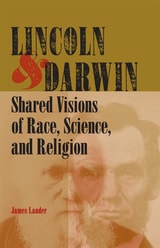
Lincoln and Darwin
Shared Visions of Race, Science, and ReligionJames Lander
Southern Illinois University Press, 2010
Born on the same day in 1809, Abraham Lincoln and Charles Darwin were true contemporaries. Though shaped by vastly different environments, they had remarkably similar values, purposes, and approaches. In this exciting new study, James Lander places these two iconic men side by side and reveals the parallel views they shared of man and God.
While Lincoln is renowned for his oratorical prowess and for the Emancipation Proclamation, as well as many other accomplishments, his scientific and technological interests are not widely recognized; for example, many Americans do not know that Lincoln is the only U.S. president to obtain a patent. Darwin, on the other hand, is celebrated for his scientific achievements but not for his passionate commitment to the abolition of slavery, which in part drove his research in evolution. Both men took great pains to avoid causing unnecessary offense despite having abandoned traditional Christianity. Each had one main adversary who endorsed scientific racism: Lincoln had Stephen A. Douglas, and Darwin had Louis Agassiz.
With graceful and sophisticated writing, Lander expands on these commonalities and uncovers more shared connections to people, politics, and events. He traces how these two intellectual giants came to hold remarkably similar perspectives on the evils of racism, the value of science, and the uncertainties of conventional religion.
Separated by an ocean but joined in their ideas, Lincoln and Darwin acted as trailblazers, leading their societies toward greater freedom of thought and a greater acceptance of human equality. This fascinating biographical examination brings the mid-nineteenth-century discourse about race, science, and humanitarian sensibility to the forefront using the mutual interests and pursuits of these two historic figures.
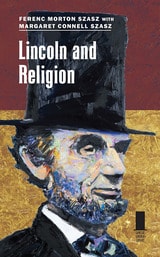
Lincoln and Religion
Ferenc Morton Szasz with Margaret Connell Szasz
Southern Illinois University Press, 2014
Abraham Lincoln’s faith has commanded more broad-based attention than that of any other American president. Although he never joined a denomination, Baptists, Presbyterians, Quakers, Episcopalians, Disciples of Christ, Spiritualists, Jews, and even atheists claim the sixteenth president as one of their own. In this concise volume, Ferenc Morton Szasz and Margaret Connell Szasz offer both an accessible survey of the development of Lincoln’s religious views and an informative launch pad for further academic inquiry. A singular key to Lincoln’s personality, especially during the presidential years, rests with his evolving faith perspective.
After surveying Lincoln’s early childhood as a Hard-Shell Baptist in Kentucky and Indiana, the authors chronicle his move from skepticism to participation in Episcopal circles during his years in Springfield, and, finally, after the death of son Eddie, to Presbyterianism. They explore Lincoln’s relationship with the nation’s faiths as president, the impact of his son Willie’s death, his adaptation of Puritan covenant theory to a nation at war, the role of prayer during his presidency, and changes in his faith as reflected in the Emancipation Proclamation and his state papers and addresses. Finally, they evaluate Lincoln’s legacy as the central figure of America’s civil religion, an image sharpened by his prominent position in American currency.
A closing essay by Richard W. Etulain traces the historiographical currents in the literature on Lincoln and religion, and the volume concludes with a compilation of Lincoln’s own words about religion.
In assessing the enigma of Lincoln’s Christianity, the authors argue that despite his lack of church membership, Lincoln lived his life through a Christian ethical framework. His years as president, dominated by the Civil War and personal loss, led Lincoln to move into a world beholden to Providence.
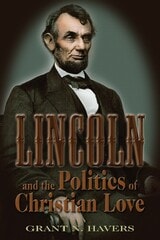
Lincoln and the Politics of Christian Love
Grant N. Havers
University of Missouri Press, 2009
In this provocative book, Grant Havers argues that charity is a central tenet of what Lincoln once called America’s “political religion.” He explores the implications of making Christian love the highest moral standard for American democracy, showing how Lincoln’s legacy demands that a true democracy be charitable toward all—and that only a people who lived according to such ideals could succeed in building democracy as Lincoln understood it.
Havers argues that it is simplistic to conflate Lincoln’s invocation of “with charity for all” with his abiding support for the ideal of human equality. The ethic of charity in his view also brought a uniquely Christian realism to the universalism of democracy. He also describes how, since World War I, intellectuals and political leaders have denied that there exists a necessary relation between democracy and Christian love, proposing that democracy is sufficiently ethical without reliance on a specific religious tradition. Today’s neoconservatives and liberals instead posit a universal yearning for democracy that requires no foundation in the ethic of charity. Havers shows that this democratic universalism, espoused by those who believe a “chosen people” should uphold the natural rights of humanity, is alien to the sober thought of both the founders and Lincoln.
This carefully argued work defends Lincoln’s understanding of charity as essential to democracy while emphasizing the difficulty of fusing this ethic with the desire to spread democracy to people who do not share America’s Christian heritage. In considering the prospect of America’s leaders rediscovering a moral foreign policy based on charity rather than the costly idolization of democracy, Lincoln and the Politics of Christian Love makes a timely contribution to the wider debate over both the meaning of religion in American politics and the mission of America in the world—and opens a new window on Lincoln’s lasting legacy.
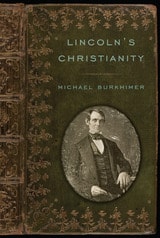
Lincoln's Christianity
Michael Burkhimer
Westholme Publishing, 2007
After listening to Abraham Lincoln’s second inaugural address, many in the audience were stunned. Instead of a positive message about the coming Union victory, the president implicated the entire country in the faults and responsibility for slavery. Using Old Testament references, Lincoln explained that God was punishing all Americans for their role in the calamity with a bloody civil war.
These were surprising words from a man who belonged to no church, did not regularly attend services, and was known to have publicly and privately questioned some of Christianity’s core beliefs. But Lincoln’s life was one with supreme sadness—the death of his first fiancee, the subsequent loss of two of his sons—and these events, along with the chance encounter with a book in Mary Todd’s father’s library, The Christian’s Defense, are all part of the key to understanding Lincoln’s Christianity. Biblical quotations soon entered his speeches—a point noted by Stephen Douglas in their debates—but it is unclear whether Lincoln’s use of scripture was a signal that American politicians should openly embrace religion in their public lives, or a rhetorical tool to manipulate his audience, or a result of a personal religious transformation. After his death both secular and religious biographers claimed Lincoln as one of their own, touching off a controversy that remains today.
In Lincoln’s Christianity, Michael Burkhimer examines the entire history of the president’s interaction with religion—accounts from those who knew him, his own letters and writings, the books he read—to reveal a man who did not believe in orthodox Christian precepts (and might have had a hard time getting elected today) yet, by his example, was a person and president who most truly embodied Christian teachings.
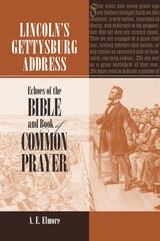
Lincoln's Gettysburg Address
Echoes of the Bible and Book of Common PrayerA. E. Elmore
Southern Illinois University Press, 2009
While it has long been determined that Abraham Lincoln’s writings were influenced by the King James Bible, until now no full-length study has shown the precise ways in which the Gettysburg Address uses its specific language. Refuting the view that the address was crafted with traditional classical references, this revealing investigation provides a new way to think about the speech and the man who wrote it. A. E. Elmore offers chapter and verse evidence from the Bible as well as specific examples from the Episcopal Book of Common Prayer to illustrate how Lincoln borrowed from these sources to imbue his speech with meanings that would resonate with his listeners. He cites every significant word and phrase—conceived, brought forth, struggled, remaining, consecrate, dedicate, hallow, devotion, new birth, to name a few—borrowed by Lincoln from these two religious texts for use in his dedication of the Gettysburg National Cemetery.
Lincoln’s Gettysburg Address focuses on a number of overlooked themes and ideas, such as the importance of literary allusion and the general public’s knowledge of the Bible in the age of Lincoln. It provides fresh answers to old questions and poses new questions: Was Lincoln a common thief who made use of words from previously published materials as well as from works by his contemporaries? Was he a genius whose literary and political skills were unmatched? No one who reads this highly engaging study will ever think about Lincoln or the Gettysburg Address the same way again.
Line upon Line
Essays on Mormon DoctrineGary J. Bergera
Signature Books, 1989
Among the contributors are Thomas G. Alexander, Peter C. Appleby, George Boyd, David John Buerger, Van Hale, Boyd Kirkland, Blake Ostler, Stephen L Richards, Kent E. Robson, Thaddeus E. Shoemaker, Vern Swanson, Dan Vogel, and Linda P. Wilcox.
For anyone who has assumed that Mormon doctrine appeared whole-cloth in a single revelation, Line Upon Line is an important primer. No issue, however central to Latter-day Saint theology, is exempt from gradual development over time. This includes the nature of God, the progression of the soul, free agency, the possibility of repentance and forgiveness through a divine sacrifice, the creation of the world, evolution of the species, and the nature and origin of evil.
In Line Upon Line, sixteen thoughtful, compelling essays offer reflective historical discussions of the development of Mormon doctrine from the statements of church leaders to the writings of LDS theologians to canonized scripture, rather than on the authors’ personal speculations. Noting the relative strengths and weaknesses of various theological or doctrinal teachings due to limited human understanding, the contributors suggest that differences of opinion can indicate the presence of genuine and sincere faith that God’s truth is nevertheless present in scriptural metaphor.
Listening at Lookout Creek
Nature in Spiritual PracticeGretel Van Wieren
Oregon State University Press, 2019
It wasn’t always like this. For years, Van Wieren studied and attempted to emulate the lives of the mystics. As a pastor in rural, dairy-farming New York, she walked the fields and woods behind the parsonage daily. Remembering that time in her life, Van Wieren concludes that she is out of practice, and she goes to the H. J. Andrews Experimental Forest in Oregon’s western Cascade Mountains to conduct a spiritual experiment: Is it possible to rediscover a deep sense of connection with the natural world, and can it be done, with children, in today’s high-tech, hyper-busy world?
Listening at Lookout Creek weaves philosophical and spiritual interpretations of the natural world with personal, hands-on experiences of particular landed places. It will be of interest to students of environmental ethics, religion, and nature, conservation practitioners, hunting and fishing enthusiasts, and all those who work to connect children with nature.
Listening to the Voices of the Dead
The 3-11 Tohoku Disaster SpeaksIsomae Jun'ichi
University of Michigan Press, 2024
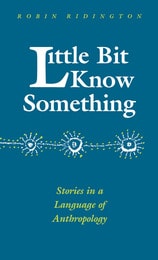
Little Bit Know Something
Stories in a Language of AnthropologyRobin Ridington
University of Iowa Press, 1990
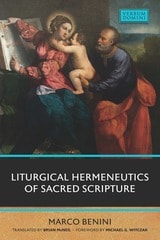
Liturgical Hermeneutics of Sacred Scripture
Marco Benini
Catholic University of America Press, 2023
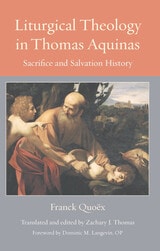
Liturgical Theology in Thomas Aquinas
Sacrifice and Salvation HistoryFranck Quoex
Catholic University of America Press, 2023
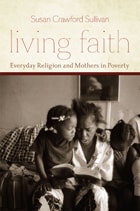
Living Faith
Everyday Religion and Mothers in PovertySusan Crawford Sullivan
University of Chicago Press, 2012
Living Spirit, Living Practice
Poetics, Politics, EpistemologyRuth Frankenberg
Duke University Press, 2004
Christians, Jews, Muslims, Buddhists, Hindus, and other practitioners come together here, speaking in terms both familiar and surprising. Whether discussing an Episcopalian deacon, a former Zen Buddhist who is now a rabbi, a Chicano monastic, an immigrant Muslim woman, a Japanese American Tibetan Buddhist, or a gay African American practicing in the Hindu tradition, Frankenberg illuminates the most intimate, local, and singular aspects of individual lives while situating them within the broad, dynamic canvas of the U.S. religious landscape.
Living the Faith
A Life of Tom MonaghanJames Leonard
University of Michigan Press, 2012
Who is Tom Monaghan?
Is he the four-year-old kid whose father died on Christmas Eve and whose mother sent him to an orphanage and then a juvenile detention home?
Is he the entrepreneurial genius who built Domino's Pizza from a hole-in-the-wall pizzeria in Michigan into an American brand as world-conquering as Ford or Coke?
Is he the religious visionary who sold Domino's for $1 billion to create an orthodox Catholic university, law school, and special interest law firm with the goal of transforming America to reflect his conservative values?
He's all that and more. With extensive interviews with friends and enemies plus unprecedented access to the man himself, but wholly without his authorization, Living the Faith illuminates Tom Monaghan, the man and the myth.
Living the Faithis the much-needed, definitive biography of one of the most fascinating and controversial figures in the realms of American business and religion. Through eighteen hard-boiled chapters, journalist James Leonard follows Monaghan on his path from a heartbroken kid who climbed into his father's coffin to the business tycoon who purchased the world-champion Detroit Tigers and spent a fortune on his own air force, navy, and island to the religious visionary who founded a university to make saints and a public interest law firm to overturn evolution.
A sympathetic but critical perspective of the man and his works, this book is for believers, nonbelievers, and agnostics; for conservatives, liberals, and independents; for the rich, the poor, and the shrinking middle class. Mainly, however, this book is for those who want the facts about Tom Monaghan—and the truth about the effect religion had on one man and the effect that man had on the world.
Living without the Dead
Loss and Redemption in a Jungle CosmosPiers Vitebsky
University of Chicago Press, 2017
Today, young Sora are rejecting the worldview of their ancestors and switching their allegiance to warring sects of fundamentalist Christianity or Hinduism. Communion with ancestors is banned as sacred sites are demolished, female shamans are replaced by male priests, and debate with the dead gives way to prayer to gods. For some, this shift means liberation from jungle spirits through literacy, employment, and democratic politics; others despair for fear of being forgotten after death.
How can a society abandon one understanding of reality so suddenly and see the world in a totally different way? Over forty years, anthropologist Piers Vitebsky has shared the lives of shamans, pastors, ancestors, gods, policemen, missionaries, and alphabet worshippers, seeking explanations from social theory, psychoanalysis, and theology. Living without the Dead lays bare today’s crisis of indigenous religions and shows how historical reform can bring new fulfillments—but also new torments and uncertainties.
Vitebsky explores the loss of the Sora tradition as one for greater humanity: just as we have been losing our wildernesses, so we have been losing a diverse range of cultural and spiritual possibilities, tribe by tribe. From the award-winning author of The Reindeer People, this is a heartbreaking story of cultural change and the extinction of an irreplaceable world, even while new religious forms come into being to take its place.
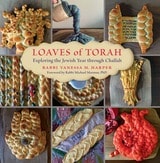
Loaves of Torah
Exploring the Jewish Year through ChallahRabbi Vanessa M. Harper
Central Conference of American Rabbis, 2023
Braided and spiral loaves of challah have long been a delicious centerpiece of the Jewish table, but with a few extra twists, the beloved Shabbat bread can become a work of art that teaches Torah. In Loaves of Torah, Rabbi Vanessa M. Harper— creator of the hit Instagram account @lechlechallah—shapes interpretive challot for each weekly Torah portion and Jewish holiday. A creative journey through the Jewish year, the book pairs gorgeous color photographs with insightful commentary, in-depth questions for reflection and discussion, as well as beautiful kavanot. Rabbi Harper also includes blessings, recipes, and tips for creating your own interpretive challot. A fresh, contemporary commentary on our holiest text, Loaves of Torah will inspire you to think outside the braid and take Torah into your own hands.
Local Church, Global Church
Stephen J.C. Andes
Catholic University of America Press, 2016