Results by title
1861 books match the query 'Social life and customs' and 73 start with l
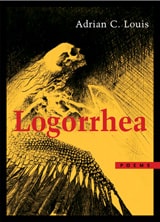
Logorrhea
PoemsAdrian C. Louis
Northwestern University Press, 2006
In a torrent of rage, love, and irony, Adrian C. Louis explodes all the myths and hypocrisy of Middle America in the twenty-first century. This is how Walt Whitman or Allen Ginsburg might have written about our post-9/11 world--where the realities of poverty on Indian reservations and the plight of Hurricane Katrina victims come in second place to the vagaries of Homeland Security. For Louis, both he and our nation face an uncertain future. Like many of us he is trapped in a surreal void of the present, where he is faced with middle age and isolation, the death of loved ones, an unsatisfying job, and the battle against loneliness and self-destruction. He writes as if he has nothing left to lose but then fills the page with bittersweet sorrow for everything that has been lost. Armed with unforgettable images, relentless rhythms, and a dark and scathing humor, Louis takes aim at this American life.
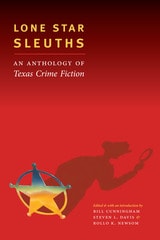
Lone Star Sleuths
An Anthology of Texas Crime FictionEdited and with an introduction by Bill Cunningham, Steven L. Davis, and Rollo K. Newsom
University of Texas Press, 2007
Texas has always staked a large claim on the nation's imagination, and its mystery literature is no exception. Hundreds of crime novels are set within the state, most of which have been published in the last twenty years. From the highest point atop the Guadalupe Mountains in West Texas to the Piney Woods of East Texas, from the High Plains of the Panhandle to the subtropical climate of the lower Rio Grande Valley, mystery writers have covered every aspect of Texas's extraordinarily diverse geography.
The first book to emphasize the wealth of Texas's mystery writers and the images they convey of the state's wide range of regions and cultures, Lone Star Sleuths is a noteworthy introduction not only to the literary genre but also to a sense of Texas as a place in fiction. Celebrating a genre that has expanded to include women and an increasing diversity of cultures, the book features selections from the works of such luminaries as Kinky Friedman and Mary Willis Walker, lesser-known stars in the making, and even some outsiders like Nevada Barr and Carolyn Hart who have succumbed to the allure of the state's weather, geography, and colorful history.
Lone Star Sleuths captures the sense of place that distinguishes much of the great literature set in Texas, and is a must-read for mystery lovers.
Looking for Hogeye
Roy Reed
University of Arkansas Press, 1986
In that always compelling yet simple style that has made Roy Reed one of the country’s foremost journalists, he shows us—as we share with him delightful moments and rich insights on the way to Hogeye—Southerners still different for being Southerners, and country Southerners who are even more so, pained by bruises and comforted by salves that are peculiarly their own.
“I hope that my city friends will not be upset to learn that this book is a little more sympathetic to the Arkansas hill people than it is to New Yorkers,” he says. “I have grown attached to cities over the years, but I am still, somewhere near my heart, a hillbilly. I have gone to a lot of trouble to remember that.”
This book is a special admission into those hills, to Vacation Bible School, tent meetings, sale barns, back roads and pool halls, to dog days in Hogeye.
To read Looking for Hogeye is to sit with Roy Reed on his wide front porch as he tells by the life he lives why, after Washington, London, and New York, he made his home in the north Arkansas hills, where he felt—as he puts it—”like Brer Rabbit reentering the briar patch.”
It is a visit not to be missed, and not to be forgotten.
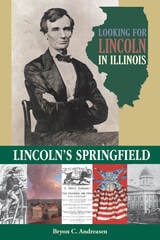
Looking for Lincoln in Illinois
Lincoln's SpringfieldBryon C. Andreasen
Southern Illinois University Press, 2015
Winner, ISHS Certificate of Excellence Award, 2016
Presenting fifty Abraham Lincoln stories—some familiar and beloved, some fresh and unexpected—Looking for Lincoln in Illinois: Lincoln’s Springfield is a carefully researched, richly illustrated guide to the Springfield, Illinois, locations on the Looking for Lincoln Story Trail. Created by the Looking for Lincoln Heritage Coalition, this trail consists of more than two hundred illustrated storyboards posted at sites of significance to Lincoln’s life and career across fifty-two communities in Illinois. The storyboards connect Lincoln-related tales to the geographical locations where they occurred, giving visitors, and now readers, a tour of the social and cultural landscape of Lincoln’s nineteenth-century world while revealing the very human Lincoln known by friends and associates.
This book celebrates the trail as a rich historical resource, featuring the original storyboards produced for Springfield and including twelve additional stories and more than 150 illustrations. Engaging stories in the book bring Lincoln’s Springfield to life: Lincoln created controversy with his Temperance Address, which he delivered in a church on Fourth Street in February 1842. He unexpectedly married Mary Todd in her sister’s home on the edge of Springfield later that year. The Lincolns’ sons used to harness dogs and cats to small wagons and drive them around the dirt streets of town. When Lincoln visited his dentist, he applied his own chloroform, because the practice of analgesia was not yet common. He reportedly played the ball game Fives in a downtown alley while waiting for news of his presidential nomination. And boxing heavyweight champion John C. Heenan visited the presidential candidate in October 1860. Through texts, historic photographs and images, and maps, including one keyed to the story locations in downtown Springfield, readers of this fascinating volume are invited to imagine social and cultural landscapes that have been lost in time.
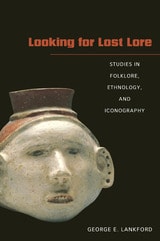
Looking for Lost Lore
Studies in Folklore, Ethnology, and IconographyGeorge E. Lankford
University of Alabama Press, 2008
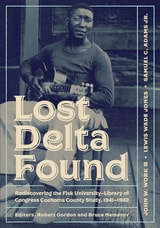
Lost Delta Found
Rediscovering the Fisk University-Library of Congress Coahoma County Study, 1941-1942John W. Work
Vanderbilt University Press, 2005
This remarkable book recovers three invaluable perspectives, long thought to have been lost, on the culture and music of the Mississippi Delta.
In 1941 and ’42 African American schol-ars from Fisk University—among them the noted composer and musicologist John W. Work III, sociologist Lewis Wade Jones, and graduate student Samuel C. Adams Jr.—joined folklorist Alan Lomax of the Library of Congress on research trips to Coahoma County, Mississippi. Their mission was “to document adequately the cultural and social backgrounds for music in the community.” Among the fruits of the project were the earliest recordings by the legendary blues singer and guitarist Muddy Waters.
The hallmark of the study was to have been a joint publication of its findings by Fisk and the Library of Congress. While this publication was never completed, Lost Delta Found is composed of the writings, interviews, notes, and musical transcriptions produced by Work, Jones, and Adams in the Coahoma County study. Their work captures, with compelling immediacy, a place, a people, a way of life, and a set of rich musical traditions as they existed in the 1940s.
Illustrated with photos and more than 160 musical transcriptions.
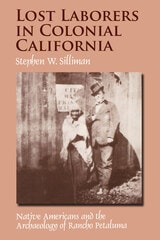
Lost Laborers in Colonial California
Native Americans and the Archaeology of Rancho PetalumaStephen W. Silliman
University of Arizona Press, 2004
This study focuses on Rancho Petaluma north of San Francisco Bay, a large livestock, agricultural, and manufacturing operation on which several hundred—perhaps as many as two thousand—Native Americans worked as field hands, cowboys, artisans, cooks, and servants. One of the largest ranchos in the region, it was owned from 1834 to 1857 by Mariano Guadalupe Vallejo, one of the most prominent political figures of Mexican California. While historians have studied Vallejo, few have considered the Native Americans he controlled, so we know little of what their lives were like or how they adjusted to the colonial labor regime.
Because Vallejo’s Petaluma Adobe is now a state historic park and one of the most well-protected rancho sites in California, this site offers unparalleled opportunities to investigate nineteenth-century rancho life via archaeology. Using the Vallejo rancho as a case study, Stephen W. Silliman examines this California rancho with a particular eye toward Native American participation. Through the archaeological record—tools and implements, containers, beads, bone and shell artifacts, food remains—he reconstructs the daily practices of Native peoples at Rancho Petaluma and the labor relations that structured indigenous participation in and experience of rancho life. This research enables him to expose the multi-ethnic nature of colonialism, counterbalancing popular misconceptions of Native Americans as either non-participants in the ranchos or passive workers with little to contribute to history.
Lost Laborers in Colonial California draws on archaeological data, material studies, and archival research, and meshes them with theoretical issues of labor, gender, and social practice to examine not only how colonial worlds controlled indigenous peoples and practices but also how Native Americans lived through and often resisted those impositions. The book fills a gap in the regional archaeological and historical literature as it makes a unique contribution to colonial and contact-period studies in the Spanish/Mexican borderlands and beyond.
Lost Shores, Forgotten Peoples
Spanish Explorations of the South East Maya LowlandsLawrence H. Feldman, ed. and translator
Duke University Press, 2000
In these narratives—primary documents written by missionaries and conquistadors—vivid details of these little known Mayan cultures are revealed, answering how and why lowlanders were able to evade Spanish conquest while similar civilizations could not. Fascinating tales of the journey from Europe are included, involving unknown islands, lost pilots, life aboard a galleon fleet, political intrigue, cannibals, and breathtaking natural beauty. In short, these forgotten manuscripts—translations of the papers of the past—provide an unforgettable look at an understudied chapter in the age of exploration.
Lost Shores, Forgotten Peoples will appeal to archaeologists, anthropologists, and historians interested in Central America, the Maya, and the Spanish Conquest.
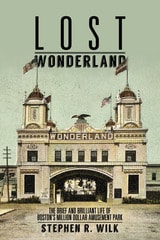
Lost Wonderland
The Brief and Brilliant Life of Boston's Million Dollar Amusement ParkStephen R. Wilk
University of Massachusetts Press, 2020
If you take Boston's Blue Line to its northern end, you'll reach the Wonderland stop. Few realize that a twenty-three-acre amusement park once sat nearby—the largest in New England, and grander than any of the Coney Island parks that inspired it. Opened in Revere on Memorial Day in 1906 to great fanfare, Wonderland offered hundreds of thousands of visitors recreation by the sea, just a short distance from downtown Boston.
The story of the park's creation and wild, but brief, success is full of larger-than-life characters who hoped to thrill attendees and rake in profits. Stephen R. Wilk describes the planning and history of the park, which featured early roller coasters, a scenic railway, a central lagoon in which a Shoot-the-Chutes boat plunged, an aerial swing, a funhouse, and more. Performances ran throughout the day, including a daring Fires and Flames show; a Wild West show; a children's theater; and numerous circus acts. While nothing remains of what was once called “Boston's Regal Home of Pleasure” and the park would close in 1910, this book resurrects Wonderland by transporting readers through its magical gates.
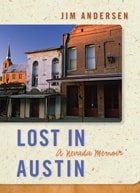
Lost in Austin
A Nevada MemoirJim Andersen
University of Nevada Press, 2009
In 1974 Jim Andersen and his wife, tired of the congestion and high taxes in California, decided to start a new life in rural Nevada. They settled on Austin, a town of about 250 people perched on a mountainside along the legendary Highway 50, “the loneliest road in America.” In the middle of the nineteenth century, Austin was a free-wheeling boomtown at the center of a silver bonanza. By the time the Andersens arrived, it had shrunk to a quiet, isolated community of self-sufficient souls who ran their lives, economy, and local government their own way, with ingenuity, wit, and a certain disregard for convention. Andersen’s account of his life in Austin is a charming, sometimes hilarious account of city folks adapting to life in a small town. He addresses such matters as making a living from a variety of odd jobs, some of them odder than others; serving as a deputy sheriff, deputy coroner, and elected justice of the peace, and administering Austin’s unique version of justice; raising a family; finding ways to have fun; and exploring the austerely beautiful backcountry of central Nevada. He also introduces some of Austin’s residents and their stories, and describes the way the community comes together for entertainment or to respond to crises.Lost in Austin is fascinating reading for anyone who cherishes nostalgic memories of living in a small town, or who contemplates moving to one. It offers an engaging portrait of a Nevada that exists far from the glitz and glitter of Las Vegas and Reno, “a happy Bermuda Triangle” where rugged individualism and community spirit flourish amidst sagebrush and vast open spaces.
Lost in Transition
Ethnographies of Everyday Life after CommunismKristen Ghodsee
Duke University Press, 2011

Lost in the Lights
Sports, Dreams, and LifePaul Hemphill
University of Alabama Press, 2003
Where the dreams of athletes become enduring stories about life, loss, and the American South.
Sport mirrors life. Or, in Paul Hemphill's opinion, “Sport is life.” The 15 pieces in this compelling collection are arranged along the timeline for an aspiring athlete's dream: “The Dawning,” with stories about boys hoping and trying to become men, “The Striving,” about athletes at work, defining themselves through their play, and “The Gloaming,” about the twilight time when athletes contend with broken dreams and fading powers. Through all the pieces, Hemphill exhibits his passion for the sports he covers and a keen eye for the dramas, details, and hopes that fire the lives of athletes, allowing them to become prototypes of all human existence.
Most of the stories have been previously published in such national magazines as Sports Illustrated, True, Life, Today’s Health, and Sport. In “White Bread and Baseball,” the author chronicles his own boyhood infatuation with the minor-league Birmingham Barons, while in “Yesterday’s Hero” he details the sad end of a former All-American football player named Bob Suffridge, a portrait of a lion in winter. “It’s a Mad, Mad, Mad Whirl” covers nights on the road with the roller derby, and “Saturday Night at Dixie Speedway” captures all the raucous glory of a stock-car dirt track under the hot lights. “Big Night, Big City” tells of an anxious, small-town high school basketball team facing their crucial chance for glory at a state tournament in Atlanta, and the classic “Mister Cobb” details a personal lesson on sliding the young author received from “the greatest player in the history of baseball.”
These stories are often bittersweet, emotional, and mythic: little dramas bearing impact and psychological “size.” Some of them are distinctively “Dixie,” but they ultimately transcend time and place. Frye Gaillard, author of Kyle at 200 MPH: A Sizzling Season in the Petty-NASCAR Dynasty, writes, “For more than 30 years, Paul Hemphill has been one of the finest writers in the South, and I think he proves it again in this collection. He exudes a natural feel for the players and the game, drawing out the real-life themes of struggle and desire, occasional triumph, and the omnipresent possibilities of heartache and failure.”
Love Across the Color Line
Helen Lefkowitz Horowitz
University of Massachusetts Press, 1996

Love and Death in Renaissance Italy
Thomas V. Cohen
University of Chicago Press, 2004
Each of the chapters in this history chronicles a domestic drama around which the lives of ordinary Romans are suddenly and violently altered. You might read the gruesome murder that opens the book—when an Italian noble takes revenge on his wife and her bastard lover as he catches them in delicto flagrante—as straight from the pages of Boccaccio. But this tale, like the other stories Cohen recalls here, is true, and its recounting in this scintillating work is based on assiduous research in court proceedings kept in the state archives in Rome.
Love and Death in Renaissance Italy contains stories of a forbidden love for an orphan nun, of brothers who cruelly exact a will from their dying teenage sister, and of a malicious papal prosecutor who not only rapes a band of sisters, but turns their shambling father into a pimp! Cohen retells each cruel episode with a blend of sly wit and warm sympathy and then wraps his tales in ruminations on their lessons, both for the history of their own time and for historians writing today. What results is a book at once poignant and painfully human as well as deliciously entertaining.
Love, Marriage, and Jewish Families
Paradoxes of a Social RevolutionEdited by Sylvia Barack Fishman
Brandeis University Press, 2015
Love, Sex, and Desire in Modern Egypt
Navigating the Margins of RespectabilityBy L. L. Wynn
University of Texas Press, 2018
Cairo is a city obsessed with honor and respectability—and love affairs. Sara, a working-class woman, has an affair with a married man and becomes pregnant, only to be abandoned by him; Ayah and Zeid, a respectably engaged couple, argue over whether Ayah’s friend is a prostitute or a virgin; Malak, a European belly dancer who sometimes gets paid for sex, wants to be loved by a man who won’t treat her like a whore just because she’s a dancer; and Alia, a Christian banker who left her abusive husband, is the mistress of a wealthy Muslim man, Haroun, who encourages business by hosting risqué parties for other men and their mistresses.
Set in transnational Cairo over two decades, Love, Sex, and Desire in Modern Egypt is an ethnography that explores female respectability, male honor, and Western theories and fantasies about Arab society. L. L. Wynn uses stories of love affairs to interrogate three areas of classic anthropological theory: mimesis, kinship, and gift. She develops a broad picture of how individuals love and desire within a cultural and political system that structures the possibilities of, and penalties for, going against sexual and gender norms. Wynn demonstrates that love is at once a moral horizon, an attribute that “naturally” inheres in particular social relations, a social phenomenon strengthened through cultural concepts of gift and kinship, and an emotion deeply felt and desired by individuals.
Love
A Philadelphia AffairBeth Kephart
Temple University Press, 2017
Philadelphia has been at the heart of many books by award-winning author Beth Kephart, but none more so than the affectionate collection Love. This volume of personal essays and photographs celebrates the intersection of memory and place. Kephart writes lovingly, reflectively about what Philadelphia means to her. She muses about meandering on SEPTA trains, spending hours among the armor in the Philadelphia Museum of Art, and taking shelter at Independence Mall during a downpour.
In Love, Kephart shares her loveof Reading Terminal Market at Thanksgiving: “This abundant, bristling market is, in November, the most unlonesome place around.” She waxes poetic about the shoulder-to-shoulder crowds, the mustard in a Salumeria sandwich, and the “coins slipped between the lips of Philbert the pig.”
Kephart also extends her journeys to the suburbs, Glenside and Ardmore—and beyond, to Lancaster County, Pennsylvania; Stone Harbor, New Jersey; and Wilmington, Delaware. What emerges is a valentine to the City of Brotherly Love and its environs. In Love, Philadelphia is “more than its icons, bigger than its tagline.”
Loving Mountains, Loving Men
Memoirs of a Gay AppalachianJeff Mann
Ohio University Press, 2005
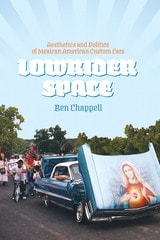
Lowrider Space
Aesthetics and Politics of Mexican American Custom CarsBy Ben Chappell
University of Texas Press, 2012

Lucy's Dance
Deb Vanasse
University of Alaska Press, 2011

Lugiim Yuraa
Deb Vanasse
University of Alaska Press, 2011
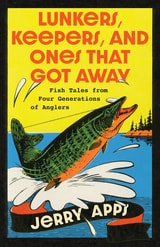
Lunkers, Keepers, and Ones that Got Away
Fish Tales from Four Generations of AnglersJerry Apps
Wisconsin Historical Society Press, 2025
From his first experiences going fishing with his pa as a boy, Jerry Apps was hooked. Eighty-some years later, Apps reflects on a lifetime of fishing and the memories and lessons hauled in along the way. As he recounts the simple pleasures of casting a line from shore on a warm summer evening or reeling in a lunker on opening day of trout season, he reminds us of the values fishing can teach people of all ages: persistence, resourcefulness, and the importance of caring for our natural world.
Along with his best-loved fish tales, Apps includes fishing photos from the family album and favorite angling locales, lingo, bait, and gear. He draws on interviews with fellow fishermen and -women, his own journal entries recorded over decades, and his popular newspaper column Outdoor Notebook. And, since it’s a tradition among fishing folks to pass along tales told by others, he shares stories that have come his way from extended family and friends—some of them funny, some poignant, many embellished, and all of them keepers. Humorous pen-and-ink illustrations made by artist Sid Boyum to commemorate the annual fishing season opener add charm to this delightful volume.
In Lunkers, Keepers, and Ones that Got Away, Apps captures the exciting, heartwarming, and nostalgia-inducing experiences that fishing brings to avid and casual anglers alike.
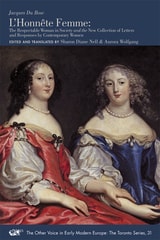
L’Honnête Femme
The Respectable Woman in Society and the New Collection of Letters and Responses by Contemporary WomenJacques Du Bosc
Iter Press, 2014
—Reverend John J. Conley, SJ
Knott Professor of Philosophy, Loyola University Maryland