2194 books match the query 'Women's Studies' and 72 start with l
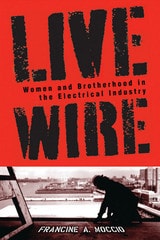
cover of Live Wire: Women and Brotherhood in the Electrical Industry

Live Wire

Women and Brotherhood in the Electrical Industry

Authored by Fran Moccio

Temple University Press, 2010

Belonging to a union can bring higher wages, fringe benefits, greater job security and, sometimes, training. But unions—still known as "brotherhoods"—often remain rigidly segregated by gender, despite the fact that sexual harassment and discrimination in employment are illegal. Live Wire is an in-depth case study of Local 3 of the International Brotherhood of Electrical Workers, arguably the most powerful and influential building trades local in the United States. Francine Moccio brings to life forty years of public policy failure that has resulted in restricted opportunities for women in skilled blue-collar jobs.

Live Wire is a unique foray into the gender dynamics of one trade and one union in historical depth, based on extensive primary, secondary, and archival research. It contributes much-needed research about sex segregation in blue-collar occupations, particularly in unions and fraternal organizations. And it provides important insights into complex interactions of work, union, and family life.

[more]
cover of Lives on the Edge: Single Mothers and Their Children in the Other America

Lives on the Edge

Single Mothers and Their Children in the Other America

Valerie Polakow

University of Chicago Press, 1994

One out of five children, and one out of two single mothers, lives in destitution in America today. The feminization and "infantilization" of poverty have made the United States one of the most dangerous democracies for poor mothers and their children to inhabit. Why then, Valerie Polakow asks, is poverty seen as a private issue, and how can public policy fail to take responsibility for the consequences of our politics of distribution? Written by a committed child advocate, Lives on the Edge draws on social, historical, feminist, and public policy perspectives to develop an informed, wide-ranging critique of American educational and social policy. Stark, penetrating, and unflinching in its first-hand portraits of single mothers in America today, this work challenges basic myths about justice and democracy.
[more]
cover of Living Rooms as Factories: Class, Gender, and the Satelite Factory System in Taiwan

Living Rooms as Factories

Class, Gender, and the Satelite Factory System in Taiwan

Ping-Chun Hsiung

Temple University Press, 1996

In Taiwan, small-scale subcontracting factories of thirty employees or less make items for export, like the wooden jewelry boxes that Ping-Chun Hsiung made when she worked in six such factories. These factories are found in rice fields and urban areas, front yards and living rooms, mostly employing married women in line with the government slogan that promotes work in the home—"Living Rooms as Factories."

Hsiung studies the experiences of the married women who work in this satellite system of factories, and how their work and family lives have contributed to Taiwan's 9.1 percent GNP growth over the last three decades, the "economic miracle." This vivid portrayal of the dual lives of these women as wives, mothers, daughters-in-law and as manufacturing workers also provides sophisticated analyses of the links between class and gender stratification, family dynamics, state policy, and global restructuring within the process of industrialization.

Hsiung uses ethnographic data to illustrate how, in this system of intersecting capitalist logic and patriarchal practices, some Taiwanese women experience upward mobility by marrying into the owners' family, while others remain home and wage workers. Although women in both groups acknowledge gender inequality, this commonality does not bridge divergent class affiliations. Along with a detailed account of the oppressive labor practices, this book reveals how workers employ clandestine tactics to defy the owners' claims on their labor.
[more]
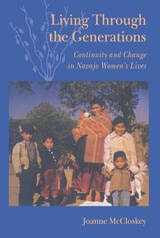
cover of Living Through the Generations: Continuity and Change in Navajo Women’s Lives

Living Through the Generations

Continuity and Change in Navajo Women’s Lives

Joanne McCloskey

University of Arizona Press, 2007

Navajo women’s lives reflect the numerous historical changes that have transformed “the Navajo way.” At the same time, in their behavior, beliefs, and values, women preserve the legacy of Navajo culture passed down through the generations. By comparing and contrasting three generations of Navajo women—grandmothers, mid-life mothers, and young mothers—similarities and differences emerge in patterns of education, work, family life, and childbearing. Women’s roles as mothers and grandmothers are central to their respected position in Navajo society. Mothers bestow membership in matrilineal clans at birth and follow the example of the beloved deity Changing Woman. As guardians of cultural traditions, grandmothers actively plan and participate in ceremonies such as the Kinaaldá, the puberty ceremony, for their granddaughters.

Drawing on ethnographic interviews with 77 women in Crownpoint, New Mexico, and surrounding chapters in the Eastern Navajo Agency, Joanne McCloskey examines the cultural traditions evident in Navajo women’s lives. Navajo women balance the demands of Western society with the desire to preserve Navajo culture for themselves and their families.
[more]
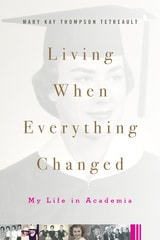
cover of Living When Everything Changed: My Life in Academia

Living When Everything Changed

My Life in Academia

Mary Kay Thompson Tetreault

Rutgers University Press, 2019

Entering the academy at the dawn of the women’s rights movement in the late 1960s and early 1970s, the first generation of feminist academics had a difficult journey. With few female role models, they had to forge their own path and prove that feminist scholarship was a legitimate enterprise. Later, when many of these scholars moved into administrative positions, hoping to reform the university system from within, they encountered entrenched hierarchies, bureaucracies, and old boys’ networks that made it difficult to put their feminist principles into practice. 

In this compelling memoir, Mary Kay Thompson Tetreault describes how a Catholic girl from small-town Nebraska discovered her callings as a feminist, as an academic, and as a university administrator. She recounts her experiences at three very different schools: the small progressive Lewis & Clark College, the massive regional university of Cal State Fullerton, and the rapidly expanding Portland State University. Reflecting on both her accomplishments and challenges, she considers just how much second-wave feminism has transformed academia and how much reform is still needed. 

With remarkable candor and compassion, Thompson Tetreault provides an intimate personal look at an era when both women’s lives and university culture changed for good.

The Acknowledgments were inadvertently left out of the first printing of this book. We apologize for the oversight, and offer them here instead. Future printings will include this information. (https://d3tto5i5w9ogdd.cloudfront.net/wp-content/uploads/2019/08/29185420/Thompson-Tetreault-Acknowledgments.pdf)
[more]
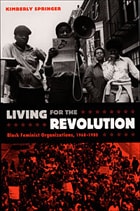
cover of Living for the Revolution: Black Feminist Organizations, 1968–1980

Living for the Revolution

Black Feminist Organizations, 1968–1980

Kimberly Springer

Duke University Press, 2005

The first in-depth analysis of the black feminist movement, Living for the Revolution fills in a crucial but overlooked chapter in African American, women’s, and social movement history. Through original oral history interviews with key activists and analysis of previously unexamined organizational records, Kimberly Springer traces the emergence, life, and decline of several black feminist organizations: the Third World Women’s Alliance, Black Women Organized for Action, the National Black Feminist Organization, the National Alliance of Black Feminists, and the Combahee River Collective. The first of these to form was founded in 1968; all five were defunct by 1980. Springer demonstrates that these organizations led the way in articulating an activist vision formed by the intersections of race, gender, class, and sexuality.

The organizations that Springer examines were the first to explicitly use feminist theory to further the work of previous black women’s organizations. As she describes, they emerged in response to marginalization in the civil rights and women’s movements, stereotyping in popular culture, and misrepresentation in public policy. Springer compares the organizations’ ideologies, goals, activities, memberships, leadership styles, finances, and communication strategies. Reflecting on the conflicts, lack of resources, and burnout that led to the demise of these groups, she considers the future of black feminist organizing, particularly at the national level. Living for the Revolution is an essential reference: it provides the history of a movement that influenced black feminist theory and civil rights activism for decades to come.
[more]
cover of Living the Changes

Living the Changes

Joan Turner

University of Manitoba Press, 1990
Living the Changes explores the nature and extent of women's changing realities. The contributors include writers, artists, academics, street kids and social workers, and range in age from nine to seventy-three. Their topics reflect the diversity and complexity of the concerns of contemporary women – birthing and aging, body image, culture, drugs, violence, sexual abuse, prostitution, reproductive technology, and spirituality.
[more]
cover of Locker Room Talk: A Woman’s Struggle to Get Inside

Locker Room Talk

A Woman’s Struggle to Get Inside

Melissa Ludtke

Rutgers University Press, 2024

While sportswriters rushed into Major League Baseball locker rooms to talk with players, MLB Commissioner Bowie Kuhn barred the lone woman from entering along with them. That reporter, 26-year-old Sports Illustrated reporter Melissa Ludtke, charged Kuhn with gender discrimination, and after the lawyers argued Ludtke v. Kuhn in federal court, she won. Her 1978 groundbreaking case affirmed her equal rights, and the judge’s order opened the doors for several generations of women to be hired in sports media.
 
Locker Room Talk is Ludtke’s gripping account of being at the core of this globally covered case that churned up ugly prejudices about the place of women in sports. Kuhn claimed that allowing women into locker rooms would violate his players’ “sexual privacy.” Late-night television comedy sketches mocked her, as newspaper cartoonists portrayed her as a sexy, buxom looker who wanted to ogle the naked athletes’ bodies.  She weaves these public perspectives throughout her vivid depiction of the court drama overseen by Judge Constance Baker Motley, the first Black woman to serve on the federal bench. She recounts how her lawyer, F.A.O. “Fritz” Schwarz, employed an ingenious legal strategy that persuaded Judge Motley to invoke the Fourteenth Amendment’s Equal Protection Clause in giving Ludtke access identical to that of her male counterparts. Locker Room Talk is both an inspiring story of one woman’s determination to do a job dominated by men and an illuminating portrait of a defining moment for women’s rights.  

[more]
cover of Lonesome Cowgirls and Honky-Tonk Angels: The Women of Barn Dance Radio

Lonesome Cowgirls and Honky-Tonk Angels

The Women of Barn Dance Radio

Kristine M. McCusker

University of Illinois Press, 2007

American barn dance radio of the 1920s-1940s evoked comforting images of a nostalgic and stable past for listeners beset by economic problems at home and worried about totalitarian governments abroad. Sentimental images such as the mountain mother and the chaste everybody's-little-sister "girl singer" helped to sell a new consumer culture and move commercial country music from regional fare to national treasure.

Drawing on personal interviews and rich archival material from the Grand Ole Opry, Kristine M. McCusker examines the gendered politics of the images through the lives and careers of six women performers: Linda Parker, the Girls of the Golden West (Milly and Dolly Good), Lily May Ledford, Minnie Pearl, and Rose Lee Maphis.
[more]
cover of Looking through the Speculum: Examining the Women’s Health Movement

Looking through the Speculum

Examining the Women’s Health Movement

Judith A. Houck

University of Chicago Press, 2024

Highlights local history to tell a national story about the evolution of the women’s health movement, illuminating the struggles and successes of bringing feminist dreams into clinical spaces.
 
The women’s health movement in the United States, beginning in 1969 and taking hold in the 1970s, was a broad-based movement seeking to increase women’s bodily knowledge, reproductive control, and well-being. It was a political movement that insisted that bodily autonomy provided the key to women’s liberation. It was also an institution-building movement that sought to transform women’s relationships with medicine; it was dedicated to increasing women’s access to affordable health care without the barriers of homophobia, racism, and sexism. But the movement did not only focus on women’s bodies. It also encouraged activists to reimagine their relationships with one another, to develop their relationships in the name of personal and political change, and, eventually, to discover and confront the limitations of the bonds of womanhood.

This book examines historically the emergence, development, travails, and triumphs of the women’s health movement in the United States. By bringing medical history and the history of women’s bodies into our emerging understandings of second-wave feminism, the author sheds light on the understudied efforts to shape health care and reproductive control beyond the hospital and the doctor’s office—in the home, the women’s center, the church basement, the bookshop, and the clinic. Lesbians, straight women, and women of color all play crucial roles in this history. At its center are the politics, institutions, and relationships created by and within the women’s health movement, depicted primarily from the perspective of the activists who shaped its priorities, fought its battles, and grappled with its shortcomings.
[more]
cover of Lost Goddesses: The Denial of Female Power in Cambodian History

Lost Goddesses

The Denial of Female Power in Cambodian History

Trudy Jacobsen

National University of Singapore Press, 2008
In a narrative and visual tour de force, Trudy Jacobsen examines the relationship between women and power in Cambodian history. Here, she seeks to describe when and why the status of women changed and what factors contributed to these changes.
[more]
cover of Lost Talent

Lost Talent

Sandra L. Hanson

Temple University Press, 1996

"Sandra Hanson demonstrates the progressive loss of women to science--and science to women--through discriminatory actions and policies of key institutions and unequal resources offered to young women and men. Her detailed analyses disclose the complex process by which gender, race and class determine who stays in science--and why." --Mary Frank Fox, School of History, Technology, and Society, Georgia Institute of Technology In this pathbreaking book, Sandra Hanson asks what compels so many talented young women to leave the professions of science and mathematics? When do they leave and why? Why do equally qualified girls and boys have such different experiences with science education? What are the patterns for women who do stay in school and pursue a scientific career? What difference does family background make? Exactly how significant are differences of race and class? In this research project, Hanson examines several unusually large and subtle, nationally representative, longitudinal data sets. The data include information on a multitude of distinctions by race, class background, school experiences, school resources, to name a few. Hanson examines this information with a particular focus on the differences in achievement within and across the disciplines, varying access to physical resources, and differential activities in both math and science for young women in the education process. The challenge faced by the United States in the next two decades is developing a balanced, qualified, and well-trained workforce for jobs in science and other technical fields. For Hanson it includes equity for women and creating conditions such that young girls who start out doing well in science do not end up with little training and knowledge. The recovery of this "lost talent" is the central concern of this book. "Lost Talent compels us to think about the experiences of women in science in an entirely new and comprehensive way--how they differ from men in their activities, achievement, access, and attitudes about science. Particularly refreshing is Hanson's recognition that women scientists are not a monolithic group. I found her broadened focus on women of various race and ethnic groups more inclusive and informative that previous books on women in science." --Shirley Vining Brown, Senior Research Scientist, Special Populations Group, Educational Testing Service "Lost Talent is a pathbreaking work. It is concerned with the relatively low long term rate of female involvement and achievement in science. Much of the effort to understand the origins of these phenomena has focused on single factors, usually examined at a moment in time, and frequently based on unrepresentative samples and inconsistent measures. Sandra Hanson seeks to remedy many of these deficiencies in this book. Her dynamic, multidimensional approach deepens our insights into the complex patterns and produces new evidence about the trajectories of these women among the various states of science involvement within the education system and their major determinants. It will be required reading for all who seek to better our understanding of this important issue." --Alan Fechter,, President, Commission on Professionals in Science and Technology
[more]
cover of Lost in the USA: American Identity from the Promise Keepers to the Million Mom March

Lost in the USA

American Identity from the Promise Keepers to the Million Mom March

Deborah Gray White

University of Illinois Press, 2017

Remembered as an era of peace and prosperity, turn-of-the-millennium America was also a time of mass protest. But the political demands of the marchers seemed secondary to an urgent desire for renewal and restoration felt by people from all walks of life. Drawing on thousands of personal testimonies, Deborah Gray White explores how Americans sought better ways of living in, and dealing with, a rapidly changing world. From the Million Man, Million Woman, and Million Mom Marches to the Promise Keepers and LGBT protests, White reveals a people lost in their own country. Mass gatherings offered a chance to bond with like-minded others against a relentless tide of loneliness and isolation. By participating, individuals opened a door to self-discovery that energized their quests for order, autonomy, personal meaning, and fellowship in a society that seemed hostile to such deeper human needs. Moving forward in time, White also shows what marchers found out about themselves and those gathered around them. The result is an eye-opening reconsideration of a defining time in contemporary America.
[more]
cover of Lost: Miscarriage in Nineteenth-Century America

Lost

Miscarriage in Nineteenth-Century America

Withycombe, Shannon

Rutgers University Press, 2019

2019 Choice Outstanding Academic Title

In Lost, medical historian Shannon Withycombe weaves together women’s personal writings and doctors’ publications from the 1820s through the 1910s to investigate the transformative changes in how Americans conceptualized pregnancy, understood miscarriage, and interpreted fetal tissue over the course of the nineteenth century. Withycombe’s pathbreaking research reveals how Americans construed, and continue to understand, miscarriage within a context of reproductive desires, expectations, and abilities. This is the first book to utilize women’s own writings about miscarriage to explore the individual understandings of pregnancy loss and the multiple social and medical forces that helped to shape those perceptions. What emerges from Withycombe’s work is unlike most medicalization narratives. 
[more]
cover of Love Across the Color Line

Love Across the Color Line

Helen Lefkowitz Horowitz

University of Massachusetts Press, 1996

This book examines a remarkable collection of twenty-seven letters written by a white working-class woman to her African American lover in 1907 and 1908. Stuffed inside a black lace stocking, the letters were hidden under the floorboards of a house in Northampton, Massachusetts, until their recent discovery. Reflecting the passions and anxieties of the moment, the letters were written by Alice Hanley, the daughter of Irish Catholic immigrants, to Channing Lewis, a cook in Springfield. Since the thoughts and feelings of women like Hanley have usually been filtered through middle-class reformers, her words provide a rare window into a realm of American social life seldom explored by historians. The letters are accompanied by essays that skillfully probe their larger meanings. Helen Lefkowitz Horowitz introduces the letters, placing them in the context of their time, while journalist Phoebe Rolin Mitchell recounts the story of their discovery. Kathy Peiss explores Hanley's life, her negotiation of illicit love, and her desire for respectability, re-creating a dense and textured world of home, church, and town. Historian Louis Wilson unearths the trail left by Lewis and members of his extended family in Springfield. Reviewing the experiences of African Americans in that city, Wilson clarifies the economic, social, and political position of a black, middle-aged breadwinner during the difficult years of the early twentieth century.
[more]
cover of Love and Marriage in the Middle Ages

Love and Marriage in the Middle Ages

Georges Duby

University of Chicago Press, 1993

Preeminent medieval scholar Georges Duby argues that the structure of sexual relationships took its cue from the family and from feudalism—both bastions of masculinity—as he reveals the role of women, what they represented, and what they were in the Middle Ages.

Beautifully written in Duby's characteristically nuanced and powerful style, this collection is an ideal entree into Duby's thinking about marriage and the diversities of love, spousal decorum, family structure, and their cultural context in bodily and spiritual values. Love and Marriage in the Middle Ages will be of great interest to students in social and cultural history, medieval and early modern history, and women's studies, as well as those interested in the nature of social life in the Middle Ages.

Georges Duby (1919-1996) was a member of the Académie française and for many years held the distinguished chair in medieval history at the Collège de France. His books include The Three Orders; The Age of Cathedrals; The Knight, the Lady, and the Priest; Love and Marriage in the Middle Ages; and History Continues, all published by the University of Chicago Press.

[more]
cover of Love in the Time of Zika: Environmental Crisis and the Future of Reproduction

Love in the Time of Zika

Environmental Crisis and the Future of Reproduction

Paige Marie Patchin

Duke University Press, 2026
Love in the Time of Zika examines the transformation of reproductive politics spurred by the Zika public health emergency in 2016. The Zika virus, a mosquito-borne disease with a direct link to fetal and children’s disabilities, provoked the surveillance of and intervention into women’s and girls’ bodies and lives. Paige Marie Patchin tracks this period of intense reproductive experimentation, from fast contraceptive implant insertion drives in Puerto Rico to the genetic modification of mosquitoes in Brazil, to explore the future of reproduction as environmental crises mount, public infrastructures wilt, and walls rise. Patchin questions what kind of a world we are building if the response to dangerous, global environmental problems like Zika is to pit fetuses against one another in a future of limited resources. Set between the twin specters of eugenics and fascism, Love in the Time of Zika argues for the relevance of reproduction to wider questions about what it means to be people living amongst other people, and people living amongst other beings.
[more]
cover of Love, Anarchy, & Emma Goldman: A Biography

Love, Anarchy, & Emma Goldman

A Biography

Falk, Candace

Rutgers University Press, 1990

Candace Falk's biography captures Goldman's colorful life as a social and labor reformer, revolutionary, anarchist, feminist, agitator for free love and free speech, and advocate of birth control. And it gives the reader a rare glimpse into Goldman as a woman, alone, searching for the intimacy of a love relationship to match her radiant social vision. Falk explores the clash between Goldman's public vision and private life, focusing on her intimate relationship with Ben Reitman, Chicago's celebrated social reformer, hobo king, and red-light district gynecologist. During this passionate and stormy relationship, Goldman lectured in public about free love and women's independence, while in private she struggled with intense jealousy and longed for the comfort of a secure relationship. Falk's account draws upon a serendipitous discovery of a cache of intimate letters between Goldman and Reitman. Falk then goes beyond Goldman's ten-year relationship with Reitman, following Goldman's inner passions through her years of exile and later life. Written with a literary sensitivity, Falk tells a riveting story, consistently placing Goldman in the context of late nineteenth- and early twentieth-century radicalism.
[more]
cover of Love, Anarchy, & Emma Goldman: A Biography

Love, Anarchy, & Emma Goldman

A Biography

Candace Serena Falk

Rutgers University Press, 2019

“What this remarkable book does . . . is to remind us of that passion, that revolutionary fervor, that camaraderie, that persistence in the face of political defeat and personal despair so needed in our time as in theirs.” —Howard Zinn

“Fascinating …With marvelous clarity and depth, Candace Falk illuminates for us an Emma Goldman shaped by her time yet presaging in her life the situation and conflicts of women in our time.” —Tillie Olsen

One of the most famous political activists of all time, Emma Goldman was also infamous for her radical anarchist views and her “scandalous” personal life. In public, Goldman was a firebrand, confidently agitating for labor reform, anarchism, birth control, and women’s independence. But behind closed doors she was more vulnerable, especially when it came to the love of her life. 

Love, Anarchy, & Emma Goldman is an account of Goldman’s legendary career as a political activist. But it is more than that—it is a biography that offers an intimate look at how Goldman’s passion for social reform dovetailed with her passion for one man: Chicago activist, hobo king, and red-light district gynecologist Ben Reitman. Candace Falk takes us into the heart of their tumultuous love affair, finding that even as Goldman lectured on free love, she confronted her own intense jealousy. 
 
As director of the Emma Goldman papers, Falk had access to over 40,000 writings by Goldman—including her private letters and notes—and she draws upon these archives to give us a rare insight into this brilliant, complex woman’s thoughts. The result is both a riveting love story and a primer on an exciting, explosive era in American politics and intellectual life.  
[more]
cover of Love, Sorrow, And Rage

Love, Sorrow, And Rage

Alisse Waterston

Temple University Press, 1999

Love, Sorrow, and Rage gives powerful voice to women like Nora Gaines and Dixie Register, who tell use what it's like to live on the streets of New York, how it feels to lose your mind, about the taste of crack cocaine and the sweetness of friendship. In this novel-like narrative of homelessness and hope, poor women share a table, their meals, and their intimacies with author Alisse Waterston. On the pages of this impassioned ethnography, Waterston puts mythic, demonized bag ladies to rest, and in so doing, brings ordinary women to life.

From drug addiction and the spread of AIDS to the growing gap between rich and poor in the U.S., the topics in this book get front-page coverage in daily newspapers across the country. Waterston seeks to understand, to explain, and to solve the human crisis that surrounds us. Towards this end, she challenges us to look at the ways in which our society and the workings of our political, economic, and popular culture contribute to the suffering experienced by our most vulnerable citizens. An important corrective to popular depictions of the urban poor, Love, Sorrow, and Rage provides a penetrating analysis of the causes and consequences of poverty. It offers a deeper understanding of what leads to and perpetuates poverty and of the human complex of love, sorrow, and rage felt by those who experience it.

Love, Sorrow, and Rage will engage readers interested in urban studies, women's studies, social issues and policies, anthropology, sociology, political economy, and New York City life.
[more]
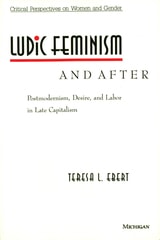
cover of Ludic Feminism and After: Postmodernism, Desire, and Labor in Late Capitalism

Ludic Feminism and After

Postmodernism, Desire, and Labor in Late Capitalism

Teresa L. Ebert

University of Michigan Press, 1995

Following the equal-rights struggles of the 1960s, feminism became involved in the theoretical problems posed by poststructuralism, psychoanalysis, semiotics, queer theory, postcolonialism, and Marxism. After years of debate about whether feminism can or should accommodate these other modes of contemporary thought, Ludic Feminism and After provides a way of making a leap forward. Teresa Ebert rethinks such notions as "pleasure," "essentialism," "performance," "labor," "class," "body," and "difference" through readings of influential texts by feminists such as Gayatri Spivak, Rigoberta Mench, Donna Haraway, Jane Gallop, Judith Butler, Diana Fuss, and Teresa de Lauretis. She not only engages the theories of Derrida, Foucault, Lyotard, and Baudrillard, but also moves beyond the academic arena to address the "backlash" phenomenon and the writings of "popular" critics like Camille Paglia. Ebert argues that the crisis of feminist theory in postmodernity is about the very meaning of politics and the possibility for effective social change. The future of feminism and feminist theory, believes Ebert, lies in reclaiming radical knowledge(s) that have been obscured by what she calls "ludic theory": the branch of postmodernism that sees politics primarily as a linguistic and textual practice, and focuses on subverting cultural representations of difference. She argues instead for the possibilities of a "resistance postmodernism" in feminism: theory grounded in the social struggle over the "material differences" of labor and access to economic means and resources. Ebert's provocative and powerful book challenges ludic feminism within the academy, and outlines transformative politics and feminist theory that can address material crises, such as the international trade in young women for prostitution, dowry murders in India, and the genocidal rape in Bosnia. The author seeks to go beyond dominant theories to open a radically new space for an active third wave feminism. Ludic Feminism and After is sure to be influential and controversial.
[more]
cover of Lydia Sigourney: Critical Essays and Cultural Views

Lydia Sigourney

Critical Essays and Cultural Views

Mary Louise Kete

University of Massachusetts Press, 2018

During her lifetime, Lydia Sigourney was acclaimed as nineteenth-century America's most popular woman poet and published widely as a historian, travel writer, essayist, and educator. While serious critical attention to her work languished following her death and into the twentieth century, a growing number of critics and writers have reexamined Sigourney and her large body of writing and have given her a central place in the “new canon.”

This first collection of original essays devoted to the poet's work puts many of the best scholars on Sigourney together in one place and in conversation with one another. The volume includes critical essays examining her literary texts as well as essays that unpack Sigourney's participation in the cultural movements of her day. Holding powerful opinions about the role of women in society, Sigourney was not afraid to advocate against government policies that, in her view, undermined the promise of America, even as she was held up as a paragon of American womanhood and middle-class rectitude. The resulting portrait promises to engage readers who wish to know more about Sigourney's writing, her career, and the causes that inspired her.

Along with the volume editors, contributors include Ann Beebe, Paula Bernat Bennett, Janet Dean, Sean Epstein-Corbin, Annie Finch, Gary Kelly, Paul Lauter, Amy J. Lueck, Ricardo Miguel-Alfonso, Jennifer Putzi, Angela Sorby, Joan Wry, and Sandra Zagarell.

[more]