Results by title
3703 books match the query '19th Century' and 132 start with l
London Voices, 1820–1840
Vocal Performers, Practices, HistoriesEdited by Roger Parker and Susan Rutherford
University of Chicago Press, 2019
It is the London of this period that editors Roger Parker and Susan Rutherford pinpoint in this book, which chooses one broad musical category—voice—and engages with it through essays on music of the streets, theaters, opera houses, and concert halls; on the raising of voices in religious and sociopolitical contexts; and on the perception of voice in literary works and scientific experiments with acoustics. Emphasizing human subjects, this focus on voice allows the authors to explore the multifaceted issues that shaped London, from the anxiety surrounding the city’s importance in the musical world at large to the changing vocal imaginations that permeated the epoch. Capturing the breadth of sonic stimulations and cultures available—and sometimes unavoidable—to residents at the time, London Voices, 1820–1840 sheds new light on music in Britain and the richness of London culture during this period.
London's West End Actresses and the Origins of Celebrity Charity, 1880-1920
Catherine Hindson
University of Iowa Press, 2016
In the late nineteenth century, theatre’s fundraising for charitable causes shifted from male-dominated and private to female-directed and public. Although elite women had long been involved in such enterprises, they took on more authority in this period. At the same time, regular, high-profile public charity events became more important and much more visible than private philanthropy. Actresses became key figures in making the growing number of large and heavily publicized fundraisers successful. By 1920, the attitude was “Get an actress first. If you can’t get an actress, then get a duchess.” Actresses’ star power, their ability to orchestrate large events quickly, and their skill at performing a kind of genteel extortion made them essential to this model of charity. Actresses also benefited from this new role. Taking a prominent, public, offstage position was crucial in making them, individually and collectively, respectable professionals.
Author Catherine Hindson reveals this history by examining the major types of charity events at the turn of the twentieth century, including fundraising matinees, charity bazaars and costume parties, theatrical tea and garden parties, and benefit performances. Her study concludes with a look at the involvement of actresses in raising funds for British soldiers serving in the Anglo-Boer War and the First World War.
London, Radical Culture, and the Making of the Dickensian Aesthetic
Sambudha Sen
The Ohio State University Press, 2012

Lone Star Vistas
Travel Writing on Texas, 1821-1861By Astrid Haas
University of Texas Press, 2021
Every place is a product of the stories we tell about it—stories that do not merely describe but in fact shape geographic, social, and cultural spaces. Lone Star Vistas analyzes travelogues that created the idea of Texas. Focusing on the forty-year period between Mexico’s independence from Spain (1821) and the beginning of the US Civil War, Astrid Haas explores accounts by Anglo-American, Mexican, and German authors—members of the region’s three major settler populations—who recorded their journeys through Texas. They were missionaries, scientists, journalists, emigrants, emigration agents, and military officers and their spouses. They all contributed to the public image of Texas and to debates about the future of the region during a time of political and social transformation. Drawing on sources and scholarship in English, Spanish, and German, Lone Star Vistas is the first comparative study of transnational travel writing on Texas. Haas illuminates continuities and differences across the global encounter with Texas, while also highlighting how individual writers’ particular backgrounds affected their views on nature, white settlement, military engagement, Indigenous resistance, African American slavery, and Christian mission.

Long Road to Harpers Ferry
The Rise of the First American LeftMark A. Lause
Pluto Press, 2018
Offering new and fascinating insights into the cast of characters who created a homegrown socialist movement in America—from Thomas Paine’s revolution to Robert Owen’s utopianism, and from Thomas Skidmore’s agrarianism to George Henry Evans’s industrial workers’ reforms—Long Road to Harpers Ferry captures the spirit of the times. Showing how class solidarity and consciousness became more important to a generation of workers than notions of American citizenship, the book offers a fascinating historical background to help us understand the rise of radicalism in the United States today.
Longfellow Redux
Christoph Irmscher
University of Illinois Press, 2005
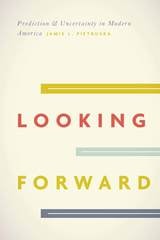
Looking Forward
Prediction and Uncertainty in Modern AmericaJamie L. Pietruska
University of Chicago Press, 2017
Pietruska argues that this late nineteenth-century quest for future certainty had an especially ironic consequence: it led Americans to accept uncertainty as an inescapable part of both forecasting and twentieth-century economic and cultural life. Drawing together histories of science, technology, capitalism, environment, and culture, Looking Forward explores how forecasts functioned as new forms of knowledge and risk management tools that sometimes mitigated, but at other times exacerbated, the very uncertainties they were designed to conquer. Ultimately Pietruska shows how Americans came to understand the future itself as predictable, yet still uncertain.
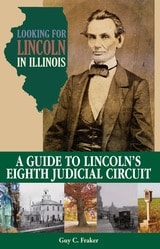
Looking for Lincoln in Illinois
A Guide to Lincoln's Eighth Judicial CircuitGuy C. Fraker
Southern Illinois University Press, 2017
For twenty-three years Abraham Lincoln practiced law on the Eighth Judicial Circuit in east central Illinois, and his legal career is explored in Looking for Lincoln in Illinois: A Guide to Lincoln’s Eighth Judicial Circuit. Guy C. Fraker directs readers and travelers through the prairies to the towns Lincoln visited regularly. Twice a year, spring and fall, Lincoln’s work took him on a journey covering more than four hundred miles. As his stature as a lawyer grew, east central Illinois grew in population and influence, and the Circuit provided Lincoln with clients, friends, and associates who became part of the network that ultimately elevated him to the presidency.
This guidebook to the Circuit features Illinois courthouses, Looking for Lincoln Wayside Exhibits, and other Lincoln points of interest. Fraker guides travelers down the long stretches of quiet country roads that gave Lincoln time to read and think to the locations where Lincoln’s broad range of cases expanded his sense of the economic and social forces changing America.
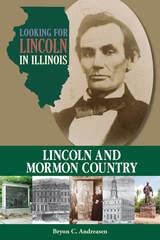
Looking for Lincoln in Illinois
Lincoln and Mormon CountryBryon C. Andreasen
Southern Illinois University Press, 2015
Although they inhabited different political, social, and cultural arenas, Abraham Lincoln and the pioneer generation of Latter-day Saints, or Mormons, shared the same nineteenth-century world. Bryon C. Andreasen’s Looking for Lincoln in Illinois: Lincoln and Mormon Country relates more than thirty fascinating and surprising stories that show how the lives of Lincoln and the Mormons intersected.
This richly illustrated and carefully researched book expands on some of the storyboards found on the Looking for Lincoln Story Trail, from the Mormon capital of Nauvoo to the state capital of Springfield. Created by the Looking for Lincoln Heritage Coalition, this trail consists of wayside exhibits posted in sites of significance to Lincoln’s life and career across fifty-two communities in Illinois. The book’s keyed maps, historic photos, and descriptions of battles, Mormon expeditions, and events at inns, federal buildings, and even Lincoln’s first Illinois log cabin connect the stories to their physical locations.
Exploring the intriguing question of whether Lincoln and Mormon founder Joseph Smith ever met, the book reveals that they traveled the same routes and likely stayed at the same inns. The book also includes colorful and engaging looks at key figures such as Brigham Young, various Mormon apostles, and more. Anyone inspired by Lincoln, as well as Mormon and Illinois history enthusiasts, will appreciate this look back at a long-past, but not forgotten, landscape.
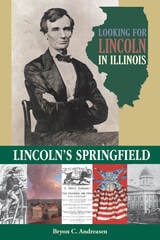
Looking for Lincoln in Illinois
Lincoln's SpringfieldBryon C. Andreasen
Southern Illinois University Press, 2015
Winner, ISHS Certificate of Excellence Award, 2016
Presenting fifty Abraham Lincoln stories—some familiar and beloved, some fresh and unexpected—Looking for Lincoln in Illinois: Lincoln’s Springfield is a carefully researched, richly illustrated guide to the Springfield, Illinois, locations on the Looking for Lincoln Story Trail. Created by the Looking for Lincoln Heritage Coalition, this trail consists of more than two hundred illustrated storyboards posted at sites of significance to Lincoln’s life and career across fifty-two communities in Illinois. The storyboards connect Lincoln-related tales to the geographical locations where they occurred, giving visitors, and now readers, a tour of the social and cultural landscape of Lincoln’s nineteenth-century world while revealing the very human Lincoln known by friends and associates.
This book celebrates the trail as a rich historical resource, featuring the original storyboards produced for Springfield and including twelve additional stories and more than 150 illustrations. Engaging stories in the book bring Lincoln’s Springfield to life: Lincoln created controversy with his Temperance Address, which he delivered in a church on Fourth Street in February 1842. He unexpectedly married Mary Todd in her sister’s home on the edge of Springfield later that year. The Lincolns’ sons used to harness dogs and cats to small wagons and drive them around the dirt streets of town. When Lincoln visited his dentist, he applied his own chloroform, because the practice of analgesia was not yet common. He reportedly played the ball game Fives in a downtown alley while waiting for news of his presidential nomination. And boxing heavyweight champion John C. Heenan visited the presidential candidate in October 1860. Through texts, historic photographs and images, and maps, including one keyed to the story locations in downtown Springfield, readers of this fascinating volume are invited to imagine social and cultural landscapes that have been lost in time.

Lord, Please Don't Take Me in August
African-Americans in Newport and Saratoga Springs, 1870-1930Myra B. Young Armstead
University of Illinois Press, 1999
The lives built by Black Americans in a pair of summer resort towns
In the late nineteenth and early twentieth centuries, northern resort towns were in their heyday as celebrated retreats for America's wealthy. Lord, Please Don't Take Me in August documents the experiences of African Americans in Saratoga Springs, New York, and Newport, Rhode Island--towns that provided a recurring season of expanded employment opportunities, enhanced social life, cosmopolitan experience, and, in a good year, enough money to last through the winter.
Affirming that the decision to live in their tiny resort communities was conscious and deliberate, Myra B. Young Armstead shows how Afro-Saratogians and Afro-Newporters organized their rhythms, their routines, and their communities to create meaningful identities for themselves. Living on streets close to their churches, developing social organizations that promoted their standards of gentility and respectability, and lobbying for wider opportunities, these African Americans actively shaped their lives within the structures and limitations imposed on them.
Armstead situates the resort town between the poles of the rural South and the large industrial cities of the North. She shows how these small northern towns, with their seasonal economic rhythms and domestic wage work, permitted an important continuity between rural and urban lifestyles and a path from rural South to urban North besides the jarring, disruptive journey that often ended in the ghetto.
"Lord, Please Don't Take Me in August" tells a story that is at once American and uniquely African American: a story of economic imperatives and enlarged social aspirations culminating in a season--June, July, and August--that brought Blacks as close as they could get to the American Dream.
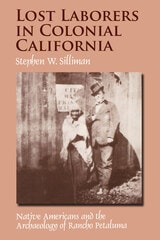
Lost Laborers in Colonial California
Native Americans and the Archaeology of Rancho PetalumaStephen W. Silliman
University of Arizona Press, 2004
This study focuses on Rancho Petaluma north of San Francisco Bay, a large livestock, agricultural, and manufacturing operation on which several hundred—perhaps as many as two thousand—Native Americans worked as field hands, cowboys, artisans, cooks, and servants. One of the largest ranchos in the region, it was owned from 1834 to 1857 by Mariano Guadalupe Vallejo, one of the most prominent political figures of Mexican California. While historians have studied Vallejo, few have considered the Native Americans he controlled, so we know little of what their lives were like or how they adjusted to the colonial labor regime.
Because Vallejo’s Petaluma Adobe is now a state historic park and one of the most well-protected rancho sites in California, this site offers unparalleled opportunities to investigate nineteenth-century rancho life via archaeology. Using the Vallejo rancho as a case study, Stephen W. Silliman examines this California rancho with a particular eye toward Native American participation. Through the archaeological record—tools and implements, containers, beads, bone and shell artifacts, food remains—he reconstructs the daily practices of Native peoples at Rancho Petaluma and the labor relations that structured indigenous participation in and experience of rancho life. This research enables him to expose the multi-ethnic nature of colonialism, counterbalancing popular misconceptions of Native Americans as either non-participants in the ranchos or passive workers with little to contribute to history.
Lost Laborers in Colonial California draws on archaeological data, material studies, and archival research, and meshes them with theoretical issues of labor, gender, and social practice to examine not only how colonial worlds controlled indigenous peoples and practices but also how Native Americans lived through and often resisted those impositions. The book fills a gap in the regional archaeological and historical literature as it makes a unique contribution to colonial and contact-period studies in the Spanish/Mexican borderlands and beyond.
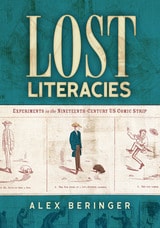
Lost Literacies
Experiments in the Nineteenth-Century US Comic StripAlex Beringer
The Ohio State University Press, 2024
Lost Literacies is the first full-length study of US comic strips from the period prior to the rise of Sunday newspaper comics. Where current histories assume that nineteenth-century US comics consisted solely of single-panel political cartoons or simple “proto-comics,” Lost Literacies introduces readers to an ambitious group of artists and editors who were intent on experimenting with the storytelling possibilities of the sequential strip, resulting in playful comics whose existence upends prevailing narratives about the evolution of comic strips.
Over the course of the nineteenth century, figures such as artist Frank Bellew and editor T. W. Strong introduced sequential comic strips into humor magazines and precursors to graphic novels known as “graphic albums.” These early works reached audiences in the tens of thousands. Their influences ranged from Walt Whitman’s poetry to Mark Twain’s travel writings to the bawdy stage comedies of the Bowery Theatre. Most importantly, they featured new approaches to graphic storytelling that went far beyond the speech bubbles and panel grids familiar to us today. As readers of Lost Literacies will see, these little-known early US comic strips rival even the most innovative modern comics for their diversity and ambition.
Lost in Time
Locating the Stranger in German ModernityJune J. Hwang
Northwestern University Press, 2014
Lost in the Customhouse
Authorship in the American RenaissanceJerome Loving
University of Iowa Press, 1993
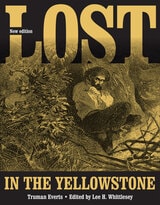
Lost in the Yellowstone
"Thirty-Seven Days of Peril" and a Handwritten Account of Being LostTruman Everts; Edited by Lee H. Whittlesey
University of Utah Press, 2015
In 1870, Truman Everts visited what would two years later become Yellowstone National Park, traveling with an exploration party intent on mapping and investigating that mysterious region. Scattered reports of a mostly unexplored wilderness filled with natural wonders had caught the public’s attention and the fifty-four-year-old Everts, near-sighted and an inexperienced woodsman, had determined to join the expedition. He was soon separated from the rest of the party and from his horse, setting him on a grueling quest for survival. For over a month he wandered Yellowstone alone and injured, with little food, clothing, or other equipment. In “Thirty-seven Days of Peril” he recounted his experiences for the readers of Scribner’s Monthly.
In June 1996, Everts’s granddaughter arrived at Mammoth Hot Springs in Yellowstone National Park to meet with park archivist Lee Whittlesey. She brought two documents that her father had kept hidden and both were handwritten by Everts. One was a brief autobiography that gave new insight into his early life. The other was a never-published alternative account of his confused 1870 journey through Yellowstone. Both have been added to this volume, further enhancing Everts’s unlikely tale of survival.
Lost
Miscarriage in Nineteenth-Century AmericaWithycombe, Shannon
Rutgers University Press, 2019
In Lost, medical historian Shannon Withycombe weaves together women’s personal writings and doctors’ publications from the 1820s through the 1910s to investigate the transformative changes in how Americans conceptualized pregnancy, understood miscarriage, and interpreted fetal tissue over the course of the nineteenth century. Withycombe’s pathbreaking research reveals how Americans construed, and continue to understand, miscarriage within a context of reproductive desires, expectations, and abilities. This is the first book to utilize women’s own writings about miscarriage to explore the individual understandings of pregnancy loss and the multiple social and medical forces that helped to shape those perceptions. What emerges from Withycombe’s work is unlike most medicalization narratives.
Lothario's Corpse
Libertine Drama and the Long-Running Restoration, 1700-1832Daniel Gustafson
Bucknell University Press, 2020
Published by Bucknell University Press. Distributed worldwide by Rutgers University Press.
Lottie Deno
A Novel of the Civil War and the American SouthwestFrank Thurmond
Parkhurst Brothers, Inc., 2024
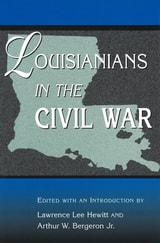
Louisianians in the Civil War
Edited & Intro by Lawrence Lee Hewitt & Arthur W. Bergeron, Jr.
University of Missouri Press, 2002
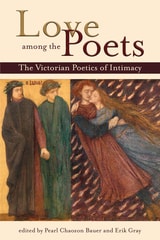
Love among the Poets
The Victorian Poetics of IntimacyPearl Chaozon Bauer; Erik Gray
Ohio University Press, 2024
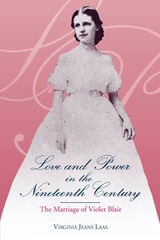
Love and Power in the Nineteenth Century
The Marriage of Violet BlairVirginia Jeans Laas
University of Arkansas Press, 1998
Winner, 1999 Missouri Conference on History Book Award
This fascinating biography of a marriage in the Gilded Age closely examines the dynamic flow of power, control, and love between Washington blue blood Violet Blair and New Orleans attorney Albert Janin. Based on their voluminous correspondence as well as Violet’s extensive diaries, it offers a thoroughly intimate portrait of a fifty-four-year union which, in many ways, conformed to societal strictures, yet always created its own definition of itself in order to fit the flux of needs of both husband and wife.
Central to their story is Violet’s fierce determination to maintain her autonomy within the patriarchic institution of marriage. An enduring belle who thought, talked, and acted with the assurance and self-confidence of one whose wishes demanded obedience, she rejected the Victorian ideal of women as silent, submissive consorts. Yet her feminism was a private one, not played out on a public stage but kept to the confines of her own daily life and marriage.
With abundant documentary evidence to draw upon, Laas ties this compelling story to broader themes of courtiship behavior, domesticity, gender roles, extended family bonds, elitism, and societal stereotyping. Deeply researched and beautifully written, Love and Power in the Nineteenth Century has the dual virtue of making an important historical contribution while also appealing to a broad popular audience.
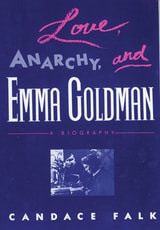
Love, Anarchy, & Emma Goldman
A BiographyFalk, Candace
Rutgers University Press, 1990
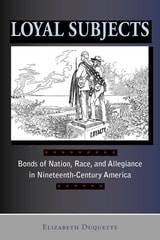
Loyal Subjects
Bonds of Nation, Race, and Allegiance in Nineteenth-Century AmericaDuquette, Elizabeth
Rutgers University Press, 2010
Loyal Subjects considers how the Civil War complicated the cultural value of emotion, especially the ideal of sympathy. Through an analysis of literary works written during and after the conflict-from Nathaniel Hawthorne's "Chiefly About War Matters" through Henry James's The Bostonians and Charles Chestnutt's "The Wife of His Youth," to the Pledge of Allegiance and W.E.B. Du Bois's John Brown, among many others-Duquette reveals that although American literary criticism has tended to dismiss the Civil War's impact, postwar literature was profoundly shaped by loyalty.
Lydia Maria Child
A Radical American LifeLydia Moland
University of Chicago Press, 2022
By 1830, Lydia Maria Child had established herself as something almost unheard of in the American nineteenth century: a beloved and self-sufficient female author. Best known today for the immortal poem “Over the River and through the Wood,” Child had become famous at an early age for spunky self-help books and charming children’s stories. But in 1833, Child shocked her readers by publishing a scathing book-length argument against slavery in the United States—a book so radical in its commitment to abolition that friends abandoned her, patrons ostracized her, and her book sales plummeted. Yet Child soon drew untold numbers to the abolitionist cause, becoming one of the foremost authors and activists of her generation.
Lydia Maria Child: A Radical American Life tells the story of what brought Child to this moment and the extraordinary life she lived in response. Through Child’s example, philosopher Lydia Moland asks questions as pressing and personal in our time as they were in Child’s: What does it mean to change your life when the moral future of your country is at stake? When confronted by sanctioned evil and systematic injustice, how should a citizen live? Child’s lifetime of bravery, conviction, humility, and determination provides a wealth of spirited guidance for political engagement today.
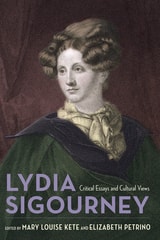
Lydia Sigourney
Critical Essays and Cultural ViewsMary Louise Kete
University of Massachusetts Press, 2018
During her lifetime, Lydia Sigourney was acclaimed as nineteenth-century America's most popular woman poet and published widely as a historian, travel writer, essayist, and educator. While serious critical attention to her work languished following her death and into the twentieth century, a growing number of critics and writers have reexamined Sigourney and her large body of writing and have given her a central place in the “new canon.”
This first collection of original essays devoted to the poet's work puts many of the best scholars on Sigourney together in one place and in conversation with one another. The volume includes critical essays examining her literary texts as well as essays that unpack Sigourney's participation in the cultural movements of her day. Holding powerful opinions about the role of women in society, Sigourney was not afraid to advocate against government policies that, in her view, undermined the promise of America, even as she was held up as a paragon of American womanhood and middle-class rectitude. The resulting portrait promises to engage readers who wish to know more about Sigourney's writing, her career, and the causes that inspired her.
Along with the volume editors, contributors include Ann Beebe, Paula Bernat Bennett, Janet Dean, Sean Epstein-Corbin, Annie Finch, Gary Kelly, Paul Lauter, Amy J. Lueck, Ricardo Miguel-Alfonso, Jennifer Putzi, Angela Sorby, Joan Wry, and Sandra Zagarell.
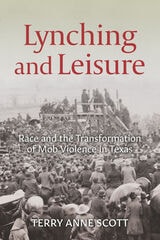
Lynching and Leisure
Race and the Transformation of Mob Violence in TexasTerry Anne Scott
University of Arkansas Press, 2022
Winner, 2022 Ottis Lock Endowment “Best Book” Award from the East Texas Historical Association
In Lynching and Leisure, Terry Anne Scott examines how white Texans transformed lynching from a largely clandestine strategy of extralegal punishment into a form of racialized recreation in which crowd involvement was integral to the mode and methods of the violence. Scott powerfully documents how lynchings came to function not only as tools for debasing the status of Black people but also as highly anticipated occasions for entertainment, making memories with friends and neighbors, and reifying whiteness. In focusing on the sense of pleasure and normality that prevailed among the white spectatorship, this comprehensive study of Texas lynchings sheds new light on the practice understood as one of the chief strategies of racial domination in the nineteenth- and twentieth-century South.
Lynching in Colorado, 1859-1919
Stephen J. Leonard
University Press of Colorado, 2022
Lynching in the New South
Georgia and Virginia, 1880-1930W. Fitzhugh Brundage
University of Illinois Press, 1993
A groundbreaking study, Lynching in the New South is a classic portrait of the tradition of violence that poisoned American life.
Lyric Complicity
Poetry and Readers in the Golden Age of Russian LiteratureDaria Khitrova
University of Wisconsin Press, 2019
Lyric Complicity helps modern readers recover Russian poetry’s former uses and functions—life situations that moved people to quote or perform a specific passage from a poem or a forgotten occasion that created unforgettable verse.
Lyrical Liberators
The American Antislavery Movement in Verse, 1831–1865Monica Pelaez
Ohio University Press, 2018
Before Black Lives Matter and Hamilton, there were abolitionist poets, who put pen to paper during an era when speaking out against slavery could mean risking your life. Indeed, William Lloyd Garrison was dragged through the streets by a Boston mob before a planned lecture, and publisher Elijah P. Lovejoy was fatally shot while defending his press from rioters. Since poetry formed a part of the cultural, political, and emotional lives of readers, it held remarkable persuasive power. Yet antislavery poems have been less studied than the activist editorials and novels of the time.
In Lyrical Liberators, Monica Pelaez draws on unprecedented archival research to recover these poems from the periodicals—Garrison’s Liberator, Frederick Douglass’s North Star, and six others—in which they originally appeared. The poems are arranged by theme over thirteen chapters, a number that represents the amendment that finally abolished slavery in 1865. The book collects and annotates works by critically acclaimed writers, commercially successful scribes, and minority voices including those of African Americans and women.
There is no other book like this. Sweeping in scope and passionate in its execution, Lyrical Liberators is indispensable for scholars and teachers of American literature and history, and stands as a testimony to the power of a free press in the face of injustice.
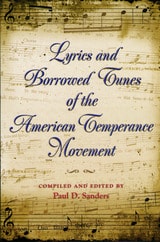
Lyrics and Borrowed Tunes of the American Temperance Movement
Edited & Compiled by Paul D. Sanders
University of Missouri Press, 2006
Cold water is the drink for me / Of all the drinks the best, sir; / Your grog, of whate’er name it be, / I dare not for to taste, sir.
Such a lyric, sung to the tune of “Yankee Doodle,” was typical ammunition in the temperance movement’s battle against alcohol. By the 1830s, Americans drank an average of 9.5 gallons of hard liquor each year. From the 1840s until the beginning of Prohibition, well over one hundred temperance songbooks were published in which inspirational lyrics were set to mostly borrowed tunes in the hope of persuading citizens to put down the bottle.