Results by title
4416 books match the query 'Anthropology' and 123 start with l
Living without the Dead
Loss and Redemption in a Jungle CosmosPiers Vitebsky
University of Chicago Press, 2017
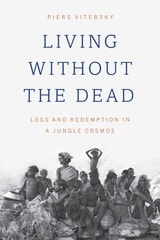
Today, young Sora are rejecting the worldview of their ancestors and switching their allegiance to warring sects of fundamentalist Christianity or Hinduism. Communion with ancestors is banned as sacred sites are demolished, female shamans are replaced by male priests, and debate with the dead gives way to prayer to gods. For some, this shift means liberation from jungle spirits through literacy, employment, and democratic politics; others despair for fear of being forgotten after death.
How can a society abandon one understanding of reality so suddenly and see the world in a totally different way? Over forty years, anthropologist Piers Vitebsky has shared the lives of shamans, pastors, ancestors, gods, policemen, missionaries, and alphabet worshippers, seeking explanations from social theory, psychoanalysis, and theology. Living without the Dead lays bare today’s crisis of indigenous religions and shows how historical reform can bring new fulfillments—but also new torments and uncertainties.
Vitebsky explores the loss of the Sora tradition as one for greater humanity: just as we have been losing our wildernesses, so we have been losing a diverse range of cultural and spiritual possibilities, tribe by tribe. From the award-winning author of The Reindeer People, this is a heartbreaking story of cultural change and the extinction of an irreplaceable world, even while new religious forms come into being to take its place.
Llamas beyond the Andes
Untold Histories of Camelids in the Modern WorldMarcia Stephenson
University of Texas Press, 2023
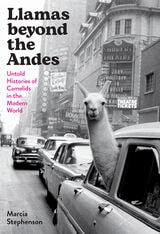
Camelids are vital to the cultures and economies of the Andes. The animals have also been at the heart of ecological and social catastrophe: Europeans overhunted wild vicuña and guanaco and imposed husbandry and breeding practices that decimated llama and alpaca flocks that had been successfully tended by Indigenous peoples for generations. Yet the colonial encounter with these animals was not limited to the New World. Llamas beyond the Andes tells the five-hundred-year history of animals removed from their native habitats and transported overseas.
Initially Europeans prized camelids for the bezoar stones found in their guts: boluses of ingested matter that were thought to have curative powers. Then the animals themselves were shipped abroad as exotica. As Europeans and US Americans came to recognize the economic value of camelids, new questions emerged: What would these novel sources of protein and fiber mean for the sheep industry? And how best to cultivate herds? Andeans had the expertise, but knowledge sharing was rarely easy. Marcia Stephenson explores the myriad scientific, commercial, and cultural interests that have attended camelids globally, making these animals a critical meeting point for diverse groups from the North and South.

Locating Cultural Creativity
John Liep
Pluto Press, 2001
Logics of Empowerment
Development, Gender, and Governance in Neoliberal IndiaAradhana Sharma
University of Minnesota Press, 2008
A critical look at the globally dominant development strategy of “empowerment”
Celebratory news features about India’s thriving middle class tell only part of the story of the country’s recent economic rise, frequently glossing over the 300 million Indians who live on the margins and struggle to survive under economic liberalization. How do those cast out of their country’s successes perceive and respond to their position and mobilize against disempowerment?
In Logics of Empowerment, Aradhana Sharma takes up these questions, focusing on the work of an innovative women’s program called Mahila Samakhya that is part governmental and part nongovernmental and strives to empower those rural Indian women who have been pushed aside. She details the awkward ideological articulations and paradoxical outcomes of this unique activist-cum-government organizational structure and usage of empowerment. Bringing much-needed specificity to the study of neoliberalism, Logics of Empowerment fosters a deeper understanding of development and politics in contemporary India.
Logics of History
Social Theory and Social TransformationWilliam H. Sewell Jr.
University of Chicago Press, 2005
Renowned for his work at the crossroads of history, sociology, political science, and anthropology, Sewell argues that only by combining a more sophisticated understanding of historical time with a concern for larger theoretical questions can a satisfying social theory emerge. In Logics of History, he reveals the shape such an engagement could take, some of the topics it could illuminate, and how it might affect both sides of the disciplinary divide.
London's Urban Landscape
Another Way of TellingEdited by Christopher Tilley
University College London, 2019
London’s Urban Landscape returns us to the everyday lives of people and the manner in which they understand their lives. The embodied experience of the city is invoked in the descriptions of entangled relationships between people and places and the paths of movement between them.
Loneliness and Its Opposite
Sex, Disability, and the Ethics of EngagementDon Kulick and Jens Rydström
Duke University Press, 2015
Loneliness and Its Opposite documents how two countries generally imagined to be progressive engage with these questions in very different ways. Denmark and Sweden are both liberal welfare states, but they diverge dramatically when it comes to sexuality and disability. In Denmark, the erotic lives of people with disabilities are acknowledged and facilitated. In Sweden, they are denied and blocked. Why do these differences exist, and how do both facilitation and hindrance play out in practice?
Loneliness and Its Opposite charts complex boundaries between private and public, love and sex, work and intimacy, and affection and abuse. It shows how providing disabled adults with access to sexual lives is not just crucial for a life with dignity. It is an issue of fundamental social justice with far reaching consequences for everyone.
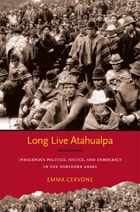
Long Live Atahualpa
Indigenous Politics, Justice, and Democracy in the Northern AndesEmma Cervone
Duke University Press, 2012
Cervone describes how the Inca Atahualpa contested racial subordination by intervening in matters of resource distribution, justice, and cultural politics. Considering local indigenous politics and indigenous mobilization at the national and international levels, she explains how, beginning in the 1960s, state-led modernization created political openings by generating new economic formations and social categories. Long Live Atahualpa sheds new light on indigenous peoples operating at the crossroads of global capitalism and neoliberal reforms as they redefine historically rooted relationships of subordination.
Lords of Lambityeco
Political Evolution in the Valley of Oaxaca during the Xoo PhaseMichael Lind
University Press of Colorado, 2010
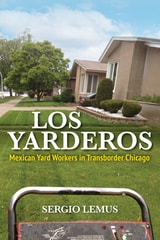
Los Yarderos
Mexican Yard Workers in Transborder ChicagoSergio Lemus
University of Illinois Press, 2025
Sergio Lemus explores the lives of these migrants and looks at the struggles they face as they work to make the city their home. Drawing on fieldwork in South Chicago, Lemus tells the stories of first and second-generation yarderos and discusses the historical, economic, cultural, and political ramifications they face as they acquire their working-class identity. Lemus’s compassionate portrait places them within America’s ongoing tradition as a nation of immigrants while analyzing their place within today’s transborder cultural moment.
Perceptive and humane, Los Yarderos reveals how a group of Mexican immigrants navigates the crossings of the borders that divide class, color hierarchies, gender, and belonging.
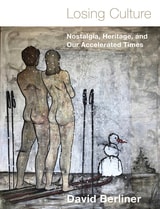
Losing Culture
Nostalgia, Heritage, and Our Accelerated TimesDavid Berliner
Rutgers University Press, 2020
Such sentiments get echoed around the world, from aging Trump supporters in West Virginia to young villagers in West Africa. But what is triggering this sense of cultural loss, and to what ends does this rhetoric get deployed?
To answer these questions, anthropologist David Berliner travels around the world, from Guinea-Conakry, where globalization affects the traditional patriarchal structure of cultural transmission, to Laos, where foreign UNESCO experts have become self-appointed saviors of the nation’s cultural heritage. He also embarks on a voyage of critical self-exploration, reflecting on how anthropologists handle their own sense of cultural alienation while becoming deeply embedded in other cultures. This leads into a larger examination of how and why we experience exonostalgia, a longing for vanished cultural heydays we never directly experienced.
Losing Culture provides a nuanced analysis of these phenomena, addressing why intergenerational cultural transmission is vital to humans, yet also considering how efforts to preserve disappearing cultures are sometimes misguided or even reactionary. Blending anthropological theory with vivid case studies, this book teaches us how to appreciate the multitudes of different ways we might understand loss, memory, transmission, and heritage.

Loss and Wonder at the World’s End
Laura A. Ogden
Duke University Press, 2021
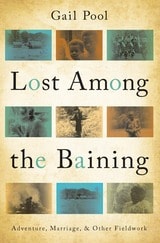
Lost Among the Baining
Adventure, Marriage, and Other FieldworkGail Pool
University of Missouri Press, 2015
In the late sixties, Gail Pool and her husband set off for an adventure in New Guinea. He was a graduate student in anthropology; she was an aspiring writer. They prepared, as academics do, by reading, practicing with language tapes, consulting with the nearest thing to experts, and then, excited and optimistic, off they went. But all their research could not prepare them for the reality of life in the jungle. As they warded off gargantuan insects, slogged through seemingly endless mud, and turned on each other in fatigue and frustration, they struggled to somehow connect with their enigmatic hosts, the Baining—a people who showed no desire to be studied.
Sixteen months later they returned home. Despite months of trying, they had not been able to make sense of the Baining’s culture. Worse yet, their lives no longer seemed to make sense. Pool put her journals away. Her husband abandoned the study of anthropology.
Decades later, Pool returned to her journals and found in her jumbled notes the understanding that had eluded her twenty-three–year-old self. Finally, she and her husband returned to New Guinea for a shorter visit and a warm reunion with the tribe that challenged them on so many levels and, Pool now realized, made their journey and lives deeper and richer.
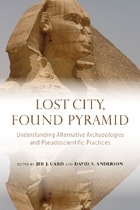
Lost City, Found Pyramid
Understanding Alternative Archaeologies and Pseudoscientific PracticesEdited by Jeb J. Card and David S. Anderson
University of Alabama Press, 2016
A critical investigation into how modern myths shape interpretations of the ancient past.
Lost City, Found Pyramid delves into the fascinating world of sensational “pseudoarchaeology,” from perennial discoveries of lost pyramids or civilizations to contemporary ghost-hunting and reality TV. It examines how nonscientific pursuit of myths and legends warps both public perceptions of archaeology and of human history itself.
A collection of twelve engaging and insightful essays, Lost City, Found Pyramid does far more than argue for the simple debunking of false archaeology. Rather, it brings into focus the value of understanding how and why pseudoarchaeology captures the public imagination. By comprehending pseudoarchaeology’s appeal as a media product, cultural practice, and communication strategy, archaeologists can enhance and enliven how they communicate about real archaeology in the classroom and in the public arena.
The first part of Lost City, Found Pyramid provides numerous case studies. Some examine the work of well-intentioned romantics who project onto actual archaeological data whimsical interpretative frameworks or quixotic “proofs” that confirm legends, such as that of the Lost White City of Honduras, or other alternative claims. Other case studies lay bare how false claims may inadvertently lead to the perpetuation of ethnic stereotypes, economic exploitation, political adventurism, and a misunderstanding of science.
Offering much of interest to scholars and students of archaeology, archaeology buffs, as well as policy-makers involved in the discovery, curation, and care of archaeological sites and relics, Lost City, Found Pyramid provides an invaluable corrective and hopeful strategy for engaging the public’s curiosity with the compelling world of archaeological discovery.
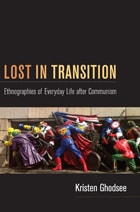
Lost in Transition
Ethnographies of Everyday Life after CommunismKristen Ghodsee
Duke University Press, 2011
Louisiana Place Names of Indian Origin
A Collection of WordsWilliam A. Read, edited and with an introduction by George M. Riser
University of Alabama Press, 2008
His writings spanned five decades and have been instrumental across a wide range of academic disciplines. Most importantly, Read devoted a good portion of his research to the meaning of place names in the southeastern United States—especially as they related to Indian word adoption by Europeans.
This volume includes his three Louisiana articles combined: Louisiana: Louisiana Place-Names of Indian Origin (1927), More Indian Place-Names in Louisiana (1928), and Indian Words (1931). Joining Alabama's reprint of Indian Places Names in Alabama and Florida Place Names of Indian Origin and Seminole Personal Names, this volume completes the republication of the southern place name writings of William A. Read.

Love Apocalypse
New Intimacies and the Decline of Marriage and FertilityAlex J. Nelson
Rutgers University Press, 2026
Marriage and fertility rates are falling around the world, upending social security planning and threatening economic growth. In Love Apocalypse, anthropologists present their insights into this society-altering demographic shift, drawing on their research into the ways love, romantic relationships, and family are being transformed by cultural, social, and economic forces. Each case study in this volume examines a unique cultural context from either Asia (China, South Korea, Japan, India), Europe (Germany, Lithuania), or Latin America (Cuba, Peru), grounded in years of ethnographic research into how communities’ experiences and perceptions of love, marriage, and family are changing in response to economic precarity, shifting gender relations, status competition, and diversifying cultural norms. It is increasingly clear that marriage and two-parent nuclear families will not be the universal norm of the twenty-first century even if this arrangement was largely idealized a mere generation ago. However, this does not mean the end of love, intimacy, or family but rather its transformation and the emergence of new intimate relationships and adaptations to the challenges and opportunities of life in the twenty-first century.

Love Songs in Motion
Voicing Intimacy in SomalilandChristina J. Woolner
University of Chicago Press, 2023
At first listen, both music and talk about love are conspicuously absent from Somaliland’s public soundscapes. The lingering effects of war, the contested place of music in Islam, and gendered norms of emotional expression limit opportunities for making music and sharing personal feelings. But while Christina J. Woolner was researching peacebuilding in Somaliland’s capital, Hargeysa, she kept hearing snippets of songs. Almost all of these, she learned, were about love. In these songs, poets, musicians, and singers collaborate to give voice to personal love aspirations and often painful experiences of love-suffering. Once in circulation, the intimate and heartfelt voices of love songs provide rare and deeply therapeutic opportunities for dareen-wadaag (feeling-sharing). In a region of political instability, these songs also work to powerfully unite listeners on the basis of shared vulnerability, transcending social and political divisions and opening space for a different kind of politics.
Taking us from 1950s recordings preserved on dusty cassettes to new releases on YouTube and live performances at Somaliland’s first postwar music venue—where the author herself eventually takes the stage—Woolner offers an account of love songs in motion that reveals the capacity of music to connect people and feelings across time and space, creating new possibilities for relating to oneself and others.

Love in Africa
Edited by Jennifer Cole and Lynn M. Thomas
University of Chicago Press, 2009
In recent years, scholarly interest in love has flourished. Historians have addressed the rise of romantic love and marriage in Europe and the United States, while anthropologists have explored the ways globalization has reshaped local ideas about those same topics. Yet, love in Africa has been peculiarly ignored, resulting in a serious lack of understanding about this vital element of social life—a glaring omission given the intense focus on sexuality in Africa in the wake of HIV/AIDS.
Love in Africa seeks both to understand this failure to consider love and to begin to correct it. In a substantive introduction and eight essays that examine a variety of countries and range in time from the 1930s to the present, the contributors collectively argue for the importance of paying attention to the many different cultural and historical strands that constitute love in Africa. Covering such diverse topics as the reception of Bollywood movies in 1950s Zanzibar, the effects of a Mexican telenovela on young people’s ideas about courtship in Niger, the models of romance promoted by South African and Kenyan magazines, and the complex relationship between love and money in Madagascar and South Africa, Love in Africa is a vivid and compelling look at love’s role in African society.

Love in the Drug War
Selling Sex and Finding Jesus on the Mexico-US BorderBy Sarah Luna
University of Texas Press, 2020
2020 — Ruth Benedict Prize – Association for Queer Anthropology, American Anthropological Association
2020 — Gloria E. Anzaldúa Book Prize – National Women’s Studies Association
2020 — Honorable Mention, Sara A. Whaley Book Prize
2021 — Best Book in Social Sciences – Mexico Section, Latin American Studies Association (LASA)
Sex, drugs, religion, and love are potent combinations in la zona, a regulated prostitution zone in the city of Reynosa, across the border from Hidalgo, Texas. During the years 2008 and 2009, a time of intense drug violence, Sarah Luna met and built relationships with two kinds of migrants, women who moved from rural Mexico to Reynosa to become sex workers and American missionaries who moved from the United States to forge a fellowship with those workers.
Luna examines the entanglements, both intimate and financial, that define their lives. Using the concept of obligar, she delves into the connections that tie sex workers to their families, their clients, their pimps, the missionaries, and the drug dealers—and to the guilt, power, and comfort of faith. Love in the Drug War scrutinizes not only la zona and the people who work to survive there, but also Reynosa itself—including the influences of the United States—adding nuance and new understanding to the current Mexico-US border crisis.
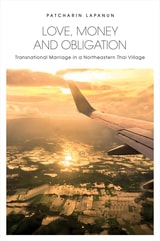
Love, Money and Obligation
Transnational Marriage in a Northeastern Thai VillagePatcharin Lapanun
National University of Singapore Press, 2019
Northeast Thailand has seen an increase in marriages between Thai women and farang (Western) men. Often the women are less well off and from rural areas in the country, while the men largely come from the United States and Europe and settle permanently in Thailand. These unions have created a new social class, with distinctive consumption patterns and lifestyles. And they are challenging gender relations and local perceptions of sexuality, marriage, and family.
In Love, Money and Obligation, Patcharin Lapanun offers an exploration of these marriages and their larger effect on Thai communities. Her interviews with women and men engaging in these transnational relationships highlight the complexities of the associations, as they are shaped by love, money, and gender obligations on the one hand and the dynamics of socio-cultural and historical contexts on the other. Her in-depth and even-handed examination highlights the importance of women’s agency and the strength and creativity of people seeking to forge meaningful lives in the processes of social transition and in the face of local and global encounters.
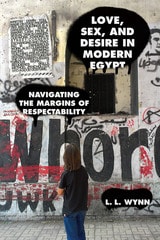
Love, Sex, and Desire in Modern Egypt
Navigating the Margins of RespectabilityBy L. L. Wynn
University of Texas Press, 2018
Cairo is a city obsessed with honor and respectability—and love affairs. Sara, a working-class woman, has an affair with a married man and becomes pregnant, only to be abandoned by him; Ayah and Zeid, a respectably engaged couple, argue over whether Ayah’s friend is a prostitute or a virgin; Malak, a European belly dancer who sometimes gets paid for sex, wants to be loved by a man who won’t treat her like a whore just because she’s a dancer; and Alia, a Christian banker who left her abusive husband, is the mistress of a wealthy Muslim man, Haroun, who encourages business by hosting risqué parties for other men and their mistresses.
Set in transnational Cairo over two decades, Love, Sex, and Desire in Modern Egypt is an ethnography that explores female respectability, male honor, and Western theories and fantasies about Arab society. L. L. Wynn uses stories of love affairs to interrogate three areas of classic anthropological theory: mimesis, kinship, and gift. She develops a broad picture of how individuals love and desire within a cultural and political system that structures the possibilities of, and penalties for, going against sexual and gender norms. Wynn demonstrates that love is at once a moral horizon, an attribute that “naturally” inheres in particular social relations, a social phenomenon strengthened through cultural concepts of gift and kinship, and an emotion deeply felt and desired by individuals.

Loving Animals
Toward a New Animal AdvocacyKathy Rudy
University of Minnesota Press, 2013
The contemporary animal rights movement encompasses a wide range of sometimes-competing agendas from vegetarianism to animal liberation. For people for whom pets are family members—animal lovers outside the fray—extremist positions in which all human–animal interaction is suspect often discourage involvement in the movement to end cruelty to other beings. In Loving Animals, Kathy Rudy argues that in order to achieve such goals as ending animal testing and factory farming, activists need to be better attuned to the profound emotional, even spiritual, attachment that many people have with the animals in their lives.
Offering an alternative to both the acceptance of animal exploitation and radical animal liberation, Rudy shows that a deeper understanding of the nature of our feelings for and about animals can redefine the human–animal relationship in a positive way. Through extended interviews with people whose lives are intertwined with animals, analysis of the cultural representation of animals, and engaging personal accounts, she explores five realms in which humans use animals: as pets, for food, in entertainment, in scientific research, and for clothing. In each case she presents new methods of animal advocacy to reach a more balanced and sustainable relationship association built on reciprocity and connection.
Using this intense emotional bond as her foundation, Rudy suggests that the nearly universal stories we tell of living with and loving animals will both broaden the support for animal advocacy and inspire the societal changes that will improve the lives of animals—and humans—everywhere.