Results by title
4743 books match the query 'Religion' and 136 start with l
Local Production, Administration, and Reception of Medieval Canon Law
Steven A. Schoenig
Catholic University of America Press, 2026
Locations of Buddhism
Colonialism and Modernity in Sri LankaAnne M. Blackburn
University of Chicago Press, 2010
Modernizing and colonizing forces brought nineteenth-century Sri Lankan Buddhists both challenges and opportunities. How did Buddhists deal with social and economic change; new forms of political, religious, and educational discourse; and Christianity? And how did Sri Lankan Buddhists, collaborating with other Asian Buddhists, respond to colonial rule? To answer these questions, Anne M. Blackburn focuses on the life of leading monk and educator Hikkaduve Sumangala (1827–1911) to examine more broadly Buddhist life under foreign rule.
In Locations of Buddhism, Blackburn reveals that during Sri Lanka’s crucial decades of deepening colonial control and modernization, there was a surprising stability in the central religious activities of Hikkaduve and the Buddhists among whom he worked. At the same time, they developed new institutions and forms of association, drawing on pre-colonial intellectual heritage as well as colonial-period technologies and discourse. Advocating a new way of studying the impact of colonialism on colonized societies, Blackburn is particularly attuned here to human experience, paying attention to the habits of thought and modes of affiliation that characterized individuals and smaller scale groups. Locations of Buddhism is a wholly original contribution to the study of Sri Lanka and the history of Buddhism more generally.

Logic and Sin in the Writings of Ludwig Wittgenstein
Philip R. Shields
University of Chicago Press, 1992
"Shields argues that the appearance throughout Wittgenstein's writings of such concepts as ritual, limit, transgression, a change of will, pride, temptation, and judgment implies a relation between religion and the logical aspects of Wittgenstein's philosophy."—Choice
"Of the many recent books about Wittgenstein, Logic and Sin is one of the very few that are well worth having"—Fergus Kerr, Modern Theology
"What Shields has uncovered in Wittgenstein's religious sensibility is something genuine and profound. . . . Shields has not just written an important book on Wittgenstein but an enlightening work that invites further reflection."—Eric O. Springsted, Cross Currents
Logos and Revelation
Ibn 'Arabi, Meister Eckhart, and Mystical HermeneuticsRobert J. Dobie
Catholic University of America Press, 2010
Long March Ahead
African American Churches and Public Policy in Post-Civil Rights AmericaR. Drew Smith ed.
Duke University Press, 2004
Long March Ahead emphasizes the need for African American churches to complement the excellent work they do in implementing policies set by others by getting more involved in shaping public policy. The contributors explore the efficacy of different means of public policy advocacy and social service delivery, including faith-based initiatives. At the same time, they draw attention to trends that have constrained political involvement by African American churches: the increased professionalization of policy advocacy and lobbying, the underdevelopment of church organizational structures devoted to policy work, and tensions between religious imperatives and political activism. Long March Ahead takes an important look at the political role of African American churches after the great policy achievements of the civil rights era.
Contributors
Cathy J. Cohen
Megan McLaughlin
Columba Aham Nnorum
Michael Leo Owens
Desiree Pedescleaux
Barbara D. Savage
R. Drew Smith
Emilie Townes
Christopher Winship
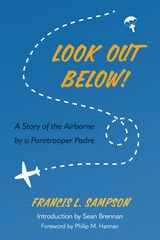
Look Out Below! A Story of the Airborne by a Paratrooper Padre
Francis L. Sampson
Catholic University of America Press, 2023
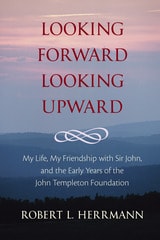
Looking Forward, Looking Upward
My Life, My Friendship with Sir John, and the Early Years of the John Templeton FoundationRobert L. Herrmann
Templeton Press, 2013
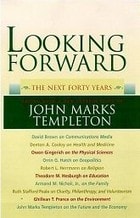
Looking Forward
Next Forty YearsJohn Marks Templeton
Templeton Press, 1998
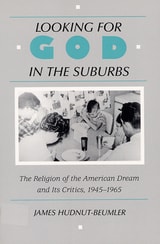
Looking for God in the Suburbs
The Religion of the American Dream and its Critics, 1945-1965Hudnut-Beumler, James
Rutgers University Press, 1994
In the 1950s, 99 percent of adult Americans said they believed in God. How, James Hudnut-Beumler asks, did this consensus about religion turn into the confrontational debates over religion in the 1960s? He argues that post-World War II suburban conformity made church-going so much a part of middle-class values and life that religion and culture became virtually synonymous. Secular critics like David Riesman, William Whyte, C. Wright Mills, and Dwight Macdonald, who blamed American culture for its conformism and lack of class consciousness, and religious critics like Will Herberg, Gibson Winter, and Peter Berger, who argued that religion had lost its true roots by incorporating only the middle class, converged in their attacks on popular religion.
Although most Americans continued to live and worship as before, a significant number of young people followed the critics' call for a faith that led to social action, but they turned away from organized religion and toward the counterculture of the sixties. The critics of the 1950s deserve credit for asking questions about the value of religion as it was being practiced and the responsibilities of the affluent to the poor—and for putting these issues on the social and cultural agenda of the next generation.
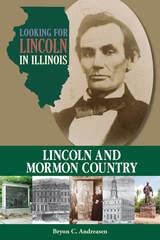
Looking for Lincoln in Illinois
Lincoln and Mormon CountryBryon C. Andreasen
Southern Illinois University Press, 2015
Although they inhabited different political, social, and cultural arenas, Abraham Lincoln and the pioneer generation of Latter-day Saints, or Mormons, shared the same nineteenth-century world. Bryon C. Andreasen’s Looking for Lincoln in Illinois: Lincoln and Mormon Country relates more than thirty fascinating and surprising stories that show how the lives of Lincoln and the Mormons intersected.
This richly illustrated and carefully researched book expands on some of the storyboards found on the Looking for Lincoln Story Trail, from the Mormon capital of Nauvoo to the state capital of Springfield. Created by the Looking for Lincoln Heritage Coalition, this trail consists of wayside exhibits posted in sites of significance to Lincoln’s life and career across fifty-two communities in Illinois. The book’s keyed maps, historic photos, and descriptions of battles, Mormon expeditions, and events at inns, federal buildings, and even Lincoln’s first Illinois log cabin connect the stories to their physical locations.
Exploring the intriguing question of whether Lincoln and Mormon founder Joseph Smith ever met, the book reveals that they traveled the same routes and likely stayed at the same inns. The book also includes colorful and engaging looks at key figures such as Brigham Young, various Mormon apostles, and more. Anyone inspired by Lincoln, as well as Mormon and Illinois history enthusiasts, will appreciate this look back at a long-past, but not forgotten, landscape.

Looking for Strangers
The True Story of My Hidden Wartime ChildhoodDori Katz
University of Chicago Press, 2013
Lord I Love You! Homilies through the Liturgical Year
Volume 2: Advent, Christmas, Marian Feasts, and Saints DaysPietro Pope Benedict XVI
Catholic University of America Press, 2025
Lord, I Love You! Homilies through the Liturgical Year
Volume 1: Lent, Easter, and Solemnities of the LordPietro Pope Benedict XVI
Catholic University of America Press, 2025
Losing the Good Portion
Why Men Are Alienated from ChristianityLeon J. Podles
St. Augustine's Press, 2017
Losing the Good Portion: Why Men Are Alienated from Christianity explores the causes and consequences of the almost millennium-old disparity between the participation of lay men and lay women in the churches of Western Christianity. Podles considers both the anecdotal and statistical evidence for the lack of men: sermons, church rolls, censuses, and sociological analyses.
Podles sees the intellectual roots of lack of men in the Aristotelian understanding of male and female as active and passive, an understanding which has formed all discussion of masculinity and femininity, from Aquinas through Schleiermacher, Barth, and Hans Urs von Balthasar, all of whom saw femininity as more compatible with Christianity than masculinity. Men, according to anthropologists and psychologists, go through a difficult process to attain masculinity and therefore distance themselves from threats to that masculine identity, including Christianity.
Men suspected the clergy was effeminate and sexually irregular. Historians of violence have examined the decline in violence in Europe and the civilizing role of the clergy, a role which further alienated men and led to violent anticlericalism
Podles examines the presentation of Jesus’ masculinity in Scripture and images of Jesus’ masculinity in art, the role of thumos in spirituality, and the various movements that have helped keep men connected to the churches. He makes suggestions for possible outreach to men.
Lost Apostles
Forgotten Members of Mormonism's Original Quorum of the TwelveWilliam Shepard
Signature Books, 2013
Of the twelve men selected, nine would eventually be pruned from the vineyard themselves, to varying degrees. Seven were excommunicated, one of whom was reinstated to his position in the Twelve. Of the other six, the subjects of this book, none returned to the apostleship and four never came back to the Church at all. Those who left faded into obscurity except for when they are occasionally still mentioned in sermons as cautionary tales. But two of them made their marks in other areas of society, John Boynton becoming a successful dentist, a popular lecturer, geologist, and inventor with dozens of important patents to his name, while Lyman Johnson became a prominent attorney and business owner. Even though Luke Johnson, Thomas B. Marsh, William McLellin, and William Smith became religious wanderers and tried unsuccessfully to adjust to life outside of the Church, their experiences were interesting and comprise valuable case studies in belief and disaffection.
Lost Classroom, Lost Community
Catholic Schools' Importance in Urban AmericaMargaret F. Brinig and Nicole Stelle Garnett
University of Chicago Press, 2014
More than just educational institutions, Catholic schools promote the development of social capital—the social networks and mutual trust that form the foundation of safe and cohesive communities. Drawing on data from the Project on Human Development in Chicago Neighborhoods and crime reports collected at the police beat or census tract level in Chicago, Philadelphia, and Los Angeles, Margaret F. Brinig and Nicole Stelle Garnett demonstrate that the loss of Catholic schools triggers disorder, crime, and an overall decline in community cohesiveness, and suggest that new charter schools fail to fill the gaps left behind.
This book shows that the closing of Catholic schools harms the very communities they were created to bring together and serve, and it will have vital implications for both education and policing policy debates.
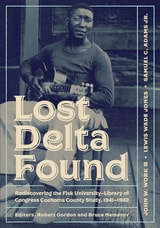
Lost Delta Found
Rediscovering the Fisk University-Library of Congress Coahoma County Study, 1941-1942John W. Work
Vanderbilt University Press, 2005
This remarkable book recovers three invaluable perspectives, long thought to have been lost, on the culture and music of the Mississippi Delta.
In 1941 and ’42 African American schol-ars from Fisk University—among them the noted composer and musicologist John W. Work III, sociologist Lewis Wade Jones, and graduate student Samuel C. Adams Jr.—joined folklorist Alan Lomax of the Library of Congress on research trips to Coahoma County, Mississippi. Their mission was “to document adequately the cultural and social backgrounds for music in the community.” Among the fruits of the project were the earliest recordings by the legendary blues singer and guitarist Muddy Waters.
The hallmark of the study was to have been a joint publication of its findings by Fisk and the Library of Congress. While this publication was never completed, Lost Delta Found is composed of the writings, interviews, notes, and musical transcriptions produced by Work, Jones, and Adams in the Coahoma County study. Their work captures, with compelling immediacy, a place, a people, a way of life, and a set of rich musical traditions as they existed in the 1940s.
Illustrated with photos and more than 160 musical transcriptions.
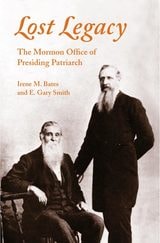
Lost Legacy
THE MORMON OFFICE OF PRESIDING PATRIARCHIrene Bates and E. Gary Smith
University of Illinois Press, 1996
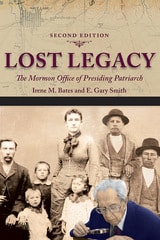
Lost Legacy
The Mormon Office of Presiding PatriarchIrene M. Bates
University of Illinois Press, 2018
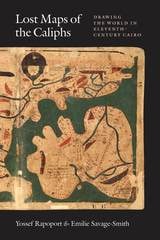
Lost Maps of the Caliphs
Drawing the World in Eleventh-Century CairoYossef Rapoport and Emilie Savage-Smith
University of Chicago Press, 2018
Lost Maps of the Caliphs provides the first general overview of The Book of Curiosities and the unique insight it offers into medieval Islamic thought. Opening with an account of the remarkable discovery of the manuscript and its purchase by the Bodleian Library, the authors use The Book of Curiosities to re-evaluate the development of astrology, geography, and cartography in the first four centuries of Islam. Their account assesses the transmission of Late Antique geography to the Islamic world, unearths the logic behind abstract maritime diagrams, and considers the palaces and walls that dominate medieval Islamic plans of towns and ports. Early astronomical maps and drawings demonstrate the medieval understanding of the structure of the cosmos and illustrate the pervasive assumption that almost any visible celestial event had an effect upon life on Earth. Lost Maps of the Caliphs also reconsiders the history of global communication networks at the turn of the previous millennium. It shows the Fatimid Empire, and its capital Cairo, as a global maritime power, with tentacles spanning from the eastern Mediterranean to the Indus Valley and the East African coast.
As Lost Maps of the Caliphs makes clear, not only is The Book of Curiosities one of the greatest achievements of medieval mapmaking, it is also a remarkable contribution to the story of Islamic civilization that opens an unexpected window to the medieval Islamic view of the world.
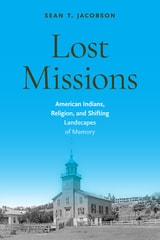
Lost Missions
American Indians, Religion, and Shifting Landscapes of MemorySean T. Jacobson
University of Massachusetts Press, 2026
Tracing how shuttered mission schools became contested commemorative landscapes
During the Early Republic and Jacksonian eras, Euro-American colonists and Native nations in the South and Old Northwest established mission schools intended to Christianize Indigenous peoples. In Lost Missions, Sean T. Jacobson recovers the histories and afterlives of these institutions, arguing that they played a far more consequential role in Native–settler relations than scholars have previously acknowledged. Mission schools advanced a spiritual vision of a multiethnic Christian America—one that ultimately collapsed amid the federally sponsored Indian Removal campaigns of the 1830s and 1840s.
Following the closure of these schools, their physical and symbolic landscapes became powerful sites of memory. Euro-American Christians later transformed former missions into commemorative spaces that celebrated “frontier” piety and national expansion. Through monuments, pageantry, and local histories, Protestant and Catholic Americans alike recast missionary labor as a foundational component of American nation-building. In doing so, these narratives framed the Christianization of Native peoples as a benevolent civilizing project, one that implicitly—and sometimes explicitly—sanitized the coercion, dispossession, and violence that accompanied westward expansion and the forced removal of Indigenous nations.
By the late twentieth century, however, these commemorative narratives faded. Suburban development, commercialization, and shifting cultural priorities rendered many mission sites once again “lost,” stripped of the civic meaning they once held. Yet Jacobson shows that these landscapes still speak, especially when viewed from Indigenous perspectives. Reinterpreted through Native histories of endurance and survival, former missions reveal counternarratives of persistence amid profound loss. As tribal nations increasingly engage with these sites today, Lost Missions probes their contested status as places of memory and conscience, illuminating how public history continues to shape and challenge understandings of America’s colonial past.
Lot’s Wife in Jewish, Christian, and Islamic Traditions
Josey Bridges Snyder Snyder
SBL Press, 2025
Love Between Women
Early Christian Responses to Female HomoeroticismBernadette J. Brooten
University of Chicago Press, 1996
"An extraordinary accomplishment. . . . A definitive source for all future discussion of homoeroticism and the Bible."—Mary Rose D'Angelo, Harvard Gay & Lesbian Review
"[Brooten's] convincing analysis . . . not only profoundly reshapes our understanding of the past, but it should also shape the way in which that past, particularly the early Christian texts with their immense normative weight, will be used for the future."—Anne L. Clark, Journal of Lesbian Studies
"Love Between Women gives contemporary debates on sexuality a carefully delineated past. It boldly insists upon a different future, one informed by history but not tyrannized by it."—Susan Ackerman, Lambda Book Report
"Fascinating, provocative and lucid. . . . Brooten has made a fundamental contribution to women's and gender studies, gay and lesbian studies, and classics."—Elizabeth A. Castelli, Women's Review of Books
Winner of the Lambda Literary Award for Best Lesbian Studies Book, 1997
Love Seeking Understanding
Aquinas, Balthasar, and the Renewal of Sapiential TheologyMichael Altenburger
Catholic University of America Press, 2024
Love That Works
Art & Science Of GivingBruce Brander
Templeton Press, 2004
This original, highly readable book poses a clear distinction between our customary form of love, which almost guarantees failure, and higher, more generous ways of loving that can succeed and enrich both individuals and society as a whole. Love That Works draws on history, psychology, and the theology and science of love to offer a proposal on how to be successful in love and romance. It starts by showing why love fails to meet expectations, often ending sadly or even tragically.
Love and Good Reasons
Postliberal Approaches to Christian Ethics and LiteratureFritz Oehlschlaeger
Duke University Press, 2003
Love and Good Reasons combines postliberal narrative theology—especially Stanley Hauerwas’s Christian ethics and Alasdair MacIntyre’s idea of traditional inquiry—with recent scholarship in literature and ethics including the work of Martha Nussbaum, J. Hillis Miller, Wayne Booth, Jeffrey Stout, and Richard Rorty. Oehlschlaeger offers detailed readings of literature by five major authors—Herman Melville, Jane Austen, Anthony Trollope, Henry James, and Stephen Crane. He examines their works in light of biblical scripture and the grand narratives of Israel, Jesus, and the Church. Discussing the role of religion in contemporary higher education, Oehlschlaeger shares his own experiences of teaching literature from a religious perspective at a state university.
Love and Saint Augustine
Hannah Arendt
University of Chicago Press, 1995
In Love and Saint Augustine, Joanna Vecchiarelli Scott and Judith Chelius Stark make this important early work accessible for the first time. Here is a completely corrected and revised English translation that incorporates Arendt's own substantial revisions and provides additional notes based on letters, contracts, and other documents as well as the recollections of Arendt's friends and colleagues during her later years.

Love in Time
An Ethical InquiryFannie Bialek
University of Chicago Press, 2025
We live in time, and so we love in time. Our beloveds change, and we change beside them. Sometimes we change apart, but it is this very changeableness, the braving of an unknown future together, that endears us to our lovers. Far from an ideal of constancy and commitment, then, love is an endeavor fraught with uncertainty.
In this book, Fannie Bialek sketches a view of love that does not ignore the vagaries of life but embraces them. In contrast to philosophical and religious attempts to secure love against finitude, Bialek’s love embraces its susceptibility to change and accepts the ethical challenges such change introduces. Attentive to our deepest vulnerabilities, Bialek develops a fresh ethics of love grounded by our humility before time.
Loving Black Boys
A Black Feminist Bible on Racism and Revolutionary MotheringTamura Lomax
Duke University Press, 2026
Loving God's Wildness
The Christian Roots of Ecological Ethics in American LiteratureJeffrey Bilbro
University of Alabama Press, 2015
Loving God’s Wildness rediscovers the environmental roots of America’s Puritan heritage. In tracing this history, Jeffrey Bilbro demonstrates how the dualistic Christianity that the Puritans brought to America led them to see the land as an empty wilderness that God would turn into a productive source of marketable commodities. Bilbro carefully explores the effect of this dichotomy in the nature writings of Henry David Thoreau, John Muir, Willa Cather, and Wendell Berry.
Thoreau, Muir, Cather, and Berry imaginatively developed the Puritan theological tradition to propose practical, physical means by which humans should live and worship within the natural temple of God’s creation. They reshaped Puritan dualism, each according to the particular needs of his or her own ecological and cultural contexts, into a theology that demands care for the entire created community. While differing in their approaches and respective ecological ethics, the four authors Bilbro examines all share the conviction that God remains active in creation and that humans ought to relinquish their selfish ends to participate in his wild ecology.
Loving God’s Wildness fills a critical gap in literary criticism and environmental studies by offering a sustained, detailed argument regarding how Christian theology has had a profound and enduring legacy in shaping the contours of the American ecological imagination. Literary critics, scholars of religion and environmental studies, and thoughtful Christians who are concerned about environmental issues will profit from this engaging new book.
Loving Yusuf
Conceptual Travels from Present to PastMieke Bal
University of Chicago Press, 2008
Through this inquiry she develops concepts for the analysis of texts that are both strange and overly familiar—culturally remote yet constantly retold. As she puts personal memories in dialogue with scholarly exegesis, Bal asks how all of these different versions complicate her own and others’ experience of the story, and how the different truths of these texts in their respective traditions illuminate the process of canonization.
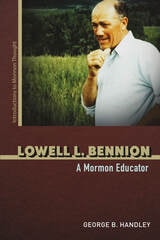
Lowell L. Bennion
A Mormon EducatorGeorge B. Handley
University of Illinois Press, 2023
Known in his lifetime for a tireless dedication to humanitarian causes, Lowell L. Bennion was also one of the most important theologians and ethicists to emerge in the Church of Jesus Christ of Latter-day Saints in the twentieth century.
George B. Handley’s intellectual biography delves into Bennion’s thought and extraordinary intellectual life. Rejecting the idea that individual LDS practice might be at odds with lived experience, Bennion insisted the gospel favored the growth of individuals acting and living in the present. He also focused on the need for ongoing secular learning alongside religious practice and advocated for an idea of social morality that encouraged Latter-day Saints to seek out meaningful transformations of character and put their ethical commitments into practice. Handley examines Bennion’s work against the background of a changing institution that once welcomed his common-sense articulation of LDS ideas and values but became discomfited by how his thought cast doubt on the Church’s beliefs about race and other issues.
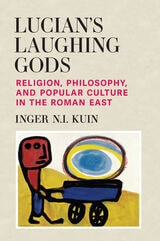
Lucian’s Laughing Gods
Religion, Philosophy, and Popular Culture in the Roman EastInger N.I. Kuin
University of Michigan Press, 2023
In Lucian's Laughing Gods, author Inger N. I. Kuin argues that in ancient Greek thought, comedic depictions of divinities were not necessarily desacralizing. In religion, laughter was accommodated to such an extent as to actually be constituent of some ritual practices, and the gods were imagined either to reciprocate or push back against human laughter—they were never deflated by it. Lucian uses the gods as comic characters, but in doing so, he does not automatically negate their power. Instead, with his depiction of the gods and of how they relate to humans—frivolous, insecure, callous—Lucian challenges the dominant theologies of his day as he refuses to interpret the gods as ethical models. This book contextualizes Lucian’s comedic performances in the intellectual life of the second century CE Roman East broadly, including philosophy, early Christian thought, and popular culture (dance, fables, standard jokes, etc.). His texts are analyzed as providing a window onto non-elite attitudes and experiences, and methodologies from religious studies and the sociology of religion are used to conceptualize Lucian’s engagement with the religiosity of his contemporaries.
Lucifer of Cagliari and the Text of 1-2 Kings
Tuukka Kauhanen
SBL Press, 2018
The most up-to-date study of the text history of 1 and 2 Kings
In this book, Tuukka Kauhanen approaches the challenging case of the textual history of 1 and 2 Kings through citations of the text found within the writings of the fourth-century bishop of Sadinia, Lucifer of Cagliari. Kauhanen presents evidence that Lucifer's Latin text sheds important light on lost Hebrew and Greek pieces of the textual puzzle in Kings. In doing so, he compares all of Lucifer's extensive quotations of Kings to extant Greek witnesses as well as Old Latin witnesses where available and subsequently analyzes the probable reasons for textual variations. In each instance he attempts to choose the best possible candidate for the Old Greek reading and where that reading might reflect a now-lost Hebrew text.
Features
- Use of the most current research into the text of the Hebrew Bible and the Septuagint, including the Hebrew Bible: A Critical Edition series and the forthcoming Göttingen Septuagint edition of King
- An appendix listing readings from the analysis sections arranged according to agreement patterns and other meaningful criteria
- Charts comparing readings
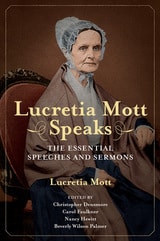
Lucretia Mott Speaks
The Essential Speeches and SermonsLucretia Mott. Edited by Christopher Densmore, Carol Faulkner, Nancy Hewitt, and Beverly Wilson Palmer
University of Illinois Press, 2017
Drawing on widely scattered archives, newspaper accounts, and other sources, Lucretia Mott Speaks unearths the essential speeches and remarks from Mott's remarkable career. The editors have chosen selections representing important themes and events in her public life. Extensive annotations provide vibrant context and show Mott's engagement with allies and opponents. The speeches illuminate her passionate belief that her many causes were all intertwined. The result is an authoritative resource, one that enriches our understanding of Mott's views, rhetorical strategies, and still-powerful influence on American society.
Lydia as a Rhetorical Construct in Acts
Alexandra Gruca-Macaulay
SBL Press, 2016
A new sociorhetorical study of Acts
In Lydia as a Rhetorical Construct in Acts, Gruca-Macaulay explores the sociorhetorical function of the story of Lydia, a named Lydian woman ancient interpreters would have associated with cultural stereotypes of Lydians. As a rhetorical figure, Lydia both influenced and was influenced by the ideology of the surrounding text in Acts 16, as well as the approach Luke–Acts as a whole takes to people who are somehow like Lydia.
Features:
- Displays the rhetorical-cultural portrayal of women in Luke-Acts from the perspective of a first-century Mediterranean audience as compared with the history of scholarship, specifically through a sociorhetorical interpretation of the role of Lydia in Acts
- Investigates the rhetorical function of Mediterranean social-cultural topoi in qualitative argumentation, with a focus on Greco-Roman physiognomy generally, and Lydian ethnography especially
- Introduces the rhetorical use of conceptual blending, particularly its application for gaining insight into the function of military discourse in developing the rhetorical force of the Lydia episode in Acts