Results by title
3027 books match the query 'Sociology' and 106 start with l

Low-Wage Work in Denmark
Niels Westergaard-Nielsen
Russell Sage Foundation, 2008

Low-Wage Work in France
Eve Caroli
Russell Sage Foundation, 2008

Low-Wage Work in Germany
Gerhard Bosch
Russell Sage Foundation, 2008

Low-Wage Work in the Netherlands
Weimer Salverda
Russell Sage Foundation, 2008
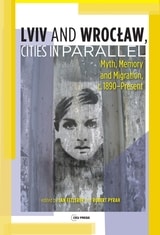
Lviv – Wroclaw, Cities in Parallel?
Myth, Memory and Migration, c. 1890-PresentJan Fellerer
Central European University Press, 2020
After World War II, Europe witnessed the massive redrawing of national borders and the efforts to make the population fit those new borders. As a consequence of these forced changes, both Lviv and Wrocław went through cataclysmic changes in population and culture. Assertively Polish prewar Lwów became Soviet Lvov, and then, after 1991, it became assertively Ukrainian Lviv. Breslau, the third largest city in Germany before 1945, was in turn "recovered" by communist Poland as Wrocław. Practically the entire population of Breslau was replaced, and Lwów's demography too was dramatically restructured: many Polish inhabitants migrated to Wrocław and most Jews perished or went into exile. The forced migration of these groups incorporated new myths and the construction of official memory projects.
The chapters in this edited book compare the two cities by focusing on lived experiences and "bottom-up" historical processes. Their sources and methods are those of micro-history and include oral testimonies, memoirs, direct observation and questionnaires, examples of popular culture, and media pieces. The essays explore many manifestations of the two sides of the same coin—loss on the one hand, gain on the other—in two cities that, as a result of the political reality of the time, are complementary.
Lying On The Postcolonial Couch
The Idea Of IndifferenceRukmini Bhaya Nair
University of Minnesota Press, 2002
Exposes the complicity of language and its uses in the colonial project
A revealing look into the long afterlife of colonial conquest, Lying on the Postcolonial Couch offers an original, overarching concept that informs—and helps to explain—the workings of postcoloniality. This concept, "indifference," is a play on the key critical term "difference." Indifference is a cognitive stance invented during the colonial period for the purpose of organizing the complex domain of the Indian subcontinent, one that created its own brand of poetics. Considering postcoloniality as a symptomatic condition, this book proposes a cure involving a return to buried memories of colonial trauma before the phenomenon itself succumbs to the absolute indifference of the slowly gathering amnesia of the new millennium.
Rukmini Bhaya Nair traces a paper trail beginning in 1757 with the Battle of Plassey, winding through the contentious Mutiny of 1857, and ending with Salman Rushdie’s Satanic Verses predicament. Along this trail, she uncovers hidden residues of feeling, from guilt and mistrust to wonder and pleasure, and analyzes the linguistic pillars that hold up the institution of bureaucratic indifference that she exposes.