Results by title
8812 books match the query 'Political Science' and 280 start with l
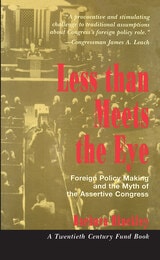
Less than Meets the Eye
Foreign Policy Making and the Myth of the Assertive CongressBarbara Hinckley
University of Chicago Press, 1994
What Hinckley reveals is sharply at odds with conventional wisdom and unflattering to both the executive and the legislative branches of government. More than a critical reassessment, this book also proposes reforms than might result in real congressional participation in the making of foreign policy. With its insight into how our system of checks and balances works—and doesn't—this book takes a first step toward making the peoples' representatives accountable for crucial American interests in foreign matters.
Lessons from East Asia
Danny M. Leipziger, Editor
University of Michigan Press, 2001

Lessons from Little Rock
Terrance Roberts
Butler Center for Arkansas Studies, 2009
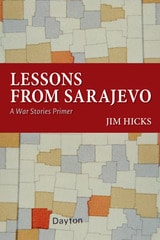
Lessons from Sarajevo
A War Stories PrimerJim Hicks
University of Massachusetts Press, 2013
Hicks explores the limitations of the sentimental tradition in war representation and asks how the work of artists and writers can help us to move beyond the constraints of that tradition. Ranging from Walt Whitman's writings on the Civil War to the U.S. wars in Iraq and Afghanistan, and focusing on the innovative and creative artistic expressions arising out of the wars of the former Yugoslavia, Hicks examines how war has been perceived, described, and interpreted. He analyzes the limitations on knowledge caused by perspective and narrative position and looks closely at the distinct yet overlapping roles of victims, observers, and aggressors. In the end, he concludes, war stories today should be valued according to the extent they make it impossible for us to see these positions as assigned in advance, and immutable.
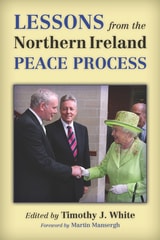
Lessons from the Northern Ireland Peace Process
Edited by Timothy J. White; Foreword by Martin Mansergh
University of Wisconsin Press, 2013

Let Them Eat Junk
How Capitalism Creates Hunger and ObesityRobert Albritton
Pluto Press, 2009
Respected economist Robert Albritton argues that the capitalist system, far from delivering on the promise of cheap, nutritious food for all, has created a world where 25% of the world population are over-fed and 25% are hungry. This malnourishment of 50% of the world's population is explained systematically, a refreshing change from accounts that focus on cultural factors and individual greed. Albritton details the economic relations and connections that have put us in a situation of simultaneous oversupply and undersupply of food.
This explosive book provides yet more evidence that the human cost of capitalism is much bigger than those in power will admit.
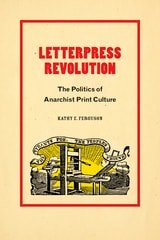
Letterpress Revolution
The Politics of Anarchist Print CultureKathy E. Ferguson
Duke University Press, 2023

Letters from Lockdown
Sustaining Public Service Values During the Covid-19 PandemicClaire Foster-Gilbert
Haus Publishing, 2020
Letters from the Lockdown presents the twelve original letters alongside new, deeply personal accounts from public servants on the job. Together, this collection provides an opportunity to reflect on how public values meet practice as the global crisis unfolds.
Letters from the Federal Farmer to the Republican
Walter Bennett
University of Alabama Press, 1978
The Federal Farmer’s letters were written in opposition to the Constitution in the form in which it had come from the Federal Convention of 1787. Their immediate objective was to secure amendments to the Constitution before it was ratified by state convention. But the letters are valuable also for the basic political philosophy that they represent, specifically, the political philosophy of the revolution and the Bill of Rights. This philosophy stresses principles of federalism and republicanism and exemplifies the liberal idealism that took root in America during the Revolutionary War era.

Lexicon for an Affective Archive
Edited by Giulia Palladini and Marco Pustianaz
Intellect Books, 2017
A co-publication with NInA and Live Art Development Agency.
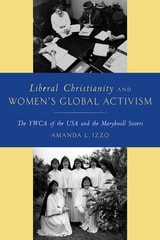
Liberal Christianity and Women's Global Activism
The YWCA of the USA and the Maryknoll SistersAmanda L. Izzo
Rutgers University Press, 2018
Focusing on the histories of two highly influential groups, the Young Women’s Christian Association of the USA, an interdenominational Protestant organization, and the Maryknoll Sisters, a Roman Catholic religious order, Izzo offers new perspectives on the contributions of these women to transnational social movements, women’s history, and religious studies, as she traces the connections between turn-of-the-century Christian women’s reform culture and liberal and left-wing religious social movements of the 1960s and 1970s. Izzo suggests that shared ethical, theological, and institutional underpinnings can transcend denominational divides, and that strategies for social change often associated with secular feminism have ties to spiritually inspired social movements.
Liberal Democracy and the Limits of Tolerance
Essays in Honor and Memory of Yitzhak RabinRaphael Cohen-Almagor, Editor
University of Michigan Press, 2000
Liberal Education and Citizenship in a Free Society
Justin Buckley Dyer
University of Missouri Press, 2023
With Liberal Education and Citizenship in a Free Society, a collection of 19 original essays, editors Justin Dyer and Constantine Vassiliou present the work of a diverse group of scholars to assess the value of a liberal arts education in the face of market, technological, cultural, and political forces shaping higher learning today.
Liberal Suppression
Section 501(c)(3) and the Taxation of SpeechPhilip Hamburger
University of Chicago Press, 2018
Tracing the history of American liberalism, including theological liberalism and its expression in nativism, Hamburger shows the centrality of turbulent popular anxieties about the Catholic Church and other potentially orthodox institutions. He argues persuasively that such theopolitical fears about the political speech of churches and related organizations underlay the adoption, in 1934 and 1954, of section 501(c)(3)’s speech limits. He thereby shows that the speech restrictions have been part of a broad majority assault on minority rights and that they are grossly unconstitutional.
Along the way, Hamburger explores the role of the Ku Klux Klan and other nativist organizations, the development of American theology, and the cultural foundations of liberal “democratic” political theory. He also traces important legal developments such as the specialization of speech rights and the use of law to homogenize beliefs. Ultimately, he examines a wide range of contemporary speech restrictions and the growing shallowness of public life in America.
His account is an unflinching look at the complex history of American liberalism and at the implications for speech, the diversity of belief, and the nation’s future.
Liberalism After Communism
The Implications of the 1993 Elections to the Federal AssemblyJerzy Szacki
Central European University Press, 1995
Liberalism Disavowed
Communitarianism and State Capitalism in SingaporeBeng Huat Chua
National University of Singapore Press, 2018
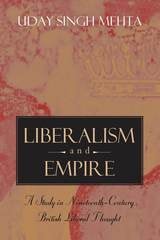
Liberalism and Empire
A Study in Nineteenth-Century British Liberal ThoughtUday Singh Mehta
University of Chicago Press, 1999
Ironically, it is in the conservative Edmund Burke—a severe critic of Britain's arrogant, paternalistic colonial expansion—that Mehta finds an alternative and more capacious liberal vision. Shedding light on a fundamental tension in liberal theory, Liberalism and Empire reaches beyond post-colonial studies to revise our conception of the grand liberal tradition and the conception of experience with which it is associated.
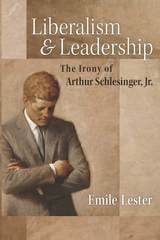
Liberalism and Leadership
The Irony of Arthur Schlesinger, Jr.Emile Lester
University of Michigan Press, 2019
Most scholars and pundits today view Franklin Delano Roosevelt and John F. Kennedy as aggressive liberal leaders, while viewing Schlesinger’s famous histories of their presidencies as celebrations of their steadfast progressive leadership. A more careful reading of Schlesinger’s work demonstrates that he preferred an ironic political outlook emphasizing the virtues of restraint, patience, and discipline. For Schlesinger, Roosevelt and Kennedy were liberal heroes and models as much because they respected the constraints on their power and ideals as because they tested traditional institutions and redefined the boundaries of presidential power.
Aggressive liberalism involves the use of inspirational rhetoric and cunning political tactics to expand civil liberties and insure economic equality. Schlesinger’s emphasis on the crucial role that irony has played and should play in liberalism poses a challenge to the aggressive liberalism advocated by liberal activists, political thinkers, and pundits. That his counsel was grounded in conservative insights as well as liberal values makes it accessible to leaders across the political spectrum.
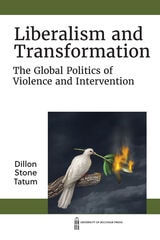
Liberalism and Transformation
The Global Politics of Violence and InterventionDillon Stone Tatum
University of Michigan Press, 2021
Liberalism and Transformation is the first scholarly work that explores the historical, philosophical, and intellectual development of global liberalism since the nineteenth century in the context of the deployment of violence, force, and intervention. Using an approach that includes interpretive and contextual analysis of texts from writers, philosophers, and policy-makers across nearly two centuries, as well as historiographical and historical analysis of archival documents (some of which have been recently declassified) and other media, Liberalism and Transformation narrates the messy history of emancipatory liberalism and its engagement with issues of war and peace. The book contributes to both a rethinking of liberal democracy and its relationship to world politics, as well as the effects of liberal internationalism on global processes. Furthermore, Liberalism and Transformation invites readers to reflect on global ethics and transformation in world politics. In the first place, it shows how ethical imaginings of the world have direct effects on actions of transformative importance. In the second place, it suggests that discourses are fluid, changing, and complex.
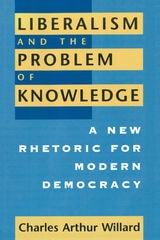
Liberalism and the Problem of Knowledge
A New Rhetoric for Modern DemocracyCharles Arthur Willard
University of Chicago Press, 1996
The problem of "unity" and the public sphere has driven a wedge between libertarians and communitarians. To mediate this conflict, Willard advocates a shift from the discourse of liberalism to that of epistemics. As a means of organizing the ebb and flow of consensus, epistemics regards democracy as a family of knowledge problems—as ways of managing discourse across differences and protecting multiple views.
Building a bridge between warring peoples and warring paradigms, this book also reminds those who presume to instruct government that they are obliged to enlighten it, and that to do so requires an enlightened public discourse.
Liberalism in Modern Times
Ernest Gellner
Central European University Press, 1996
Liberalism without Democracy
Nationhood and Citizenship in Egypt, 1922–1936Abdeslam M. Maghraoui
Duke University Press, 2006
In the 1920s and 1930s, Egypt’s reformers equated liberal notions of nationhood and citizenship with European civilization and culture. As Maghraoui demonstrates, in their efforts to achieve liberalization, they sought to align Egypt with the West and to dissociate it from the Arab and Islamic worlds. Egypt’s professionals and leading cultural figures attempted to replace the fez with European-style hats; they discouraged literary critics from studying Arabic poetry, claiming it was alien to Egyptian culture. Why did they feel compelled to degrade local cultures in order to accommodate liberal principles?
Drawing on the thought of Lacan, Fanon, Said, and Bhabha, as well as contemporary political theory, Maghraoui points to liberalism’s inherent contradiction: its simultaneous commitments to individual liberty and colonial conquest. He argues that when Egypt’s reformers embraced the language of liberalism as their own, they adopted social prejudices built into that language. Efforts to achieve liberalization played out—and failed—within the realm of culture, not just within the political arena. Opinions voiced through literary works, cartoons, newspaper articles on controversial social issues, and other forms of cultural expression were ultimately more important to the fate of liberalism in Egypt than were questions of formal political participation and representation. Liberalism without Democracy demonstrates the powerful—and under appreciated—role of language and culture in defining citizenship and political community.
Liberalism without Illusions
Essays on Liberal Theory and the Political Vision of Judith N. ShklarEdited by Bernard Yack
University of Chicago Press, 1996
In this tightly organized collection of essays, sixteen distinguished political theorists explore Shklar's intellectual legacy, focussing on both her own ideas and the broad range of issues that most intrigued her. The volume opens with a series of varied and illuminating assessments of Shklar's conception of liberal politics. The second section, with essays on Descartes and Racine, Hobbes, Rousseau, and Laski, emphasizes the relation between individual freedom and moral psychology in modern political thought. The third section addresses contemporary issues, such as the role of hypocrisy, offensive speech, and constitutional courts in liberal democracies. The book concludes with an autobiographical essay by Shklar that provides a vivid sense of her singular voice and personality.
The contributors to this volume are Bruce Ackerman, Seyla Benhabib, John Dunn, Amy Gutmann, Stanley Hoffmann, Stephen Holmes, George Kateb, Isaac Kramnick, Patrick Riley, Nancy Rosenblum, Quentin Skinner, Rogers M. Smith, Tracy B. Strong, Dennis F. Thompson, Michael Walzer, and Bernard Yack.
Liberals under Autocracy
Modernization and Civil Society in Russia, 1866–1904Anton A. Fedyashin
University of Wisconsin Press, 2012
With its rocky transition to democracy, post-Soviet Russia has made observers wonder whether a moderating liberalism could ever succeed in such a land of extremes. But in Liberals under Autocracy, Anton A. Fedyashin looks back at the vibrant Russian liberalism that flourished in the country’s late imperial era, chronicling its contributions to the evolution of Russia’s rich literary culture, socioeconomic thinking, and civil society.
For five decades prior to the revolutions of 1917, The Herald of Europe (Vestnik Evropy) was the flagship journal of Russian liberalism, garnering a large readership. The journal articulated a distinctively Russian liberal agenda, one that encouraged social and economic modernization and civic participation through local self-government units (zemstvos) that defended individual rights and interests—especially those of the peasantry—in the face of increasing industrialization. Through the efforts of four men who turned The Herald into a cultural nexus in the imperial capital of St. Petersburg, the publication catalyzed the growing influence of journal culture and its formative effects on Russian politics and society.
Challenging deep-seated assumptions about Russia’s intellectual history, Fedyashin’s work casts the country’s nascent liberalism as a distinctly Russian blend of self-governance, populism, and other national, cultural traditions. As such, the book stands as a contribution to the growing literature on imperial Russia's nonrevolutionary, intellectual movements that emphasized the role of local politics in both successful modernization and the evolution of civil society in an extraparliamentary environment.
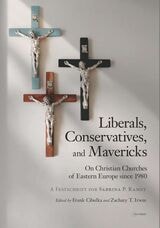
Liberals, Conservatives, and Mavericks
On Christian Churches of Eastern Europe since 1980. A Festschrift for Sabrina P. RametFrank Cibulka
Central European University Press, 2025
No Church is monolithic—this is the preliminary premise of this volume on the public place of religion in a representative number of post-communist countries. The studies confirm that within any religious organization we can expect to find fissures, factions, theological or ideological quarrels, and perhaps even competing interest groups, such as missionary workers, regular clergy versus secular clergy, and sometimes even competing ecclesiastical hierarchies. The main focus of the book rests on the divisions arising within select Christian Churches, as they confront the processes of secularization and atheization. The coverage area includes Russia and the Ukraine, East-Central Europe and South-Eastern Europe. Some chapters focus on individual clergy who challenge the mainstream of their given Church either from a more liberal or from a more conservative perspective, while others deal with the divisive forces impacting the religious organizations.
This festschrift to honor Sabrina Ramet’s seminal contribution to the study of religion in the politics of the communist and post-communist world, brings together several generations of scholars from a variety of countries, both those well established in their fields of study as well as young promising academics.
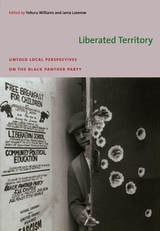
Liberated Territory
Untold Local Perspectives on the Black Panther PartyYohuru Williams and Jama Lazerow, eds.
Duke University Press, 2008
The histories and character of the party branches vary as widely as their locations. The Cape Verdeans of New Bedford, Massachusetts, were initially viewed as a particular challenge for the local Panthers but later became the mainstay of the Boston-area party. In the early 1970s, the Winston-Salem, North Carolina, chapter excelled at implementing the national Black Panther Party’s strategic shift from revolutionary confrontation to mainstream electoral politics. In Detroit, the Panthers were defined by a complex relationship between their above-ground activities and an underground wing dedicated to armed struggle. While the Milwaukee chapter was born out of a rising tide of black militancy, it ultimately proved more committed to promoting literacy and health care and redressing hunger than to violence. The Alabama Black Liberation Front did not have the official imprimatur of the national party, but it drew heavily on the Panthers’ ideas and organizing strategies, and its activism demonstrates the broad resonance of many of the concerns articulated by the national party: the need for jobs, for decent food and housing, for black self-determination, and for sustained opposition to police brutality against black people. Liberated Territory reveals how the Black Panther Party’s ideologies, goals, and strategies were taken up and adapted throughout the United States.
Contributors: Devin Fergus, Jama Lazerow, Ahmad A. Rahman, Robert W. Widell Jr., Yohuru Williams
Liberating Economics
Feminist Perspectives on Families, Work, and GlobalizationDrucilla K. Barker and Susan F. Feiner
University of Michigan Press, 2004
Rooted in the two disciplines, this book draws on the rich tradition of interdisciplinary work in feminist social science scholarship to construct a parallel between the notions that the "personal is political" and "the personal is economic."
Drucilla K. Barker is Professor of Economics and Women's Studies, Hollins University.
Susan F. Feiner is Associate Professor of Economics and Women's Studies, University of Southern Maine.
Liberating Memory
Our Work and Our Working-Class ConsciousnessZandy, Janet
Rutgers University Press, 1994
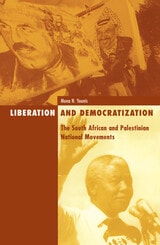
Liberation and Democratization
The South African and Palestinian National MovementsMona N. Younis
University of Minnesota Press, 2000
The first comprehensive comparison of two of the century’s most important liberation movements.
Arising in the 1910s and emerging as legitimate governing bodies in the 1990s, the South African and the Palestinian national liberation movements have exhibited remarkable parallels over the course of their development. The fortunes of the African National Congress and the Palestinian Liberation Organization, however, have proven strikingly different. How the movements, despite similar circumstances and experiences, have arrived at such dissimilar outcomes is described in Liberation and Democratization.
Younis traces the evolution of the movements, from early domination by elites to the ascendancy of mass-based forces in their last phases of expansion. She shows how this latest shift, accompanied by a democratization of the process of liberation, made the movements more effective in the 1980s. Liberation and Democratization also identifies dissimilarities—the balance of class forces and resources—that led to the A.N.C.’s greater success relative to the P.L.O.’s achievements. The first comprehensive comparison of two of the most significant liberation movements of this century, Younis’s work brings to light problems and dynamics that will remain at work well into the future.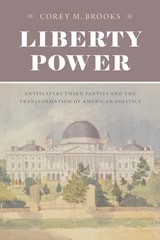
Liberty Power
Antislavery Third Parties and the Transformation of American PoliticsCorey M. Brooks
University of Chicago Press, 2015
As Corey M. Brooks explains, abolitionist trailblazers who organized first the Liberty Party and later the more moderate Free Soil Party confronted formidable opposition from a two-party system expressly constructed to suppress disputes over slavery. Identifying the Whigs and Democrats as the mainstays of the southern Slave Power’s national supremacy, savvy abolitionists insisted that only a party independent of slaveholder influence could wrest the federal government from its grip. A series of shrewd electoral, lobbying, and legislative tactics enabled these antislavery third parties to wield influence far beyond their numbers. In the process, these parties transformed the national political debate and laid the groundwork for the success of the Republican Party and the end of American slavery.
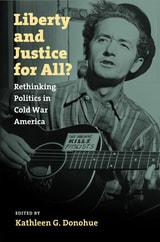
Liberty and Justice for All?
Rethinking Politics in Cold War AmericaKathleen G. Donohue
University of Massachusetts Press, 2012
From the congressional debate over the “fall of China” to the drama of the Army–McCarthy hearings to the kitchen faceoff between Richard Nixon and Nikita Khrushchev, the political history of the early Cold War was long dominated by studies of presidential administrations, anticommunism, and foreign policy. In Liberty and Justice for All? a group of distinguished historians representing a variety of disciplinary perspectives—social history, cultural history, intellectual history, labor history, urban history, women's history, African American studies, and media studies—expand on the political history of the early Cold War by rethinking the relationship between politics and culture. How, for example, did folk music help to keep movement culture alive throughout the 1950s? How did the new medium of television change fundamental assumptions about politics and the electorate? How did American experiences with religion in the 1950s strengthen the separation of church and state? How did race, class, and gender influence the relationship between citizens and the state? These are just some of the questions addressed in this wide-ranging set of essays.
In addition to volume editor Kathleen G. Donohue, contributors include Howard Brick, Kari Frederickson, Andrea Friedman, David Greenberg, Grace Elizabeth Hale, Jennifer Klein, Laura McEnaney, Kevin M. Schultz, Jason Scott Smith, Landon R. Y. Storrs, and Jessica Weiss.
Liberty and the Search for Identity
Ivan Zoltan Denes
Central European University Press, 2006
Liberty, Equality, Fraternity
And Three Brief EssaysJames Fitzjames Stephen
University of Chicago Press, 1992
"His writing is strong meat—full of the threat of hellfrire, the virtue of government by the lash and a fervent belief that the state cannot remain neutral but has a duty to espouse a moral code."—Roderick Munday, Cambridge Law Journal
Lies, Passions, and Illusions
The Democratic Imagination in the Twentieth CenturyFrançois Furet
University of Chicago Press, 2014
This conversation would be, sadly, Furet’s last—he died while Ricoeur was completing his edits. Ricoeur did not want to publish his half without Furet’s approval, so what remains is Furet’s alone, an astonishingly cohesive meditation on the political passions of the twentieth century. With strokes at once broad and incisive, he examines the many different trajectories that nations of the West have followed over the past hundred years. It is a dialogue with history as it happened but also as a form of thought. It is a dialogue with his critics, with himself, and with those major thinkers—from Tocqueville to Hannah Arendt—whose ideas have shaped our understanding of the tragic dramas and upheavals of the modern era. It is a testament to the crucial role of the historian, a reflection on how history is made and lived, and how the imagination is a catalyst for political change. Whether new to Furet or deeply familiar with his work, readers will find thought-provoking assessments on every page, a deeply moving look back at one of the most tumultuous periods of history and how we might learn and look forward from it.
Life After Welfare
Reform and the Persistence of PovertyBy Laura Lein and Deanna T. Schexnayder; with Karen Manges Douglas and Daniel G. Schroeder
University of Texas Press, 2007
A Choice Outstanding Academic Book
In the decade since President Clinton signed the Personal Responsibility and Work Opportunity Reconciliation Act of 1996 into law—amidst promises that it would "end welfare as we know it"—did the reforms ending entitlements and moving toward time limits and work requirements lift Texas families once living on welfare out of poverty, or merely strike their names from the administrative rolls?
Under welfare reform, Texas continued with low monthly payments and demanding eligibility criteria. Many families who could receive welfare in other states do not qualify in Texas, and virtually any part-time job makes a family ineligible. In Texas, most families who leave welfare remain in or near poverty, and many are likely to return to the welfare rolls in the future.
This compelling work, which follows 179 families after leaving welfare, is set against a backdrop of multiple types of data and econometric modeling. The authors' multi-method approach draws on administrative data from nine programs serving low-income families and a statewide survey of families who have left welfare. Survey data on health problems, transportation needs, and child-care issues shed light on the patterns of employment and welfare use seen in the administrative data. In their lives after welfare, the families chronicled here experience poverty even when employed; a multiplicity of barriers to employment that work to exacerbate one another; and a failing safety net of basic human services as they attempt to sustain low-wage employment.
Life Interrupted
Trafficking into Forced Labor in the United StatesDenise Brennan
Duke University Press, 2014
All royalties from this book will be donated to the nonprofit Survivor Leadership Training Fund administered through the Freedom Network.
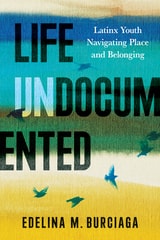
Life Undocumented
Latinx Youth Navigating Place and BelongingEdelina M. Burciaga
University of Arizona Press, 2025
The book is about how undocumented young adults in these two contexts navigate the pathway to and through adulthood, and the powerful role state laws and policies play in shaping their prospects for social mobility and their sense of belonging. Edelina M. Burciaga examines how state laws and policies in California and Georgia shape the pathways to adulthood for these individuals. California, with its supportive legal frameworks, contrasts sharply with Georgia’s restrictive environment, highlighting the significant impact of state-level immigration policies.
The book highlights the complexities and contradictions that emerge from these distinct legal ecologies, which include the intersections of federal, state, local, familial, and individual dynamics, and shape the daily lives and future orientations of undocumented young adults. This book underscores the resilience and agency of undocumented youth as they confront and resist the structural constraints imposed by immigration laws, offering a vivid portrayal of their emotional and social journeys. This book is a vital resource for anyone committed to creating equitable and inclusive systems for undocumented students.
Life Without Money
Building Fair and Sustainable EconomiesEdited by Anitra Nelson and Frans Timmerman
Pluto Press, 2011
We urgently need to combat those who say 'there is no alternative' to the current system, but what would an alternative look like? The contributors to Life Without Money argue that it is time radical, non-market models were taken seriously. The book brings together diverse voices presenting strong arguments against our money-based system's ability to improve lives and prevent environmental disaster. Crucially, it provides a direct strategy for undercutting capitalism by refusing to deal in money, and offers money-free models of governance and collective sufficiency.
Life Without Money is written by high-profile activist scholars, including Harry Cleaver, Ariel Salleh and John O'Neill, making it an excellent text for political economy and environmental courses, as well as an inspiring manifesto for those who want to take action.

Life after Death
What Happens When Someone Survives an Execution?Austin D. Sarat
Temple University Press, 2027
In May and October of 2026, the Tennessee Department of Corrections failed to execute first Tony Carruthers and then Christa Pike via lethal injection. Their experiences raise the question of whether a second execution would be constitutional and fuel the debate over whether the death penalty can ever be anything but cruel and unusual punishment.
In Life after Death, esteemed legal scholar and student of capital punishment Austin Sarat tells the stories of eight others who, like Carruthers and Pike, survived failed execution attempts. He recounts what went wrong and what happened to them after their near-death experiences. Some endured the trauma of a second execution; others remained incarcerated for the rest of their lives. But each case posed distinctive challenges for courts and public officials.
Sarat insists that the death penalty can never be humane and that no one should ever have to face a second trip to the execution chamber. Life after Death urges Americans to recognize those realities. It offers a critical examination of the way the justice system uses capital punishment, and it does so by telling the stories of prisoners who survive efforts to put them to death.

Life after Guns
Reciprocity and Respect among Young Men in LiberiaHardgrove, Abby
Rutgers University Press, 2017
Download open access ebook here.

Life in a Cambodian Orphanage
A Childhood Journey for New OpportunitiesKathie Carpenter
Rutgers University Press, 2021

Life of the 381st Bomb Group
The World War II Diary of Eighth Air Force Chaplain James Good BrownBob Korkuc
University of Missouri Press, 2026
While working on his first book, Bob Korkuc became intimately familiar with the 381st Bombardment Group of the Mighty Eighth Air Force and met the group’s chaplain, James Good Brown. Brown kept a diary during his time with the bomb group (1943 to 1945) in which he chronicled the daily experiences of the men.
Years after the war, Brown self-published his diary, which today is hard to find. Through his friendship with Brown, Korkuc gained access to and chose to edit the original docu - ment so that more readers might appreciate this insightful wartime eyewitness account.
Serving in his early forties alongside men twenty years his junior—whom he called the “Mighty Men of the 381st”—Brown took part in morning briefings, shared meals with crews, and anxiously awaited their return from dangerous daylight bombing missions. Flying as a noncombatant, an unnecessary eleventh crewmember, Brown describes his own observations of a Flying Fortress combat mission over Germany. Writing with extraordinary candor, Brown documents the inner workings of a bomb group that flew 297 combat missions over Europe, providing vivid character assessments of his fellow airmen and capturing both their victories and devastating losses.
In addition to judiciously editing Brown’s original diary for readability, Korkuc created a unique appendix, which reveals the fate of every airman who served with Brown. The immediacy of Brown’s narration combined with Korkuc’s meticulous editing make this a promising new resource for scholars and general readers alike.

Life, Earth, Colony
Friedrich Ratzel's Necropolitical GeographyIan Klinke
University of Michigan Press, 2023
Life, Earth, Colony finds that there is an as yet unexplored necropolitical impulse at the heart of Ratzel’s entire oeuvre, a preoccupation with death and dying, which had a profound impact on twentieth-century history.
Life, Emergent
The Social in the Afterlives of ViolenceYasmeen Arif
University of Minnesota Press, 2016
How does an inquiry into life as it lives (or dies) amid mass violence look like from the perspective of the “social”? Taking us from Sierra Leone to India to Lebanon, Life, Emergent challenges conventional understandings of biopolitics, weaving a politics of life through the lens of life, not death.
Arguing that the “letting die” element of biopolitics has been overemphasized, Yasmeen Arif zeros in on biopolitics’ other pole: “making live.” She does so by highlighting the various means and the forms of life configured in the aftermath—or afterlives—of violent events in contexts of law, justice, community, and identity. Her analysis of the social repercussions is both global and local in scope. Arif examines the convictions made in the Special Court of Sierra Leone, the first hybrid court of its nature under international criminal law. Next, she explores the making of a justice movement in the context of Hindu–Muslim violence in 2002 in the state of Gujarat, India. From there she revisits the Sikh carnage in Delhi of 1984. Finally, she explores a span of civil violence in Lebanon, and particularly, its effects on the city of Beirut.
This rigorously argued book brings together the various strands of life and the social that each chapter has disentangled—and in doing so it begins to frame a politics of, and in, life.
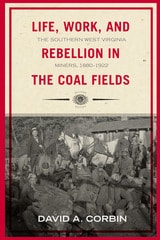
Life, Work, and Rebellion in the Coal Fields
The Southern West Virginia Miners, 1880-1922 2nd EditionDavid Corbin
West Virginia University Press, 2015
Between 1880 and 1922, the coal fields of southern West Virginia witnessed two bloody and protracted strikes, the formation of two competing unions, and the largest armed conflict in American labor history—a week-long battle between 20,000 coal miners and 5,000 state police, deputy sheriffs, and mine guards. These events resulted in an untold number of deaths, indictments of over 550 coal miners for insurrection and treason, and four declarations of martial law. Corbin argues that these violent events were collective and militant acts of aggression interconnected and conditioned by decades of oppression. His study goes a long way toward breaking down the old stereotypes of Appalachian and coal mining culture. This second edition contains a new preface and afterword by author David A. Corbin.
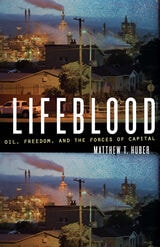
Lifeblood
Oil, Freedom, and the Forces of CapitalMatthew T. Huber
University of Minnesota Press, 2013
If our oil addiction is so bad for us, why don’t we kick the habit? Looking beyond the usual culprits—Big Oil, petro-states, and the strategists of empire—Lifeblood finds a deeper and more complex explanation in everyday practices of oil consumption in American culture. Those practices, Matthew T. Huber suggests, have in fact been instrumental in shaping the broader cultural politics of American capitalism.
How did gasoline and countless other petroleum products become so central to our notions of the American way of life? Huber traces the answer from the 1930s through the oil shocks of the 1970s to our present predicament, revealing that oil’s role in defining popular culture extends far beyond material connections between oil, suburbia, and automobility. He shows how oil powered a cultural politics of entrepreneurial life—the very American idea that life itself is a product of individual entrepreneurial capacities. In so doing he uses oil to retell American political history from the triumph of New Deal liberalism to the rise of the New Right, from oil’s celebration as the lifeblood of postwar capitalism to increasing anxieties over oil addiction.
Lifeblood rethinks debates surrounding energy and capitalism, neoliberalism and nature, and the importance of suburbanization in the rightward shift in American politics. Today, Huber tells us, as crises attributable to oil intensify, a populist clamoring for cheap energy has less to do with American excess than with the eroding conditions of life under neoliberalism.
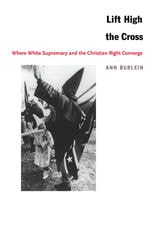
Lift High the Cross
Where White Supremacy and the Christian Right ConvergeAnn Burlein
Duke University Press, 2002
Arguing that today’s right engenders its popularity not by overt bigotry or hatred but by focusing on people’s hopes for their children, Burlein finds a politics of grief at the heart of such rhetoric. While demonstrating how religious symbols, rituals, texts, and practices shape people’s memories and their investment in society, she shows how Peters and Dobson each construct countermemories for their followers that reframe their histories and identities—as well as their worlds—by reversing mainstream perspectives in ways that counter existing power relations. By employing the techniques of niche marketing, the politics of scandal, and the transformation of political issues into “gut issues” and by remasculinizing the body politic, Burlein shows, such groups are able to move people into their realm of influence without requiring them to agree with all their philosophical, doctrinal, or political positions.
Lift High the Cross will appeal to students and scholars of religion, American cultural studies, women’s studies, sociology, and gay and lesbian studies, as well as to non-specialists interested in American politics and, specifically, the right.

Lifting the Fog of Peace
How Americans Learned to Fight Modern WarJanine Davidson
University of Michigan Press, 2011
"Lifting the Fog of Peace is a captivating study of an agile and adaptive military evolving through the chaos of the post-9/11 world. In what is certain to be regarded as the definitive analysis of the reshaping of American combat power in the face of a complex and uncertain future, Dr. Janine Davidson firmly establishes herself as a rising intellectual star in government and politics. A thoroughly captivating study of organizational learning and adaptation—a 'must read' for leaders in every field."
---LTG William B. Caldwell, IV, Commanding General, NATO Training Mission - Afghanistan
"In Lifting the Fog of Peace, Dr. Janine Davidson explains how the American military has adapted itself to succeed in the wars in Afghanistan and Iraq that are the most likely future face of combat. The book is informed by her experience of these wars in the Department of Defense, where she now plays a critical role in continuing the process of learning that has so visibly marked the military's performance in today's wars. Highly recommended."
---John A. Nagl, President, Center for a New American Security
"Janine Davidson’s Lifting the Fog of Peace is a superb, concise, and well-written book that makes important contributions in three areas. It advances our knowledge of organizational learning in the Armed Forces. It also accurately captures the rich post-Vietnam operational and doctrinal history of the Army and the Marine Corps. The simplistic cartoon of dim-witted generals fixated on the Fulda Gap is replaced here by a more accurate version, where engaged senior officers studied the security environment, absorbed important lessons, and began to improve the learning capacity of the military services. Finally, Lifting the Fog of Peace assesses the state of contemporary stability operations and what must be done to further prepare our Armed Forces for modern war on the low end of the spectrum of conflict. It will be a 'must read' on the E-Ring of the Pentagon and in security studies programs across the nation."
---Joseph J. Collins, Professor, National War College, and former Deputy Assistant Secretary of Defense for Stability Operations
Counterinsurgency and stability operations in Iraq and Afghanistan are only the most recent examples of the U.S. Armed Forces fighting insurgents, building infrastructure, enforcing laws, and governing cities. For more than two centuries, these assignments have been a regular part of the military's tasks; yet until recently the lessons learned from the experiences have seldom been formally incorporated into doctrine and training. As a result, each generation of soldiers has had to learn on the job.
Janine Davidson traces the history of the U.S. military's involvement in these complex and frustrating missions. By comparing the historical record to the current era, Davidson assesses the relative influence of organizational culture and processes, institutional structures, military leadership, and political factors on the U.S. military's capacity to learn and to adapt. Pointing to the case of Iraq, she shows that commanders serving today have benefited at the tactical level from institutional changes following the Vietnam War and from the lessons of the 1990s. Davidson concludes by addressing the question of whether or not such military learning, in the absence of enhanced capabilities and capacity in other U.S. government agencies, will be sufficient to meet the complex challenges of the 21st century.
Janine Davidson, a former Air Force pilot, is a professor of national security at George Mason University, currently serving in the Pentagon as Deputy Assistant Secretary of Defense for Plans.
The views presented in this book are those of the author and do not necessarily represent the views of the Department of Defense or its Components.
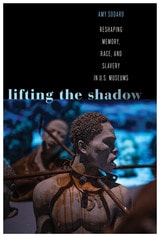
Lifting the Shadow
Reshaping Memory, Race, and Slavery in U.S. MuseumsAmy Sodaro
Rutgers University Press, 2025
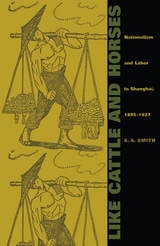
Like Cattle and Horses
Nationalism and Labor in Shanghai, 1895-1927S. A. Smith
Duke University Press, 2002
While the massive wave of labor protest in the 1920s was principally an expression of militant nationalism rather than of class consciousness, Smith argues, elements of a precarious class identity were in turn forged by the very discourse of nationalism. By linking work-related demands to the defense of the nation, anti-imperialist nationalism legitimized participation in strikes and sensitized workers to the fact that they were worthy of better treatment as Chinese citizens. Smith shows how the workers’ refusal to be treated “like cattle and horses” (a phrase frequently used by workers to describe their condition) came from a new but powerfully felt sense of dignity. In short, nationalism enabled workers to interpret the anger they felt at their unjust treatment in the workplace in political terms and to create a link between their position as workers and their position as members of an oppressed nation. By focusing on the role of the working class, Like Cattle and Horses is one of very few studies that examines nationalism “from below,” acknowledging the powerful agency of nonelite forces in promoting national identity.
Like Cattle and Horses will interest historians of labor, modern China, and nationalism, as well as those engaged in the study of revolutions and revolt.