Results by title
5550 books match the query 'Biography & Autobiography' and 276 start with l
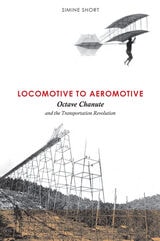
Locomotive to Aeromotive
Octave Chanute and the Transportation RevolutionSimine Short. Foreword by Tom D. Crouch
University of Illinois Press, 2014
Aviation researcher and historian Simine Short brings to light in colorful detail many previously overlooked facets of Chanute's professional and personal life. In the late nineteenth century, few considered engineering as a profession on par with law or medicine, but Chanute devoted much time and energy to the newly established professional societies that were created to set standards and serve the needs of civil engineers. Though best known for his aviation work, he became a key figure in the opening of the American continent by laying railroad tracks and building bridges, experiences that later gave him the engineering knowledge to build the first stable aircraft structure. Chanute also introduced a procedure to treat wooden railroad ties with an antiseptic that increased the wood’s lifespan in the tracks. Establishing the first commercial plants, he convinced railroad men that it was commercially feasible to make money by spending money on treating ties to conserve natural resources. He next introduced the date nail to help track the age and longevity of railroad ties.
A versatile engineer, Chanute was known as a kind and generous colleague during his career. Using correspondence and other materials not previously available to scholars and biographers, Short covers Chanute's formative years in antebellum America as well as his experiences traveling from New Orleans to New York, his apprenticeship on the Hudson River Railroad, and his early engineering successes. His multiple contributions to railway expansion, bridge building, and wood preservation established his reputation as one of the nation's most successful and distinguished civil engineers. Instead of retiring, he utilized his experiences and knowledge as a bridge builder in the development of motorless flight. Through the reflections of other engineers, scientists, and pioneers in various fields who knew him, Short characterizes Chanute as a man who believed in fostering and supporting people who were willing to learn. This well-researched biography cements Chanute's place as a preeminent engineer and mentor in the history of transportation in the United States and the development of the airplane.
Lois McMaster Bujold
Edward James
University of Illinois Press, 2015
Acclaimed science fiction scholar Edward James traces Bujold's career, showing how Bujold emerged from fanzine culture to win devoted male and female readers despite working in genres--military SF, space opera--perceived as solely by and for males. Devoted to old-school ideas such as faith in humanity and the desire to probe and do good in the universe, Bujold simultaneously subverted genre conventions and experimented with forms that led her in bold creative directions. As James shows, her iconic hero Miles Vorkosigan--unimposing, physically impaired, self-conscious to a fault--embodied Bujold's thematic concerns. The sheer humanity of her characters, meanwhile, gained her a legion of fans eager to provide her with feedback, expand her vision through fan fiction, and follow her into fantasy.
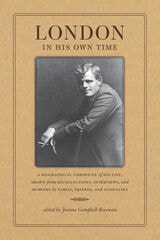
London in His Own Time
A Biographical Chronicle of His Life, Drawn from Recollections, Interviews, and Memoirs by Family, Friends, and AssociatesJeanne Reesman
University of Iowa Press, 2020
Everyone knows Jack London for his tales of adventure in Alaska and the Canadian Yukon. With his work translated into more than 100 languages, London is one of the most popular American writers in the world, alongside Mark Twain. Yet for the reader tackling The Call of the Wild or White Fang, or perhaps his most often-anthologized short story “To Build a Fire,” many misconceptions about his life confuse his legacy.
London in His Own Time is based on Jeanne Reesman’s nearly thirty-five years of archival research. The book offers surprising perspectives on Jack London’s many sides by family, friends, fellow struggling young writers, business associates, high school and college classmates, interviewers, editors, coauthors, visitors to his Sonoma Valley Beauty Ranch in Glen Ellen, California, and more.
People who have commented on and discussed the mercurial genius include Joseph Conrad, Theodore Dreiser, Upton Sinclair, Sinclair Lewis, Ambrose Bierce, and Mary Austin, as well as his half-sister, Eliza London Shepard, and his first wife, Elizabeth Bess “Bessie” Maddern London. There are a few Klondike pals he kept in touch with, and some fellow writers such as Cloudesley Johns, but many of those closest to him truly demonstrate his wide range of friends: barman Johnny Heinold; his second wife, Charmian, whom he called “Mate Woman”; his daughters, Joan and Becky; his lover, Anna Strunsky; his closest friends, especially the poet George Sterling; his former crewmate on the Snark, Martin Johnson; and his valet/memoirist, Yoshimatsu Nakata. Reesman also includes dozens of entries from Bay-area socialists, friends in Hawai’i and the South Seas, fellow war correspondents, neighbors like Luther Burbank, and his long-time editor at Macmillan, George Brett.
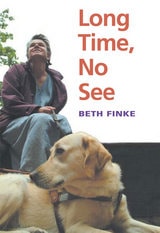
Long Time, No See
Beth Finke
University of Illinois Press, 2003
With unflinching candor and acerbic wit, Finke chronicles the progress of the juvenile diabetes that left her blind at the age of twenty-six as well as the seemingly endless spiral of adversity that followed. First she was forced out of her professional job. Then she bore a multiply handicapped son. But she kept moving forward, confronting marital and financial problems and persevering through a rocky training period with a seeing-eye dog.
Finke’s life story and her commanding knowledge of her situation give readers a clear understanding of diabetes, blindness, and the issues faced by parents of children with significant disabilities. Because she has taken care to include accurate medical information as well as personal memoir, Long Time, No See serves as an excellent resource for others in similar situations and for professionals who deal with disabled adults or children.
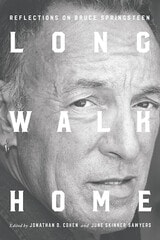
Long Walk Home
Reflections on Bruce SpringsteenJonathan D. Cohen
Rutgers University Press, 2019
Contributors to Long Walk Home include novelists like Richard Russo, rock critics like Greil Marcus and Gillian Gaar, and other noted Springsteen scholars and fans such as A. O. Scott, Peter Ames Carlin, and Paul Muldoon. They reveal how Springsteen’s albums served as the soundtrack to their lives while also exploring the meaning of his music and the lessons it offers its listeners. The stories in this collection range from the tale of how “Growin’ Up” helped a lonely Indian girl adjust to life in the American South to the saga of a group of young Australians who turned to Born to Run to cope with their country’s 1975 constitutional crisis. These essays examine the big questions at the heart of Springsteen’s music, demonstrating the ways his songs have resonated for millions of listeners for nearly five decades.
Commemorating the Boss’s seventieth birthday, Long Walk Home explores Springsteen’s legacy and provides a stirring set of testimonials that illustrate why his music matters.
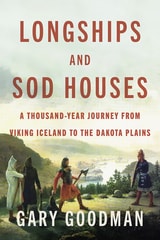
Longships and Sod Houses
A Thousand-Year Journey from Viking Iceland to the Dakota PlainsGary Goodman
University of Minnesota Press, 2026
A direct descendant of a tenth-century Viking marauder traces his lineage from medieval Iceland to the Dakota plains
Gary Goodman first heard that his 24x great-grandfather was a tenth-century Viking pirate and mercenary at a family reunion, when a cousin told him that they were the direct descendants of an Icelandic poet and cold-blooded killer named Egil Skallagrímsson. Also known as “Egil the Bastard,” Goodman’s forefather was the subject of Egil’s Saga, one of the great Icelandic epics of the early Middle Ages. Spurred by this revelation of his family’s lineage, Goodman set out to discover the route his ancestors had traveled from medieval Iceland to the North Dakota plains in the later 1800s.
Drawing on Egil’s Saga, family records, and travels through Iceland, England, and Ireland, Goodman traces his ancestral line from Iceland—the family’s homeland for over a thousand years until a volcanic eruption forced them to migrate—to the hardscrabble plains of the Dakota Territory. His panoramic view ranges from the Viking invasion of England in the early Middle Ages to the disappearance of a short-lived Icelandic settlement on the Mouse River in North Dakota in the late 1800s. Along the way, Goodman sketches the highlights of Egil’s Saga, making the centuries-old epic accessible to today’s readers.
With candor, dry wit, and some bemusement, Goodman shares his trip through history from the perspective of a descendant of an original Viking marauder. An innovative, time-bending family history, Longships and Sod Houses is a noteworthy saga in its own right.
Retail e-book files for this title are screen-reader friendly with images accompanied by short alt text and/or extended descriptions.
Look Out Below! A Story of the Airborne by a Paratrooper Padre
Francis L. Sampson
Catholic University of America Press, 2023
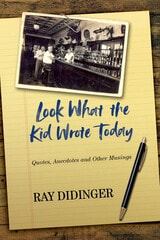
Look What the Kid Wrote Today
Quotes, Anecdotes and Other MusingsRay Didinger
Temple University Press, 2026
When Ray Didinger was a young sports columnist, his proud grandfather would tape his articles on the mirror of his Southwest Philadelphia bar and tell his customers, “Look what the kid wrote today.” That phrase is now the title of Didinger’s latest book, a fond look back on his award-winning career.
In Look What the Kid Wrote Today, Didinger reflects on walking the historic Merion golf course with Jack Nicklaus, shooting pool with Mean Joe Greene, touring Foxcatcher Farms with John du Pont and hanging out with Mark Wahlberg on the set of Invincible. He also writes about helping to heal the rift between the Philadelphia Eagles and arguably their greatest player, Chuck Bednarik. It is a story that went untold until now.
Didinger takes the reader through the many stages of his fifty-plus years in sports media, from his time as an Emmy Award-winning producer at NFL Films, which involved writing scripts for the likes of Tom Selleck, Gary Busey, and Oscar winner James Coburn. Now a playwright, Didinger also devotes a chapter to the 2025 premiere of his critically acclaimed production Spinner.
Candid and insightful, Look What the Kid Wrote Today is Didinger at his best.
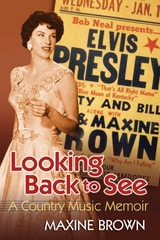
Looking Back to See
A Country Music MemoirMaxine Brown
University of Arkansas Press, 2005
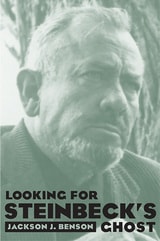
Looking For Steinbeck's Ghost
Jackson J. Benson
University of Nevada Press, 2002
Looking Forward, Looking Upward
My Life, My Friendship with Sir John, and the Early Years of the John Templeton FoundationRobert L. Herrmann
Templeton Press, 2013
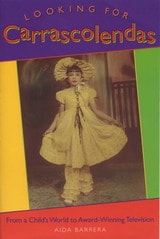
Looking for Carrascolendas
From a Child's World to Award-Winning TelevisionBy Aida Barrera
University of Texas Press, 2001
If your childhood friends were Agapito, the bombastic, bilingual lion; Campamocha, the fix-it man; Caracoles, the restaurant owner; Uncle Andy, the shoe seller; Berta and Dyana, the life-size dolls; and Señorita Barrera, then you grew up watching Carrascolendas. This award-winning show, which originally aired on PBS in the 1970s and was subsequently broadcasted throughout the country in the 1980s and 1990s, was the first Spanish and English children's educational television program broadcast to national audiences in the United States.
In this engagingly written memoir, creator-producer Aida Barrera describes how the mythical world of Carrascolendas grew out of her real-life experiences as a Mexican American child growing up in the Valley of South Texas. She recalls how she drew on those early experiences to create television programming that specifically addressed the needs of Hispanic children, even as it remained accessible and entertaining to children of other cultural backgrounds.
In addition to her personal story, Barrera recounts the long-term struggles for network acceptance and funding that made the production of Carrascolendas something of a miracle. This off-camera story adds an important chapter to the history of Anglo-Mexican cultural politics during the 1970s. Given the fact that Latino characters are still under- and stereotypically represented on network television, Carrascolendas remains an important reminder of what is possible and what has been lost in authentically multicultural television programming.
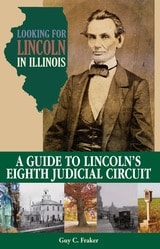
Looking for Lincoln in Illinois
A Guide to Lincoln's Eighth Judicial CircuitGuy C. Fraker
Southern Illinois University Press, 2017
For twenty-three years Abraham Lincoln practiced law on the Eighth Judicial Circuit in east central Illinois, and his legal career is explored in Looking for Lincoln in Illinois: A Guide to Lincoln’s Eighth Judicial Circuit. Guy C. Fraker directs readers and travelers through the prairies to the towns Lincoln visited regularly. Twice a year, spring and fall, Lincoln’s work took him on a journey covering more than four hundred miles. As his stature as a lawyer grew, east central Illinois grew in population and influence, and the Circuit provided Lincoln with clients, friends, and associates who became part of the network that ultimately elevated him to the presidency.
This guidebook to the Circuit features Illinois courthouses, Looking for Lincoln Wayside Exhibits, and other Lincoln points of interest. Fraker guides travelers down the long stretches of quiet country roads that gave Lincoln time to read and think to the locations where Lincoln’s broad range of cases expanded his sense of the economic and social forces changing America.
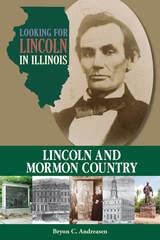
Looking for Lincoln in Illinois
Lincoln and Mormon CountryBryon C. Andreasen
Southern Illinois University Press, 2015
Although they inhabited different political, social, and cultural arenas, Abraham Lincoln and the pioneer generation of Latter-day Saints, or Mormons, shared the same nineteenth-century world. Bryon C. Andreasen’s Looking for Lincoln in Illinois: Lincoln and Mormon Country relates more than thirty fascinating and surprising stories that show how the lives of Lincoln and the Mormons intersected.
This richly illustrated and carefully researched book expands on some of the storyboards found on the Looking for Lincoln Story Trail, from the Mormon capital of Nauvoo to the state capital of Springfield. Created by the Looking for Lincoln Heritage Coalition, this trail consists of wayside exhibits posted in sites of significance to Lincoln’s life and career across fifty-two communities in Illinois. The book’s keyed maps, historic photos, and descriptions of battles, Mormon expeditions, and events at inns, federal buildings, and even Lincoln’s first Illinois log cabin connect the stories to their physical locations.
Exploring the intriguing question of whether Lincoln and Mormon founder Joseph Smith ever met, the book reveals that they traveled the same routes and likely stayed at the same inns. The book also includes colorful and engaging looks at key figures such as Brigham Young, various Mormon apostles, and more. Anyone inspired by Lincoln, as well as Mormon and Illinois history enthusiasts, will appreciate this look back at a long-past, but not forgotten, landscape.
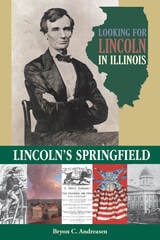
Looking for Lincoln in Illinois
Lincoln's SpringfieldBryon C. Andreasen
Southern Illinois University Press, 2015
Winner, ISHS Certificate of Excellence Award, 2016
Presenting fifty Abraham Lincoln stories—some familiar and beloved, some fresh and unexpected—Looking for Lincoln in Illinois: Lincoln’s Springfield is a carefully researched, richly illustrated guide to the Springfield, Illinois, locations on the Looking for Lincoln Story Trail. Created by the Looking for Lincoln Heritage Coalition, this trail consists of more than two hundred illustrated storyboards posted at sites of significance to Lincoln’s life and career across fifty-two communities in Illinois. The storyboards connect Lincoln-related tales to the geographical locations where they occurred, giving visitors, and now readers, a tour of the social and cultural landscape of Lincoln’s nineteenth-century world while revealing the very human Lincoln known by friends and associates.
This book celebrates the trail as a rich historical resource, featuring the original storyboards produced for Springfield and including twelve additional stories and more than 150 illustrations. Engaging stories in the book bring Lincoln’s Springfield to life: Lincoln created controversy with his Temperance Address, which he delivered in a church on Fourth Street in February 1842. He unexpectedly married Mary Todd in her sister’s home on the edge of Springfield later that year. The Lincolns’ sons used to harness dogs and cats to small wagons and drive them around the dirt streets of town. When Lincoln visited his dentist, he applied his own chloroform, because the practice of analgesia was not yet common. He reportedly played the ball game Fives in a downtown alley while waiting for news of his presidential nomination. And boxing heavyweight champion John C. Heenan visited the presidential candidate in October 1860. Through texts, historic photographs and images, and maps, including one keyed to the story locations in downtown Springfield, readers of this fascinating volume are invited to imagine social and cultural landscapes that have been lost in time.
Looking for Strangers
The True Story of My Hidden Wartime ChildhoodDori Katz
University of Chicago Press, 2013
Looking for The Outsider
Albert Camus and the Life of a Literary ClassicAlice Kaplan
University of Chicago Press, 2016
How did a young man in his twenties who had never written a novel turn out a masterpiece that still grips readers more than seventy years later? With Looking for “The Outsider”, Alice Kaplan tells that story. In the process, she reveals Camus’s achievement to have been even more impressive—and more unlikely—than even his most devoted readers knew.
Born in poverty in colonial Algeria, Camus started out as a journalist covering the criminal courts. The murder trials he attended, Kaplan shows, would be a major influence on the development and themes of The Outsider. She follows Camus to France, and, making deft use of his diaries and letters, re-creates his lonely struggle with the novel in Montmartre, where he finally hit upon the unforgettable first-person voice that enabled him to break through and complete The Outsider.
Even then, the book’s publication was far from certain. France was straining under German occupation, Camus’s closest mentor was unsure of the book’s merit, and Camus himself was suffering from near-fatal tuberculosis. Yet the book did appear, thanks in part to a resourceful publisher, Gaston Gallimard, who was undeterred by paper shortages and Nazi censorship.
The initial critical reception of The Outsider was mixed, and it wasn’t until after liberation that The Outsider began its meteoric rise. As France and the rest of the world began to move out of the shadow of war, Kaplan shows, Camus’s book— with the help of an aggressive marketing campaign by Knopf for their 1946 publication of the first English translation—became a critical and commercial success, and Camus found himself one of the most famous writers in the world. Suddenly, his seemingly modest tale of alienation was being seen for what it really was: a powerful parable of the absurd, an existentialist masterpiece.
Few books inspire devotion and excitement the way The Outsider does. And it couldn’t have a better biographer than Alice Kaplan, whose books about twentieth-century French culture and history have won her legions of fans. No reader of Camus will want to miss this brilliant exploration.
Looking for The Stranger
Albert Camus and the Life of a Literary ClassicAlice Kaplan
University of Chicago Press, 2016
How did a young man in his twenties who had never written a novel turn out a masterpiece that still grips readers more than seventy years later? With Looking for “The Stranger”, Alice Kaplan tells that story. In the process, she reveals Camus’s achievement to have been even more impressive—and more unlikely—than even his most devoted readers knew.
Born in poverty in colonial Algeria, Camus started out as a journalist covering the criminal courts. The murder trials he attended, Kaplan shows, would be a major influence on the development and themes of The Stranger. She follows Camus to France, and, making deft use of his diaries and letters, re-creates his lonely struggle with the novel in Montmartre, where he finally hit upon the unforgettable first-person voice that enabled him to break through and complete The Stranger.
Even then, the book’s publication was far from certain. France was straining under German occupation, Camus’s closest mentor was unsure of the book’s merit, and Camus himself was suffering from near-fatal tuberculosis. Yet the book did appear, thanks in part to a resourceful publisher, Gaston Gallimard, who was undeterred by paper shortages and Nazi censorship.
The initial critical reception of The Stranger was mixed, and it wasn’t until after liberation that The Stranger began its meteoric rise. As France and the rest of the world began to move out of the shadow of war, Kaplan shows, Camus’s book— with the help of an aggressive marketing campaign by Knopf for their 1946 publication of the first English translation—became a critical and commercial success, and Camus found himself one of the most famous writers in the world. Suddenly, his seemingly modest tale of alienation was being seen for what it really was: a powerful parable of the absurd, an existentialist masterpiece.
Few books inspire devotion and excitement the way The Stranger does. And it couldn’t have a better biographer than Alice Kaplan, whose books about twentieth-century French culture and history have won her legions of fans. No reader of Camus will want to miss this brilliant exploration.
Loose of Earth
A MemoirKathleen Dorothy Blackburn
University of Texas Press, 2024
An arresting memoir of love and unbending religion, toxicity and disease, and one family’s desperate wait for a miracle that never came.
Kathleen Dorothy Blackburn was the oldest of five children, a twelve-year-old from Lubbock, Texas, whose evangelical family eschewed public education for homeschooling, and wove improbable scientific theories into literal interpretations of the Bible. Then her father, a former air force pilot, was diagnosed with cancer at the age of thirty-eight, and, “it was like throwing gasoline on the Holy Spirit.” Stirred by her mother, the family committed to an extreme diet and sought deliverance from equally extreme sources: a traveling tent preacher, a Malaysian holy man, a local faith-healer who led services called “Miracles on 34th Street.”
What they didn’t know at the time was that their lives were entangled with a larger, less visible environmental catastrophe. Fire-fighting foams containing carcinogenic compounds had contaminated the drinking water of every military site where her father worked. Commonly referred to as “forever chemicals,” the presence of PFAS in West Texas besieged a landscape already burdened with vanishing water, taking up residence in wells and in the bloodstreams of people who lived there. An arresting portrait of the pernicious creep of decline, and a powerful cry for environmental justice, Loose of Earth captures the desperate futility and unbending religious faith that devastated a family, leaving them waiting for a miracle that would never come.
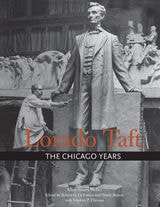
Lorado Taft
The Chicago YearsAllen Stuart Weller; Edited by Robert G. La France and Henry Adams with Stephen P. Thomas
University of Illinois Press, 2014
Returning to Chicago from France, Taft established a bustling studio and began a twenty-one-year career as an instructor at the Art Institute, succeeded by three decades as head of the Midway Studios at the University of Chicago. This triumphant era included ephemeral sculpture for the 1893 World's Columbian Exposition; a prolific turn-of-the-century period marked by the gold-medal-winning The Solitude of the Soul; the 1913 Fountain of the Great Lakes; the 1929 Alma Mater at the University of Illinois; and large-scale projects such as his ambitious program for Chicago's Midway with the monumental Fountain of Time. In addition, the book charts Taft's mentoring of women artists, including the so-called White Rabbits at the World's Fair, many of whom went on to achieve artistic success.
Lavishly illustrated with color images of Taft's most celebrated works, Lorado Taft: The Chicago Years completes the first major study of a great American artist.
Lord Kelvin and the Age of the Earth
Joe D. Burchfield
University of Chicago Press, 1990
"Anyone interested in geologic time, and that should include all geologists and a fair smattering of biologists, physicists and chemists, should make Burchfield's commendable and time-tested volume part of their personal library"—Brent Darymple, Quartely Review of Biology

Lord Selkirk
A LifeJ.M. Bumsted
University of Manitoba Press, 2008
The product of three decades of research, this is the definitive biography of Lord Selkirk. Bumsted’s passionate prose and thoughtful analysis illuminate not only the man, but also the political and economic realities of the British empire at the turn of the nineteenth century. He analyzes Selkirk’s position within these realities, showing how his paternalistic attitudes informed his “social experiments” in colonization and translated into unpredictable, and often tragic, outcomes. Bumsted also provides extensive detail on the complexities of colonization, the Scottish Enlightenment, Scottish peerage, the fur trade, the Red River settlement, and early British-Canadian politics.
Lords of the Levee
The Story of Bathhouse John and Hinky DinkLloyd Wendt and Herman Kogan
Northwestern University Press, 2005
In the early twentieth century, John Coughlin and Mike Kenna ruled Chicago's First Ward, the lucrative lakefront territory and nerve center of the city. It was one of the most infamous havens for vice in the entire country, home to gambling palaces with marble floors and mahogany bars, to a mini-city of thugs and prostitutes and down-and-outers, to dives and saloons of every description and a few beyond description. In short, the First was a gold mine. In a city where money talked, it made boisterous Bathhouse John and the laconic Hinky Dink Kenna the most powerful men in town. This classic of Chicago-style journalism traces the careers of these two operators as they rose to the top of the city's political world.
Lorenzo Da Ponte
The Life and Times of Mozart’s LibrettistSheila Hodges
University of Wisconsin Press, 2002
Three of the greatest operas ever written—The Marriage of Figaro, Don Giovanni, and Così fan tutte—join the exquisite music of Wolfgang Amadeus Mozart with the perfectly matched libretti of Lorenzo Da Ponte. Da Ponte’s own long life (1749–1838), however, was more fantastic than any opera plot. A poor Jew who became a Catholic priest; a priest who became a young gambler and rake; a teacher, poet, and librettist of genius who became a Pennsylvania greengrocer; an impoverished immigrant to America who became professor of Italian at Columbia University—wherever Da Ponte went, he arrived a penniless fugitive and made a new and eventful life. Sheila Hodges follows him from the last glittering years of the Venetian Republic to the Vienna of Mozart and Salieri, and from George III’s London to New York City.
Lorine Niedecker
A Poet’s LifeMargot Peters
University of Wisconsin Press, 2011
Lorine Niedecker (1903–70) was a poet of extraordinary talent whose life and work were long enveloped in obscurity. After her death in 1970, poet Basil Bunting wrote that she was “the most interesting woman poet America has yet produced . . . only beginning to be appreciated when she died.” Her poverty and arduous family life, the isolated home in Wisconsin that provided rich imagery for her work, and her unusual acquaintances have all contributed to Niedecker’s enigmatic reputation.
Margot Peters brings Lorine Niedecker’s life out of the shadows in this first full biography of the poet. She depicts Niedecker’s watery world on Blackhawk Island (near Fort Atkinson, Wisconsin), where she was born and spent most of her life. A brief college career cut short by family obligations and an equally brief marriage were followed in 1931 by the start of a life-changing correspondence and complicated thirty-five-year friendship with modernist poet Louis Zukofsky, who connected Niedecker to a literary lifeline of distant poets and magazines. Supporting herself by turns as a hospital scrubwoman and proofreader for a dairy journal, Niedecker made a late marriage to an industrial painter, which gave her time to write and publish her work in the final decades of her life.
During her lifetime, Niedecker’s poetry was praised by a relatively small literary circle, including Zukofsky, William Carlos Williams, Robert Creeley, Denise Levetov, and Allen Ginsberg. Since her death much more of her surviving writings have been published, including a comprehensive edition of collected works and two volumes of correspondence. Through Margot Peters’s compelling biography, readers will discover Lorine Niedecker as a poet of spare and brilliant verse and a woman whose talent and grit carried her through periods of desperation and despair.
Best Special Interest Books, selected by the American Association of School Librarians
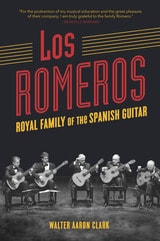
Los Romeros
Royal Family of the Spanish GuitarWalter Aaron Clark
University of Illinois Press, 2018
Loss, A Love Story
Imagined Histories and Brief EncountersSophie Ratcliffe
Northwestern University Press, 2024
Part memoir, part imagined history, this unique personal essay depicts the intimate experience of childhood bereavement, lost love affairs, and the complicated realities of motherhood and marriage. Framed by an extended train journey, author Sophie Ratcliffe turns to the novels, novelists, and heroines who have shaped her emotional and romantic landscapes. She transports us with her to survey the messiness of everyday life, all while reflecting on steam propulsion and pop songs, handbags and honeymoons, Anna Karenina and Anthony Trollope, former lovers and forgotten muses. Frank, funny, tender, and transporting, Loss, A Love Story asks why we fall in, and out, of love—and how we might understand doing so amid the ongoing upheavals and unwritten futures of the twenty-first century.
Lost Among the Baining
Adventure, Marriage, and Other FieldworkGail Pool
University of Missouri Press, 2015
In the late sixties, Gail Pool and her husband set off for an adventure in New Guinea. He was a graduate student in anthropology; she was an aspiring writer. They prepared, as academics do, by reading, practicing with language tapes, consulting with the nearest thing to experts, and then, excited and optimistic, off they went. But all their research could not prepare them for the reality of life in the jungle. As they warded off gargantuan insects, slogged through seemingly endless mud, and turned on each other in fatigue and frustration, they struggled to somehow connect with their enigmatic hosts, the Baining—a people who showed no desire to be studied.
Sixteen months later they returned home. Despite months of trying, they had not been able to make sense of the Baining’s culture. Worse yet, their lives no longer seemed to make sense. Pool put her journals away. Her husband abandoned the study of anthropology.
Decades later, Pool returned to her journals and found in her jumbled notes the understanding that had eluded her twenty-three–year-old self. Finally, she and her husband returned to New Guinea for a shorter visit and a warm reunion with the tribe that challenged them on so many levels and, Pool now realized, made their journey and lives deeper and richer.
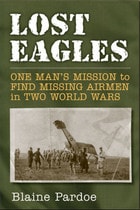
Lost Eagles
One Man's Mission to Find Missing Airmen in Two World WarsBlaine Pardoe
University of Michigan Press, 2010
Praise for Lost Eagles
"The pilot and observer stories selected have not previously seen much exposure. Not only are they interesting, but I found myself relishing getting to the next chapter to find out what Frederick Zinn was doing during the next stage of his life."
---Alan Roesler, founding member, League of World War I Aviation Historians, and former Managing Editor, Over the Front
Praise for Blaine Pardoe's previous military histories (which average 4.5-star customer reviews on Amazon.com):
Terror of the Autumn Skies: The True Story of Frank Luke, America's Rogue Ace of World War I
"This painstaking biography of World War I ace Frank Luke will earn Pardoe kudos . . . Pardoe has flown a very straight course in researching and recounting Luke's myth-ridden life. . . . Thorough annotation makes the book that much more valuable to WWI aviation scholars as well as for more casual air-combat buffs."
---Booklist
The Cruise of the Sea Eagle: The Amazing True Story of Imperial Germany's Gentleman Pirate
"This is a gem of a story, well told, and nicely laid out with photos, maps, and charts that cleverly illuminate the lost era of ‘gentlemen pirates' at sea . . . [German commerce raider Felix von Luckner's] legend lives on in this lively and readable biography."
---Admiral James Stavridis, U.S. Navy, Naval History
Few people have ever heard of Frederick Zinn, yet even today airmen's families are touched by this man and the work he performed in both world wars. Zinn created the techniques still in use to determine the final fate of airmen missing in action. The last line of the Air Force Creed reads, "We will leave no airman behind." Zinn made that promise possible.
Blaine Pardoe weaves together the complex story of a man who brought peace and closure to countless families who lost airmen during both world wars. His lasting contribution to warfare was a combination of his methodology for locating the remains of missing pilots (known as the Zinn system) and his innovation of imprinting all aircraft parts with the same serial number so that if a wreck was located, the crewman could be identified. The tradition he established for seeking and recovering airmen is carried on to this day.
Blaine Pardoe is an accomplished author who has published dozens of military fiction novels and other books, including the widely acclaimed Cubicle Warfare: Self-Defense Tactics for Today's Hypercompetitive Workplace; Terror of the Autumn Skies: The True Story of Frank Luke, America's Rogue Ace of World War I; and The Cruise of the Sea Eagle: The Amazing True Story of Imperial Germany's Gentleman Pirate.
Jacket photo: Frederick Zinn's Sopwith aircraft, which crashed during World War I. National Museum of the United States Air Force Archives.
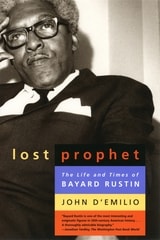
Lost Prophet
The Life and Times of Bayard RustinJohn D'Emilio
University of Chicago Press, 2004
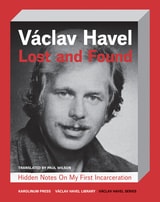
Lost and Found
Hidden Notes on My First IncarcerationVáclav Havel
Karolinum Press, 2026
An English translation of a lost manuscript of reflections from former Czech dissident Václav Havel.
In the fall of 1977, after the dramatic events of the “Year of Charter 77,” Václav Havel wrote a report recounting the first hours after the Charter 77 Declaration, the four months of investigative detention imposed on him by the communist regime, his release, and the agonizing self-examination that followed. In this text, the former dissident describes not only the investigation but also the Faustian guilt he felt after promising to scale back his political activities in exchange for his freedom. As he later recalled in a book-length interview with journalist Karel Hvíždala titled Dálkový výslech (Long-distance interrogation), he hid the roughly one-hundred-page manuscript somewhere, admitting: “I don’t know where it is anymore. Maybe I’ll find it someday.” He never did. The manuscript resurfaced only recently, discovered among the papers of his close friend Zdenek Urbánek. Fragmentary yet strikingly immediate, the text has been reconstructed and published by the Václav Havel Library, with the English translation appearing on the occasion of the world-renowned intellectual’s ninetieth birthday.
Lost in Austin
A Nevada MemoirJim Andersen
University of Nevada Press, 2009
In 1974 Jim Andersen and his wife, tired of the congestion and high taxes in California, decided to start a new life in rural Nevada. They settled on Austin, a town of about 250 people perched on a mountainside along the legendary Highway 50, “the loneliest road in America.” In the middle of the nineteenth century, Austin was a free-wheeling boomtown at the center of a silver bonanza. By the time the Andersens arrived, it had shrunk to a quiet, isolated community of self-sufficient souls who ran their lives, economy, and local government their own way, with ingenuity, wit, and a certain disregard for convention. Andersen’s account of his life in Austin is a charming, sometimes hilarious account of city folks adapting to life in a small town. He addresses such matters as making a living from a variety of odd jobs, some of them odder than others; serving as a deputy sheriff, deputy coroner, and elected justice of the peace, and administering Austin’s unique version of justice; raising a family; finding ways to have fun; and exploring the austerely beautiful backcountry of central Nevada. He also introduces some of Austin’s residents and their stories, and describes the way the community comes together for entertainment or to respond to crises.Lost in Austin is fascinating reading for anyone who cherishes nostalgic memories of living in a small town, or who contemplates moving to one. It offers an engaging portrait of a Nevada that exists far from the glitz and glitter of Las Vegas and Reno, “a happy Bermuda Triangle” where rugged individualism and community spirit flourish amidst sagebrush and vast open spaces.
Lost in a Labyrinth of Red Tape
The Story of an Immigration that FailedArmin Schmid and Renate Schmid
Northwestern University Press, 1996
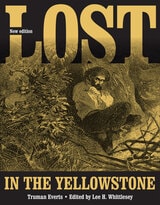
Lost in the Yellowstone
"Thirty-Seven Days of Peril" and a Handwritten Account of Being LostTruman Everts; Edited by Lee H. Whittlesey
University of Utah Press, 2015
In 1870, Truman Everts visited what would two years later become Yellowstone National Park, traveling with an exploration party intent on mapping and investigating that mysterious region. Scattered reports of a mostly unexplored wilderness filled with natural wonders had caught the public’s attention and the fifty-four-year-old Everts, near-sighted and an inexperienced woodsman, had determined to join the expedition. He was soon separated from the rest of the party and from his horse, setting him on a grueling quest for survival. For over a month he wandered Yellowstone alone and injured, with little food, clothing, or other equipment. In “Thirty-seven Days of Peril” he recounted his experiences for the readers of Scribner’s Monthly.
In June 1996, Everts’s granddaughter arrived at Mammoth Hot Springs in Yellowstone National Park to meet with park archivist Lee Whittlesey. She brought two documents that her father had kept hidden and both were handwritten by Everts. One was a brief autobiography that gave new insight into his early life. The other was a never-published alternative account of his confused 1870 journey through Yellowstone. Both have been added to this volume, further enhancing Everts’s unlikely tale of survival.
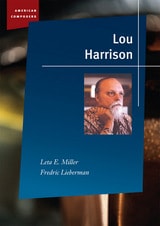
Lou Harrison
Leta E. Miller and Fredric Lieberman
University of Illinois Press, 2010
Leta E. Miller and Fredric Lieberman take readers into Harrison's rich world of cross-fertilization through an exploration of his outspoken stance on pacifism, gay rights, ecology, and respect for minorities--all major influences on his musical works. Though Harrison was sometimes accused by contemporaries of "cultural appropriation," Miller and Lieberman make it clear why musicians and scholars alike now laud him as an imaginative pioneer for his integration of Asian and Western musics. They also delve into Harrison's work in the development of the percussion ensemble, his use of found and invented instruments, and his explorations of alternative tuning systems. An accompanying compact disc of representative recordings allows readers to examine Harrison's compositions in further detail.

Louder Than Bombs
A Life with Music, War, and PeaceEd Vulliamy
University of Chicago Press, 2020
Describing the artists, songs, and concerts that most influenced him, Vulliamy brings together the two largest threads of his life—music and war. Louder Than Bombs covers some of the most important musical milestones of the past fifty years, from Jimi Hendrix playing “Machine Gun” at the Isle of Wight Festival in 1970 to the Bataclan in Paris under siege in 2015. Vulliamy was present for many of these historic moments, and with him as our guide, we see them afresh, along the way meeting musicians like B. B. King, Graham Nash, Patti Smith, Daniel Barenboim, Gustavo Dudamel, and Bob Dylan. Vulliamy peppers the book with short vignettes—which he dubs 7" singles—recounting some of his happiest memories from a lifetime with music. Whether he’s working as an extra in the Vienna State Opera’s production of Aida, buying blues records in Chicago, or drinking coffee with Joan Baez, music is never far from his mind. As Vulliamy discovers, when horror is unspeakable, when words seem to fail us, we can turn to music for expression and comfort, or for rage and pain. Poignant and sensitively told, Louder Than Bombs is an unforgettable record of a life bursting with music.
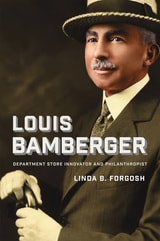
Louis Bamberger
Department Store Innovator and PhilanthropistLinda B. Forgosh
Brandeis University Press, 2016
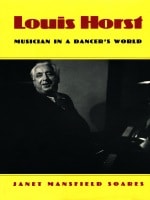
Louis Horst
Musician in a Dancer’s WorldJanet Mansfield Soares
Duke University Press, 1992
At the center of this story is Horst's relationship with Martha Graham, who was his intimate for decades. "I did everything for Martha," Horst said late in life. Indeed, as her lover, ally, and lifelong confidante, he worked with such conviction to make her the undisputed dance leader in the concert world that Graham herself would later remark: "Without him I could not have achieved anything I have done." Drawing on the conversation and writings of Horst and his colleagues, Janet Mansfield Soares reveals the inner workings of this passionate commitment and places it firmly in the context of dance history.
Horst emerges from these pages as a man of extraordinary personality and multifaceted talent: a composer whose dance scores, such as the one for Graham's Primitive Mysteries, became models for many who followed; a concert pianist for American dancers such as Doris Humphrey and Helen Tamiris, as well as their German counterparts; an editor and writer whose advocacy for American dance made him a leading critic of his time; and, above all, a teacher and mentor whose work at the Neighborhood Playhouse, the Bennington School of Dance, American Dance Festival, and Juilliard helped shape generations of dancers and choreographers.
Richly illustrated, sensitive to intimate detail and historical nuance, this comprehensive biography reveals the raison d'etre underlying Horst's theories and practices, offering a wealth of insight into the development of dance as an art form under his virtually unchallenged rule.
Louis I. Kahn
The Nordic LatitudesPer Olaf Fjeld
University of Arkansas Press, 2019
Kahn’s Nordic and European ties are emphasized in this study that also covers his early childhood in Estonia, his travels, and his relationships with other architects, including the Norwegian architect Arne Korsmo.
The authors have gathered personal reflections, archival material, and other student work to offer insight into the wisdom that Kahn imparted to his students in his famous masterclass. Louis I. Kahn: The Nordic Latitudes addresses Kahn’s legacy both personally and in terms of the profession, documents a research trip the University of Pennsylvania’s Louis I. Kahn Collection, and confronts the affiliation of Kahn’s work with postmodernism.
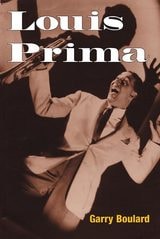
Louis Prima
Garry Boulard
University of Illinois Press, 1998
Louis Prima infused the grit and grace of Dixieland jazz with swing and big band sounds, the first whiffs of rock 'n' roll, and a vaudevillian stage presence. Garry Boulard pens the biography of the underrated jazz musician, Las Vegas mainstay, and popular entertainer.
A native of New Orleans, Prima was a Guy Lombardo protégé known as "The Italian Satchmo" who became the country's new jazz sensation at New York's Famous Door in the 1930s. He went on to success as a big band leader before virtually creating the lounge act as a Las Vegas nightclub staple. Employing and later marrying singer Keely Smith, Prima rode high with a series of hit songs and smash albums in the Fifties. But Boulard also looks past the over-the-top stage antics to restore Prima's legacy as an overlooked jazz musician and vocalist, and as a bandleader with an uncanny ability to fuse disparate styles into music that kept audiences cheering and dancing for decades.
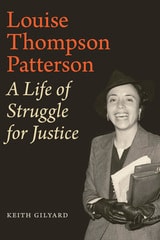
Louise Thompson Patterson
A Life of Struggle for JusticeKeith Gilyard
Duke University Press, 2017
Lourdes Portillo
The Devil Never Sleeps and Other FilmsEdited by Rosa Linda Fregoso
University of Texas Press, 2001
Filmmaker Lourdes Portillo sees her mission as "channeling the hopes and dreams of a people." Clearly, political commitment has inspired her choice of subjects. With themes ranging from state repression to AIDS, Portillo's films include: Después del Terremoto, the Oscar-nominated Las Madres: The Mothers of the Plaza de Mayo,La Ofrenda: The Days of the Dead,The Devil Never Sleeps, and Corpus: A Home Movie for Selena.
The first study of Portillo and her films, this collection is collaborative and multifaceted in approach, emphasizing aspects of authorial creativity, audience reception, and production processes typically hidden from view. Rosa Linda Fregoso, the volume editor, has organized the book into three parts: interviews (by Fregoso and Kathleen Newman and B. Ruby Rich); critical perspectives (essays by Fregoso, Yvonne Yarbro-Bejarano, Sylvie Thouard, Norma Iglesias, and Barbara McBane); and production materials (screenplays, script notes, storyboards, etc.).
This innovative collection provides "inside" information on the challenges of making independent films. By describing the production constraints Portillo has surmounted, Fregoso deepens our appreciation of this gifted filmmaker's life, her struggles, and the evolution of her art.

Love Is My Favorite Flavor
A Midwestern Dining Critic Tells AllWini Moranville
University of Iowa Press, 2024
Amidst the vast changes that have occurred over the years, Love Is My Favorite Flavor underscores the timelessness of what it is we seek when we entrust restaurateurs with our hard-earned money and our hard-won leisure time. Dining out may have changed dramatically since the 1970s, but the joys of being in the hands of people who care deeply about our time at their tables have not.
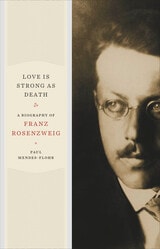
Love Is Strong as Death
A Biography of Franz RosenzweigPaul Mendes-Flohr
University of Chicago Press, 2026
Franz Rosenzweig (1886–1929) was one of the central figures of the Jewish cultural and intellectual renaissance in Weimar Germany. His masterwork, The Star of Redemption (1921), is a classic of existential thought and Jewish philosophy, and his considerable legacy also includes his collaboration with Martin Buber on a key translation of the Hebrew Bible into German and the establishment of an education center in Frankfurt that brought together the most important young German-Jewish intellectuals of its time.
Rosenzweig’s personal biography is no less fascinating than his ideas and accomplishments. Drawing on unprecedented access to Rosenzweig’s unpublished personal correspondence, Paul Mendes-Flohr skillfully weaves together the threads of Rosenzweig’s life to give us a moving portrait of this towering figure—from his near-conversion to Christianity to his tragic diagnosis with ALS. Mendes-Flohr also closely explores Rosenzweig’s relationship with Margrit Huessy, who was a vital intellectual partner for Rosenzweig, as well as a muse and lover. He worked out many of his ideas about love both in conversation and consort with her, and Mendes-Flohr shows the importance of intimacy—both romantic and platonic—in the development of Rosenzweig’s thought.
Love Is Strong as Death provides a unique and insightful look at one of the most important modern Jewish thinkers.

Love Makes a Family
Portraits of Lesbian, Gay, Bisexual, and Transgendered Parents and Their FamiliesGigi Kaeser
University of Massachusetts Press, 1999
This handsome volume combines interviews and photographs to document the experiences of lesbian, gay, bisexual, and transgendered parents and their children. It allows all of the family members to speak candidly about their lives, their relationships, and the ways in which they have dealt with the pressures of homophobia. Included in the book are people from a diverse array of racial, ethnic, and economic backgrounds, representing a wide range of family structures. Together, they provide clear evidence that family roles and responsibilities need not be based on gender, and that children thrive in an atmosphere in which understanding, respect, and love transcend the prejudices of the day.
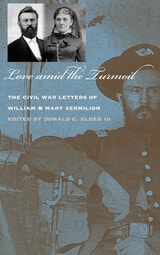
Love amid the Turmoil
The Civil War Letters of William and Mary VermilionDonald C. Elder, III
University of Iowa Press, 2003
William Vermilion (1830-1894) served as a captain in Company F of the 36th Iowa Infantry from October 1862 until September 1865. Although he was a physician in Iconium in south central Iowa at the start of the war, after it ended he became a noted lawyer in nearby Centerville; he was also a state senator from 1869 to 1872. Mary Vermilion (1831-1883) was a schoolteacher who grew up in Indiana; she and William married in 1858. In this volume historian Donald Elder provides a careful selection from the hundreds of supportive, informative, and heart-wrenching letters that they wrote each other during the war—the most complete collection of letters exchanged between a husband and a wife during the Civil War.
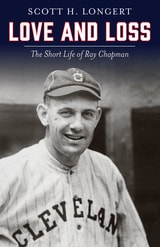
Love and Loss
The Short Life of Ray ChapmanScott H. Longert
Ohio University Press, 2024
The son of a coal miner from a small Illinois town, Cleveland Indians shortstop Ray Chapman lived the American dream until his untimely death at age twenty-nine. In his brief life, he reached the pinnacle of baseball success as the best shortstop in the American League. While many professional ballplayers struggled with meager salaries, the handsome Chapman had married heiress Kathleen Daly, one of Cleveland’s wealthiest women. With a child on the way and an executive job in the offseason, Chapman was moving toward a privileged place in society until an errant fastball fractured his skull and ended his life the next day. Late in the 1920 pennant race, the Indians were in New York for a key series against the Yankees. New York pitcher Carl Mays threw a high hard one that Chapman could not evade. He was taken to a nearby hospital, where doctors tried in vain to save his life. The tragedy did not end there. His widow took her own life eight years later, and their daughter, Rae, subsequently died from meningitis. Today, people visit Chapman’s impressive grave in Cleveland’s Lake View Cemetery, leaving baseballs and gloves in his memory. Though gone over a hundred years, he is well remembered as a Cleveland icon. This book goes far beyond the well-worn accounts of Chapman’s untimely death to illustrate the fullness of his short life.
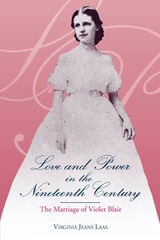
Love and Power in the Nineteenth Century
The Marriage of Violet BlairVirginia Jeans Laas
University of Arkansas Press, 1998
Winner, 1999 Missouri Conference on History Book Award
This fascinating biography of a marriage in the Gilded Age closely examines the dynamic flow of power, control, and love between Washington blue blood Violet Blair and New Orleans attorney Albert Janin. Based on their voluminous correspondence as well as Violet’s extensive diaries, it offers a thoroughly intimate portrait of a fifty-four-year union which, in many ways, conformed to societal strictures, yet always created its own definition of itself in order to fit the flux of needs of both husband and wife.
Central to their story is Violet’s fierce determination to maintain her autonomy within the patriarchic institution of marriage. An enduring belle who thought, talked, and acted with the assurance and self-confidence of one whose wishes demanded obedience, she rejected the Victorian ideal of women as silent, submissive consorts. Yet her feminism was a private one, not played out on a public stage but kept to the confines of her own daily life and marriage.
With abundant documentary evidence to draw upon, Laas ties this compelling story to broader themes of courtiship behavior, domesticity, gender roles, extended family bonds, elitism, and societal stereotyping. Deeply researched and beautifully written, Love and Power in the Nineteenth Century has the dual virtue of making an important historical contribution while also appealing to a broad popular audience.
Love, Anarchy, & Emma Goldman
A BiographyFalk, Candace
Rutgers University Press, 1990
Love, Anarchy, & Emma Goldman
A BiographyCandace Serena Falk
Rutgers University Press, 2019
“Fascinating …With marvelous clarity and depth, Candace Falk illuminates for us an Emma Goldman shaped by her time yet presaging in her life the situation and conflicts of women in our time.” —Tillie Olsen
One of the most famous political activists of all time, Emma Goldman was also infamous for her radical anarchist views and her “scandalous” personal life. In public, Goldman was a firebrand, confidently agitating for labor reform, anarchism, birth control, and women’s independence. But behind closed doors she was more vulnerable, especially when it came to the love of her life.
Love, Anarchy, & Emma Goldman is an account of Goldman’s legendary career as a political activist. But it is more than that—it is a biography that offers an intimate look at how Goldman’s passion for social reform dovetailed with her passion for one man: Chicago activist, hobo king, and red-light district gynecologist Ben Reitman. Candace Falk takes us into the heart of their tumultuous love affair, finding that even as Goldman lectured on free love, she confronted her own intense jealousy.
As director of the Emma Goldman papers, Falk had access to over 40,000 writings by Goldman—including her private letters and notes—and she draws upon these archives to give us a rare insight into this brilliant, complex woman’s thoughts. The result is both a riveting love story and a primer on an exciting, explosive era in American politics and intellectual life.