Results by title
28164 books match the query 'History' and 932 start with l
Latin Classics in Medieval Hungary
Eleventh CenturyElod Nemerkényi
Central European University Press, 2004

Latin Inscriptions in Oxford
Compiled with Translations by Reginald H. Adams
Bodleian Library Publishing, 2015
For Latin Inscriptions in Oxford, Reginald H. Adams, a former scholar at St. John’s College, University of Oxford, has translated a selection of Latin inscriptions. Among them, he finds a great many tributes and memorials—to Queen Anne, Cardinal Wolsey, and T. E. Lawrence, but also to Irene Frude, a “most kindly landlady” on Little Clarendon who “provided each day for almost thirty-five years enormous breakfasts.” Some of the inscriptions offer concise commentary—“Without experiment, it is not possible to know anything adequately.” While others are instructive like the Rhodes House’s warning, “Let no one who is smoke-bearing enter here.”
Evocative mementoes of the past, the inscriptions collected by Adams bring insight to the vivid history of Oxford, the city and the university.
Latin Inscriptions in the Kelsey Museum
The Dennison and De Criscio CollectionsSteven L. Tuck
University of Michigan Press, 2006
The 400 entries in this volume include all of the Latin inscriptions on stone or metal in the Kelsey Museum of Archaeology at the University of Michigan; they represent the largest, and arguably the most important, collection of Latin inscriptions in the Western Hemisphere. The collection is notable not just for its size but for the fact that almost all the inscriptions were acquired by purchase for their scholarly and educational value to the members of the university community. Because of this, the collection is also an important testimony to a seminal phase in the development of the study of Classics at the University of Michigan. For the first time ever, this project makes the Latin inscriptions of the Kelsey available in one volume and has provided an opportunity to reexamine some texts that have not been edited in over a century. The commentaries for this edition have benefited from a wealth of recent scholarship resulting in some amended readings and reidentification of texts.
Steven L. Tuck is Assistant Professor of Classics at Miami University of Ohio.
The Kelsey Museum Studies series, edited by University of Michigan professors Elaine Gazda, Margaret Cool Root, and John Pedley, is designed to publish unusual material in the Museum's collections, together with reports of current and past archaeological expeditions sponsored by the University of Michigan.

Latin Liturgical Psalters in the Bodleian Library
A Select CatalogueElizabeth Solopova
Bodleian Library Publishing, 2013
Latin Liturgical Psalters in the Bodleian Library describes more than one hundred psalters from Britain, France, the Netherlands, Germany, Austria, Italy, and Spain, ranging from the ninth to the sixteenth century and reflecting a wide range of requirements and interests. Each entry includes a description of the psalter’s contents, physical makeup, and provenance, alongside full-color images of pages, a bibliography, and tables to assist in the study of illumination and the liturgical use of psalms.
Bringing together important information on a stunning selection of little-known manuscripts held by the Bodleian Library, this volume will prove a valuable resource.
Latin for Gardeners
Over 3,000 Plant Names Explained and ExploredLorraine Harrison
University of Chicago Press, 2012
Since Latin became the standard language for plant naming in the eighteenth century, it has been intrinsically linked with botany. And while mastery of the classical language may not be a prerequisite for tending perennials, all gardeners stand to benefit from learning a bit of Latin and its conventions in the field. Without it, they might buy a Hellebores foetidus and be unprepared for its fetid smell, or a Potentilla reptans with the expectation that it will stand straight as a sentinel rather than creep along the ground.
An essential addition to the gardener’s library, this colorful, fully illustrated book details the history of naming plants, provides an overview of Latin naming conventions, and offers guidelines for pronunciation. Readers will learn to identify Latin terms that indicate the provenance of a given plant and provide clues to its color, shape, fragrance, taste, behavior, functions, and more.
Latin for Reading
A Beginner's Textbook with ExercisesGlenn M. Knudsvig, Ruth S. Craig, and Gerda M. Seligson
University of Michigan Press, 1986
Latin for Reading
A Beginner's Textbook with Exercises, Instructor's ManualGlenn M. Knudsvig, Ruth S. Craig, and Gerda M. Seligson
University of Michigan Press, 1986
LatinAsian Cartographies
History, Writing, and the National ImaginaryThananopavarn, Susan
Rutgers University Press, 2018
Thananopavarn creates a new “LatinAsian” view of the United States that emphasizes previously suppressed aspects of national history, including imperialism, domestic racism during World War II, Cold War operations in Latin America and Asia, and the politics of borders in an age of globalization. LatinAsian Cartographies ultimately reimagines national narratives in a way that transforms dominant ideas of what it means to be American.
Latina/o Midwest Reader
Omar Valerio-Jimenez , Santiago Vaquera-Vasquez
University of Illinois Press, 2017
Eye-opening and provocative, The Latina/o Midwest Reader rewrites the conventional wisdom on today's Latina/o community and how it faces challenges—and thrives—in the heartland.
Contributors: Aidé Acosta, Frances R. Aparicio, Jay Arduser, Jane Blocker, Carolyn Colvin, María Eugenia Cotera, Theresa Delgadillo, Lilia Fernández, Claire F. Fox, Felipe Hinojosa, Michael D. Innis-Jiménez, José E. Limón, Marta María Maldonado, Louis G. Mendoza, Amelia María de la Luz Montes, Kim Potowski, Ramón H. Rivera-Servera, Rebecca M. Schreiber, Omar Valerio-Jiménez, Santiago Vaquera-Vásquez, Darrel Wanzer-Serrano, Janet Weaver, and Elizabeth Willmore
Latina/o/x Education in Chicago
Roots, Resistance, and TransformationEdited by Isaura Pulido, Angelica Rivera, and Ann M. Aviles
University of Illinois Press, 2022
Insightful and enlightening, Latina/o/x Education in Chicago brings to light the ongoing struggle for educational equity in the Chicago Public Schools.
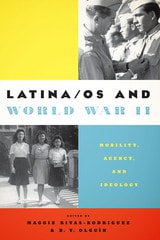
Latina/os and World War II
Mobility, Agency, and IdeologyEdited by Maggie Rivas-Rodriguez and B.V. Olguín
University of Texas Press, 2014
The first book-length study of Latina/o experiences in World War II over a wide spectrum of identities and ancestries—from Cuban American, Spanish American, and Mexican American segments to the under-studied Afro-Latino experience—Latina/os and World War II probes the controversial aspects of Latina/o soldiering and citizenship in the war, the repercussions of which defined the West during the twentieth century. The editors also offer a revised, more accurate tabulation of the number of Latina/os who served in the war.
Spanning imaginative productions, such as vaudeville and the masculinity of the soldado razo theatrical performances; military segregation and the postwar lives of veterans; Tejanas on the homefront; journalism and youth activism; and other underreported aspects of the wartime experience, the essays collected in this volume showcase rarely seen recollections. Whether living in Florida in a transformed community or deployed far from home (including Mexican Americans who were forced to endure the Bataan Death March), the men and women depicted in this collection yield a multidisciplinary, metacritical inquiry. The result is a study that challenges celebratory accounts and deepens the level of scholarly inquiry into the realm of ideological mobility for a unique cultural crossroads. Taking this complex history beyond the realm of war narratives, Latina/os and World War II situates these chapters within the broader themes of identity and social change that continue to reverberate in postcolonial lives.
Latinamericanism after 9/11
John Beverley
Duke University Press, 2011
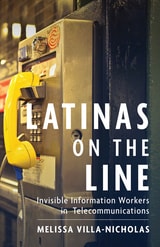
Latinas on the Line
Invisible Information Workers in TelecommunicationsMelissa Villa-Nicholas
Rutgers University Press, 2022
Latinas/os in New Jersey
Histories, Communities, and CulturesAldo A. Lauria Santiago
Rutgers University Press, 2025
Contributors: Yamil Avivi; Jennifer Ayala; Ulla D. Berg; Giovani Burgos; Elsa Candelario; Laura Curran; Lilia Fernández; Ismael García Colón; Olga Jiménez de Wagenheim; Benjamin Lapidus; Aldo A. Lauria Santiago; Johana Londoño; Kathleen Lopez; Giancarlo Muschi; Melanie Z. Plasencia; Ana Y. Ramos-Zayas; Elena Sabogal; Raymond Sanchez Mayers; William Suárez Gómez; Alex F. Trillo; Daniela Valdez; Anil Venkatesh; Lyna L. Wiggins
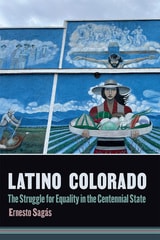
Latino Colorado
The Struggle for Equality in the Centennial StateErnesto Sagás
University Press of Colorado, 2026
Author Ernesto Sagás also explores the ways in which Latinos—as a racialized, subordinate group—have historically interacted with Colorado’s Anglo society in carving out their own spaces while struggling for social and legal equality. He presents a demographic and socioeconomic profile of Latinos in Colorado based on field research and the latest US Census data to dispel common stereotypes while also pointing out areas of concern for state policymakers.
Latino Colorado sheds light on this marginalized community and advances the understanding of the state’s racialized dynamics. It is about everyone in the American West—Anglos, Latinos, and others—and how they interact with and continue to (re)define one another in real and imagined ways in the most mythologized of American regions.
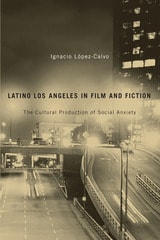
Latino Los Angeles in Film and Fiction
The Cultural Production of Social AnxietyIgnacio López-Calvo
University of Arizona Press, 2014
Latino Los Angeles in Film and Fiction sets out to reconfigure the scope of Latino literary and cultural studies. Integrating histories of different regions and nations, the book sets the interplay of unresolved contradictions in this particular metropolitan area. The novelists studied here stem from multiple areas, including the U.S. Southwest, Guatemala, and Chile. The study also incorporates non-Latino writers who have contributed to the Latino culture of the city.
The first chapter examines Latino cultural production from an ecocritical perspective on urban interethnic relations. Chapter 2 concentrates on the representation of daily life in the barrio and the marginalization of Latino urban youth. The third chapter explores the space of women and how female characters expand their area of operations from the domestic space to the public space of both the barrio and the city.
A much-needed contribution to the fields of urban theory, race critical theory, Chicana/o–Latina/o studies, and Los Angeles writing and film, López-Calvo offers multiple theoretical perspectives—including urban theory, ecocriticism, ethnic studies, gender studies, and cultural studies— contextualized with notions of transnationalism and post-nationalism.
Latinos and American Law
Landmark Supreme Court CasesBy Carlos R. Soltero
University of Texas Press, 2006
To achieve justice and equal protection under the law, Latinos have turned to the U.S. court system to assert and defend their rights. Some of these cases have reached the United States Supreme Court, whose rulings over more than a century have both expanded and restricted the legal rights of Latinos, creating a complex terrain of power relations between the U.S. government and the country's now-largest ethnic minority. To map this legal landscape, Latinos and American Law examines fourteen landmark Supreme Court cases that have significantly affected Latino rights, from Botiller v. Dominguez in 1889 to Alexander v. Sandoval in 2001.
Carlos Soltero organizes his study chronologically, looking at one or more decisions handed down by the Fuller Court (1888-1910), the Taft Court (1921-1930), the Warren Court (1953-1969), the Burger Court (1969-1986), and the Rehnquist Court (1986-2005). For each case, he opens with historical and legal background on the issues involved and then thoroughly discusses the opinion(s) rendered by the justices. He also offers an analysis of each decision's significance, as well as subsequent developments that have affected its impact. Through these case studies, Soltero demonstrates that in dealing with Latinos over issues such as education, the administration of criminal justice, voting rights, employment, and immigration, the Supreme Court has more often mirrored, rather than led, the attitudes and politics of the larger U.S. society.
Latinos and Nationhood
Two Centuries of Intellectual ThoughtNicolás Kanellos
University of Arizona Press, 2023
Over the course of two centuries, these Latino or Hispanic intellectuals were natural-born citizens of the United States, immigrants, or political refugees. Many of these intellectuals, whether citizens or not, strove to embrace and enliven such democratic principles as freedom of speech and of the press, the protection of minorities in the Bill of Rights and in subsequent laws, and the protection of linguistic and property rights, among many others, guaranteed by treaties when the United States incorporated their homelands into the Union.
The first six chapters present the work of lesser-known historical figures—most of whom have been consistently ignored by Anglo- and Euro-centric history and whose works have been widely inaccessible until recently—who were revolutionaries, editors of magazines and newspapers, and speechmakers who influenced the development of a Latino consciousness. The last three chapters deal with three foundational figures of the Chicano Movement, the last two of whom either subverted the concept of nationhood or went beyond it to embrace internationalism in an outreach to humanity as a whole.
Latinos and Nationhood sheds new light on the biographies of Félix Varela, José Alvarez de Toledo y Dubois, Francisco Ramírez, Tomás Rivera, Rolando Hinojosa-Smith, and Gloria E. Anzaldúa, among others.
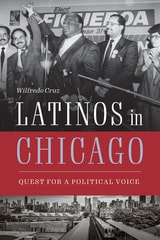
Latinos in Chicago
Quest for a Political VoiceWilfredo Cruz
Southern Illinois University Press, 2022
The path to political power for Latinos in Chicago
In the Midwest’s largest city, Latinos have been fighting for political representation for more than half a century. In this exploration of urban politics in Chicago, Wilfredo Cruz shows for the first time how Latinos went from being ignored by the Irish-controlled political machine to becoming a respected constituency.
Beginning with the Latino community’s first attempt to acquire a political voice in Chicago politics in 1911 and continuing through Latino officeholders of the early twenty-first century, Cruz surveys not only the struggles of this community—specifically the two largest Latino groups in the city, Mexicans and Puerto Ricans—but also the ways in which Chicago’s Latinos overcame those challenges to gain their political voice.
For most of the twentieth century, Chicago politicians ignored the growing Latino community. This disregard changed with the 1983 election of Mayor Harold Washington, an African American who defied the political machine and actively recruited Latinos to his administration and helped them win city and statewide political offices. His actions opened the doors of government for Latinos in Chicago. Subsequent mayors, seeing the political success of Washington’s move, continued his policies.
Many up-and-coming Latino politicians making strides in Chicago, including state representative Aarón Ortíz, Alderman Andre Vasquez, and Alderman Rossana Rodríguez-Sanchez, contribute their takes on the struggle for political power and the challenges facing the rising new generation of elected officials. With this book, Cruz asks and answers this question: What does the future hold for Latinos politically in Chicago?
Latinos in Michigan
David A. Badillo
Michigan State University Press, 2003
Latinos in Nevada
A Political, Economic, and Social ProfileJohn P. Tuman
University of Nevada Press, 2021
This extensive study by a distinguished and multidisciplinary team of scholars discusses the impact of the Latinx population from the early development of the state of Nevada and highlights their roles in society, as well as the specific implications of their growing presence in the state. It also contemplates the future of the Latinx population and the role they will continue to play in politics and the economy.
This in-depth examination of a large and relatively understudied population will be of interest to scholars and students who study disparities in health and education opportunities as well as the political and economic climate among Latinos and other groups in Nevada and beyond. A political, economic, and demographic profile, this book:
- Explores the history, growth, and diversity of the Latinx population.
- Draws on an array of census data, voter surveys, statistics, interviews, and health, education, employment, wages, and immigration statistics.
- Evaluates key trends in employment, education, religion, and health.
- Analyzes the dynamics of political participation, including implications of a growing Latino political electorate in a western swing state.
- Assesses key determinants of health disparities, educational inequities, and civic engagement among Latinos in the state.
- Demonstrates the impact of the Great Recession of 2008 and provides a preliminary assessment of the COVID-19 pandemic on Latino employment.
Latinos in New England
edited by Andrés Torres
Temple University Press, 2006
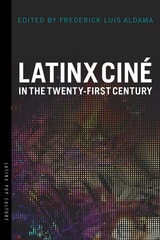
Latinx Ciné in the Twenty-First Century
Edited by Frederick Luis Aldama
University of Arizona Press, 2019
Twenty-first-century Latinx film offers much to celebrate, but as noted pop culture critic Frederick Luis Aldama writes, there’s still room to be purposefully critical. In Latinx Ciné in the Twenty-First Century contributors offer groundbreaking scholarship that does both, bringing together a comprehensive presentation of contemporary film and filmmakers from all corners of Latinx culture.
The book’s seven sections cover production techniques and evolving genres, profile those behind and in front of the camera, and explore the distribution and consumption of contemporary Latinx films. Chapters delve into issues that are timely, relevant, and influential, including representation or the lack thereof, identity and stereotypes, hybridity, immigration and detention, historical recuperation, and historical amnesia.
With its capacious range and depth of vision, this timeless volume of cutting-edge scholarship blazes new paths in understanding the full complexities of twenty-first century Latinx filmmaking.
Contributors
Contributors
Iván Eusebio Aguirre Darancou
Frederick Luis Aldama
Juan J. Alonzo
Lee Bebout
Debra A. Castillo
Nikolina Dobreva
Paul Espinosa
Mauricio Espinoza
Camilla Fojas
Rosa-Linda Fregoso
Desirée J. Garcia
Enrique García
Clarissa Goldsmith
Matthew David Goodwin
Monica Hanna
Sara Veronica Hinojos
Carlos Gabriel Kelly
Jennifer M. Lozano
Manuel M. Martín-Rodríguez
J. V. Miranda
Valentina Montero Román
Danielle Alexis Orozco
Henry Puente
John D. “Rio” Riofrio
Richard T. Rodríguez
Ariana Ruiz
Samuale Saldívar III
Jorge Santos
Rebecca A. Sheehan

Latinx TV in the Twenty-First Century
Edited by Frederick Luis Aldama
University of Arizona Press, 2022
In this volume, editor Frederick Luis Aldama brings together leading experts who show how Latinx TV is shaped by historical, social, cultural, regional, and global contexts. Contributors address head on harmful stereotypes in Latinx representation while giving key insights to a positive path forward. TV narratives by and about Latinx people exist across all genres. In this century, we see Latinx people in sitcoms, sci-fi, noir, soap operas, rom-coms, food shows, dramas, action-adventure, and more. Latinx people appear in television across all formats, from quick webisodes, to serialized big-arc narratives, to animation and everything in between. The diverse array of contributors to this volume delve into this rich landscape of Latinx TV from 2000 to today, spanning the ever-widening range of genres and platforms.
Latinx TV in the Twenty-First Century argues that Latinx TV is not just television—it’s an entire movement. Digital spaces and streaming platforms today have allowed for Latinx representation on TV that speaks to Latinx people and non-Latinx people alike, bringing rich and varied Latinx cultures into mainstream television and addressing urbanization, immigration, family life, language, politics, gender, sexuality, class, race, and ethnicity.
Once heavily underrepresented and harmfully stereotypical, Latinx representation on TV is beginning to give careful nuance to regional, communal, and familial experiences among U.S. Latinx people. This volume unpacks the negative implications of older representation and celebrates the progress of new representation, recognizing that television has come a long way, but there is still a lot of important work to do for truly diverse and inclusive representation.
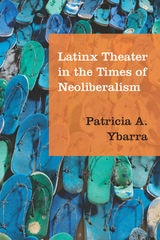
Latinx Theater in the Times of Neoliberalism
Patricia A. Ybarra
Northwestern University Press, 2018
Patricia A. Ybarra examines IMF interventions, NAFTA, shifts in immigration policy, the escalation of border industrialization initiatives, and austerity programs. She demonstrates how these policies have created the conditions for many of the most tumultuous events in the Americas in the last forty years, including dictatorships in the Southern Cone; the 1994 Cuban Rafter Crisis; femicides in Juárez, Mexico; the Zapatista uprising in Chiapas, Mexico; and the rise of narcotrafficking as a violent and vigorous global business throughout the Americas.
Latinx artists have responded to these crises by writing and developing innovative theatrical modes of representation about neoliberalism. Ybarra analyzes the work of playwrights María Irene Fornés, Cherríe Moraga, Michael John Garcés, Caridad Svich, Quiara Alegría Hudes, Victor Cazares, Jorge Ignacio Cortiñas, Tanya Saracho, and Octavio Solis. In addressing histories of oppression in their home countries, these playwrights have newly imagined affective political and economic ties in the Americas. They also have rethought the hallmark movements of Latin politics in the United States—cultural nationalism, third world solidarity, multiculturalism—and their many discontents.
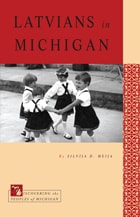
Latvians in Michigan
Silvija D. Meija
Michigan State University Press, 2005
Latvians have contributed to the cultural mosaic and economy of Michigan far more than one might imagine. There are three large Latvian communities in Michigan—Kalamazoo, Detroit, and Grand Rapids—with several smaller enclaves elsewhere in the state. An underlying goal of Latvians who now live in Michigan, as well as other parts of the United States and Canada, is to maintain their language and culture. More than five thousand Latvians came to Michigan after World War II, found gainful employment, purchased homes, and became a part of the Michigan population. Most sought to reeducate themselves and struggled to educate their children in Michigan’s many colleges and universities. Latvians in Michigan examines Latvia and its history, and describes how World War II culminated in famine, death, and eventual flight from their homeland by many Latvian refugees. After the war ended, most Latvian emigrants eventually made their way to Sweden or Germany, where they lived in displaced persons camps. From there, the emigrants were sponsored by individuals or organizations and they moved once again to other parts of the world. Many came to the United States, where they established new roots and tried to perpetuate their cultural heritage while establishing new lives.
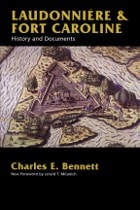
Laudonniere & Fort Caroline
History and DocumentsCharles Bennett and foreword by Jerald T. Milanich
University of Alabama Press, 2001
This classic historical resource remains the most complete work on the establishment of Fort Caroline, which heralded the start of permanent settlement by Europeans in North America. America's history was shaped in part by the clash of cultures that took place in the southeastern United States in the 1560s. Indians, French, and Spaniards vied to profit from European attempts to colonize the land Juan Ponce de Leon had named La Florida.
Rene de Goulaine de Laudonniere founded a French Huguenot settlement on the St. Johns River near present-day Jacksonville and christened it Fort Caroline in 1564, but only a year later the hapless colonists were expelled by a Spanish fleet led by Pedro Menendez de Aviles. The Spanish in turn established a permanent settlement at St. Augustine, now the oldest city in the United States, and blocked any future French claims in Florida.
Using documents from both French and Spanish archives, Charles E. Bennett provides the first comprehensive account of the events surrounding the international conflicts of this 16th-century colonization effort, which was the actual "threshold" of a new nation. The translated Laudonniere documents also provide a wealth of information about the natural wonders of the land and the native Timucua Indians encountered by the French. As a tribe, the Timucua would be completely gone by the mid-1700s, so these accounts are invaluable to ethnologists and anthropologists.
With this republication of Laudonniere & Fort Caroline, a new generation of archaeologists, anthropologists, and American colonial historians can experience the New World through the adventures of the French explorers. Visitors to Fort Caroline National Memorial will also find the volume fascinating reading as they explore the tentative early beginnings of a new nation.

Laughing Atoms, Laughing Matter
Lucretius' De Rerum Natura and SatireT. H. M. Gellar-Goad
University of Michigan Press, 2020
Gellar-Goad aims to track De Rerum Natura along two paths of satire: first, the broad boulevard of satiric literature from the beginnings of Greek poetry to the plays, essays, and broadcast media of the modern world; and second, the narrower lane of Roman verse satire, satura, beginning with early authors Ennius and Lucilius and closing with Flavian poet Juvenal. Lucilius is revealed as a major, yet overlooked, influence on Lucretius.
By examining how Lucretius’ poem employs the tools of satire, we gain a richer understanding of how it interacts with its purported philosophical program.

Laughing Lost in the Mountains
Poems of Wang WeiWei Wang
University Press of New England, 1992
Laughing at Leviathan
Sovereignty and Audience in West PapuaDanilyn Rutherford
University of Chicago Press, 2012

Laughing at the Devil
Seeing the World with Julian of NorwichAmy Laura Hall
Duke University Press, 2018

Laughing to Keep from Dying
African American Satire in the Twenty-First CenturyDanielle Fuentes Morgan
University of Illinois Press, 2020
Adventurous and perceptive, Laughing to Keep from Dying reveals how African American satirists unmask the illusions and anxieties surrounding race in the twenty-first century.
Laughter and Civility
The Theater of Emma GadLynn R. Wilkinson
University of Wisconsin Press, 2020
Laughter and Civility, the first biographical and scholarly volume to examine and contextualize her dramas, deeply explores how and why influential women are so often excluded from the canon. Lynn R. Wilkinson provides insightful readings into all twenty-five of Gad’s plays and demonstrates how writers and intellectuals of the time, including Georg and Edvard Brandes, took her critically acclaimed work seriously. This volume rightfully reinstates Emma Gad’s work into the repertory of European drama and is crucial for scholars interested in turn‐of‐the‐century Scandinavian drama, literature, culture, and politics.
Launching Global Health
The Caribbean Odyssey of the Rockefeller FoundationSteven Palmer
University of Michigan Press, 2010
Laura Battiferra and Her Literary Circle
An Anthology: A Bilingual EditionLaura Battiferra degli Ammannati
University of Chicago Press, 2006
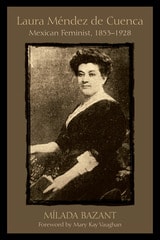
Laura Méndez de Cuenca
Mexican Feminist, 1853–1928Mílada Bazant; Foreword by Mary Kay Vaughan
University of Arizona Press, 2018
In the early 1870s, when conservative religious thought permeated all aspects of Mexican life, she was one of very few women to gain admission to an extraordinary constellation of male poets, playwrights, and novelists, who were also the publicists and statesmen of the time. She entered this world through her poetry, intellect, curiosity, assertiveness, but her personal life was fraught with tragedy: she had a child out of wedlock by poet Manuel Acuña, who killed himself shortly thereafter. She later married another poet, Agustín Fidencio Cuenca, and had seven other children. All but two of her children died, as did Agustín.
As a penniless young widow facing social rejection, Laura became a teacher and an important force in Mexico’s burgeoning educational reform program. She moved abroad—first to San Francisco, then St. Louis, then Berlin. In these places where she was not known and women had begun to move confidently in the public sphere, she could walk freely, observe, mingle, make friends across many circles, learn, think, and express her opinions. She wrote primarily for a Mexican public and always returned to Mexico because it was her country’s future that she strove to create.
Now, for the first time in English, Mílada Bazant shares with us the trajectory of a leading Mexican thinker who applied the power of the pen to human feeling, suffering, striving, and achievement.

Laura
Uncovering Gender and Genre in Wyatt, Donne and MarvellBarbara L. Estrin
Duke University Press, 1994
Through close readings of the Rime sparse and the works of Wyatt, Donne, and Marvell, Estrin uncovers three Lauras: Laura-Daphne, who denies sexuality; Laura-Eve, who returns the poet’s love; and Laura-Mercury, who reinvents her own life. Estrin claims that in these three guises Laura subverts both genre and gender, thereby introducing multiple desires into the many layers of the poems. Drawing upon genre and gender theories advanced by Jean-François Lyotard and Judith Butler to situate female desire in the poem’s framework, Estrin shows how genre and gender in the Petrarchan tradition work together to undermine the stability of these very concepts.
Estrin’s Laura constitutes a fundamental reconceptualization of the Petrarchan tradition and contributes greatly to the postmodern reassessment of the Renaissance period. In its descriptions of how early modern poets formulate questions about sexuality, society and poetry, Laura will appeal to scholars of the English and Italian Renaissance, of gender studies, and of literary criticism and theory generally.

Lavender Sounds
From Lesbian Radio to Queer Feminist SoundworkStacey Copeland
University of Michigan Press, 2026
Stacey Copeland’s Lavender Sounds explores lesbian radio history and its evolution into queer feminist podcasting today, exploring the politics, aesthetics, and cultural activism embedded in queer feminist soundwork. Through deeply personal and archival explorations, Stacey Copeland traces the emergence of queer feminist soundwork—a unique blend of community-led storytelling, political resistance, and creative expression rooted in feminist and LGBTQ+ activism. At the heart of the book lies a powerful idea: sound is not just heard but felt, connecting generations through shared voices and struggles. In conversation with award-winning and cutting-edge queer and feminist podcast producers from across Canada and the U.S., Lavender Sounds invites us to turn a feminist-embodied ear to the past to uncover the ways gender, race, and sexual orientations are embedded in our everyday media listening practices. From pioneering Canadian radio shows like Vancouver's The Lesbian Show and Montreal's Dykes on Mykes to today’s queer chumcasts and audio documentary, Lavender Sounds is a journey through auditory landscapes where joy, protest, intimacy, and identity intersect. This book opens a vibrant conversation about how radio and podcasting are vital tools for marginalized communities to connect, create, and claim space in the media world.
Law Collections from Mesopotamia and Asia Minor
Martha T. Roth
SBL Press, 1997
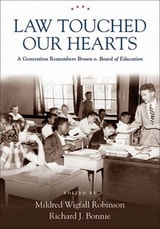
Law Touched Our Hearts
A Generation Remembers Brown v. Board of EducationMildred Wigfall Robinson
Vanderbilt University Press, 2008
What Brown did was to elevate race from the country's dirty secret to its most urgent topic of conversation. This book stands alone in presenting, in one source, stories of black and white Americans, men and women, from all parts of the nation, who were public school students during the years immediately after Brown. All shared an epiphany. Some became aware of race and the burden of racial separation. Others dared to hope that the yoke of racial oppression would at last be lifted.
The editors surveyed 4750 law professors born between 1936 and 1954, received 1000 responses, and derived these forty essays from those willing to write personal accounts of their childhood experiences in the classroom and in their communities. Their moving stories of how Brown affected them say much about race relations then and now. They also provide a picture of how social change can shape the careers of an entire generation in one profession.
Contributors provide accounts from across the nation. Represented are
-de jure states, those segregated by law at the time of Brown, including Alabama, Florida, Georgia, Louisiana, Maryland, Mississippi, North Carolina, South Carolina, Tennessee, Virginia, as well as the District of Columbia
-de facto states, those where segregation was illegal but a common practice, including California, Illinois, Kansas, Massachusetts, Missouri, New Jersey, New York, Ohio, Washington, and Wisconsin.

Law and Justice in the 1950s
Case Studies From a Neglected DecadeEdited by Fiona Cownie and Rosemary Auchmuty
University of London Press, 2026
The 1950s were a decade of considerable legal development in England and Wales, despite often being regarded as very conservative in contrast to the more radical 1960s and 1970s. This collection illustrates the breadth of those developments, providing a sociolegal perspective on a range of topics across criminal, property, family, commercial, environmental, and public law, as well as legal education.
Drawing on case studies from the Great London Smog in 1952, the treatment of women in the Wolfenden Report, divorce law reform, the takeover battle for the Savoy Hotel in 1953, law on the radio, and more, this book throws new light on current debates about the relationship between law and issues of justice, inclusion, and equality in different spheres of activity.
Written for historians and legal specialists alike, Law and Justice in the 1950s explores the stories behind the laws in this neglected decade. In revealing the historical context, arguments, and controversies raised at the time and the different perspectives of the parties involved, it offers a greater understanding of why we have the law we have now and of these issues as they continue to be played out in the early twenty-first century.
Law and Kingship in Thailand During the Reign of King Chulalongkorn
David M. Engel
University of Michigan Press, 1975
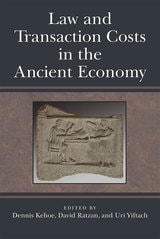
Law and Transaction Costs in the Ancient Economy
Dennis P. Kehoe, David M. Ratzan, and Uri Yiftach, editors
University of Michigan Press, 2015
Law and the Conditions of Freedom in the Nineteenth-Century United States
James Willard Hurst
University of Wisconsin Press, 1964
In these essays J. Willard Hurst shows the correlation between the conception of individual freedom and the application of law in the nineteenth-century United States—how individuals sought to use law to increase both their personal freedom and their opportunities for personal growth. These essays in jurisprudence and legal history are also a contribution to the study of social and intellectual history in the United States, to political science, and to economics as it concerns the role of public policy in our economy. The nonlawyer will find in them demonstration of how "technicalities" express deep issues of social values.

Law and the Conditions of Freedom in the Nineteenth-Century United States
J. Willard Hurst
University of Wisconsin Press, 1956
In these essays J. Willard Hurst shows the correlation between the conception of individual freedom and the application of law in the nineteenth-century United States—how individuals sought to use law to increase both their personal freedom and their opportunities for personal growth. These essays in jurisprudence and legal history are also a contribution to the study of social and intellectual history in the United States, to political science, and to economics as it concerns the role of public policy in our economy. The nonlawyer will find in them demonstration of how "technicalities" express deep issues of social values.
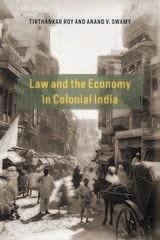
Law and the Economy in Colonial India
Tirthankar Roy and Anand V. Swamy
University of Chicago Press, 2021
Tirthankar Roy and Anand V. Swamy trace the beginnings of the current Indian legal system to the years of British colonial rule. They show how India inherited an elaborate legal system from the British colonial administration, which incorporated elements from both British Common Law and indigenous institutions. In the case of property law, especially as it applied to agricultural land, indigenous laws and local political expediency were more influential in law-making than concepts borrowed from European legal theory. Conversely, with commercial law, there was considerable borrowing from Europe. In all cases, the British struggled with limited capacity to enforce their laws and an insufficient knowledge of the enormous diversity and differentiation within Indian society. A disorderly body of laws, not conducive to production and trade, evolved over time. Roy and Swamy’s careful analysis not only sheds new light on the development of legal institutions in India, but also offers insights for India and other emerging countries through a look at what fosters the types of institutions that are key to economic growth.
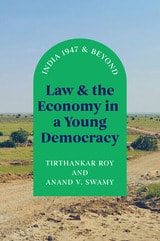
Law and the Economy in a Young Democracy
India 1947 and BeyondTirthankar Roy and Anand V. Swamy
University of Chicago Press, 2022
Economists have long lamented how the inefficiency of India's legal system undermines the country’s economic capacity. How has this come to be? The prevailing explanation is that the postcolonial legal system is understaffed and under-resourced, making adjudication and contract enforcement slow and costly.
Taking this as given, Law and the Economy in a Young Democracy examines the contents and historical antecedents of these laws, including how they have stifled economic development. Economists Roy and Swamy argue that legal evolution in independent India has been shaped by three factors: the desire to reduce inequality and poverty; the suspicion that market activity, both domestic and international, can be detrimental to these goals; and the strengthening of Indian democracy over time, giving voice to a growing fraction of society, including the poor.
Weaving the story of India's heralded economic transformation with its social and political history, Roy and Swamy show how inadequate legal infrastructure has been a key impediment to the country's economic growth during the last century. A stirring and authoritative history of a nation rife with contradictions, Law and the Economy in a Young Democracy is essential reading for anyone seeking to understand India's current crossroads—and the factors that may keep its dreams unrealized.
Law and the Gay Rights Story
The Long Search for Equal Justice in a Divided DemocracyFrank, Walter
Rutgers University Press, 2014
In his gripping new book, Walter Frank offers an in-depth look at the court cases that were pivotal in establishing gay rights. But he also tells the story of those individuals who were willing to make waves by fighting for those rights, taking enormous personal risks at a time when the tide of public opinion was against them. Frank’s accessible style brings complex legal issues down to earth but, as a former litigator, never loses sight of the law’s human dimension and the context of the events occurring outside the courtroom.
Chronicling the past half-century of gay and lesbian history, Law and the Gay Rights Story offers a unique perspective on familiar events like the Stonewall Riots, the AIDS crisis, and the repeal of “Don’t Ask, Don’t Tell.” Frank pays special attention to the constitutional issues surrounding same-sex marriage and closely analyzes the two recent Supreme Court cases addressing the issue. While a strong advocate for gay rights, Frank also examines critiques of the movement, including some coming from the gay community itself. Comprehensive in coverage, the book explains the legal and constitutional issues involved in each of the major goals of the gay rights movement: a safe and healthy school environment, workplace equality, an end to anti-gay violence, relationship recognition, and full integration into all the institutions of the larger society, including marriage and military service. Drawing from extensive archival research and from decades of experience as a practicing litigator, Frank not only provides a vivid history, but also shows where the battle for gay rights might go from here.
Law and the Image
The Authority of Art and the Aesthetics of LawEdited by Costas Douzinas and Lynda Nead
University of Chicago Press, 1999
The essays draw on the critical procedures of law, art history, and cultural studies in order to create a new interdisciplinary field of visual culture and law. In exploring the hidden interdependence of law and art, the writings refute the generally held conception that law is fixed and rational while the judgment of art is autonomous and ambiguous. Among the topics addressed are the history of the relationship between art and law, the ways in which the visual is made subject to the force of the law, and the complex relations between law, the image, and identity.
With its groundbreaking ideas from a variety of intellectual traditions and disciplines, this book puts law and art into a new and exciting conversation that will introduce a new field of study and spark international debate.
Contributors are: Georges Didi-Huberman, Costas Douzinas, Hal Foster, Peter Goodrich, Piyel Haldar, Martin Jay, Mandy Merck, Lynda Nead, Jonathan Ribner, Katherine Fischer Taylor.
Law and the Rural Economy in the Roman Empire
Dennis P. Kehoe
University of Michigan Press, 2010
The economy of the Roman Empire was predominantly agrarian: Roman landowners, agricultural laborers, and small tenant farmers were highly dependent upon one another for assuring stability. By examining the property rights established by the Roman government, in particular the laws concerning land tenure and the contractual relationships between wealthy landowners and the tenant farmers to whom they leased their land, Dennis P. Kehoe is able to demonstrate how the state fostered economic development and who benefited the most. In this bold application of economic theory, Kehoe explores the relationship between Roman private law and the development of the Roman economy during a crucial period of the Roman Empire, from the second to the fourth century C.E. Kehoe is able to use the laws concerning land tenure, and the Roman government's enforcement of those laws, as a window through which to develop a more comprehensive view of the Roman economy. With its innovative application of the methodologies of law and economics and the New Institutional Economics Law and the Rural Economy in the Roman Empire is a groundbreaking addition to the study of the Roman economy.
Dennis P. Kehoe is Professor of Classical Studies at Tulane University. He is the author of several books, including Investment, Profit, and Tenancy: The Jurists and the Roman Agrarian Economy(University of Michigan Press, 1997).
"Kehoe brings his deep expertise in Roman land tenure systems and his broad knowledge of the methodologies of New Institutional Economics to bear on questions of fundamental importance regarding the relationship of Roman law and society. Was governmental policy on agriculture designed to benefit large landowners or small farmers? What impact did it have on the rural economy? The fascinating answers Kehoe provides in this pathbreaking work should occasion a major reassessment of such problems by social and legal historians."
---Thomas McGinn, Department of Classical Studies at Vanderbilt University, and author of The Economy of Prostitution in the Roman World: A Study of Social History and the Brothel and Prostitution, Sexuality, and the Law in Ancient Rome
"A ground-breaking study using the principles of New Institutional Economics to analyze the impact of legal policy in balancing the interests of Roman tenant-farmers and landowners in the 2-4 centuries C.E. Kehoe's book will be essential reading for historians of the Roman Empire, demonstrating how the government overcame challenges and contradictions as it sought to regulate this enormous sector of the economy."
---Susan D. Martin, Department of Classics, University of Tennessee
"In Law and the Rural Economy, Kehoe brings to life the workings of the ancient economy and the Roman legal system. By analyzing interactions between the imperial government, landlords, and tenant farmers in provinces across the Empire, Kehoe opens insights into imperial economic policy. He handles a variety of challenging sources with mastery and wit, and his knowledge of scholarship is extensive and thorough, covering ancient history, textual problems in the sources, legal history and, perhaps most impressively, the modern fields of economic theory and 'law and economics.' Kehoe's innovative and sophisticated methodology sets his work apart. The book will make an important contribution to our understanding of access to the law and the effectiveness of the legal system, important topics for scholars of law, ancient and modern."
---Cynthia J. Bannon, Department of Classical Studies, Indiana University